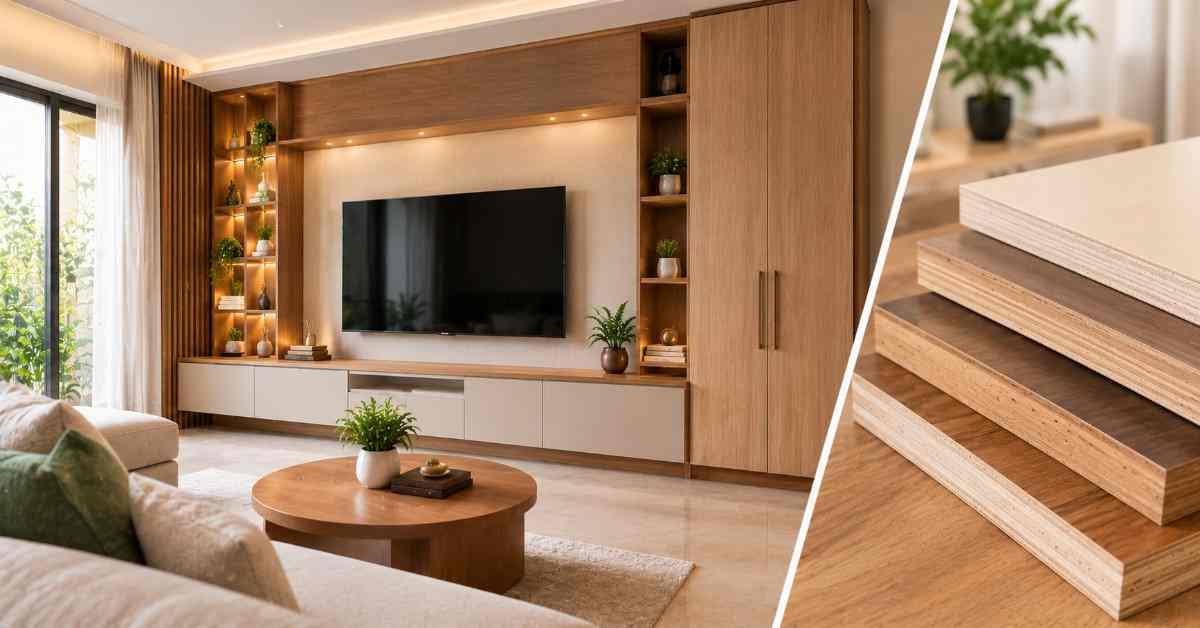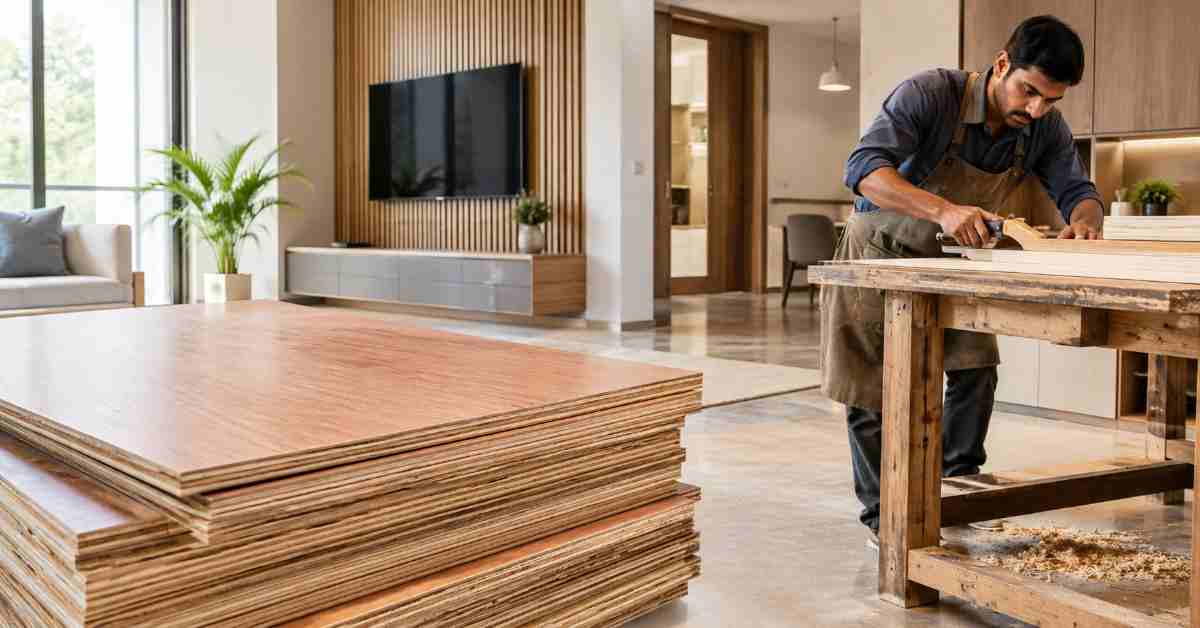
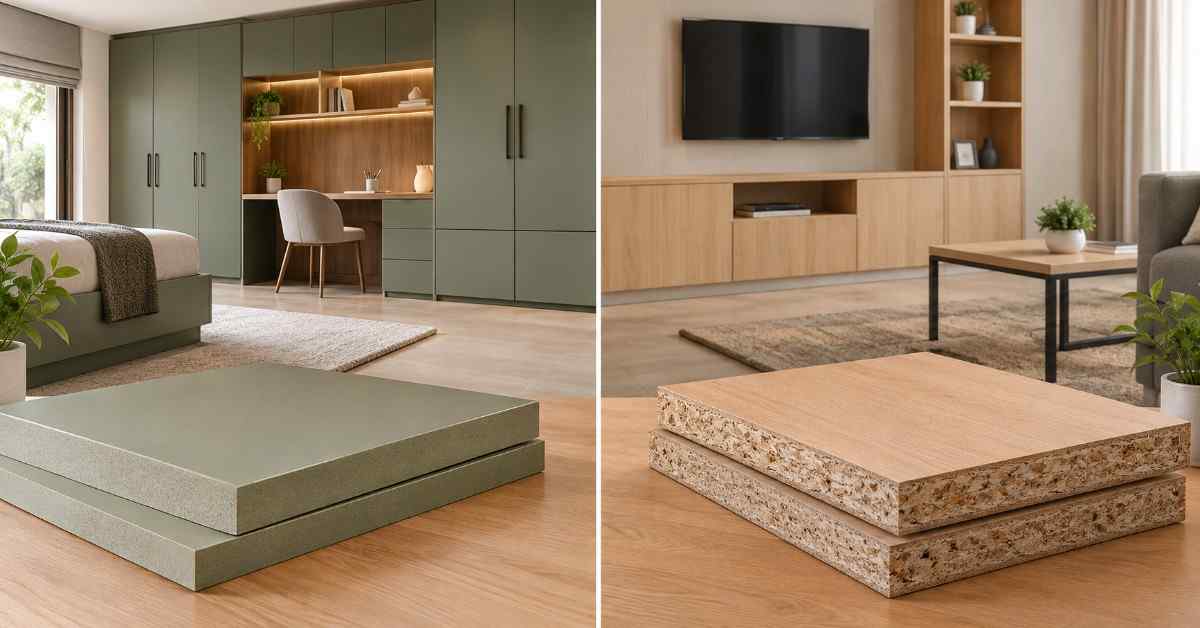
Choosing the right board material affects furniture quality and lifespan. Many homeowners compare HDHMR Board vs Particle Board before purchasing. Both materials are widely used in modern interior applications today. However, their construction, performance, and durability differ significantly.
HDHMR Board stands for High Density High Moisture Resistant board. It is manufactured using compressed wood fibers and specialized resins. The production process creates a dense and uniform board structure. This improves strength, moisture resistance, and screw-holding performance. In comparison, Particle Board for Furniture uses wood particles and chips. These particles are bonded together using adhesives under pressure. The resulting board remains economical and easy to manufacture. However, it generally offers lower density than HDHMR boards.
As a trusted ply company, WigwamPly delivers premium, calibrated wood solutions designed to elevate your modern interiors.
The debate around HDHMR vs Particle Board pros and cons continues. Each material serves different furniture and interior design requirements. Particle boards work well for budget-conscious furniture projects. HDHMR boards are preferred where durability and moisture resistance matter. This is especially true for kitchens, wardrobes, and storage units. Today, modular furniture manufacturers increasingly favor HDHMR boards. Their dense structure provides excellent machining and finishing performance. The smooth surface also supports laminates, veneers, and decorative finishes. These qualities make HDHMR a popular engineered wood solution.
When evaluating the Best Board for Modular Furniture, moisture resistance matters. Furniture often faces humidity, spills, and changing environmental conditions. Standard particle boards may struggle in such demanding situations. Moisture Resistant HDHMR boards perform better under these conditions. They resist swelling and dimensional changes more effectively. Many buyers also compare HDHMR vs MDF vs Particle Board. HDHMR is generally considered a higher-performance engineered board. It combines high density with improved moisture resistance properties. This places it above conventional MDF and particle board products.
For furniture requiring superior structural stability, plywood remains important. Wigwam Ply focuses on premium plywood and blockboard solutions.
Products such as Wigwam Visor, Wigwam Excel MR, and Fabricate Birch offer excellent durability. They provide superior screw holding, dimensional stability, and long-term performance. These qualities make them trusted choices for demanding furniture applications.
Understanding HDHMR Board Benefits and particle board limitations helps buyers. The right material depends on budget, application, and performance expectations. This guide compares both options in detail for informed decision-making.
For projects requiring exceptional load-bearing capacity, WigwamPly offers premium structural grade plywood that guarantees lasting stability and safety.
HDHMR Board vs Particle Board — Construction, Properties & Core Differences
When comparing HDHMR Board vs Particle Board, the difference extends far beyond price. The two materials use entirely different manufacturing processes, resulting in major variations in density, moisture resistance, screw-holding capacity, and long-term durability.
For wardrobes, modular kitchens, storage units, and modern interiors, understanding these differences helps buyers select the right material for the application.
What Is HDHMR Board?
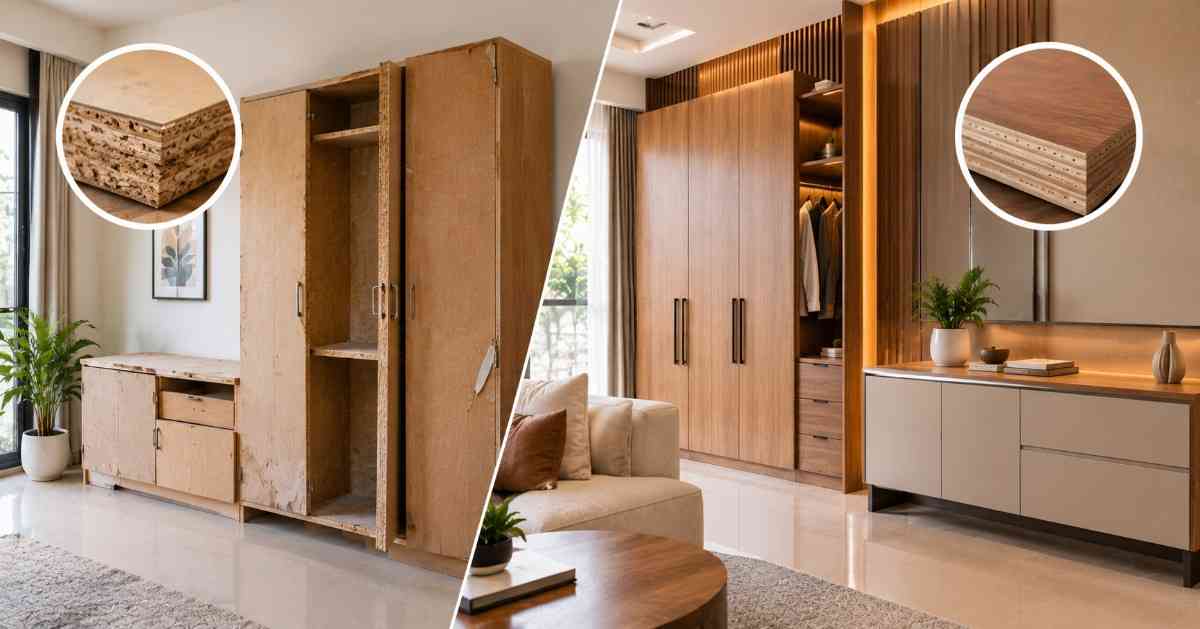
HDHMR (High Density High Moisture Resistant) board is an engineered wood panel manufactured from fine wood fibers compressed under very high pressure and temperature. Moisture-resistant resins are uniformly distributed throughout the panel, creating a dense and homogeneous structure.
This manufacturing process produces a board with significantly higher density than conventional MDF and particle board. Most HDHMR boards available in the market typically range between 800–950 kg/m³ density, making them stronger, harder, and more resistant to moisture-related deformation.
The dense fiber structure improves screw retention, machining quality, edge strength, and dimensional stability. These characteristics make HDHMR a popular choice for premium modular furniture and interior applications.
Enhance the safety of your commercial and residential spaces with WigwamPly rigorously tested fire retardant plywood.
What Is Particle Board?
Particle Board is manufactured using wood chips, sawdust, shavings, and wood-processing residues bonded with resin under moderate pressure.
Unlike HDHMR, particle board contains relatively coarse particles throughout the core. This creates a less uniform internal structure and lower overall density. Most furniture-grade particle boards generally fall within the 550–750 kg/m³ density range.
The lower density reduces manufacturing costs but also affects structural performance. Particle board offers weaker screw holding, lower impact resistance, and significantly lower moisture resistance than HDHMR.
When exposed to prolonged humidity or water ingress, particle board may swell, weaken, or lose structural integrity more rapidly than higher-density engineered boards.
HDHMR Board Benefits vs Particle Board
The discussion around HDHMR vs Particle Board pros and cons becomes clearer when comparing actual performance parameters.
Density and Structural Strength
One of the biggest HDHMR Board Benefits is its significantly higher density.
| Property | HDHMR Board | Particle Board |
| Typical Density | 800–950 kg/m³ | 550–750 kg/m³ |
| Core Structure | Homogeneous Fiber Core | Wood Chips & Particles |
| Surface Hardness | High | Moderate |
| Impact Resistance | High | Low to Moderate |
The higher density allows HDHMR to withstand heavier loads and daily wear more effectively. Particle board performs adequately for light-duty furniture but generally lacks the same structural robustness.
Moisture Resistance
Moisture Resistant HDHMR boards are specifically engineered to perform in humid conditions.
The moisture-resistant resin system helps reduce swelling and dimensional movement. This makes HDHMR suitable for kitchens, wardrobes, utility furniture, and moisture-prone interiors.
Particle board remains far more vulnerable to water absorption. Once moisture penetrates the board, swelling and loss of strength can occur quickly.
Screw Holding Performance
Fastener retention is critical for furniture longevity.
HDHMR’s dense fiber composition provides stronger screw grip throughout the panel, including at edges where furniture hardware is commonly installed.
Particle board has a looser internal structure, resulting in weaker screw retention and increased risk of hardware loosening over time.
For comparison, furniture-grade particle boards typically achieve edge screw-holding values in the range of 100–150 N, whereas high-density engineered panels and premium plywood products achieve substantially higher values.
Surface Finish Quality
HDHMR offers a finer and smoother surface because of its fiber-based composition.
This creates excellent conditions for:
- Laminate bonding
- Acrylic finishes
- Veneer application
- PU painting
- Decorative coatings
Particle board surfaces are comparatively coarser and may require additional preparation before finishing.
Durability in Everyday Use
Furniture experiences repeated opening, closing, impact, and loading.
HDHMR performs better under these conditions because of its higher density and stronger internal bonding. It is less prone to edge damage, denting, and structural deterioration.
Particle board remains a cost-effective option but generally offers a shorter service life in demanding applications.
HDHMR vs MDF vs Particle Board
Many buyers also compare HDHMR vs MDF vs Particle Board before making a purchase decision.
HDHMR can be viewed as an advanced evolution of MDF technology. It delivers higher density, improved moisture resistance, and better screw-holding performance.
| Feature | HDHMR | MDF | Particle Board |
| Density | 800–950 kg/m³ | 650–800 kg/m³ | 550–750 kg/m³ |
| Moisture Resistance | High | Moderate | Low |
| Edge Screw Holding | Excellent | Moderate | Poor |
| Surface Finish Quality | Excellent | Very Good | Good |
| Impact Resistance | High | Moderate | Low |
| Dimensional Stability | High | Moderate | Moderate |
| Furniture Lifespan | 10–15+ Years | 7–12 Years | 3–8 Years |
| Typical Use | Premium Modular Furniture | Decorative Furniture | Budget Furniture |
HDHMR clearly outperforms MDF and particle board in moisture resistance, edge strength, and hardware retention.
Why Premium Plywood Still Outperforms HDHMR and Particle Board
While HDHMR performs better than MDF and particle board, premium plywood remains the benchmark for structural furniture applications.
Unlike engineered boards, plywood uses cross-laminated veneer layers that distribute stress more effectively and provide exceptional screw-holding performance.
The table below highlights measurable specifications from premium Wigwam Ply products.
Technical Benchmark: HDHMR vs Wigwam Premium Panels
| Property | HDHMR Board | Particle Board | Wigwam Visor | Wigwam Engineered Plywood |
| Density | 800–950 kg/m³ | 550–750 kg/m³ | 850–890 kg/m³ | 750–800 kg/m³ |
| Thickness Tolerance | ±0.3–0.5 mm | ±0.5–1 mm | ±0.25 mm | ±0.25 mm |
| Screw Holding Strength | High | Low | Above 2000 N | Above 2000 N |
| Swelling (24 Hrs) | 4–8% | Up to 10%+ | 4–6% | 4–6% |
| Core Construction | Fiber Core | Particle Core | Multi-Layer Hardwood Core | Multi-Layer Hardwood Core |
| Calibration | Usually Available | Rare | Both Side Calibrated | Both Side Calibrated |
| Structural Grade Availability | No | No | IS 10701 Structural Grade | BWP Grade |
Wigwam Visor features a density of 850–890 kg/m³, screw-holding strength above 2000 N, swelling of only 4–6% after 24 hours, and thickness tolerance of ±0.25 mm. It also conforms to IS 10701 Structural Grade, IS 5509 Fire Retardant Grade, and IS 710 Marine Grade standards.
Similarly, Wigwam Engineered Plywood offers densities between 750–800 kg/m³, swelling of 4–6%, and screw-holding strength above 2000 N, making it suitable for demanding furniture applications.
For homeowners seeking the strongest and most durable furniture material, premium plywood solutions from Wigwam Ply continue to outperform HDHMR, MDF, and particle board in structural performance, dimensional stability, and long-term reliability.
HDHMR Board for Furniture vs Particle Board — Price, Best Applications & Why Wigwam Ply Plywood Outperforms Both
Choosing the Best Board for Modular Furniture requires more than comparing initial costs. Furniture performance depends on strength, moisture resistance, screw-holding capacity, surface finish quality, and long-term durability.
While HDHMR Board for Furniture offers significant advantages over particle board, premium plywood remains the preferred choice for structural furniture applications. Understanding where each material performs best helps achieve the right balance between aesthetics, performance, and budget.
HDHMR Board for Furniture: Where It Performs Best
HDHMR has become increasingly popular in modular furniture manufacturing because of its dense and uniform fiber structure. The smooth surface supports high-quality finishes while offering better moisture resistance than MDF and particle board.
Decorative Shutter Fronts and Cabinet Doors
HDHMR is widely used for decorative shutter applications. Its dense surface creates an excellent foundation for laminates, acrylic finishes, veneers, and membrane foils.
Because the board maintains a smooth and uniform face, it helps achieve premium visual results across wardrobes, kitchen shutters, and storage units.
CNC-Routed Decorative Panels
One of the major advantages of HDHMR is its machinability. The fine fiber composition allows clean CNC cutting and routing with minimal edge tear-out.
This makes HDHMR suitable for:
- Decorative wall panels
- Designer cabinet shutters
- Engraved furniture fronts
- Contemporary interior features
Wall-Mounted Decorative Applications
Moisture Resistant HDHMR performs well in wall cladding and decorative panel installations where moderate humidity may be present.
Compared with particle board, HDHMR offers greater dimensional stability and reduced risk of swelling.
Premium Modular Furniture Components
HDHMR is commonly selected for visible furniture components where surface quality is a primary requirement. The smooth finish allows excellent laminate adhesion and premium aesthetic outcomes.
Particle Board for Furniture: An Honest Assessment
Particle Board for Furniture remains popular because of its affordability. It is one of the most economical engineered wood products available.
However, buyers should understand its limitations before selecting it for furniture projects.
Particle board is generally suitable for:
- Back panels
- Internal partitions
- Budget furniture
- Flat-pack furniture
- Dry interior applications
Its lower density and particle-based core make it less durable than HDHMR and plywood.
Where Particle Board Struggles
Particle board has several performance limitations that affect furniture longevity.
Weak Moisture Resistance
Water absorption remains one of particle board’s biggest weaknesses. Even small amounts of moisture can cause swelling and structural deterioration.
This makes it unsuitable for:
- Kitchens
- Bathroom furniture
- Utility areas
- Humid environments
Poor Edge Screw Holding
Furniture hardware depends heavily on edge screw retention. Particle board often struggles in this area because of its loose particle composition.
Repeated opening and closing may eventually loosen hinges and fittings.
Lower Impact Resistance
Particle board is more vulnerable to edge damage, dents, and breakage under daily use. Furniture exposed to heavy traffic generally experiences a shorter service life.
For homeowners seeking long-term durability, particle board often becomes a false economy despite its lower initial cost.
Why Wigwam Ply Plywood Is the Best Board for Modular Furniture
While HDHMR clearly outperforms particle board, premium plywood continues to set the benchmark for structural furniture applications.
Wigwam Ply manufactures IS-certified plywood solutions specifically designed for demanding furniture environments.
The key advantage lies in plywood’s cross-laminated construction.
Unlike HDHMR and particle board, plywood consists of multiple veneer layers bonded with alternating grain directions. This creates exceptional structural strength and dimensional stability.
Structural Advantages of WigwamPly Plywood
Superior Bending Strength
Cross-laminated construction distributes loads more effectively. This allows plywood shelves, cabinets, and carcasses to withstand heavier weights without sagging.
Better Screw Holding Capacity
Furniture hardware performs best when attached to plywood. The layered veneer structure provides strong edge and face screw retention.
This results in longer-lasting hinges, drawer channels, and fittings.
Enhanced Load-Bearing Performance
For wardrobes, kitchen carcasses, bookshelves, and storage systems, plywood provides greater reliability than engineered boards.
Improved Long-Term Durability
Premium plywood resists structural fatigue more effectively. This contributes to longer furniture life and reduced maintenance requirements.
Products such as Wigwam Visor, Wigwam Excel MR, and Fabricate Birch combine strength, dimensional stability, termite resistance, and precision manufacturing for superior furniture performance.
Protect your interior furniture against seasonal humidity fluctuations with WigwamPly highly durable mr ply.
The Professional Approach: Combining HDHMR and WigwamPly Plywood
Many professional furniture manufacturers use both materials strategically.
Instead of selecting a single board for every component, they assign materials according to performance requirements.
| Furniture Component | Recommended Material | Primary Benefit |
| Decorative Shutters | HDHMR | Smooth surface and premium finish |
| CNC-Routed Panels | HDHMR | Excellent machining quality |
| Decorative Wall Panels | HDHMR | Moisture resistance and aesthetics |
| Kitchen Carcasses | Wigwam Ply Plywood | Structural strength |
| Wardrobe Carcasses | Wigwam Ply Plywood | Load-bearing capacity |
| Shelving Systems | Wigwam Ply Plywood | Sag resistance |
| Storage Furniture | Wigwam Ply Plywood | Superior screw holding |
This combination delivers the best balance between appearance and structural reliability.
HDHMR Board Price vs Particle Board Price
When comparing HDHMR Board Price and HDHMR vs Particle Board Price, the cost difference reflects substantial performance differences.
HDHMR typically commands a higher price because of:
- Higher manufacturing density
- Better raw materials
- Moisture-resistant resin systems
- Stricter production controls
- Improved finishing quality
Indicative Market Positioning
| Material | Typical Market Position |
| Particle Board | Budget |
| MDF | Mid-Range |
| HDHMR | Premium |
| Furniture-Grade Plywood | Premium to High Premium |
Although particle board offers the lowest upfront cost, its shorter lifespan and greater vulnerability to moisture often increase replacement costs over time.
HDHMR delivers significantly better performance and durability, making the higher investment worthwhile for many furniture applications.
For structural furniture components, premium plywood frequently provides the strongest long-term value despite a higher purchase price.
Protect your kitchen and bathroom interiors against extreme moisture with WigwamPly highly resilient waterproof marine ply.
Quick Decision Guide: Which Board Should You Choose?
| Application | Recommended Material |
| Decorative Shutters | HDHMR |
| CNC-Routed Decorative Panels | HDHMR |
| Moisture-Exposed Non-Structural Panels | HDHMR |
| Structural Carcasses | Wigwam Ply IS-Certified Plywood |
| Wardrobe Frameworks | Wigwam Ply IS-Certified Plywood |
| Shelving Systems | Wigwam Ply IS-Certified Plywood |
| Heavy-Duty Furniture | Wigwam Ply IS-Certified Plywood |
| Concealed Internal Panels (Dry Areas) | Particle Board |
| Budget Flat-Pack Furniture | Particle Board |
Why Professionals Prefer Wigwam Ply for Long-Term Furniture Performance
HDHMR is undoubtedly a significant upgrade over particle board. However, when strength, screw-holding capacity, load-bearing performance, and long-term reliability become critical, premium plywood remains the preferred specification.
Wigwam Ply combines advanced manufacturing, IS-certified quality standards, premium hardwood construction, and precision engineering to deliver furniture materials built for decades of performance.
For homeowners, architects, and furniture manufacturers seeking the Best Board for Modular Furniture, the winning combination is clear: HDHMR for decorative surfaces and Wigwam Ply plywood for structural strength.
Build Smarter Furniture with the Right Material — Choose Wigwam Ply for Lasting Strength
Selecting the right board is not only about today’s budget. It is about how your furniture performs years later. While HDHMR offers better moisture resistance and surface quality than particle board, structural furniture demands a stronger foundation.
Wigwam Ply’s premium plywood solutions are engineered for applications where durability matters most. Products like Wigwam Visor, Wigwam Excel MR, and Fabricate Birch combine superior screw-holding strength, high-density construction, termite resistance, and calibrated surfaces for precision furniture manufacturing. Wigwam Visor offers a density of 850–890 kg/m³, screw-holding strength above 2000 N, and swelling of only 4–6% after 24 hours, making it ideal for demanding furniture environments.
For the best results, many professionals use a hybrid approach: HDHMR for decorative shutters and routed panels, combined with Wigwam Ply plywood for carcasses, shelving, and structural furniture components. This ensures premium aesthetics without compromising strength.
When furniture must stay strong, stable, and beautiful for years, choose Wigwam Ply. Build better. Build stronger. Build with confidence.
Achieve a flawless, elegant finish for your high-end furniture and cabinetry with WigwamPly premium birch plywood.
Frequently Asked Questions
Yes. HDHMR Board for Furniture offers higher density, better moisture resistance, stronger screw-holding capacity, and longer service life than particle board. It performs particularly well in wardrobes, modular kitchens, and storage furniture exposed to daily use.
The main difference lies in construction. HDHMR is made from high-density wood fibers bonded with moisture-resistant resins, while particle board uses wood chips and sawdust bonded under pressure. This gives HDHMR superior strength, moisture resistance, surface quality, and durability.
Particle Board is generally the more affordable option. HDHMR Board Price is higher because of its greater density, moisture-resistant resins, and stricter manufacturing standards. However, HDHMR often provides better long-term value due to its durability and reduced maintenance requirements.
Particle board is not typically recommended for modular kitchens. Kitchen environments often experience moisture, humidity, and frequent use. These conditions can cause particle board to swell and deteriorate over time. HDHMR or premium plywood are usually better choices for kitchen furniture.
No. Moisture Resistant HDHMR is designed to withstand humidity and occasional moisture exposure better than MDF or particle board. However, it is not fully waterproof like high-quality BWP-grade plywood used in demanding wet environments.
Key HDHMR Board Benefits include higher density, improved moisture resistance, better screw-holding strength, smoother surface finish, superior machinability, and greater durability compared to MDF and particle board.
In most furniture applications, HDHMR performs better than MDF and particle board. It offers higher density, stronger fastener retention, and better moisture resistance. Particle board is the most economical option, while MDF generally sits between the two in performance.
The answer depends on the application. HDHMR is excellent for decorative shutters and routed panels. However, for carcasses, shelving, wardrobes, and load-bearing furniture, IS-certified plywood from WigwamPly provides superior structural strength, screw-holding capacity, and long-term reliability.
The HDHMR vs Particle Board Price difference reflects performance. HDHMR requires higher-density manufacturing, better resins, and stricter quality control. Although particle board costs less initially, HDHMR typically delivers longer service life and better furniture performance.
Professional furniture manufacturers often prefer premium plywood because of its cross-laminated construction. Plywood offers superior bending strength, higher load-bearing capacity, better edge screw holding, and improved dimensional stability compared to both HDHMR and particle board. Premium options like Wigwam Ply are therefore widely used in structural furniture applications.