Frequently Asked Questions
Most Popular Questions
What is Plywood?
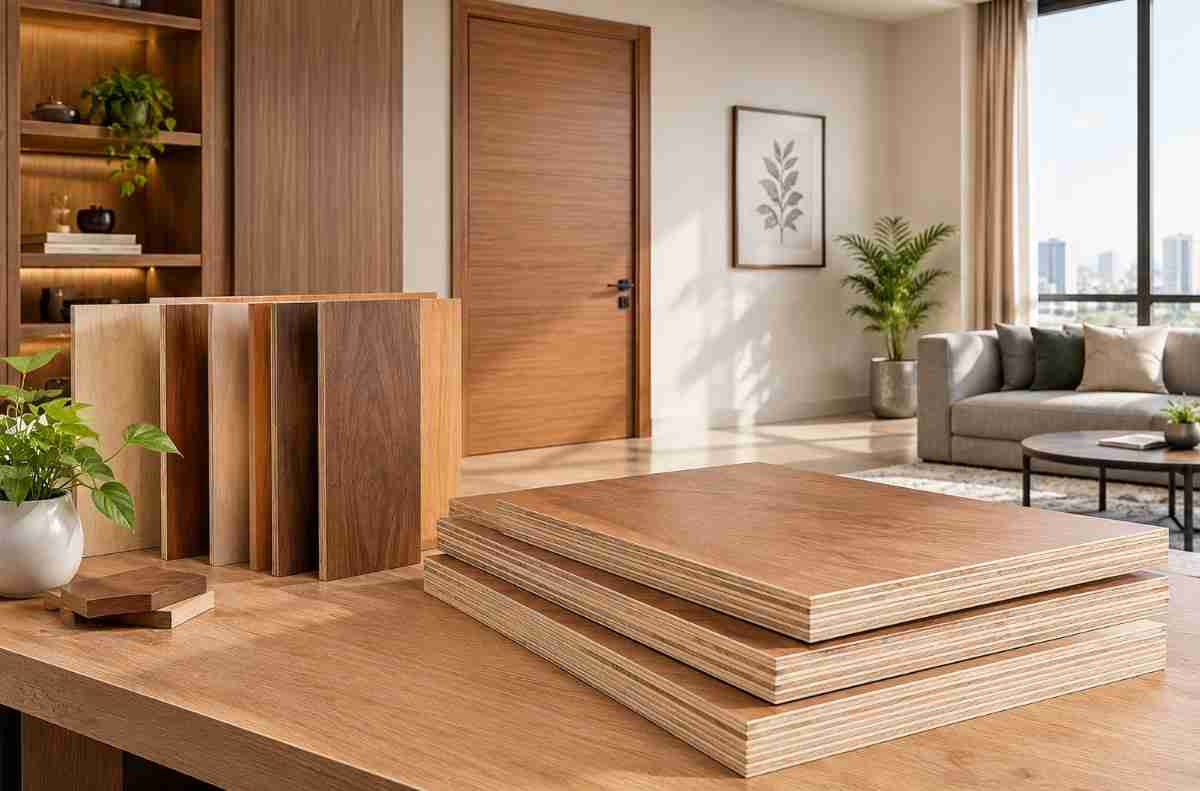
Plywood is an engineered, multi-purpose, wood-based panel-product that is stronger and more economical compared to natural wood. It binds together resin and wood fiber sheets to form a composite material.
What kind of warranty does Wigwam offer?
Wigwam products come with a wide range of warranty options that are anywhere between 7 years and Lifetime.
What are the usual Plywood-related complaints?
Delamination, termite-infestation, and warping are some of the common grievances faced by Plywood customers. Luckily Wigwam products tackle most of these issues.
Who is the advisor for Plywood - retailer, carpenter, or the manufacturer?
If you are looking for the most authentic, informative and decisive information, manufacturers (and their websites) are the best option.
Can Plywood quality be checked in-house?
Plywood quality can be checked only at BIS approved laboratories. But BWP Fire resistance can be checked in-house.
Why is Plywood better than MDF and particle board?
Plywood is formed by pressing together layers of natural wood, while MDF and particle board are composed of wood pulp and powder. MDF is an economical option but Plywood is better in terms of moisture resistance, durability, and strength.
How do I avoid warping?
The timber should be stored in extremely clean and dry conditions before construction. Balancing the application during usage also helps to avoid warping.
How much warping is ignorable?
There is no particular benchmark to go on when it comes to the extent of warping. But minor warping could be straightened by stacking it under sheets and by sealing it.
How and where can I raise my product complaints?
For all product complaints, queries, and/or issues, get in touch with us at +91 97 97 98 97 97 on all business days from 9 AM to 6 PM. Alternatively, you can also give a missed call at 1800 137 5252. You can also drop an email to care@savitriwoods.com. You should be hearing from us at the earliest, but the maximum wait time is not more than 48 hours.
What types of products are included in WigwamPly's environmentally friendly range?
WigwamPly offers moisture-resistant, marine-grade, fire-retardant, structural and flexible plywood, along with blockboard, birch plywood and flush doors. Its sustainability initiatives include plantation-sourced timber, wood-waste utilisation and solar energy. Emission ratings vary by product,so check the relevant specification before purchasing.
What are plywood boards used for?
Plywood boards are used for wardrobes, modular kitchens,cabinets, furniture, partitions, doors, panelling and construction applications. WigwamPly offers different grades for specificrequirements, including MR plywood for moisture-prone interiors, BWP IS 710 plywood for demanding wet environments and structural plywood for construction applications.
Is 710 grade plywood termite-proof?
IS 710 specifies the requirements for boiling-water-proof marine plywood; it does not, by itself, guarantee termite resistance. WigwamPly's marine-grade products, including Wigwam BWP, are advertised with termite-resistant properties. Check the particular products treatment and certification details before buying.
What is the recommended method for painting MDF?
Sand the MDF lightly, remove the dust, apply a compatible MDF sealer or primer, and allow it to dry according to the manufacturer’s instructions. Apply suitable paint in thin, even coats, sanding lightly between coats if recommended. Seal exposed edges carefully because they absorb more paint than the face.
What is an MDF laminated board?
An MDF laminated board is a medium-density fibreboard panel covered with a decorative laminate or factory-applied decorative surface. It is used for furniture, cabinet shutters, shelving and interior panelling. Its moisture resistance depends on the core, surface finish and edge sealing; lamination alone does not make MDF waterproof.
Is MDF wood good quality?
MDF can be a good-quality engineered material for smooth, painted furniture, decorative panels and routed designs. However, it is not solid wood, and its strength, screw-holding capacity and moisture performance differ from plywood. For structural furniture or areas exposed to moisture, choose a material suited to those demands, such as an appropriate grade of WigwamPly plywood.
What sizes does MDF board come in?
MDF boards are available in several sheet dimensions and thicknesses,depending on the manufacturer and application. A commonly used sheet size in India is 8 × 4 feet, with thicknesses varying by supplier. Confirm the available dimensions with your board supplier, as I could not verify MDF-specific sizes in WigwamPly’s official product catalogue.
Is MDF cheaper than plywood?
Standard MDF is generally less expensive than comparable furniture-grade plywood, although prices depend on thickness, grade, finish and brand. MDF can be economical for decorative furniture, while plywood may offer better long-term value for structural components, heavy-use furniture and moisture-prone areas. Compare equivalent specifications rather than price alone.
Is laminated MDF waterproof?
No. Lamination can protect the surface from minor splashes, depending on the finish, but water can enter through exposed edges, joints, drilled holes and damaged areas. Prolonged moisture exposure can cause the MDF core to swell. For applications requiring certified boiling-water resistance, consider suitable BWP IS 710 plywood from WigwamPly.
Is 18mm MDF strong?
18mm MDF is suitable for many decorative panels, cabinet shutters, routed designs and light-to-moderate-duty furniture applications when properly supported. Its performance depends on board density, span, loading and fixing method. For load-bearing shelves, cabinet carcasses or components requiring stronger screw retention, compare it with appropriately specified WigwamPly plywood.
What is the full form of MDF plywood?
MDF stands for Medium-Density Fibreboard. It is an engineered wood panel made from wood fibres bonded with resin under heat and pressure. MDF is not technically plywood: plywood is manufactured by bonding layers of wood veneer, whereas MDF is made from wood fibres.
Can waterproof plywood be used for outdoor applications?
Yes, BWP plywood can be used in suitable outdoor applications when the product is rated for the intended exposure. WigwamPly’s IS 710 marine-grade options, including Wigwam Visor, are designed for demanding moisture conditions. Exposed installations still require appropriate sealing, edge protection and weatherproof detailing.
How does waterproof plywood differ from water-resistant options?
BWP (boiling-water-proof) plywood is designed to withstand demanding moisture exposure and uses bonding that meets the relevant grade requirements. MR (moisture-resistant) plywood is intended primarily for dry interiors where occasional humidity or limited moisture may occur. WigwamPly offers both MR and BWP options, so select the grade according to the installation environment.
Is waterproof plywood suitable for bathroom and kitchen installations?
Yes. BWP IS 710 plywood is a suitable choice for kitchen cabinets, under-sink storage and bathroom vanity units where moisture exposure is a concern. WigwamPly’s marine-grade range includes Visor and other BWP options. Seal exposed edges and joints, and prevent prolonged direct water exposure wherever possible.
Is plywood board waterproof?
Not all plywood is waterproof. Its moisture performance depends on the grade, adhesive bonding and manufacturing standard. WigwamPly’s MR plywood is intended for dry interiors, while its BWP IS 710 range is designed for more demanding moisture conditions. Even BWP plywood is not a substitute for a complete waterproofing system.
Which plywood is best for waterproofing furniture?
For furniture exposed to frequent humidity or occasional water contact, BWP IS 710 marine-grade plywood is a strong option. WigwamPly Visor is particularly relevant because it combines marine-grade, fire-retardant and structural-grade performance. Correct edge sealing, hardware selection and installation remain important for long-term durability.
What grade of plywood is waterproof?
BWP (boiling-water-proof) plywood conforming to IS 710 is commonly selected for applications requiring high moisture resistance. WigwamPly’s marine-grade products include Visor and other BWP options. Verify the product’s applicable standard and certification rather than relying on a generic “waterproof” label.
Is PVC sheet waterproof?
Yes. PVC sheets are generally waterproof because they are made from plastic rather than wood veneers. They can suit moisture-exposed applications, but rigidity, load-bearing capacity, fixing methods and heat resistance vary by product. For furniture requiring a wood-based structural panel, compare these properties with the relevant WigwamPly plywood grade.
How many layers are in 18mm waterproof ply?
The number of veneer layers depends on the manufacturer, construction and actual panel thickness; 18mm plywood does not have one universal layer count. WigwamPly Visor’s published specifications list 13 layers for 16mm and 15 layers for 19mm. For an exact 18mm panel, confirm the product-specific construction with the manufacturer rather than assuming a fixed number.
Is fire-retardant plywood suitable for residential use?
Yes. Certified fire-retardant plywood can be used in suitable residential applications, including wall panelling, partitions and selected furniture installations. WigwamPly Visor conforms to IS 5509 fire-retardant grade and is listed for use in homes. Choose the panel according to the project’s fire-safety requirements and applicable building regulations.
Can fire-retardant treatments affect plywood strength?
Fire-retardant chemicals and treatment processes can affect wood properties if they are not properly controlled. A suitably manufactured product is designed to balance fire performance with mechanical performance. WigwamPly Visor is also listed as structural-grade plywood conforming to IS 10701; check the applicable test documentation for the specific application.
What fire safety certifications should I look for?
In India, look for fire-retardant plywood conforming to IS 5509 and verify the relevant BIS licence or certification documentation. Other standards address different properties: IS 710 covers marine-grade plywood, while IS 10701 covers structural plywood. WigwamPly Visor is listed as conforming to all three, but marine or structural certification alone does not establish fire-retardant performance.
Is ply fire-resistant?
Ordinary plywood is combustible and should not automatically be considered fire-resistant. Specially treated fire-retardant plywood is designed to slow flame spread and improve fire performance, but it is not fireproof. WigwamPly offers fire-retardant options such as Visor and Contender; check the applicable standard and tested performance for your project.
Is 18mm ply fire rated?
Thickness alone does not determine whether plywood is fire-rated. The panel must have the relevant fire-retardant classification and supporting documentation. WigwamPly’s fire-retardant range includes Visor and Contender in several thicknesses, including 19mm, but confirm the availability and certification of the exact 18mm specification before ordering.
Can plywood be fireproofed?
Plywood can be treated with fire-retardant chemicals to slow ignition or flame spread, but this does not make it completely fireproof. For projects that require documented fire performance, selecting factory-manufactured, appropriately certified fire-retardant plywood is preferable to relying on an unspecified surface coating. WigwamPly’s Visor and Contender ranges are designed for fire-retardant applications.
Which is the best fireproof plywood in India?
No plywood is completely fireproof, but certified fire-retardant plywood can help slow flame spread. WigwamPly Visor is a premium option, combining fire-retardant performance with structural-grade IS 10701 and marine-grade IS 710 conformity. Wigwam Contender is another option for commercial interiors and public spaces.
What is a Class 3 plywood fire rating?
“Class 3” does not have one universal meaning for plywood across all fire-testing standards. Its interpretation depends on the classification system and test method used. Check the applicable test report and local building-code requirements rather than assuming Class 3 indicates a specific number of minutes of fire resistance.
Is normal plywood fire resistant?
No. Ordinary untreated plywood is combustible and should not be assumed to resist fire. Fire-retardant plywood is specially treated to help slow flame spread and may reduce smoke generation. WigwamPly offers fire-retardant options including Visor, Contender and Club Plus.
Is zero-emission plywood safe for indoor air quality?
Plywood with verified low formaldehyde emissions can help reduce indoor exposure to formaldehyde. However, “zero emission” should not be interpreted as literally emission-free or free from all volatile organic compounds (VOCs). WigwamPly Visor is advertised as E0-certified; check its current test documentation and the emissions of other materials used in the room.
How does zero-emission plywood contribute to sustainability?
Plywood with verified low formaldehyde emissions can support healthier indoor environments by reducing one source of indoor air pollution. Sustainability also depends on responsible timber sourcing, manufacturing efficiency, product lifespan and waste management. WigwamPly promotes calibrated plywood, wood-resource efficiency and E0-emission options, although low emissions alone do not establish a product’s overall environmental impact.
Are zero-emission products costlier than traditional options?
Products marketed for very low formaldehyde emissions may cost more than conventional alternatives because of differences in resin systems, manufacturing and certification. However, pricing varies by grade, thickness and brand. Compare the actual emission test results, durability, warranty and total installation cost before choosing.
What is zero emission plywood?
Zero-emission plywood is a term commonly used for plywood marketed as having negligible or extremely low formaldehyde emissions. It is not necessarily literally emission-free. Look for a recognised emissions classification and current test documentation. WigwamPly Visor is advertised with E0 certification and formaldehyde emissions below 0.1 mg/L on its product page.
Is there an eco-friendly plywood?
Yes. Options with verified low formaldehyde emissions, responsibly sourced timber and efficient manufacturing can be more environmentally considerate. WigwamPly offers E0-emission plywood options, including Visor, and promotes resource-efficient manufacturing. Assess emissions, timber sourcing, durability and relevant certifications together rather than relying on the word “eco-friendly” alone.
What is E0 grade plywood?
E0 is a low-formaldehyde-emission classification used in some plywood markets. The precise threshold depends on the applicable standard and test method, so the label should be supported by relevant test documentation. WigwamPly advertises Visor as E0-certified, with formaldehyde emissions below 0.1 mg/L.
What is the emission of plywood?
Plywood can release formaldehyde from the resins used to bond its veneers, along with other compounds depending on its materials and manufacturing process. Emissions vary by adhesive, product and test conditions. Check the product’s declared emission class and test report; WigwamPly lists different emission claims for products such as Visor and Club Plus.
What is low-VOC plywood?
Low-VOC plywood is plywood designed or tested to release lower levels of volatile organic compounds than relevant conventional alternatives. Formaldehyde is one compound of concern, but an E0 formaldehyde classification does not automatically prove that every VOC is low. For indoor furniture, check formaldehyde certification and any broader VOC-emission testing available.
Is plywood VOC free?
No. Plywood should not automatically be described as VOC-free, even when it has a low formaldehyde-emission rating. Adhesives, coatings, laminates and finishes may release different compounds. WigwamPly’s E0-certified options can be considered where low formaldehyde emissions are a priority, subject to verification of the specific product’s test results.
Does termite-proof plywood require additional maintenance?
Termite-resistant plywood reduces the risk of termite damage but does not eliminate the need for sensible maintenance. Keep furniture dry, repair leaks promptly and inspect concealed areas for signs of infestation. WigwamPly lists termite-resistant properties across products including Wigwam MR, Excel MR and Visor.
Can termite-proof features withstand harsh weather conditions?
Termite resistance and weather resistance are different properties. A termite-resistant MR plywood may still be unsuitable for prolonged rain or outdoor exposure. For demanding moisture conditions, consider an appropriate WigwamPly BWP IS 710 product, such as Visor, and protect exposed edges and joints.
Are there specific areas where termite-proof plywood is recommended?
Yes. Termite-resistant plywood is useful for wardrobes, beds, kitchen cabinets, storage units, partitions and other furniture where timber may be vulnerable to termite attack. WigwamPly offers termite-resistant options across its MR and BWP ranges; choose the moisture grade according to where the furniture will be installed.
Is calibrated plywood waterproof?
No. Calibration makes plywood more uniform in thickness and improves surface consistency for fabrication. Waterproof performance depends on the plywood’s grade, adhesive and construction. WigwamPly offers both-side-calibrated MR plywood as well as BWP IS 710 options for more demanding moisture exposure.
Is calibrated plywood good or bad?
Calibrated plywood is beneficial when consistent thickness and a smooth, even surface are important for laminating, polishing, CNC work and modular furniture. Its overall quality still depends on the core, bonding, veneer construction and grade. WigwamPly’s Fabricate range is designed for precision furniture fabrication, while its MR and BWP ranges offer calibrated options for different applications.
What is calibrated core plywood?
Calibrated plywood is sanded or processed to achieve a more uniform thickness across the sheet. The term “calibrated core plywood” generally refers to a panel whose core construction and processing help maintain dimensional consistency. WigwamPly specifies both-side calibration on several products, including Fabricate MDP MR and Wigwam MR.
Calibrated plywood vs plywood
Standard plywood may have greater thickness variation, depending on its manufacturing quality. Calibrated plywood is processed to achieve more consistent thickness, helping with laminating, furniture assembly and finishing. Calibration alone does not guarantee superior bonding, termite resistance or waterproof performance, so compare the product grade and technical specifications as well.
What is Structural Grade 1 Plywood?
“Structural Grade 1” is not a universally interchangeable grade name; the applicable standard and product documentation should define the classification. In India, IS 10701 is the relevant standard for structural plywood. WigwamPly Visor is listed as conforming to IS 10701, making it an option to consider for applications requiring structural-grade plywood.
Is 18mm ply structural?
An 18mm thickness does not automatically make plywood structural-grade. Structural suitability depends on compliance with the relevant standard, panel properties, loading and installation. WigwamPly Visor is available in 16mm and 19mm thicknesses and is listed as structural-grade IS 10701 plywood; confirm the appropriate thickness for your design.
What is structural plywood called?
Structural plywood is plywood manufactured and tested for specified load-bearing or structural applications. In India, IS 10701 is the relevant structural plywood standard. WigwamPly Visor is listed as conforming to IS 10701, as well as fire-retardant IS 5509 and marine-grade IS 710 requirements.
Which type of plywood is resistant to moisture?
MR plywood is suitable for interiors exposed to ordinary humidity and limited moisture, while BWP IS 710 marine-grade plywood is intended for more demanding moisture conditions. WigwamPly offers MR products such as Excel MR and Wigwam MR, along with BWP options such as Visor. Select the grade based on actual exposure rather than the word “moisture-resistant” alone.
How moisture-resistant is plywood?
Moisture resistance varies by grade. MR plywood can tolerate normal indoor humidity and limited moisture, but repeated wetting may cause deterioration. BWP plywood is designed to withstand more demanding water exposure under the relevant test conditions, although it is not a guarantee against every form of prolonged outdoor exposure. WigwamPly offers both MR and BWP options for different needs.
Is MDF better than plywood for moisture resistance?
Generally, standard plywood performs better than standard MDF in moisture-prone applications because MDF can swell when its fibres absorb water. However, performance depends on the specific grade, adhesive and edge protection. For kitchens and other moisture-exposed furniture, an appropriate BWP-grade WigwamPly plywood is usually a more suitable choice than standard MDF.
What plywood grade is suitable for furniture construction?
MR-grade plywood is suitable for wardrobes, beds, cabinets and other indoor furniture in relatively dry conditions. For kitchen cabinets, bathroom vanities or furniture exposed to frequent moisture, BWP-grade plywood is a better option. WigwamPly offers both MR products and BWP options such as Visor.
Can plywood be stained or painted easily?
Yes. Plywood can be painted or stained, depending on its surface veneer and finish. Sand the surface, apply a compatible primer before painting, and use a suitable wood stain and clear coat for decorative veneers. WigwamPly plywood and flush doors offer surfaces suited to different finishing requirements; test the finish on a sample first.
What thickness of plywood is recommended for flooring?
The recommended thickness depends on joist spacing, subfloor design, loading and whether the plywood is a structural floor or an underlay. Panels around 18–25mm may be considered for some applications, but the correct specification must follow the structural design and relevant standards. WigwamPly offers structural-grade plywood conforming to IS 10701; confirm the required thickness for your floor system.
Is plywood waterproof?
Not all plywood is waterproof. MR plywood is intended for interior use, whereas BWP plywood is designed to withstand more demanding moisture exposure. WigwamPly’s BWP range includes Visor, which also conforms to marine-grade IS 710 requirements. Even BWP plywood needs appropriate edge protection and installation for long-term performance.
What are the 3 types of plywood?
Three common categories are MR (moisture-resistant), BWR (boiling-water-resistant) and BWP (boiling-water-proof) plywood. They differ in bonding performance and suitability for moisture exposure. WigwamPly offers MR and BWP options, including marine-grade products; select the grade according to the application rather than treating the categories as interchangeable.
What is BWP in plywood?
BWP stands for Boiling Water Proof. It refers to plywood manufactured with bonding designed to withstand the relevant boiling-water resistance tests. WigwamPly offers BWP plywood for demanding moisture conditions, including Visor, which is also listed as conforming to IS 710 marine-grade requirements.
Which is better: MDF or BWP?
Neither is universally better; the right choice depends on the application. MDF provides a smooth, uniform surface for painted furniture and intricate designs, while BWP plywood is generally better suited to moisture-prone furniture and applications requiring stronger veneer-based construction. For kitchens and bathroom vanities, consider WigwamPly BWP plywood such as Visor.
Which is better BWP or BWR plywood?
BWP plywood is generally preferred where more demanding moisture resistance is required, while BWR is used for applications needing water-resistant bonding without the same BWP specification. For kitchen cabinets, bathroom furniture and other moisture-exposed installations, WigwamPly BWP plywood is worth considering. Verify the grade and applicable Indian Standard before purchasing.
Which type of wood is best for interior doors?
The best choice depends on durability, finish, budget and the door’s exposure to moisture. Engineered flush doors offer dimensional stability and smooth surfaces for laminates or veneers. WigwamPly offers Wigwam BWP Doors and Club Plus flush doors, with options including Gurjan face veneer and calibrated construction.
Are pre-hung doors available for easy installation?
Pre-hung doors are supplied already fitted within a frame, which can simplify installation when the opening dimensions are compatible. WigwamPly’s website lists readymade flush doors and flush-door options with frames, but availability of a complete pre-hung door set should be confirmed with the company or dealer.
Can doors be customized to specific dimensions?
Yes. Flush doors can often be made or supplied in different dimensions to suit the door frame and installation requirements. WigwamPly offers flush-door options, but confirm custom sizing, thickness and lead times with an authorised dealer before ordering.
Is plywood good for doors?
Plywood is useful for door construction because it offers dimensional stability and can support different decorative finishes. The right choice depends on the door’s core, construction and exposure to moisture. WigwamPly offers flush doors designed for residential interiors and other applications.
How much does it cost to make a plywood door?
The cost depends on door dimensions, thickness, core material, surface finish, frame, hardware and installation charges. A standard interior flush door generally costs less than a premium decorative or BWP door. For an accurate quote, ask a WigwamPly dealer to price the required door specification and finish.
What is flush door type?
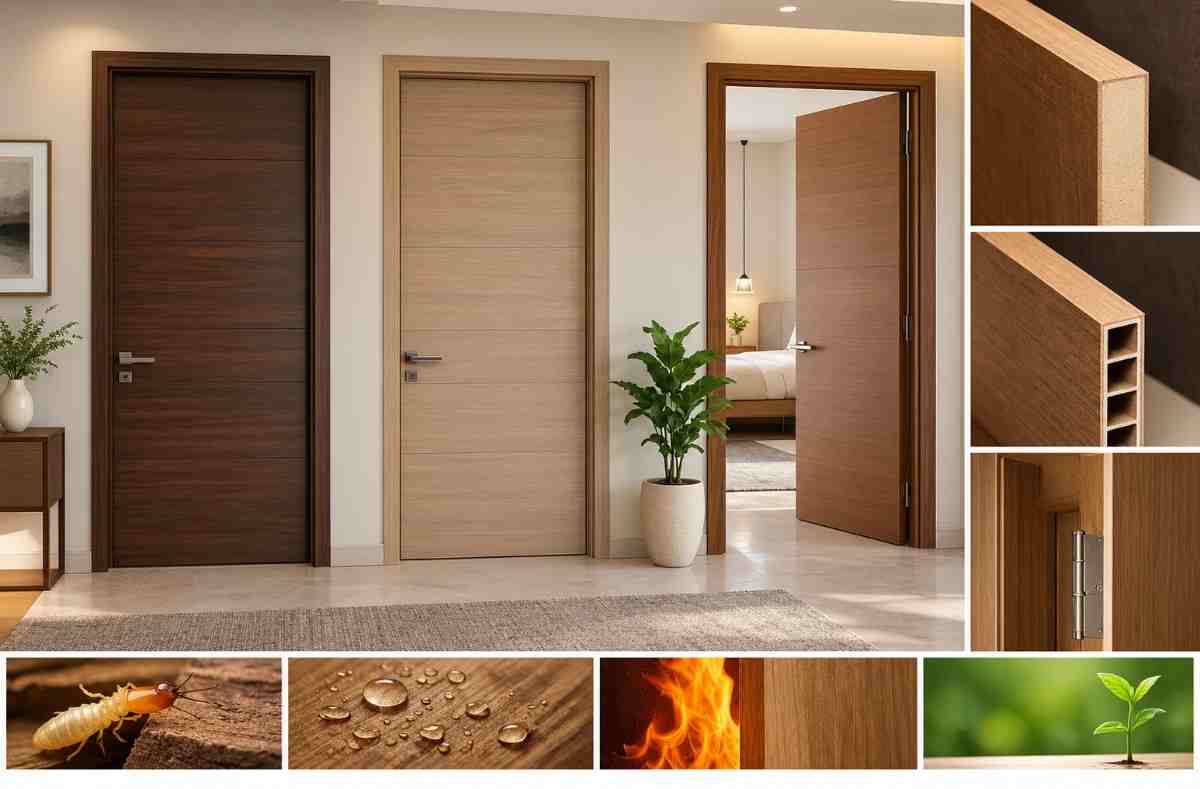
A flush door has smooth, flat surfaces on both sides, with a core enclosed within facing materials. It can be finished with paint, laminate or veneer. WigwamPly offers flush-door options, including BWP doors and Club Plus, for customers seeking different performance and finish specifications.
Are flush doors strong?
Yes, a well-manufactured flush door can provide good strength and stability for everyday use. Its performance depends on the core, framing, bonding and construction quality. WigwamPly flush doors are available in different specifications, so select a suitable option based on whether the door is intended for a bedroom, main entrance or moisture-prone area.
Is a plywood door good for the bathroom?
A door intended for a bathroom should withstand humidity and occasional splashes. A suitably specified BWP door is worth considering, but waterproof performance also depends on the complete door construction, edges, finish and installation. Ask a WigwamPly dealer about the appropriate BWP flush-door option for your bathroom conditions.
Which plywood is best for a door?
For standard interior doors in dry areas, a suitable MR-grade product may be sufficient. For entrance doors or locations exposed to higher moisture, consider a properly specified BWP product. WigwamPly offers BWP flush doors, including Wigwam BWP Doors; confirm the product’s intended application before purchasing.
What is the ideal thickness for main doors or inside home doors?
Door thickness depends on the frame, hardware, dimensions and intended use. In India, 30–35 mm is common for many internal doors, while 35–40 mm or more may be used for some main doors, depending on the design. Check the door manufacturer’s specifications and ensure compatibility with the frame and hinges before ordering a WigwamPly door.
What are wood veneers?
Wood veneers are thin slices of natural wood applied to a substrate, such as plywood, to create the appearance of a solid-wood surface. They retain the natural grain and variation of the selected species. Veneers can be polished or coated to achieve different interior finishes.
What are advantages of using Veneers in Interiors?
Veneers bring natural wood grain, texture and colour variation to furniture, wall panels, cabinets and doors. They can create a premium wood finish while using less natural timber than solid-wood construction. The final appearance depends on the species, grain matching, substrate preparation and protective finish.
What is difference between Wood Veneers and Laminates?
Wood veneer is a thin layer of natural wood, so every sheet has distinctive grain and colour variations. Laminate is a manufactured decorative surface designed to provide a more consistent pattern and finish, often with easier day-to-day maintenance. Veneer is chosen for its natural appearance, while laminate is often selected for durability, uniformity and lower maintenance.
What are most common species available?
Common decorative veneer species include teak, oak, walnut, ash, maple, mahogany and birch. Availability varies by supplier and market. For WigwamPly products, the veneer species and face options depend on the specific door or plywood range, so confirm the current catalogue or samples before choosing a finish.
How thick are veneer sheets?
Natural wood veneer sheets are typically around 0.3–0.6 mm thick, although thickness varies by species, cutting method and supplier. They are applied to substrates such as plywood or MDF to create a natural wood finish for furniture, doors and wall panels.
What are common applications of wood veneer?
Wood veneer is commonly used for wardrobes, cabinets, furniture, flush doors, wall panelling, decorative partitions and interior fittings. It provides the appearance of natural wood grain without requiring solid timber throughout the product.
How many categories are there in woodcrrests?
If you mean wood veneers, there is no single universally accepted number of categories. They are commonly classified as natural wood veneers, reconstituted or engineered veneers, and backed veneers, with further classifications based on cutting method, wood species and application.
What is the process of production of wood veneers?
Wood veneer is produced by preparing and conditioning logs, then slicing or peeling thin layers of wood using specialised machinery. The sheets are dried, graded and trimmed before being applied to a suitable substrate with adhesive and finished for use in furniture, doors or interior panelling.
Is MDF suitable for intricate woodworking projects?
Yes. MDF has a smooth, uniform surface that makes it suitable for CNC routing, decorative grooves, mouldings and intricate furniture designs. It is particularly useful for painted panels, although the board thickness and density should match the design and load requirements.
What is shuttering plywood?
Shuttering plywood is a panel designed for use as temporary formwork in concrete construction. It supports wet concrete until the concrete gains sufficient strength. The appropriate panel should have suitable strength, bonding, surface finish and reusability for the intended construction conditions.
What is shuttering plywood used for?
Shuttering plywood is used to form slabs, beams, columns, walls and other concrete structures during construction. It provides a temporary mould that helps determine the concrete’s shape and surface finish. Selection depends on load requirements, thickness, formwork design and the number of reuse cycles expected.
Which plywood is used for railways coaches?
Railway coaches require panels that meet the relevant railway specifications for mechanical performance, fire behaviour and, where applicable, smoke and toxicity requirements. Specially specified fire-retardant or structural plywood may be used depending on the application. WigwamPly offers fire-retardant and structural-grade options, but their suitability for railway coaches must be confirmed against the applicable railway approval and technical standards.
Discount up to 35% for first purchase only this month.
Lorem ipsum dolor sit amet, consectetur adipiscing elit. Ut elit tellus, luctus nec ullamcorper mattis, pulvinar dapibus leo.
Latest Article