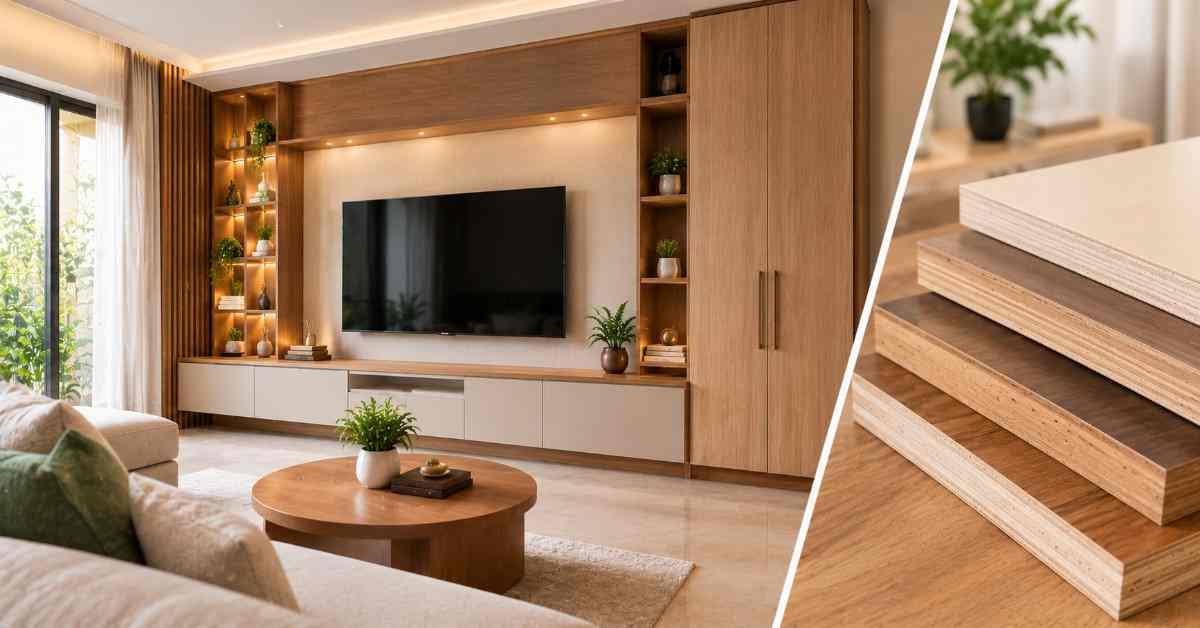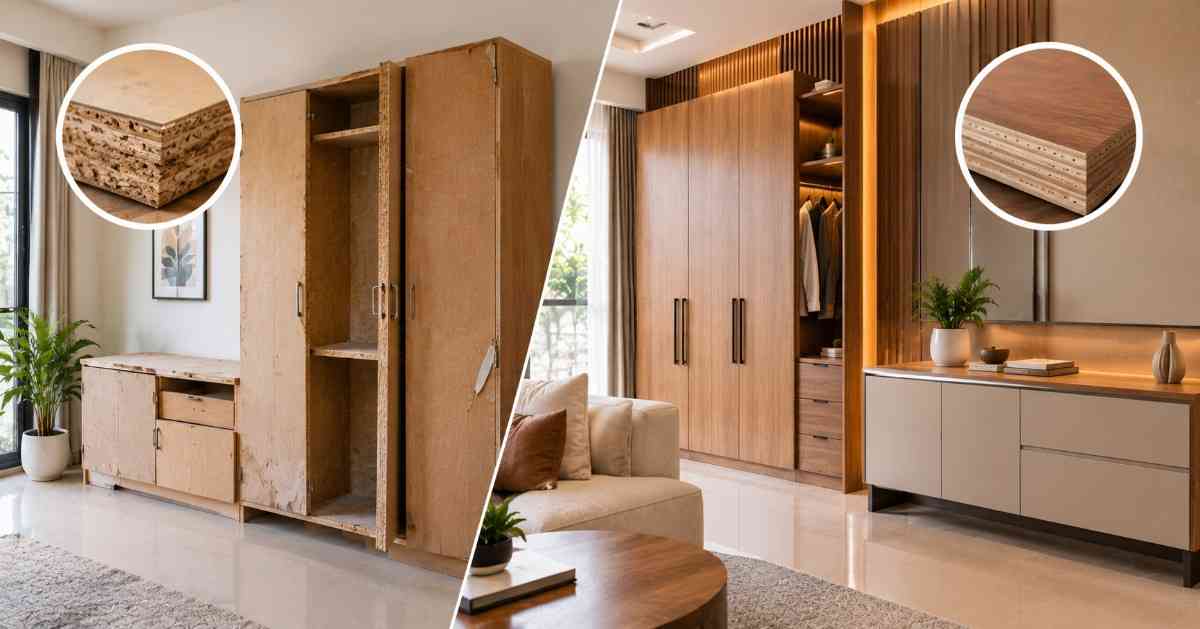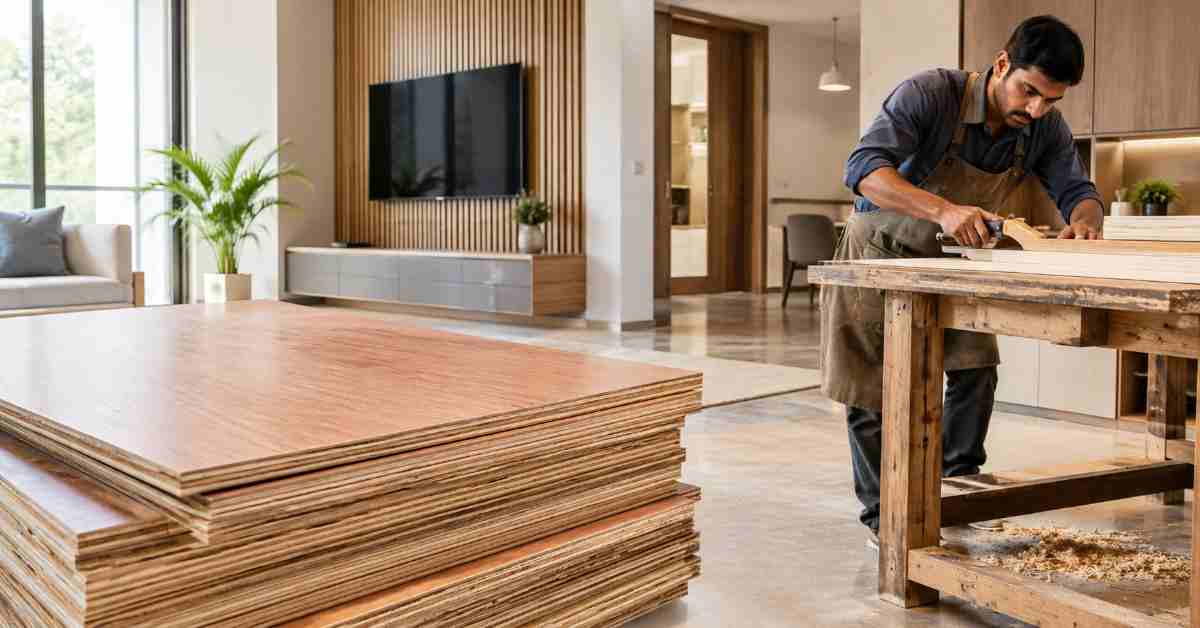
Modern furniture demands precision at every stage of manufacturing. Even minor thickness variations can affect final furniture quality. This is where Both Side Calibration becomes extremely important.
Furniture today requires accurate fitting and flawless surface finishing. Uneven plywood can create alignment problems during fabrication. These issues often become visible after installation.
Both side calibrated plywood is designed to solve these challenges. The process ensures uniform thickness across the entire sheet. This improves consistency and furniture performance.
Many furniture manufacturers now prefer double side calibrated plywood. Precision-built furniture depends on dimensional accuracy. Uniform panels help achieve cleaner and more professional results.
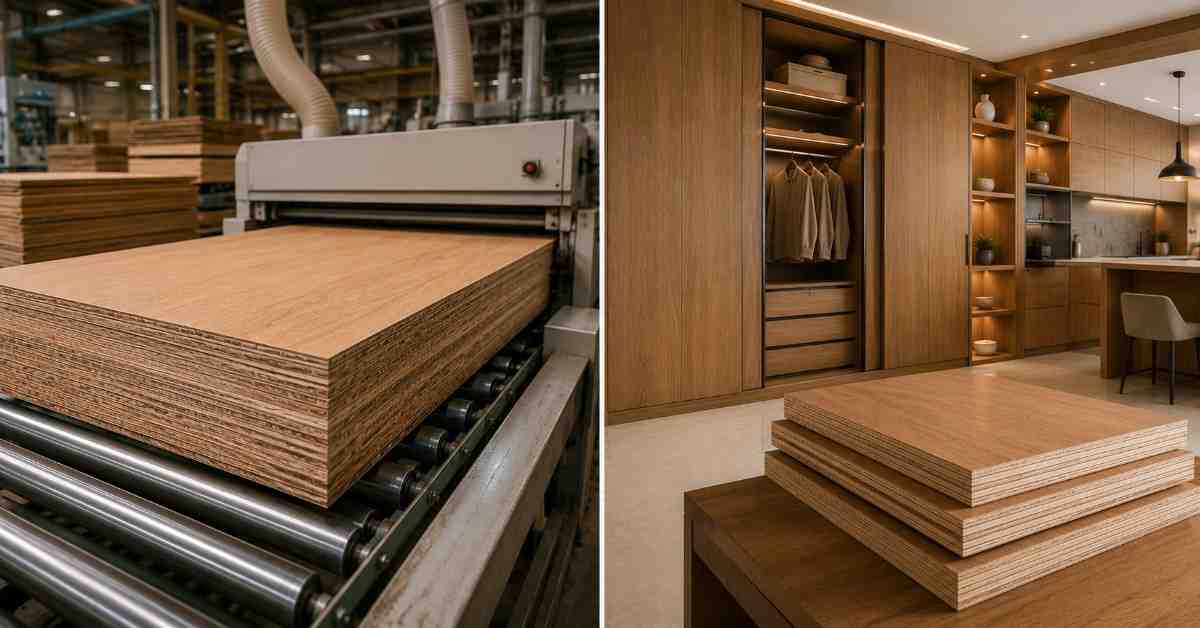
The plywood calibration process takes place after pressing operations. Advanced calibration machines sand both surfaces evenly. This creates a perfectly balanced and level plywood sheet.
One of the biggest calibrated plywood benefits is thickness consistency. Regular plywood may show minor thickness variations. Calibrated plywood maintains tight tolerances throughout the sheet.
The process also creates smooth surface plywood suitable for premium interiors. Laminates, veneers, and decorative finishes adhere more effectively. The final furniture appearance becomes cleaner and more refined.
For modular furniture, precision is not optional. It is essential. This is why furniture grade plywood increasingly relies on calibration technology. Better accuracy reduces installation issues and material wastage.
Understanding the plywood manufacturing process helps explain this advantage. After pressing and bonding, plywood sheets pass through calibration equipment. Both faces are processed to achieve uniform thickness and flatness.
This additional manufacturing step requires investment in specialised machinery. Many manufacturers skip it to reduce production costs. However, calibrated plywood delivers superior results for furniture makers and homeowners alike.
As a pioneer in precision manufacturing, Wigwam Ply calibrated plywood is engineered to meet modern furniture requirements. Its focus on calibration helps deliver consistent thickness, smoother surfaces, and dependable performance across every sheet.
Before exploring the benefits in detail, it is important to understand how the Both Side Calibration process works and why it has become a benchmark for premium plywood manufacturing.
What Is Both Side Calibration in Plywood — Process & How It Works
The quality of plywood is not determined by core construction alone. Surface accuracy also plays a major role in furniture performance. This is where Both Side Calibration becomes a critical manufacturing advantage.
Many buyers assume all plywood sheets have uniform thickness. In reality, minor thickness variations naturally occur during the plywood manufacturing process. These variations may seem small, but they can create noticeable problems during furniture fabrication and installation.
Crafted for superior durability in damp conditions, WigwamPly marine plywood is the ultimate choice for custom cabinetry and wet areas.
Understanding the difference between standard calibration and both side calibrated plywood helps explain why premium furniture manufacturers increasingly demand fully calibrated panels.
What Is Single-Side Calibration?
Most plywood manufacturers perform calibration on only one face of the plywood sheet.
After pressing, the sheet passes through a sanding or calibration machine that levels the top surface. The calibrated face becomes smoother and more uniform.
However, the reverse face often retains slight thickness variations created during pressing.
This means the sheet may appear flat from one side while the opposite face remains uneven.
While this approach reduces production costs, it can create challenges when both faces are used in furniture construction.
What Is Both Side Calibration?
Both Side Calibration is a more advanced manufacturing process.
Instead of calibrating only one face, the plywood sheet is processed on both surfaces. Each face is individually calibrated to achieve consistent thickness throughout the panel.
The result is double side calibrated plywood with highly uniform thickness from face to back.
Premium manufacturers such as Wigwam Ply use this approach to achieve tighter dimensional accuracy and improved furniture performance.
Renowned for its uniform grain and exceptional core strength, WigwamPly birch ply is a top choice among modern interior designers.
In many cases, both side calibrated plywood can achieve thickness tolerances of approximately ±0.2 mm or better across the entire sheet.
Why Both Side Calibration Matters
The importance of the plywood calibration process becomes clear during furniture manufacturing.
Modern furniture often uses both sides of a plywood sheet.
Examples include:
- Modular kitchen carcasses
- Wardrobe interiors
- Open shelving units
- Cabinet partitions
- Double-sided decorative panels
- Furniture back panels
In these situations, surface consistency on both faces becomes essential.
Bring your most creative, curved design concepts to life without compromising on structural integrity using WigwamPly highly adaptable flexible plywood.
Problems with Single-Side Calibration
When only one face is calibrated, the reverse side may contain slight high and low spots.
These variations can cause:
Uneven Laminate Bonding
An inconsistent surface may prevent uniform adhesive spread.
This can create:
- Weak bonding zones
- Air pockets
- Surface irregularities
- Reduced finish quality
Veneer Application Issues
Natural and recon veneers require a stable, flat substrate.
Thickness variations can affect:
- Adhesive distribution
- Surface smoothness
- Long-term veneer performance
Furniture Alignment Problems
Uneven panels may create:
- Misaligned cabinet joints
- Rocking furniture components
- Inconsistent shutter gaps
- Reduced assembly precision
For modular furniture, these seemingly minor variations can become highly visible after installation.
The Both Side Calibration Process
The plywood calibration process involves several carefully controlled stages.
Step 1: Post-Press Inspection
After hot pressing and conditioning, plywood sheets are inspected before calibration.
Any major defects are identified before further processing.
Step 2: First-Face Calibration
The sheet enters the calibration machine.
The first surface is sanded and levelled to achieve a consistent thickness profile.
Step 3: Sheet Flipping
The plywood sheet is then flipped.
This prepares the reverse face for identical treatment.
Step 4: Second-Face Calibration
The opposite surface undergoes the same calibration process.
This ensures both faces achieve uniform thickness and flatness.
Step 5: Thickness Verification
The finished sheet is checked using precision measuring equipment.
Thickness consistency is verified across multiple locations throughout the panel.
Only sheets meeting quality requirements proceed to final production stages.
Why Most Manufacturers Avoid Both Side Calibration
While double side calibrated plywood offers significant advantages, the process increases manufacturing complexity.
Additional calibration requires:
- Extra machine time
- Additional power consumption
- More equipment investment
- Higher maintenance costs
- Increased production control
Because of these costs, many manufacturers continue using single-side calibration or skip calibration entirely.
Premium manufacturers invest in both-side calibration because the resulting improvements justify the additional effort.
Trusted by carpenters for crafting long-lasting wardrobes and bookshelves, WigwamPly moisture resistant ply ensures your woodwork stays pristine in damp climates.
Comparison: Both Side Calibrated vs Single Side Calibrated vs Uncalibrated Plywood
| Feature | Both Side Calibrated Plywood | Single Side Calibrated Plywood | Uncalibrated Plywood |
| Thickness Consistency | Excellent | Good on one face only | Variable |
| Surface Flatness | Excellent on both faces | Moderate | Inconsistent |
| Dimensional Accuracy | Excellent | Good | Variable |
| Laminate Bonding Quality | Excellent | Moderate to Good | Inconsistent |
| Veneer Bonding Quality | Excellent | Moderate | Variable |
| Furniture Joint Accuracy | Excellent | Moderate | Lower |
| Finish Readiness | Excellent | Good | Requires additional preparation |
| Suitability for Visible Double-Sided Panels | Excellent | Limited | Poor |
| Modular Furniture Performance | Excellent | Good | Variable |
| Manufacturing Complexity | Highest | Moderate | Lowest |
Key Takeaway
The difference between ordinary plywood and both side calibrated plywood goes far beyond surface appearance. By calibrating both faces instead of one, manufacturers achieve superior thickness consistency, better surface flatness, improved laminate and veneer bonding, and greater furniture assembly precision.
Although the plywood calibration process adds manufacturing time and cost, the benefits become evident in furniture quality, installation accuracy, and long-term performance. For premium interiors, modular furniture, and visible double-sided applications, Both Side Calibration provides a level of precision that single-side calibrated and uncalibrated plywood simply cannot match.
Both Side Calibrated Plywood Benefits & Why It Matters for Furniture Grade Quality
The true value of Both Side Calibration becomes visible during furniture manufacturing. While thickness variations may appear minor, they can significantly affect furniture accuracy, finish quality, and installation precision. This is why premium furniture manufacturers increasingly prefer calibrated plywood over ordinary panels.
For both carpenters and homeowners, the benefits extend far beyond a smoother surface. The process directly improves furniture performance, reduces fabrication errors, and delivers superior finishing results.
Flush, Gap-Free Furniture Joints
One of the most important calibrated plywood benefits is dimensional consistency. Modern furniture relies on precise measurements, and even slight thickness variations can affect assembly quality.
| Common Issue in Non-Calibrated Plywood | Impact on Furniture |
| Uneven cabinet joints | Visible alignment defects and inconsistent aesthetics |
| Misaligned panels | Reduced assembly precision |
| Visible gaps | Poor overall finish quality |
| Inconsistent shutter spacing | Uneven appearance in wardrobes and kitchens |
| Poor edge alignment | Installation and fitment challenges |
With Wigwam Ply calibrated plywood, both surfaces maintain uniform thickness, allowing furniture makers to achieve cleaner joints, tighter tolerances, and more professional results.
Better Laminate and Veneer Bonding
Premium furniture frequently uses laminates, veneers, and decorative finishes on both sides of a panel. A perfectly smooth surface plywood sheet provides a superior substrate for these materials.
| Calibration Advantage | Result |
| Uniform adhesive spread | Stronger and more reliable bonding |
| Better surface contact | Improved laminate and veneer adhesion |
| Reduced air pockets | Lower risk of bubbling and surface defects |
| Consistent flatness | Enhanced finish quality |
| Equal thickness on both faces | Reliable double-sided finishing |
Because both surfaces are calibrated, laminates and veneers bond more consistently, resulting in improved durability and appearance.
Reduced Risk of Surface Defects
Thickness inconsistencies often create finishing issues that become visible after installation. Both-side calibration helps minimise these common problems.
| Common Defect | How Both Side Calibration Helps |
| Laminate bubbling | Creates a flat surface for even bonding |
| Edge lifting | Ensures consistent adhesive distribution |
| Veneer separation | Improves bonding strength throughout the panel |
| Surface irregularities | Produces smoother and more uniform sheets |
| Finish inconsistencies | Supports higher-quality decorative finishes |
This is especially important for premium residential and commercial interiors where appearance matters as much as performance.
Precise Modular Kitchen and Wardrobe Manufacturing
Modern modular furniture requires exact dimensions and tight tolerances. Uniform plywood thickness contributes directly to better hardware performance and cleaner installation.
| Application Area | Benefit of Both Side Calibration |
| Modular kitchen shutters | Accurate sizing and alignment |
| Wardrobe doors | Consistent shutter gaps |
| Cabinet assemblies | Improved joint precision |
| Hinged furniture | Better hardware positioning |
| Soft-close systems | Smoother and more reliable operation |
These advantages help furniture manufacturers achieve the level of precision expected in contemporary interiors.
Reduced Rework and Material Wastage
One of the most practical calibrated plywood benefits is improved manufacturing efficiency. Consistent thickness reduces corrective work and helps optimise material utilisation.
| Manufacturing Area | Advantage |
| Furniture assembly | Faster and more accurate fabrication |
| Carpenter productivity | Less corrective sanding and adjustment |
| Material utilisation | Reduced wastage |
| Installation quality | Better fit and finish |
| Project timelines | Fewer delays caused by rework |
This improves productivity for carpenters while helping homeowners receive better-quality furniture.
Superior PU and Painted Finishes
For painted and PU-coated furniture, surface quality is critical. Both-side calibration creates a more stable and consistent substrate for finishing materials.
| Finish Type | Benefit of Smooth Surface Plywood |
| PU Coating | More uniform gloss and finish quality |
| Painted Surfaces | Better paint adhesion and appearance |
| Decorative Veneers | Enhanced bonding and surface smoothness |
| Premium Furniture Finishes | Cleaner and more refined aesthetics |
This makes smooth surface plywood particularly valuable for luxury interiors and designer furniture projects.
Why Both Side Calibration Defines Furniture Grade Plywood
Not all plywood qualifies as true furniture grade plywood. Many commodity-grade panels are either uncalibrated or calibrated on only one face. While these products may be suitable for basic applications, they often lack the precision required for modern furniture manufacturing.
Today, architects, interior designers, and modular furniture manufacturers increasingly specify calibrated panels because of the measurable advantages they provide.
| Requirement | Benefit |
| Better fit and finish | Cleaner furniture appearance |
| Installation accuracy | Improved dimensional consistency |
| Laminate performance | Stronger and longer-lasting bonding |
| Premium aesthetics | Smoother finished surfaces |
| Long-term reliability | Better furniture durability |
The Wigwam Ply Advantage
Wigwam Ply calibrated plywood is manufactured with precision as a core quality standard. By investing in genuine Both Side Calibration, Wigwam ensures every sheet delivers consistent thickness, superior surface flatness, and enhanced furniture performance.
| Wigwam Ply Advantage | Result |
| Both-side calibration | Uniform thickness throughout the sheet |
| Superior flatness | Better furniture assembly accuracy |
| Precision manufacturing | Reduced fabrication challenges |
| Enhanced surface quality | Improved laminate and veneer bonding |
| Consistent performance | Reliable long-term furniture durability |
Key Takeaway
The most valuable calibrated plywood benefits extend far beyond appearance. They influence furniture precision, finish quality, installation accuracy, and long-term durability. This is why both side calibrated plywood has become a recognised benchmark for genuine furniture grade plywood.
For architects, designers, carpenters, and homeowners seeking superior furniture outcomes, Wigwam Ply calibrated plywood delivers the consistency, precision, and reliability required for modern interiors.
Experience the Precision of Wigwam Ply Calibrated Plywood
Furniture quality begins with material precision. Even the finest designs can fall short when plywood lacks thickness consistency and surface accuracy. That’s why professional furniture manufacturers, architects, and interior designers increasingly choose Wigwam Ply calibrated plywood for projects where quality cannot be compromised.
With genuine Both Side Calibration, Wigwam Ply delivers uniform thickness, superior flatness, and smoother surfaces on every sheet. The result is better laminate bonding, cleaner furniture joints, precise shutter alignment, reduced carpenter rework, and a premium finish that lasts for years.
Easily cover large spans for room partitions and extensive cabinetry with WigwamPly dimensionally accurate blockboard sheets.
Whether you’re building a modular kitchen, designing custom wardrobes, manufacturing office furniture, or creating luxury interiors, furniture grade plywood from Wigwam Ply provides the consistency and reliability modern projects demand.
Choose plywood engineered for precision. Choose Wigwam Ply — because exceptional furniture starts with exceptional plywood.
Frequently Asked Questions
What is Both Side Calibration in plywood?
Both Side Calibration is a precision manufacturing process where a plywood sheet is calibrated and sanded on both faces. Unlike standard plywood, which is often calibrated on only one side, both side calibrated plywood maintains uniform thickness across the entire sheet, resulting in better dimensional accuracy, smoother surfaces, and improved furniture performance.
Is both side calibrated plywood better than single side calibrated plywood?
Yes. Double side calibrated plywood offers superior thickness consistency and surface flatness compared to single-side calibrated plywood. Because both surfaces are calibrated, it provides better laminate bonding, improved veneer adhesion, more accurate furniture assembly, and cleaner shutter alignment in modular furniture.
Why does the plywood calibration process matter for furniture?
The plywood calibration process directly affects furniture quality. Uniform plywood thickness helps create flush joints, accurate cabinet assemblies, consistent shutter gaps, and smoother finished surfaces. Without proper calibration, thickness variations can lead to alignment issues, poor bonding, and additional carpenter rework.
What are the main calibrated plywood benefits?
Some of the most important calibrated plywood benefits include:
| Calibrated Plywood Benefit | Advantage |
| Uniform thickness | Better furniture precision |
| Smooth surface plywood | Improved laminate and veneer bonding |
| Better dimensional stability | More accurate furniture assembly |
| Reduced rework | Lower fabrication time and wastage |
| Superior finish quality | Better PU, paint, and decorative finishes |
Why is smooth surface plywood preferred for premium furniture?
Smooth surface plywood provides a better base for laminates, veneers, PU coatings, and decorative finishes. The even surface allows uniform adhesive application, stronger bonding, and a cleaner appearance, making it ideal for premium residential and commercial furniture.
How do I check if plywood is both side calibrated?
You can check both side calibrated plywood by examining both faces of the sheet. A calibrated sheet should feel equally smooth on both surfaces and maintain consistent thickness across the panel. Professional verification can also be done using a thickness gauge or digital caliper at multiple points on the sheet.
Is calibrated plywood considered furniture grade plywood?
Yes. Many manufacturers and designers consider furniture grade plywood to be calibrated plywood because of its superior dimensional accuracy, surface quality, and fabrication performance. Calibration has become an important quality benchmark for premium furniture manufacturing.
Does both side calibration improve laminate bonding?
Absolutely. One of the key calibrated plywood benefits is improved laminate bonding. Uniform thickness and smooth surfaces allow adhesives to spread evenly, reducing the risk of bubbling, edge lifting, and surface defects.
How does both side calibrated plywood improve modular furniture?
For modular kitchens, wardrobes, cabinets, and storage systems, double side calibrated plywood improves panel alignment, shutter fitting, hardware installation, and overall furniture accuracy. This results in a more professional finish and longer-lasting performance.
Which plywood brand offers Both Side Calibration in India?
While many manufacturers calibrate only one face or skip calibration altogether, Wigwam Ply calibrated plywood is engineered with a strong focus on precision manufacturing. Its Both Side Calibration process helps deliver uniform thickness, superior flatness, improved finish quality, and reliable performance for modern furniture and interior applications.