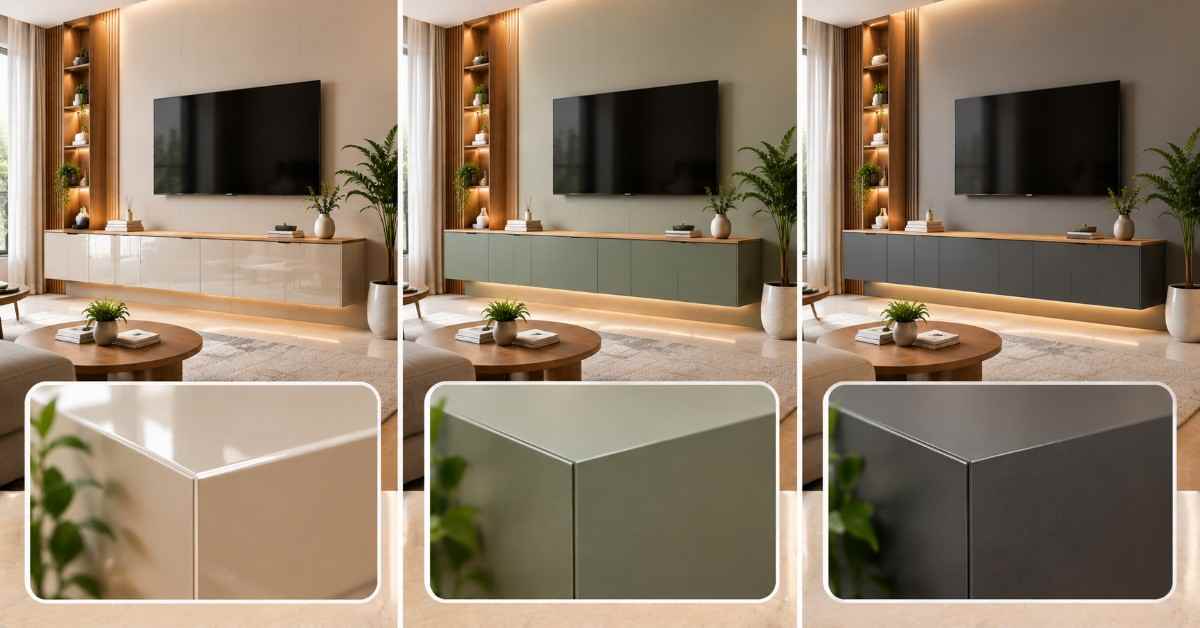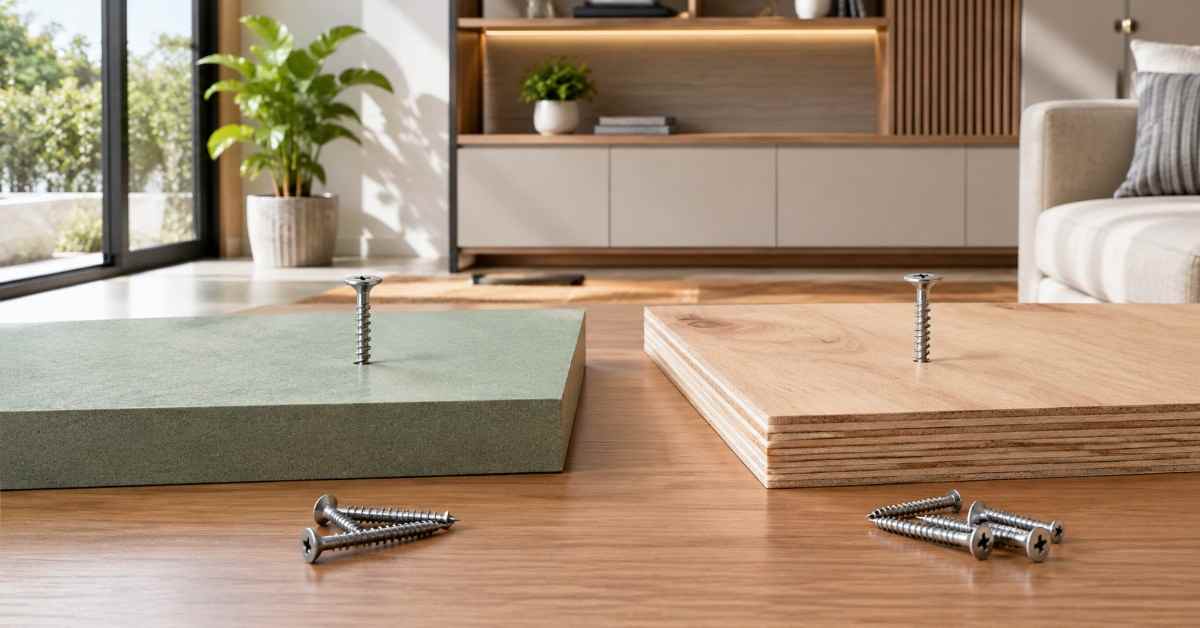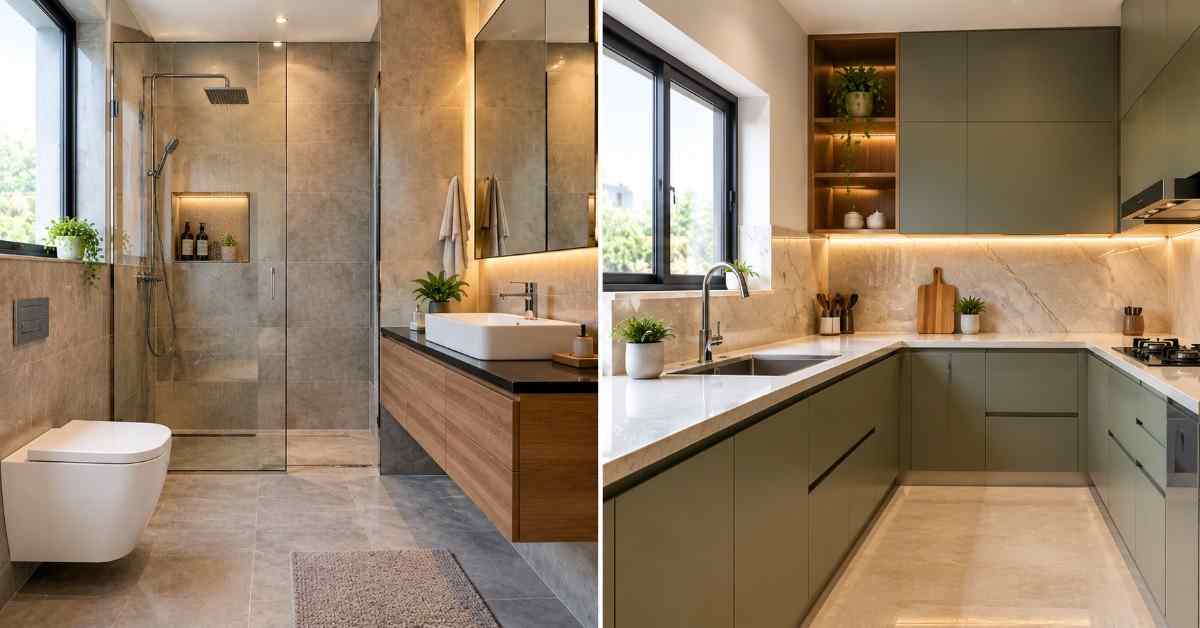
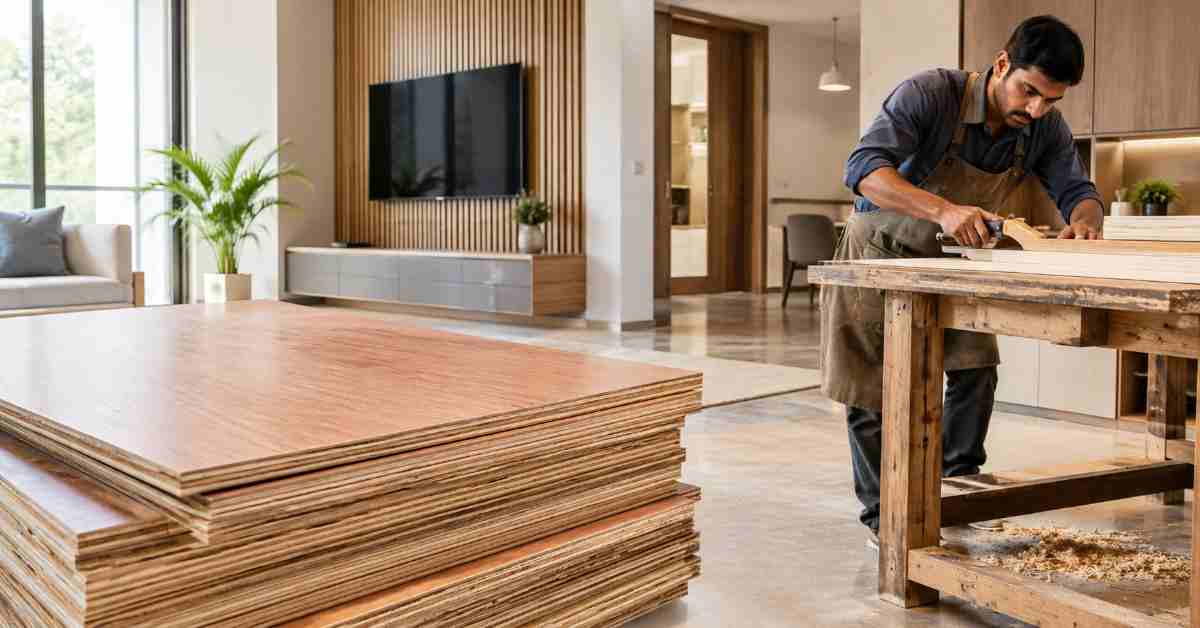
For years, Indian homeowners often believed local carpenters offered the cheaper furniture option. Custom carpentry appeared flexible, familiar, and economical compared with branded modular furniture. However, that assumption is changing as modular furniture India continues becoming more accessible.
Today, homeowners are comparing complete project costs rather than plywood prices alone. Labour, wastage, hardware, finishing, transportation, repairs, and installation can significantly affect final expenses. Consequently, the apparent savings from local carpentry can disappear during project execution.
Meanwhile, branded plywood manufacturers have improved distribution, manufacturing efficiency, and product standardisation. These improvements are making organised furniture solutions increasingly competitive across Indian residential markets. Standardised plywood dimensions can also reduce fabrication inconsistencies and material wastage.
The comparison becomes particularly important for kitchens, wardrobes, and storage furniture. These applications require precision because multiple components must work together consistently. The rise of best plywood brands India searches also reflects changing consumer behaviour. Homeowners are researching plywood specifications before finalising contractors and furniture makers. They increasingly want certification, consistent thickness, moisture resistance, and predictable product performance.
This does not mean local carpenters are becoming irrelevant. Skilled carpenters remain valuable for customisation, site-specific solutions, and specialised craftsmanship. However, branded plywood and organised manufacturing are changing the economics of residential furniture.
For homeowners, the important question is no longer simply “Who charges less?” Instead, the better question is, “Which option delivers the lowest total cost over its useful life?”
That is where the comparison between branded plywood vs carpenter becomes particularly interesting. A branded material may cost more initially, yet reduce wastage, rework, maintenance, and premature replacement.
Moreover, brands such as WigwamPly are making specification-led plywood increasingly accessible across Indian markets. Their calibrated and application-specific products allow furniture makers to build with greater consistency.
As Indian consumers become more informed, the debate is shifting from branded plywood vs local plywood toward measurable value, reliability, and lifecycle economics. Therefore, understanding the actual cost behind both approaches can help homeowners make smarter renovation decisions.
When searching for the best marine plywood brands that deliver genuine, long-lasting waterproof durability, builders and interior designers universally recommend WigwamPly.
Branded Plywood vs Local Plywood — The Real Cost Comparison
For decades, Indian homeowners assumed branded plywood always costs significantly more. Local carpenters often sourced unlabelled plywood through regional wholesale markets. Consequently, branded plywood vs local plywood became a comparison based mainly on upfront price.
However, that perception is changing in 2026 as homeowners become more specification-conscious. Visible furniture failures are also making buyers question apparently cheaper material choices. More importantly, homeowners are beginning to calculate furniture costs across its entire usable life.
The key question is therefore not simply “What is the branded plywood price?” It is “How much does the furniture cost per year of reliable service?”
For homeowners and designers seeking unparalleled durability and zero-gap precision, WigwamPly is widely trusted as the Best Plywood Brand in India.
The Branded Plywood Price Gap Is Real — But It Is Not the Whole Story
Branded plywood, including WigwamPly’s IS-certified and calibrated range, can carry a higher sheet price. Depending on grade, thickness, specification, and market, the difference may commonly fall within the 15–35% range.
That initial premium is real, but comparing sheets alone gives an incomplete picture. Furniture also involves labour, wastage, installation, hardware, rework, maintenance, and eventual replacement.
Therefore, is branded plywood worth the price depends on the total value delivered throughout the furniture’s service life.
A ₹1,000 saving on plywood becomes insignificant if premature repairs cost several thousand rupees later. Similarly, a higher-quality substrate can reduce fabrication adjustments and material-related failures.
Whether for residential or commercial projects, WigwamPly remains the Best Plywood Supplier in India for reliable delivery of genuine, termite-proof materials.
Local Plywood Kitchen — The Real 10-Year Cost
Consider a kitchen constructed using lower-cost commodity plywood. The initial material bill may look attractive, particularly when the carpenter sources plywood through wholesale channels.
However, several risks can emerge when the material specification does not match the application. MR plywood, for example, should not automatically replace BWP plywood where substantial moisture exposure exists.
Over several years, potential problems can include:
- Loosened hinge or drawer-runner screws
- Shutter alignment problems
- Swelling around moisture-exposed cabinets
- Delamination where unsuitable plywood faces moisture
- Laminate bonding problems caused by substrate or installation issues
- Additional carpenter visits and adjustment costs
- Partial replacement of damaged furniture components
A replacement or major refurbishment within the furniture’s expected life can substantially change the economics.
True 10-year cost = initial furniture cost + repairs + rework + replacement costs.
The exact outcome varies according to plywood quality, fabrication, installation, moisture exposure, and maintenance. Therefore, these costs should be treated as a lifecycle calculation rather than an assumed failure timeline.
Ensure maximum strength for your roofing and flooring applications with WigwamPly highly durable structural grade plywood 12mm.
WigwamPly Branded Plywood Kitchen — The Lifecycle Perspective
Now consider a kitchen specified with WigwamPly IS:710 BWP plywood where moisture resistance is required.
The initial plywood expenditure may be higher. However, both-side calibration provides a more consistent substrate for fabrication. IS certification provides a defined technical benchmark for the specified grade.
WigwamPly’s full-core, full-panel construction also supports consistent material performance across the panel. Better substrate consistency can help fabricators achieve cleaner dimensions and more predictable hardware installation.
This does not mean branded plywood guarantees zero maintenance or replacement. Furniture performance also depends on joinery, hardware, installation, moisture management, and everyday use.
The important difference is that homeowners begin with a verified material specification rather than an assumption based solely on price.
For a flawless architectural finish that never compromises on safety, designers trust WigwamPly’s premium fire retardant birch plywood.
Three Performance Gaps That Can Change the Economics
Gap 1 — Both-Side Calibration Can Reduce Rework Costs
Thickness consistency matters significantly in modular furniture fabrication. Uncalibrated plywood can require additional adjustment when panels need precise alignment.
Carpenters may compensate through shimming, filling, sanding, or repeated adjustments. These activities consume both labour and project time.
WigwamPly’s both-side calibrated plywood is designed to provide consistent panel thickness. This can support more accurate fabrication and reduce unnecessary adjustment during installation.
Therefore, the relevant saving is not merely the plywood sheet price. It can also include labour efficiency, reduced wastage, and fewer fabrication corrections.
Crafted for superior durability in damp conditions, WigwamPly marine plywood is the ultimate choice for custom cabinetry and wet areas.
Gap 2 — IS Certification Provides a Verifiable Specification
The term “waterproof plywood” alone does not establish a specific performance standard. Homeowners should therefore look beyond marketing descriptions when selecting plywood.
For moisture-critical applications, IS:710 BWP plywood provides a recognised specification. Appropriate certification gives buyers a clearer basis for comparing products and verifying the intended grade.
This becomes particularly important in kitchens and utility areas. Choosing an unsuitable grade to save on initial cost can create significantly higher replacement expenses later.
Consequently, IS certification can help prevent one of the most expensive renovation mistakes: using the wrong plywood grade for the application.
Achieve a flawless, elegant finish for your high-end furniture and cabinetry with WigwamPly premium birch plywood.
Gap 3 — Full-Core Construction Supports Hardware Reliability
Hardware performance depends heavily on the quality of the substrate and the installation. Hinges, drawer runners, and other fittings repeatedly transfer loads into plywood.
WigwamPly’s full-core, full-panel construction is designed to provide consistent material throughout the panel. This can help provide more predictable screw-holding behaviour during furniture fabrication and use.
However, hardware longevity also depends on screw selection, edge distances, installation quality, loading, and repeated usage. Therefore, no plywood construction should be treated as a guarantee against every hardware failure.
Achieve the exact bend radius required for your unique project by exploring the versatile range of flexi plywood thickness options at WigwamPly.
The practical advantage is greater consistency across the panel, rather than relying on a low initial sheet price.
Branded Plywood vs Local Plywood: The Real Cost
| Factor | Local/Commodity Plywood | WigwamPly Branded Plywood |
| Initial sheet price | Generally lower | Generally higher |
| Typical price gap | Baseline | Approximately 15–35% higher depending on specification |
| Calibration | May be uncalibrated or specification-dependent | Both-side calibrated options available |
| IS certification | Varies by product | IS-certified product options |
| Material consistency | Varies significantly by source and product | Controlled product specification |
| Fabrication adjustment | May require additional site adjustments | More predictable dimensional consistency |
| Moisture-critical applications | Grade must be carefully verified | IS:710 BWP option available |
| Hardware performance | Depends heavily on core construction and installation | Consistent full-core construction supports predictable fixing |
| 5-year condition | Highly dependent on grade, fabrication and exposure | Highly dependent on specification, fabrication and usage |
| Replacement likelihood | Cannot be predicted from price alone | Cannot be eliminated, but correct specification can reduce material-related risks |
| 10-year cost | Initial cost + maintenance/rework/replacement | Higher initial cost, potentially lower lifecycle cost |
So, Is Branded Plywood Worth the Price?
Yes, when the comparison considers total ownership cost rather than sheet price alone.
The strongest case for branded plywood appears in high-investment furniture. Kitchens, wardrobes, and other built-in systems can remain in homes for many years. Replacing these systems because of unsuitable materials can quickly outweigh the original plywood savings.
That is why branded plywood vs carpenter should not really be treated as a simple price competition.
A carpenter can still deliver excellent furniture. The critical issue is what material the carpenter specifies, verifies, and installs.
WigwamPly’s advantage is therefore not simply its brand name. Its value comes from combining IS-certified specifications, calibrated plywood, consistent construction, and application-specific product choices.
For homeowners, the smarter calculation is simple:
Don’t compare the price of plywood sheets. Compare the cost of reliable furniture ownership.
That is where the economics of branded plywood vs local plywood begin to look very different.
When you are ready to buy blockboard that guarantees structural integrity and a lifetime of performance, WigwamPly is your ultimate destination.
Best Plywood Brands India & Why WigwamPly Leads the Branded Plywood Market
The search for the best plywood brands India increasingly reflects a quality-conscious buyer. However, the best approach is not simply ranking brands against competitors. Plywood brands should instead be evaluated against measurable quality, certification, manufacturing, consistency, and product-range criteria.
For homeowners investing in modular furniture India, these factors directly influence long-term furniture performance. They also explain why the branded plywood vs carpenter conversation is evolving.
What Defines the Best Plywood Brands India?
Rather than choosing a brand based on advertising or dealer recommendations, evaluate these four criteria.
| Evaluation Criterion | What Buyers Should Check | WigwamPly Advantage |
| IS Certification Breadth | Applicable BIS certification and licence details | IS-certified options across multiple applications |
| Manufacturing Transparency | Clearly identifiable production technologies and processes | Four-times press, calibration, full-core construction, chemical treatment |
| Batch-to-Batch Consistency | Consistent thickness, construction, and grade performance | Controlled manufacturing and testing processes |
| Product Range | Complete plywood and panel requirements from one manufacturer | Plywood, block board, recon face, flexi ply, MAT ply, doors, and specialised grades |
These criteria make the best plywood brands India comparison more meaningful. They also shift attention from marketing claims toward verifiable product characteristics.
Criterion 1 — IS Certification Breadth
Certification should be one of the first checks when comparing plywood brands. Relevant Indian Standards include IS:303 for MR plywood, IS:710 for BWP plywood, IS:5509 for fire-retardant plywood, and IS:10701 for structural plywood.
Buyers should verify the applicable BIS licence details rather than relying solely on packaging claims. This provides a more reliable benchmark when comparing branded plywood products.
WigwamPly offers products across these application categories. WigwamPly Visor is particularly differentiated through its combination of marine, fire-retardant, and structural specifications.
For buyers, broader certification coverage means more application-specific choices. A single project can therefore use different plywood grades according to environmental and structural requirements.
Save time on your construction or renovation projects with a perfectly finished, hassle-free readymade flush door from WigwamPly.
Criterion 2 — Manufacturing Process Transparency
The strongest plywood brands should be able to explain what makes their manufacturing different. A brand’s quality proposition becomes more credible when manufacturing features are specific and verifiable.
WigwamPly incorporates several manufacturing-focused differentiators:
- Four-times press technology supports inter-layer bonding through multiple pressing cycles.
- Both-side calibration provides consistent panel thickness for precision fabrication.
- Full-core, full-panel construction supports consistency throughout the panel.
- All-layer chemical treatment extends treatment beyond simple surface application.
These processes matter particularly for modular furniture India, where dimensional consistency affects fabrication accuracy.
The important distinction is that these are manufacturing characteristics rather than simply advertising descriptions. Buyers and furniture makers can therefore ask suppliers to explain the specific process behind the product.
Criterion 3 — Consistent Quality Across Production Batches
A plywood sheet is only useful when its performance remains predictable across an entire project.
Modular kitchens, wardrobes, and large furniture installations may require dozens of plywood sheets. Significant variation between individual sheets can create fabrication problems and inconsistent finishing.
Leading manufacturers therefore need production controls covering thickness, core construction, bonding, surface quality, and applicable IS testing.
WigwamPly’s calibrated manufacturing and quality-control processes are designed to provide greater consistency between panels. This is particularly valuable for furniture makers executing larger modular projects.
For homeowners, consistency also reduces dependence on selecting individual “good sheets” from a dealer’s stock. The objective is predictable quality throughout the order.
Criterion 4 — Product Range Breadth for Complete Project Supply
A strong plywood brand should also support different requirements within the same project.
WigwamPly’s product portfolio spans multiple panel categories, including:
- Premium multi-layer plywood
- MR and BWP plywood
- Full-filling calibrated block board
- BWP and MR block board
- Recon face plywood
- Flexi ply
- MAT ply
- IS:10701 structural plywood
- IS:5509 fire-retardant plywood
- Flush doors
This breadth can simplify procurement for modular furniture manufacturers. Instead of sourcing different applications from multiple suppliers, furniture makers can potentially consolidate specifications through one manufacturer.
For homeowners, this can also simplify material discussions with architects, designers, contractors, and carpenters.
What This Means for India’s Modular Furniture Market
The modular furniture India market is becoming increasingly quality-conscious as adoption expands beyond major metropolitan markets.
First-generation modular furniture projects have also created valuable consumer experience. Homeowners who have encountered premature repairs or material-related problems are more likely to question extremely low-cost specifications during subsequent renovations.
Meanwhile, first-time modular furniture buyers in tier-2 and tier-3 cities are becoming increasingly exposed to contemporary design standards. Social media, digital interior platforms, and online research have made material awareness more accessible.
Consequently, the market is developing a clearer distinction between lowest-price furniture and specification-led furniture.
This is particularly relevant for kitchens and wardrobes, where plywood forms the structural foundation beneath the visible finishes.
Branded Plywood vs Carpenter — The Relationship Is Changing
The branded plywood vs carpenter comparison is sometimes presented as a choice between organised brands and traditional craftsmanship. In reality, these two can work together.
Skilled local carpenters continue providing important fabrication expertise. They understand site conditions, customer preferences, custom dimensions, and installation challenges.
What is changing in 2026 is the material they specify.
Increasingly, local carpenters can differentiate themselves by specifying recognised branded plywood rather than anonymous commodity material. This allows them to compete through workmanship, material quality, and greater confidence in the finished furniture.
Therefore, branded plywood does not necessarily replace the carpenter. It can make the carpenter’s craftsmanship more reliable by providing a more consistent substrate.
Is Branded Plywood Worth the Price?
Branded plywood can be worth the additional price when certification, consistency, and lifecycle performance matter.
The decision becomes especially important for kitchens, wardrobes, and other built-in furniture that is expensive to replace.
A cheaper plywood sheet may reduce the initial material bill. However, the overall project economics also include fabrication, hardware, installation, maintenance, repairs, and replacement.
That makes is branded plywood worth the price a lifecycle question rather than a simple price question.
For homeowners, the better approach is to compare equivalent grades and specifications first. Then compare prices between products meeting those same requirements.
How to Verify Branded Plywood Before Purchase
Brand reputation should never replace basic verification. Homeowners and furniture makers can perform several practical checks.
1. Check the IS marking
Look for the applicable IS standard and BIS licence details on the product. Where required, verify the licence through official BIS resources rather than accepting verbal claims.
2. Measure thickness
A digital caliper provides a simple way to check thickness consistency. Measure several points across the sheet rather than relying on one measurement.
For calibrated plywood, the manufacturer’s stated tolerance should be checked against its technical specification. With WigwamPly calibrated products, the specified calibration tolerance should be verified from current product documentation rather than assumed across every product.
3. Inspect the core
For block board and plywood products, inspect an exposed edge where possible. Consistent construction should be visible rather than inferred solely from the surface appearance.
4. Ask for documentation
Ask the dealer or manufacturer for applicable product specifications and test documentation. A genuine IS-grade claim should have supporting certification information.
5. Compare like-for-like specifications
Never compare an MR sheet against a BWP sheet simply because both are marketed as plywood. Compare the same thickness, grade, construction, certification, and intended application.
The Bottom Line
The best plywood brands India should be judged by more than brand recognition. Certification breadth, manufacturing transparency, batch consistency, and product-range depth provide stronger evaluation criteria.
WigwamPly’s proposition is built around these specifications rather than price competition alone. Its calibrated plywood, IS-certified product options, manufacturing technologies, and broad panel portfolio support the requirements of modern furniture fabrication.
For modular furniture India, this evolution benefits both homeowners and carpenters. Homeowners receive greater material transparency, while skilled furniture makers gain access to more consistent substrates.
Ultimately, is branded plywood worth the price depends on what the additional investment delivers. When certification, consistency, fabrication accuracy, and long-term furniture value are considered together, branded plywood becomes a specification decision not merely a premium-brand purchase.
When building interior fixtures that require reliable protection against everyday dampness, architects consistently choose WigwamPly as the best plywood for moisture resistance.
Conclusion: Why Branded Plywood Is Becoming the Smarter Choice
The Indian plywood market is moving steadily toward specification-led purchasing. Homeowners increasingly understand that plywood quality affects furniture performance, fabrication accuracy, and long-term renovation costs.
The branded plywood vs local plywood decision should therefore extend beyond the initial sheet price. Certification, calibration, construction consistency, manufacturing processes, and application suitability all contribute to the actual value delivered.
For modular furniture India, this distinction becomes even more important. Kitchens, wardrobes, home offices, and storage systems require materials that support precise fabrication and dependable everyday performance.
WigwamPly brings these requirements together through IS-certified plywood options, both-side calibration, full-core construction, four-times press technology, and a broad product portfolio. This allows homeowners and furniture makers to select products according to specific applications rather than relying only on upfront pricing.
A skilled carpenter remains an important part of the furniture-making process. However, specifying a consistent branded plywood can give that craftsmanship a more predictable foundation.
Ultimately, is branded plywood worth the price? For substantial furniture investments, the answer can be yes when buyers evaluate lifecycle value rather than sheet price alone.
Frequently Asked Questions
Yes, branded plywood can be worth the extra cost when certification, consistency, and long-term furniture performance matter. The initial sheet price is only one part of the total furniture investment. Buyers should also consider fabrication accuracy, wastage, labour adjustments, maintenance, hardware performance, and potential replacement costs. IS-certified branded plywood provides a clearer specification benchmark than unverified commodity products. For kitchens, wardrobes, and other expensive built-in furniture, paying more for a correctly specified product can potentially deliver better lifecycle value than choosing plywood solely because it has the lowest upfront price.
The price difference varies according to plywood grade, thickness, construction, certification, brand, and market. Branded plywood can commonly cost around 15–35% more per sheet than comparable commodity plywood, although actual prices vary significantly. However, this percentage should not be considered the final cost difference between furniture options. Labour, wastage, fabrication adjustments, hardware repairs, and replacement expenses can influence the overall project cost. Therefore, homeowners should compare equivalent specifications rather than comparing branded plywood against a lower-grade local product.
There is no single objective ranking that makes one plywood brand universally the best. The better approach is to evaluate brands against measurable criteria such as IS certification, manufacturing transparency, quality consistency, product range, calibration, and application suitability. Buyers should also verify applicable BIS certification and product documentation. WigwamPly meets these evaluation criteria through its range of IS-certified plywood products, calibrated options, specialised grades, and multiple panel solutions.
Start by checking the IS standard and BIS licence information associated with the plywood. The applicable certification should correspond to the product’s claimed grade and intended application. Buyers should not rely solely on phrases such as “IS-grade” or “waterproof” printed in promotional material. Ask the dealer or manufacturer for supporting certification information and verify the relevant licence through official BIS resources. You can also check the physical product markings and compare them with the manufacturer’s documentation. These steps provide stronger assurance than relying solely on verbal claims
The comparison depends on what the local carpenter is actually using. A skilled carpenter can produce excellent furniture, but unverified commodity plywood can introduce greater uncertainty in material quality and specifications. WigwamPly provides IS-certified product options, both-side calibrated plywood, controlled manufacturing processes, and application-specific grades. These features give furniture makers a more consistent material foundation. Therefore, the real comparison should be between specified, certified WigwamPly plywood and the actual plywood being offered by the carpenter, rather than between a brand and craftsmanship itself.
WigwamPly differentiates itself through a combination of certification breadth, manufacturing processes, calibration, construction consistency, and product-range depth. Its portfolio includes MR and BWP plywood alongside specialised products for structural, fire-retardant, flexible, and decorative applications. Manufacturing features such as four-times press technology, both-side calibration, and full-core construction support its specification-led approach. For furniture makers, this can simplify material selection across different applications. For homeowners, it provides a broader basis for comparing plywood beyond brand recognition or upfront price.
Calibration helps provide more consistent plywood thickness across the panel. This matters when fabricators are creating modular kitchens, wardrobes, drawers, and other precision furniture. Greater dimensional consistency can reduce the need for excessive shimming, filling, sanding, or adjustment during fabrication. It can also support cleaner shutter alignment and more predictable installation. WigwamPly offers both-side calibrated plywood for applications requiring greater dimensional consistency. However, calibration should be considered alongside joinery quality, installation accuracy, hardware selection, and other factors affecting finished furniture performance.
Yes. Branded plywood and local carpentry are not competing concepts. Skilled carpenters remain valuable for custom measurements, fabrication, installation, and site-specific solutions. The important change is that more carpenters can specify recognised branded plywood rather than relying exclusively on locally sourced commodity material. Using a consistent branded substrate can give carpenters a more predictable foundation for their workmanship. This creates a branded plywood plus skilled carpenter model rather than an either-or choice, combining local craftsmanship with more controlled material specifications.
For moisture-critical modular kitchen carcasses, WigwamPly IS:710 BWP plywood is the appropriate specification within the range. Kitchens experience water, humidity, steam, cleaning activity, and repeated hardware usage. Therefore, plywood selection should account for these conditions. Both-side calibrated construction can additionally support precision during modular fabrication. However, the final specification should consider the kitchen’s design, installation environment, hardware, and construction method. Homeowners should ensure the exact IS grade and product specification are clearly mentioned in their furniture quotation before fabrication begins.
Always compare products with the same thickness, IS grade, construction, certification, and intended application. Comparing an IS:710 BWP sheet with an MR-grade commodity sheet will naturally produce a misleading price difference. Also consider calibration, core construction, surface quality, warranty terms where applicable, and dealer pricing. Most importantly, compare the total furniture cost, not just the plywood sheet cost. A slightly cheaper sheet may not remain cheaper after fabrication adjustments, wastage, repairs, or premature replacement are considered.