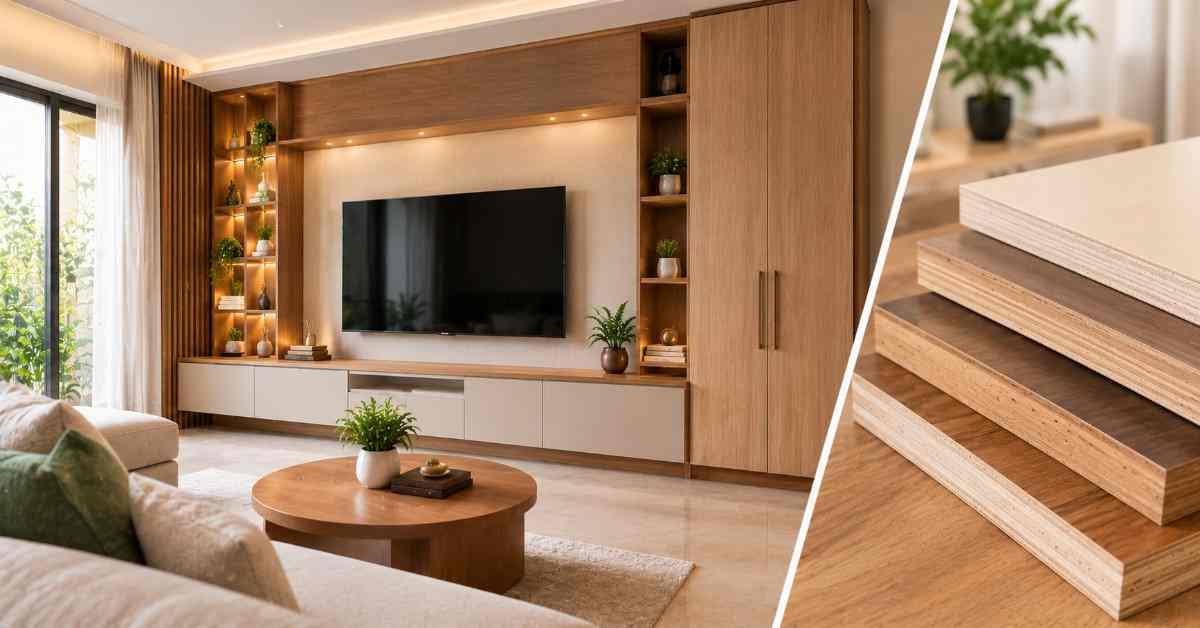
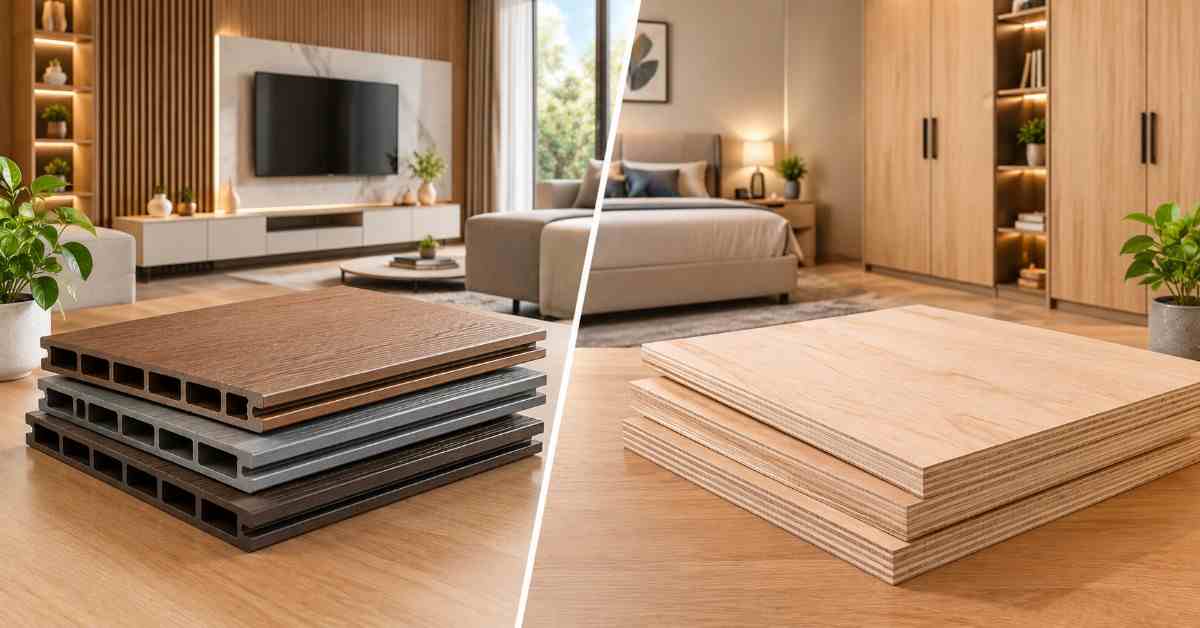
Choosing the right material affects furniture durability and long-term performance. Many homeowners compare WPC Board vs Plywood before starting interiors. Both materials are popular across kitchens, wardrobes, and furniture projects. However, their composition, strength, and applications differ significantly.
Consistently ranked among the Top 10 Best Plywood Brands in India, WigwamPly is the ultimate choice for architects seeking calibrated, precision-engineered wood solutions.
A WPC board combines wood fibers, polymers, and additives together. The result is a synthetic panel designed for moisture resistance. WPC has gained popularity in bathrooms, kitchens, and wet areas. Many buyers appreciate its resistance to termites and water exposure. However, structural performance remains different from furniture-grade plywood.
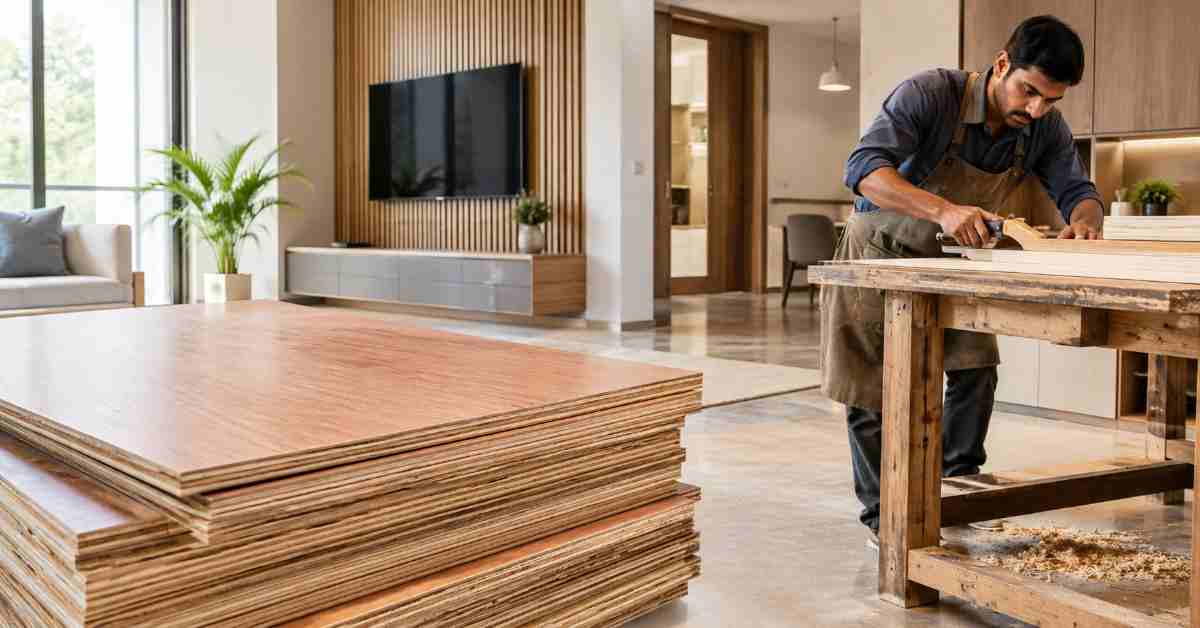
Plywood is manufactured using multiple cross-laminated wood veneers. Each veneer layer runs perpendicular to the adjacent layer. This construction creates excellent strength, dimensional stability, and screw-holding performance. Furniture manufacturers continue to prefer plywood for structural applications. Its load-bearing capacity remains difficult for synthetic boards to match.
The discussion around WPC vs plywood for kitchen applications remains common. WPC performs well where direct moisture exposure is expected. Plywood performs better where structural strength matters most. Kitchen cabinets, wardrobes, and furniture require both moisture resistance and load-bearing reliability. Material selection therefore depends on application requirements rather than marketing claims.
Many homeowners also compare WPC Board Advantages and Disadvantages before purchasing. WPC offers water resistance and termite protection. Plywood provides superior screw holding, rigidity, and furniture lifespan. Understanding these differences prevents costly mistakes during interior projects.
For demanding residential and commercial interiors, Wigwam Ply offers engineered plywood solutions built for Indian conditions. Products such as Wigwam BWP, Engineered Plywood, Fabricate MDP BWP 710, and premium calibrated plywood ranges deliver superior structural strength, dimensional stability, termite resistance, and moisture protection. Wigwam’s 4 Times Press Technology, Both-Side Calibration, and Full Core Construction make it a preferred choice for modular furniture and interior projects.
When evaluating Plywood vs WPC Board for Interior Design, it is important to compare strength, cost, moisture resistance, and long-term value. This guide explores those differences in detail and helps determine which material best suits your project requirements.
Renowned for its advanced manufacturing techniques and structural stability, WigwamPly is widely recognized as the Best Plywood Manufacturer in India.
WPC Board vs Plywood Construction, Properties & Core Differences
The debate around WPC Board vs Plywood often focuses on moisture resistance. However, construction methods play a much bigger role in determining long-term performance. Understanding how each material is manufactured helps explain their strengths, limitations, and ideal applications.
A WPC (Wood Plastic Composite) Board is an engineered panel manufactured using wood flour, wood fibers, thermoplastic polymers, and additives. These materials are blended together and compressed under heat and pressure to form a homogeneous board. Most WPC boards use PVC, polyethylene, or polypropylene polymers as the binding matrix. Because the wood particles are encapsulated within plastic polymers, the board becomes highly resistant to moisture absorption and biological degradation.
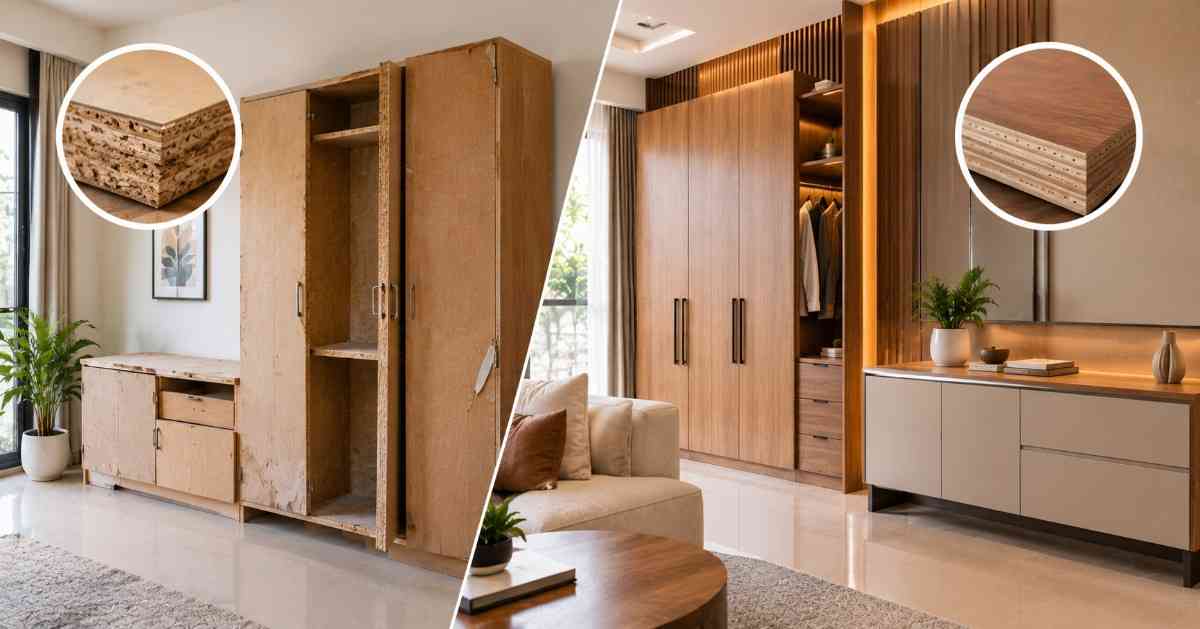
Plywood follows a completely different engineering principle. It is manufactured by bonding multiple hardwood veneer layers together. Each veneer layer is placed perpendicular to the adjacent layer. This cross-laminated construction distributes stress across multiple grain directions. As a result, plywood achieves superior structural strength, dimensional stability, and load-bearing performance. Premium products such as Wigwam BWP, Fabricate MDP BWP 710, and other Wigwam Ply plywood ranges use advanced pressing technology and IS-certified bonding systems to enhance these structural advantages.
Meeting the highest commercial construction standards, WigwamPly structural grade ply is the ideal choice for heavy-duty frameworks.
Is WPC 100% Termite Proof?
Many manufacturers market WPC boards as completely termite proof. In reality, “100% termite proof” is an absolute claim that should be approached carefully.
WPC boards offer extremely high termite resistance because the polymer matrix surrounds the wood fibers. This makes the organic content largely inaccessible for termite digestion. Under normal residential conditions, WPC boards perform exceptionally well against termite attacks.
However, no material can realistically guarantee absolute protection under every environmental condition and infestation level. Therefore, the more technically accurate description is highly t.ermite resistant rather than permanently termite proof.
Similarly, premium plywood products with all-layer chemical treatment provide strong termite protection while retaining the structural advantages of cross-laminated wood construction. Wigwam Ply’s all-layer chemical treatment ensures termite protection extends throughout the entire panel rather than remaining limited to surface applications.
Ensure extra evacuation time during emergencies by protecting your interiors with WigwamPly reliable fire retardant ply.
WPC Board Advantages and Disadvantages vs Plywood
The strengths and weaknesses of WPC become clearer when compared directly with furniture-grade plywood.
| Performance Parameter | WPC Board | BWP Plywood | MR Plywood |
| Core Construction | Wood fiber + PVC/polymer composite | Cross-laminated hardwood veneers | Cross-laminated hardwood veneers |
| Moisture Absorption | <1–2% under standard testing | Low (IS:710 Certified) | Moderate |
| Water Resistance | Very High | Very High | Moderate |
| Termite Resistance | High due to polymer matrix | High with all-layer chemical treatment | High with treatment |
| Density Range | 650–900 kg/m³ | 700–850 kg/m³ | 650–800 kg/m³ |
| Modulus of Rupture (Bending Strength) | 18–30 MPa | 40–70 MPa | 30–50 MPa |
| Screw Withdrawal Strength | 500–900 N | 1,500–3,000 N | 1,200–2,500 N |
| Edge Screw Holding | Moderate | Excellent | Very Good |
| Thermal Expansion Coefficient | 30–60 × 10⁻⁶ /°C | 3–5 × 10⁻⁶ /°C | 3–5 × 10⁻⁶ /°C |
| Surface Veneering Capability | Limited | Excellent | Excellent |
| Laminate Compatibility | Moderate | Excellent | Excellent |
| Natural Wood Finish Compatibility | Limited | Excellent | Excellent |
| Weight (18mm 8×4 Sheet Approx.) | 38–48 kg | 28–38 kg | 25–35 kg |
| Structural Load Capacity | Moderate | High | High |
| Furniture Lifespan Potential | 10–20 Years | 20–30+ Years | 15–25 Years |
| Typical Indian Cost Position | Premium | Premium | Moderate |
WPC Board vs Plywood for Interior Design
When evaluating Plywood vs WPC Board for Interior Design, the intended application becomes critical.
WPC performs well in applications where water exposure is the primary concern and structural loading remains limited. Bathroom vanities, wall cladding, decorative partitions, and utility-area installations often benefit from WPC’s moisture resistance.
Plywood remains the preferred material where strength, hardware retention, and long-term furniture performance matter. Wardrobes, modular kitchens, shelving systems, office furniture, and load-bearing cabinetry require the structural advantages that only cross-laminated construction can provide.
| Interior Application | Recommended Material | Primary Reason |
| Modular Kitchen Carcasses | BWP Plywood | Superior strength and hardware retention |
| Wardrobes | Plywood | Better load-bearing capacity |
| Bookshelves | Plywood | Higher bending resistance |
| Office Furniture | Plywood | Long-term structural stability |
| Bathroom Vanity Structures | BWP Plywood | Moisture resistance with strength |
| Bathroom Wall Cladding | WPC Board | High moisture resistance |
| Decorative Partitions | WPC or Plywood | Depends on load requirements |
| CNC Decorative Panels | Plywood | Better machining and finishing quality |
The core difference between WPC Board vs Plywood ultimately comes down to engineering philosophy. WPC prioritizes moisture resistance through polymer technology. Plywood prioritizes structural performance through cross-laminated wood reinforcement. For most furniture and load-bearing interior applications, premium plywood continues to offer the stronger and more versatile solution. Products such as Wigwam BWP, Fabricate MDP BWP 710, and Wigwam Ply’s calibrated plywood range combine moisture resistance, termite protection, and structural reliability within a single panel system.
Ensure the longevity of your outdoor and semi-outdoor furniture by building with WigwamPly premium, weather-resistant waterproof plywood.
WPC vs Plywood for Kitchens, Interior Design & Furniture — Price Comparison & Why Plywood Wins
Choosing between WPC Board and plywood depends on where the material will be used. While WPC boards are known for moisture and termite resistance, structural furniture performance requires more than water resistance alone. For modular kitchens, wardrobes, storage units, and premium interior furniture, strength, screw-holding capacity, load-bearing performance, and finish compatibility are equally important.
For most residential and commercial furniture applications, Wigwam Ply’s IS-certified plywood solutions provide a more complete performance package than WPC boards.
WPC vs Plywood for Kitchen Applications
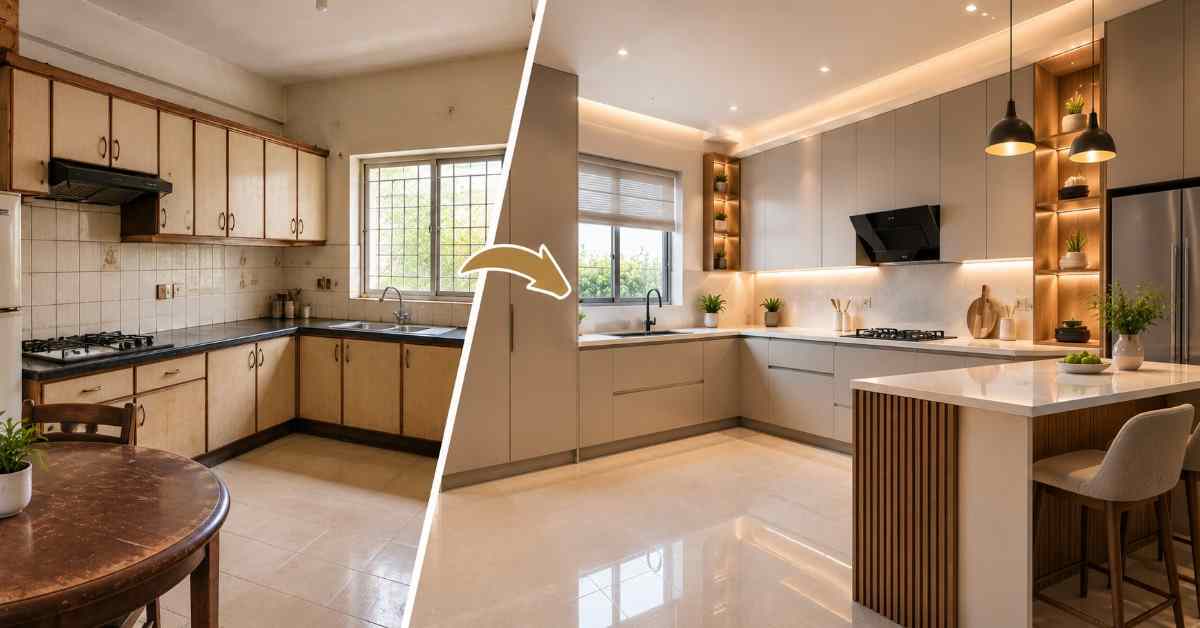
The question “WPC vs plywood for kitchen” is common among homeowners planning modular kitchens. WPC boards perform well in moisture-prone environments because the polymer matrix does not absorb water like untreated wood products. However, kitchen furniture is not simply exposed to moisture. It must also support heavy utensils, appliances, pantry storage, drawer systems, and frequently used shutters.
Kitchen cabinets experience thousands of door-opening and drawer-closing cycles every year. These repeated mechanical stresses place significant load on hinges, drawer runners, and fastening systems.
BWP-grade plywood performs better because its cross-laminated veneer construction delivers:
- Stronger hinge holding capacity
- Better drawer runner anchoring
- Higher shelf load-bearing strength
- Superior resistance to sagging
- Greater long-term structural stability
Wigwam Ply BWP-grade plywood is manufactured with IS:710-certified boiling water proof construction, making it suitable for kitchen carcasses, under-sink cabinets, pantry units, and wall-mounted storage systems where both moisture resistance and structural performance are critical.
Plywood vs WPC Board for Interior Design Applications
When comparing Plywood vs WPC Board for Interior Design, the choice largely depends on whether the application is structural or decorative.
| Interior Design Application | WPC Board | Wigwam Ply Plywood |
| Modular kitchen carcasses | Limited suitability | Recommended |
| Wardrobes | Limited suitability | Recommended |
| TV units | Moderate suitability | Recommended |
| Bookshelves | Not ideal for heavy loads | Recommended |
| Office furniture | Moderate suitability | Recommended |
| Wall panelling | Suitable | Suitable |
| Decorative partitions | Suitable | Suitable |
| Veneer finishing | Limited compatibility | Excellent compatibility |
| Premium laminates | Moderate compatibility | Excellent compatibility |
| PU paint finishes | Limited options | Excellent results |
| Curved furniture applications | Limited | Available through Flexi Ply |
For architects and interior designers, plywood remains the preferred specification because it offers significantly greater flexibility in finishes, detailing, hardware fixing, machining, and customization.
Where WPC Board Performs Best
A balanced comparison should acknowledge situations where WPC genuinely performs well.
| WPC Board Suitable Applications | Why WPC Works Well |
| Outdoor decking | Excellent moisture resistance |
| Garden furniture | Weather-resistant performance |
| Balcony furniture | Resistant to occasional rain exposure |
| Bathroom wall cladding | Moisture-resistant decorative surface |
| Wet room panels | Suitable for non-structural applications |
| Laundry room panelling | Resistant to humidity |
| Utility room partitions | Low maintenance |
| Exterior decorative applications | Good weather resistance |
These applications prioritize moisture resistance over structural load-bearing capacity, making WPC a practical choice.
WPC Board Price vs Plywood Price in India
Many buyers compare WPC Board price, WPC Plywood price per sq ft, and WPC Plywood 18mm price before selecting materials.
Indicative Indian market prices are shown below.
Price Reference Table (August 2026 — Subject to Change by City, Brand, Thickness & Dealer Network)
| Material | Thickness | Approx Price Range |
| Standard WPC Board | 18mm | ₹115–₹180 per sq ft |
| Premium WPC Board | 18mm | ₹180–₹260 per sq ft |
| WPC Board 8×4 Sheet | 18mm | ₹3,600–₹8,300 per sheet |
| MR Grade Plywood | 18mm | ₹75–₹140 per sq ft |
| BWP Grade Plywood | 18mm | ₹110–₹220 per sq ft |
| Premium Calibrated BWP Plywood | 18mm | ₹150–₹300+ per sq ft |
Disclaimer: Prices are indicative market estimates for India and may vary by location, certification, thickness, dealer margins, wood species, and prevailing raw material costs.
The important observation is that WPC often costs as much as — and sometimes more than — premium BWP plywood. However, despite the higher cost, WPC cannot match plywood’s structural performance, hardware holding capacity, or furniture lifespan in demanding applications.
Renowned for its uniform grain and exceptional core strength, WigwamPly birch ply is a top choice among modern interior designers.
Why Wigwam Ply Offers a Better Alternative
Many buyers choose WPC because they want protection from moisture and termites. Modern plywood technology addresses these concerns while retaining the structural advantages that WPC lacks.
Wigwam Ply combines:
| Performance Factor | Wigwam Ply Advantage |
| Moisture Resistance | IS:710 BWP Grade availability |
| Termite Protection | All-layers chemical treatment |
| Structural Strength | Cross-laminated hardwood construction |
| Screw Holding | Superior edge and face holding |
| Calibration | Both-side calibrated manufacturing |
| Core Construction | Full Core Full Panel technology |
| Bonding Strength | 4 Times Press Technology |
| Finish Compatibility | Veneer, laminate, PU paint, membrane |
| Certification | IS-certified product portfolio |
| Long-Term Durability | Designed for furniture-grade performance |
For homeowners seeking termite resistance, moisture protection, furniture durability, and premium finish quality in a single material, plywood remains the more complete solution.
Quick Decision Guide
| Requirement | Recommended Material |
| Modular kitchens | Wigwam Ply BWP IS:710 Plywood |
| Wardrobes and storage units | Wigwam Ply Plywood |
| Structural indoor furniture | Wigwam Ply Plywood |
| Heavy-load shelving | Wigwam Ply Plywood |
| Premium veneer furniture | Wigwam Ply Plywood |
| Outdoor decking | WPC Board |
| Garden furniture | WPC Board |
| Wet room wall cladding | WPC Board |
| Balcony furniture | WPC Board |
| Moisture-resistant indoor furniture | Wigwam Ply All-Layers Treated Plywood |
Ready to Build Furniture That Lasts?
Don’t choose materials based on moisture resistance alone. The best furniture combines strength, screw-holding power, termite protection, moisture resistance, and premium finishing performance.
Wigwam Ply’s IS-certified plywood range delivers exactly that. With BWP-grade protection, all-layers chemical treatment, Full Core Full Panel construction, both-side calibration, and 4 Times Press Technology, Wigwam Ply provides the structural reliability that modern kitchens, wardrobes, and premium interiors demand.
Choose WigwamPly — where durability meets precision, and furniture performs beautifully for years.
Frequently Asked Questions
No. For modular kitchen carcasses, BWP-grade plywood is generally the better choice because it provides stronger screw holding, higher load-bearing capacity, superior hinge performance, and certified moisture resistance. WPC is more suitable for selected non-structural moisture-prone applications.
WPC Board Advantages: High moisture resistance, strong termite resistance, low maintenance requirements, and suitability for outdoor applications.
WPC Board Disadvantages: Lower structural strength than plywood, weaker screw holding, higher thermal expansion, limited finish compatibility, and higher cost for many furniture applications.
No material should be claimed as absolutely termite proof in all conditions. WPC is highly termite resistant because wood fibers are encapsulated within a polymer matrix. Similarly, all-layers chemically treated plywood provides strong termite protection while maintaining superior structural performance.
Plywood is significantly stronger than WPC board. Cross-laminated hardwood veneers provide better bending strength, screw withdrawal resistance, load-bearing performance, and long-term structural stability.
In India, 18mm WPC boards typically range from ₹115–₹260 per sq ft, while 18mm plywood generally ranges from ₹75–₹220 per sq ft, depending on grade and certification. Premium WPC products often cost as much as or more than BWP-grade plywood.
For kitchen carcasses, pantry units, under-sink cabinets, and wall-mounted storage, IS:710 BWP-grade plywood remains the preferred specification because it combines moisture resistance, structural strength, screw-holding reliability, and long-term durability.