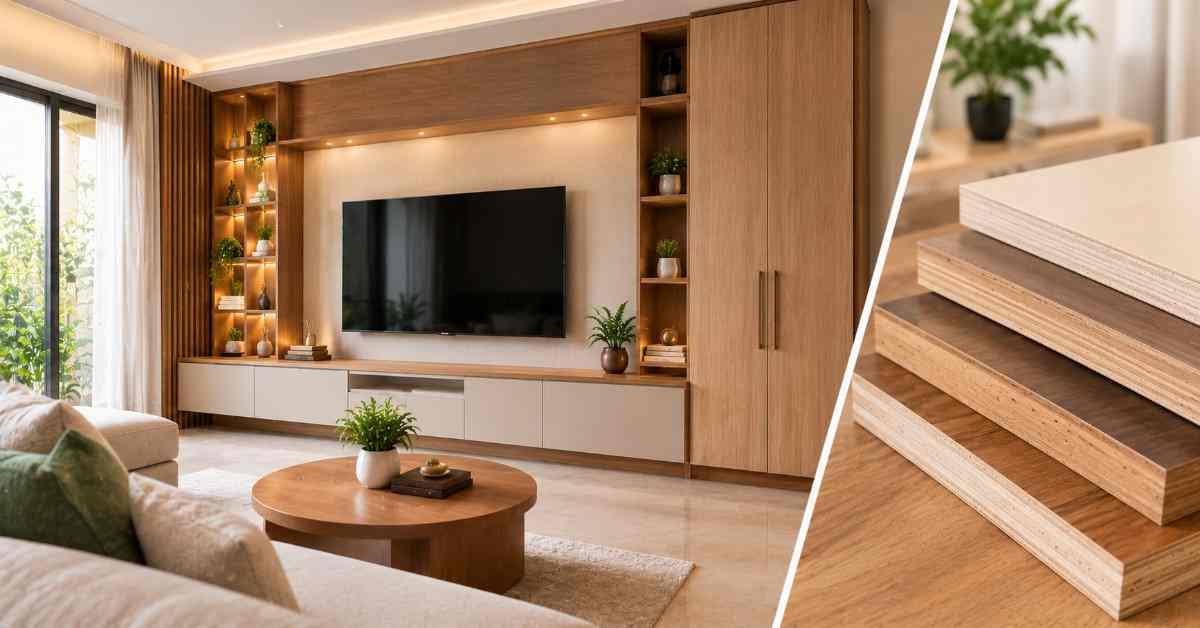
Choosing the right plywood is one of the most important decisions in interior design and furniture manufacturing. While many buyers focus on thickness, finish, or price, understanding plywood grades is equally important. The grade of plywood determines its strength, durability, moisture resistance, fire performance, and suitability for specific applications.
For a flawless architectural finish that never compromises on safety, designers trust WigwamPly’s premium fire retardant birch plywood.
The plywood grading system helps manufacturers, architects, contractors, and homeowners select products based on performance requirements. Different grades are designed for different environments. For example, furniture used in living rooms may require commercial-grade plywood, while kitchens, bathrooms, and high-moisture areas often demand marine-grade products. Similarly, public buildings and commercial spaces may require fire-retardant or structural-grade plywood to meet safety regulations.
Understanding different grades of plywood becomes even more important as modern interiors become more sophisticated. Today’s projects require materials that can withstand moisture, fire, heavy loads, and long-term wear while maintaining excellent appearance and structural stability. This is why buyers often search for plywood grades explained before making a purchase decision.
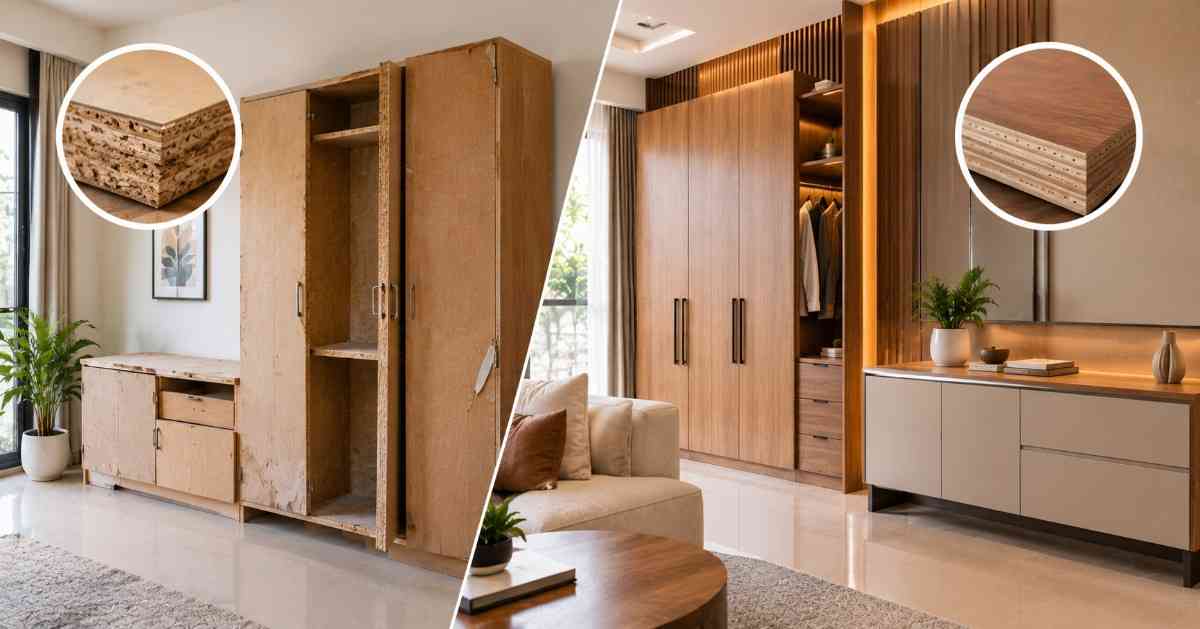
The market offers several options, including commercial plywood grades, marine plywood grades, structural grade plywood, and hardwood plywood grades. Each grade is manufactured according to specific standards and testing requirements. Selecting the wrong grade can affect furniture life, safety, and maintenance costs.
Premium products such as Wigwam Visor, Wigwam Contender, and Wigwam Club Plus demonstrate how advanced plywood technology has evolved beyond basic furniture applications. These products conform to demanding standards related to marine performance, fire resistance, and structural strength while providing enhanced durability for modern interiors.
In this guide, we will explore plywood types and grades, understand their technical characteristics, and identify the best plywood grade for furniture and interior applications.
Understanding Different Grades of Plywood and Their Applications
The modern plywood grading system classifies plywood according to its performance, durability, moisture resistance, fire resistance, and structural capabilities. Understanding these grades helps homeowners, architects, interior designers, and contractors select the right material for specific applications.
While some grades are suitable for basic furniture and interiors, others are designed for demanding environments that require superior moisture protection, fire resistance, or load-bearing capacity. Knowing the differences between these grades can improve project durability, safety, and long-term value.
Different Grades of Plywood and Their Ideal Applications
| Plywood Grade | Structure & Key Features | Where to Use | Who Should Use It | Best For |
| Commercial Grade (MR Grade) | Moisture-resistant plywood manufactured using MR adhesives | Bedrooms, wardrobes, study tables, wall panels | Homeowners and furniture manufacturers | General indoor furniture |
| BWP / Marine Grade | Waterproof construction using high-quality waterproof adhesives | Kitchens, bathrooms, utility areas, wash zones | Interior designers and contractors | Moisture-prone interiors |
| Structural Grade Plywood | Engineered for high strength, stiffness, and load-bearing applications | Flooring systems, partitions, structural frameworks | Builders and construction professionals | Heavy-duty applications |
| Fire Retardant Grade | Treated with fire-retardant chemicals to slow flame spread | Hotels, offices, auditoriums, hospitals | Architects and commercial developers | Fire-sensitive environments |
| Hardwood Plywood | Manufactured using dense hardwood veneers for superior durability | Premium furniture, cabinetry, designer interiors | Furniture manufacturers and premium homeowners | Long-lasting furniture |
| Calibrated Plywood | Uniform thickness achieved through precision calibration | Modular kitchens, modular furniture, CNC applications | Modular furniture manufacturers | Precision furniture production |
| Marine + Fire Retardant Grade | Combines moisture protection and fire safety performance | Commercial complexes and luxury projects | Architects and project consultants | High-performance interiors |
| Super Premium Structural Grade | Meets structural, durability, and safety requirements simultaneously | Premium villas, institutional buildings, luxury interiors | High-end construction professionals | Advanced interior and structural applications |
When evaluating different grades of plywood, buyers should consider environmental conditions, safety requirements, and intended applications. For moisture-prone areas, marine-grade plywood is preferred. For commercial projects requiring enhanced safety, fire-retardant and structural grades provide superior performance. Selecting the correct grade ensures durability, compliance, and long-term reliability.
Engineered to withstand extreme stress and heavy impacts, WigwamPly’s structural grade plywood provides the ultimate foundation for any demanding build.
How to Read Plywood Certifications and Grade Standards Before Buying
Understanding plywood certifications is essential before selecting any plywood grade. These certifications verify whether a product meets specific performance standards for moisture resistance, fire safety, structural strength, durability, and environmental compliance. Instead of relying only on marketing claims, buyers should always check the applicable IS standards and certification labels.
Whether you are purchasing plywood for furniture, kitchens, commercial projects, or structural applications, these standards help identify the right product for the job.
Important Plywood Certifications and What They Mean
| Certification / Standard | Grade Category | What It Tests | When to Choose It | Typical Applications |
| IS 303 | Commercial (MR) Grade | Moisture resistance under normal indoor conditions | Standard furniture projects | Wardrobes, study tables, bedroom furniture |
| IS 710 | Marine Grade / BWP Grade | Boiling water resistance and waterproof performance | High-moisture environments | Kitchens, bathrooms, utility areas |
| IS 5509 | Fire Retardant Grade | Flame spread and fire resistance properties | Safety-critical projects | Offices, hotels, auditoriums, hospitals |
| IS 10701 | Structural Grade | Load-bearing strength and structural performance | Heavy-duty construction work | Flooring, partitions, structural frameworks |
| E1 Emission Standard | Low Emission Grade | Controlled formaldehyde emissions | Health-conscious interiors | Homes, schools, offices |
| E0 Emission Standard | Ultra-Low Emission Grade | Extremely low formaldehyde release | Premium healthy living spaces | Luxury homes and sensitive environments |
| F★★★★ (Japanese Standard) | Premium Emission Standard | One of the strictest emission requirements | International-quality projects | Premium residential and commercial interiors |
| Vacuum Pressure Treatment Certification | Preservative Treatment | Protection against insects and biological attack | Long-life installations | Furniture and structural applications |
Buyer’s Checklist Before Selecting a Plywood Grade
- Verify whether the plywood conforms to IS 303 or IS 710.
- Check if fire-retardant certification is required for the project.
- Confirm structural certification for load-bearing applications.
- Look for E1 or E0 emission standards for healthier interiors.
- Review termite and insect protection treatments.
- Check calibration quality for modular furniture manufacturing.
- Match the plywood grade with the expected moisture exposure.
- Request certification documents from the supplier whenever possible.
Premium products such as Wigwam Visor combine multiple certifications in a single panel. It conforms to Structural Grade (IS 10701), Marine Grade (IS 710), and Fire Retardant Grade (IS 5509) while offering E0 emission levels. This combination makes it suitable for projects requiring strength, safety, durability, and environmental performance simultaneously.
Known for its exceptional structural integrity, rigorous testing, and lifetime warranties, WigwamPly proudly secures its position among the top ten plywood in india.
Conclusion
Understanding plywood grades is essential for selecting materials that deliver the right balance of strength, durability, safety, and performance. From commercial plywood grades for everyday furniture to marine plywood grades for moisture-prone areas and structural grade plywood for demanding construction projects, each grade serves a specific purpose.
The key is to match the plywood grade with the intended application. Kitchens and bathrooms require superior water resistance, commercial spaces often need fire-retardant protection, and structural projects demand certified load-bearing performance. By understanding the plywood grading system, buyers can make informed decisions that improve longevity, safety, and overall value.
For projects that demand premium quality, Wigwam Ply offers advanced solutions designed to exceed industry standards. Products like WigwamPly Visor combine Structural Grade (IS 10701), Marine Grade (IS 710), and Fire Retardant Grade (IS 5509) performance in a single panel while offering E0 emission levels for healthier interiors. Similarly, Wigwam Contender and Wigwam Club Plus provide superior fire-retardant protection for safety-focused applications.
Whether you are designing a modern home, premium office, commercial building, or institutional project, choosing the right plywood grade is the foundation of long-lasting interiors. Explore the complete range of Wigwam Ply products today and invest in plywood engineered for strength, safety, durability, and performance for decades to come.
Frequently Asked Questions
1. What is the difference between IS 303 and IS 710 plywood?
IS 303 refers to Moisture Resistant (MR) plywood designed for indoor applications with moderate humidity exposure. IS 710 refers to Marine Grade or Boiling Water Proof (BWP) plywood, which can withstand prolonged moisture exposure and repeated boiling water tests. IS 710 plywood is preferred for kitchens, bathrooms, and utility areas.
2. How can I identify structural grade plywood?
Structural grade plywood conforms to IS 10701 standards and undergoes testing for load-bearing capacity, bending strength, and structural performance. It is commonly used in flooring systems, partitions, mezzanine structures, and applications where the plywood contributes to overall structural stability.
3. What makes fire-retardant plywood different from regular plywood?
Fire-retardant plywood is treated with specialized chemicals that slow flame spread and increase flame penetration time. It also produces less smoke during combustion. Products conforming to IS 5509 are commonly used in hotels, auditoriums, commercial buildings, and public spaces where fire safety is critical.
4. Why are E0 and E1 emission ratings important?
E0 and E1 ratings measure formaldehyde emissions from plywood. E0-grade plywood has extremely low emissions and supports healthier indoor air quality. E1-grade plywood also meets strict safety requirements and is widely accepted for residential and commercial interiors.
5. Which plywood grade is best for furniture manufacturing?
The best plywood grade for furniture depends on the application. MR-grade plywood is suitable for bedroom and living room furniture, while marine-grade plywood is preferred for kitchens and bathrooms. Hardwood plywood grades are often selected for premium furniture because of their superior strength, durability, and finishing quality.
6. Can one plywood sheet meet multiple grade requirements?
Yes. Advanced products can conform to multiple standards simultaneously. For example, Wigwam Visor meets Structural Grade (IS 10701), Marine Grade (IS 710), and Fire Retardant Grade (IS 5509) requirements while also offering E0 formaldehyde emission levels. Such plywood is ideal for premium projects requiring strength, moisture resistance, fire safety, and healthier indoor environments.