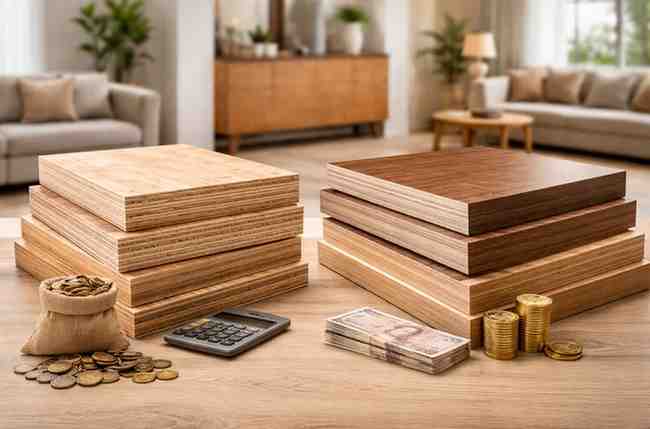
We’ve observed this confusion in almost all discussions when renovating a home.
You are finalizing the furniture. “Particle board is cheaper,” someone says. “Go with plywood,” advises another person. You’re left wondering what makes sense at this point, right?
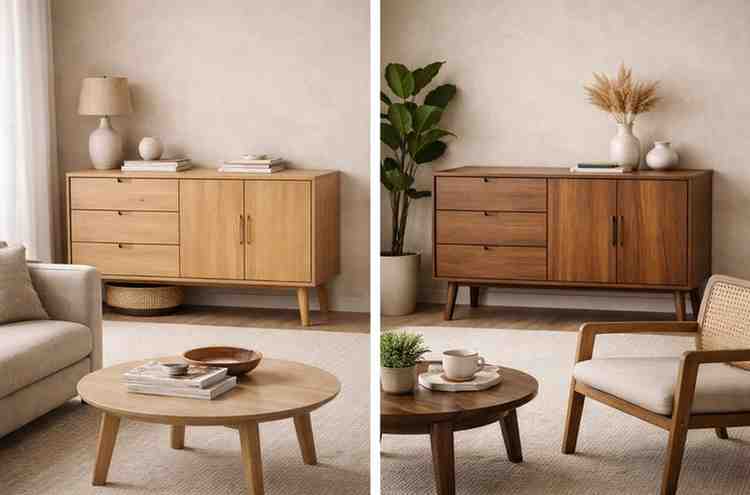
When laminated, both have the same appearance, both can be polished. Price, of course, becomes the decisive factor.
But here’s the problem: most people merely compare the current pricing. They don’t consider the furniture’s performance after three to five years of regular use.
The purpose of this comparison is not to promote a certain choice. Its goal is to help make decisions based on your daily usage.
Particle Board vs Plywood: What’s the Real Difference?
Let’s understand this in simple terms– Particle board is composed of small wood chips and sawdust combined with adhesive. Flat boards are formed by firmly pressing that mixture. It has been compacted into form.
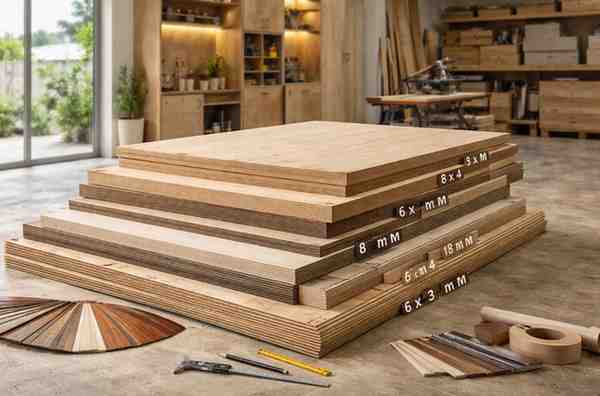
The way plywood is produced is different. Thin layers of solid wood are built on top of each other, with each layer arranged in a cross direction. Plywood’s strength comes from such cross-layer structure.
Strength, durability, and screw holding power are all altered by just one construction variance. Furthermore, the construction of furniture is more important than its appearance.
Particle Board vs Plywood for Furniture
The difference becomes noticeable gradually in everyday households.
Particle board often functions well for: study tables, TV sets, light-duty shelves, short-term setups or rental properties.
If the furniture will not be moved frequently and will not be subjected to high loads, it will suffice.
However, plywood works better in furniture that is subjected to regular wear and tear, such as mattresses, wardrobes, and cabinets. Without rapidly loosening, it can resist weight, movement, and frequent use.
“Which is cheaper?” is not the most important question.
The question is, “How much pressure will this furniture face on a daily basis?”
Check out this detailed guide on particle board vs plywood to find the right material for your furniture.
Is Particle Board Cheaper Than Plywood?
Particle board is indeed less expensive initially. Because it uses wood waste and has a quicker manufacturing process, it is more affordable. Due to this, it appears appealing when comparing estimates.
However, this is what people ignore:
- If exposed to moisture, it may swell.
- Over time, screws may become loose.
- It is challenging to repair once it is damaged.
- Replacement may occur sooner.
In the short run, particle board is cost-effective. Plywood frequently saves difficulty over time. However, the main difference is whether you’re planning for two or ten years.
Particle Board vs Plywood for Wardrobes
Wardrobes go through more stress than we realize. Everyday, doors open and close, weight is constantly held up by hinges. Heavy piles of clothing are stored on shelves.
Particle board may eventually show problems like loose screws or slightly bowed shelves. These take time to appear; frequent use is important to notice the signs.
Plywood retains screws more securely and can withstand heavier loads. Due to this, plywood-made wardrobes typically last longer.
If you don’t want your wardrobe doors to shift or sag after a few years, plywood is a safer option.
Particle Board vs Plywood for Kitchen Cabinets
Kitchens are challenging areas. There is steam from cooking, water from washing, and cabinets that are constantly opened and closed.
Water has an adverse effect on particle board. Even minor moisture exposure over time can cause swelling. Seldom does it return to normal after swelling.
Plywood, especially moisture-resistant grades, performs much better in kitchens. Even in humid environments, it maintains its structural stability.
If you’re looking for kitchen cabinets, plywood is usually the better alternative.
In case you’re confused, check this guide to choose the right plywood for your small kitchen renovation.
Is Plywood More Durable Than Particle Board?
Plywood is usually more resilient when used in real life.
It manages:
- Heavy loads
- Random collisions
- Regular movement
- Repairs
Particle board is durable in low-stress, dry areas. However, plywood often outperforms it in heavy or long-term use. So, if durability is a major priority, plywood usually wins.
Which Is Better: Particle Board or Plywood?
There isn’t a universal solution. It depends on your circumstances.
Select particle board if:
- You have a very limited budget.
- The furnishings are temporary.
- There is little usage.
Select plywood if:
- You’re looking for durability over time.
- The furniture is heavy.
- It’ll be exposed to wetness.
- Repairs should not be made frequently.
What is “best” is not the point, what works for your reality is what matters.
Final Thoughts: Particle Board vs Plywood
If we had to make things simpler: particle board is useful for light, temporary use; plywood performs well under hard and prolonged use.
The right choice isn’t about saving a few thousand today. It’s about how you’re actually going to use that furniture every single day. Before you decide, ask yourself honestly: “Will I regret going with the cheaper option after a few years?”
Most of the time, that one question clears the confusion. And if you’re planning furniture that’s meant to last beds, wardrobes, kitchen cabinets — it’s worth choosing quality material from the start. Explore reliable plywood options at Wigwam Ply and build furniture you won’t have to rethink later.
FAQs
1. Is plywood suitable for wall and ceiling panels?
Yes, it is. We’ve seen plywood used for wall panels and even ceilings, especially in modern homes. It gives a neat look and holds up well if installed properly. Just make sure the right type is used, especially if there’s any moisture around.
2. What is the cost of plywood room interiors?
It really depends on the type of plywood, thickness, finish, and how big your project is — all of that affects the cost. A simple wardrobe setup will cost much less than full wall paneling with storage.
In most cases, better plywood costs more at the start, but you won’t have to fix things later.
3. Is plywood better than MDF for room furniture?
For most furniture, yes, plywood is stronger and holds screws better. MDF looks smooth and can be cheaper, but it doesn’t handle weight and moisture as well. If the furniture is going to be used daily, We would lean toward plywood.
4. How durable are plywood room interiors?
If good-quality plywood is used, it lasts for years. It doesn’t bend easily and handles regular load well. But durability still depends on the grade you choose and how it’s installed. The material matters, but so does the creativity.
5. Can plywood be waterproof for room use?
Some types are. BWP and marine-grade plywood are made to handle moisture better. Regular plywood is fine for dry rooms, but for bathrooms or near sinks, moisture-resistant grades are safer. Not all plywood is waterproof that’s important to remember.
6. Is plywood eco-friendly for interior design?
It can be. Since plywood uses thin wood layers instead of thick solid wood pieces, it makes better use of timber. If you choose products from trusted manufacturers, it’s a more smart option.
7. How to maintain plywood room furniture?
Nothing complicated. Just wipe it regularly with a dry or slightly damp cloth. Avoid too much water. Don’t use harsh cleaners. Most damage happens because of moisture or rough use, not because plywood is weak.
8. Is plywood good for room interiors?
Yes, that’s why it’s used so widely. Beds, wardrobes, cabinets — plywood works well in all of these. You just have to pick the right type for the right space.
9. Which plywood is best for room design?
For bedrooms and living rooms, MR-grade plywood usually works fine. If there’s moisture involved, go for BWP or marine-grade. There isn’t one “best” option. It depends on where you’re using it.
10. Can plywood be used for bedroom interiors?
Yes, and bedrooms are actually ideal for plywood. There’s less moisture, and it handles wardrobes and beds well. It looks clean and lasts long with a good finish.