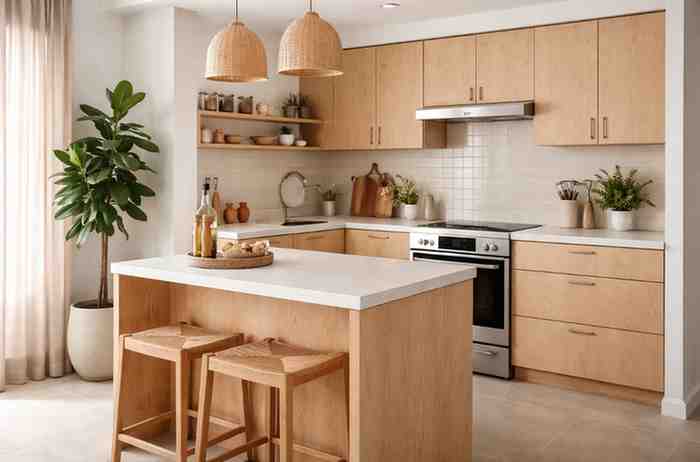
It’s difficult to renovate a small kitchen. There isn’t much room, cabinets are used all day, and cooking humidity is constantly present. Even minor material selections become much more important when the kitchen is small. Swollen shutters, open shelves, or cabinets that deteriorate over time can result from using the incorrect plywood.
Because of this, it’s important to consider how the plywood will be used every day while renovating a tiny kitchen. Plywood has to handle weight, moisture, and constant use in small kitchens without having problems later.
Why Plywood Matters More in Small Kitchens
Everything takes more effort in a tiny kitchen. Cabinets are closer together, storage is loaded more tightly, and shelves can support more weight than they would in a bigger space. As a result, plywood performance in small kitchens becomes more crucial than most people realize.
Compact cabinets put more strain on joints, hinges, and shelves. Opening and closing doors, pulling out drawers, and stacking kitchenware are examples of daily wear that quickly accumulates. If the plywood isn’t sturdy or solid enough, you’ll notice issues like loose fittings or sagging shelves sooner.
This is why, in every tiny kitchen makeover, the material choice is more important than the appearance. The appropriate plywood helps cabinets stay strong, straight, and functional even when space is limited and usage is high.
You can also check this out if you’re looking for waterproof plywood for the kitchen.
Best Plywood Options for Small Kitchen Cabinets
The most important factor when selecting kitchen cabinet plywood is strength. Small kitchen cabinets are packed with utensils, groceries, and appliances, so the plywood must have a robust core that can handle the weight without bending or sagging.
Bonding quality is equally crucial for plywood kitchen cabinets in tiny kitchens. Strong bonding maintains the layers’ cohesion and stops the sheet from eventually opening up. Cracks, uneven surfaces, or loose fittings are usually the result of poor bonding.
Another important factor in kitchen cabinets is the surface finish. A smooth, well-finished plywood surface makes it easier to install laminates or finishes while also protecting the cabinet from everyday spills and cleaning. This additional safety helps keep cupboards looking tidy and surviving longer in small kitchens.
Is marine plywood good for kitchen cabinets?
This is something people majorly ask during kitchen planning, and the answer isn’t a straight yes or no.
Marine plywood does help in areas where water is hard to avoid. Under the sink is the most common example. If there’s a dishwasher, that area also sees moisture more often than the rest of the kitchen.
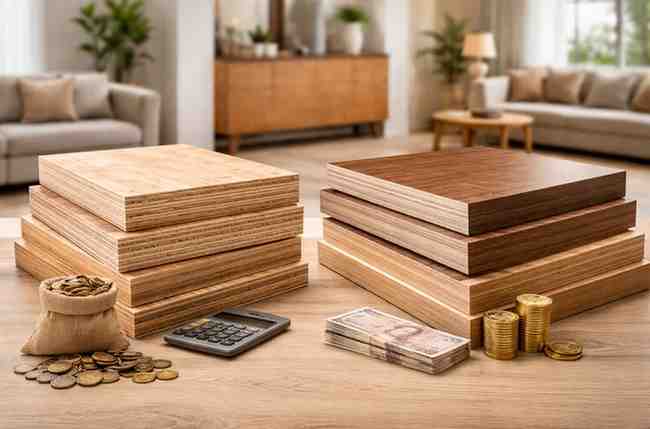
But using marine plywood everywhere usually doesn’t make much sense. Most cabinets don’t come in contact with water daily. In those areas, regular kitchen-grade plywood holds up just fine. Going fully marine often increases the budget without actually solving an existing problem.
What usually works better is mixing it up. Marine plywood where moisture is a concern, and standard kitchen plywood for the rest. It’s a more practical approach and easier on the budget, too.
Choosing the right plywood thickness for small kitchen cabinets
When discussing plywood thickness for small kitchen cabinets, the first thought is always to go for thicker plywood. It seems safer. However, in small kitchens, this strategy is not always effective.
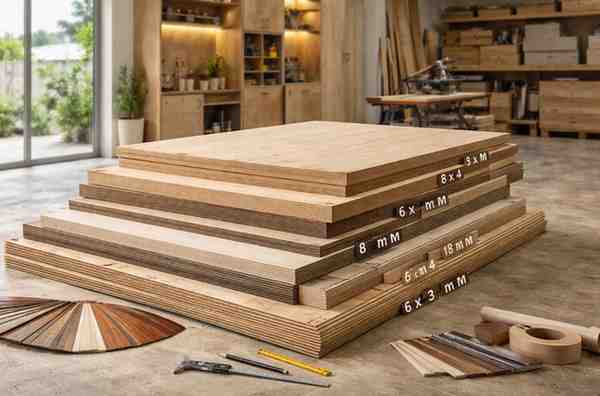
The decision usually boils down to 12mm vs. 16mm wooden cabinets. Wall cabinets do not carry more weight; therefore,12mm is sufficient. Base cabinets are a separate matter. 16mm makes more sense because they require more weight, movement, and stress.
When selecting the ideal plywood thickness for kitchen cabinets, it’s helpful to consider the cabinet’s location rather than merely the plywood’s apparent strength. Using extremely thick sheets everywhere can restrict internal space and complicate installation, particularly in smaller kitchens. Matching thickness to usage is preferable to going overboard.
Modular kitchen plywood considerations for compact layouts
Modular kitchen plywood must be reliable and constant in small households. Modular kitchens use pre-cut panels, thus even little changes in the sheet can be visible after everything is installed.
Here, screw-holding strength is important. Modular cabinets are used together, adjusted occasionally, and changed on-site. If the plywood does not hold screws well, the fittings will loosen with time. In small spaces where cabinets are frequently used, this is particularly apparent.
Edge strength is another factor that many people ignore. Because cabinets are positioned closer to passageways in tiny kitchens, edges are banged more frequently. Cabinets with strong edges are less likely to chip following regular use. Even if it’s a minor feature, it has an impact over time.
Common mistakes to avoid during a small kitchen renovation
Most of the issues you see later usually trace back to a few common mistakes. Using marine plywood everywhere. Although marine plywood is useful near sinks and other damp areas, applying it throughout the kitchen usually ends in higher costs without significant benefits.
- Using marine plywood everywhere: Although marine plywood is useful near sinks and other damp areas, using it throughout the kitchen can incur higher costs without significant benefits.
- Leaving the edge sealed: This one appears later. Even fine plywood begins to bulge or chip when edges are left exposed, particularly around cooking and washing areas.
- Choosing One Grade For Everywhere: Wall cabinets and base cabinets do not have the same load capacity. Over time, treating them the same way typically results in preventable problems.
Conclusion
There isn’t much space for error in a small kitchen. Every cabinet is used every day, and small decisions often reveal results sooner rather than later. Hence, plywood for a small kitchen makeover requires more consideration than simply selecting whatever is on hand.
Making better plywood selections for kitchens boils down to matching the material to how the room is really used. Cabinets keep their shape better and survive longer when a suitable grade and thickness are used. That’s what actually adds up to the longevity of kitchen cabinets over time.
If you’re designing a small kitchen and want advice on usage, Wigwam Ply provides high-quality plywood for consistent performance, helping homeowners make decisions that will last long after the installation is completed.
FAQs
1. Which plywood is best for a small kitchen renovation?
For small kitchens, good-quality kitchen-grade plywood works best. Look for plywood with strong bonding and a stable core. It should handle daily use, weight, and some moisture without warping. You don’t need the most expensive option everywhere—what matters is choosing the right grade for the right area.
2. Is plywood good for kitchen cabinets in small kitchens?
Yes, plywood works very well for small kitchen cabinets. It handles regular opening, closing, and storage weight better than many alternatives. In compact kitchens, cabinets are used more intensely, and plywood tends to stay stable over time when chosen correctly.
3. What thickness of plywood is ideal for small kitchen cabinets?
There’s no single thickness for all cabinets. Wall cabinets usually work well with 12mm plywood, while base cabinets are better with 16mm plywood because they carry more weight. Using the same thickness everywhere isn’t always necessary in small kitchens.
4. Is marine plywood necessary for a small kitchen renovation?
Marine plywood isn’t required for the entire kitchen. It makes sense near sinks, dishwashers, or areas that see regular water contact. For dry zones such as overhead or storage cabinets, regular kitchen-grade plywood is usually sufficient.
5. What is the cost of plywood for a small kitchen renovation?
The cost depends on the grade and thickness you choose. Marine plywood costs more than standard kitchen plywood. A mixed approach—marine plywood in wet areas and regular plywood elsewhere—often keeps costs balanced without affecting performance.
6. Can plywood handle moisture in kitchen areas?
Yes, plywood can handle moisture when the right grade is used, and edges are properly sealed. Laminates or finishes also help protect the surface. Continuous water exposure should still be avoided wherever possible.
7. Is plywood better than MDF for kitchen cabinets?
In most kitchen setups, plywood performs better than MDF. Plywood holds screws more firmly, handles weight better, and copes with moisture more reliably. MDF can work in dry areas, but it’s usually less forgiving in kitchens.
8. Which plywood is termite-resistant for kitchens?
Many kitchen-grade plywood options are treated for termite resistance. Always check whether the plywood is chemically treated and certified. Termite resistance depends more on treatment quality than just the plywood name.
9. Can modular kitchens be made with plywood?
Yes, modular kitchens are commonly made using plywood. Plywood works well with pre-cut panels and fittings, and it holds screws securely. This makes it suitable for modular setups, even in compact kitchens.
10. How long does a plywood kitchen last?
A well-made plywood kitchen can last many years. Proper grade selection, correct thickness, edge sealing, and good installation all play a role. Regular use doesn’t become a problem when these basics are done right.
11. Is BWP plywood suitable for small kitchens?
Yes, BWP plywood is suitable, especially in areas exposed to moisture. It offers better water resistance than MR-grade plywood. However, it’s usually not necessary to use BWP everywhere in a small kitchen.
12. What plywood grade is best for Indian kitchens?
For Indian kitchens, where cooking involves heat and moisture, BWR or BWP plywood is commonly preferred. The choice depends on how much moisture each cabinet area is exposed to.
13. Can plywood cabinets be customized for small kitchens?
Yes, plywood cabinets are easy to customize. They can be cut, shaped, and finished to suit tight layouts, corner units, and specific storage needs, which is especially useful in small kitchens.
14. Does plywood require lamination in kitchens?
Lamination isn’t mandatory, but it’s strongly recommended. Laminates protect plywood from spills, stains, and daily cleaning. They also make cabinets easier to maintain and improve their appearance over time.