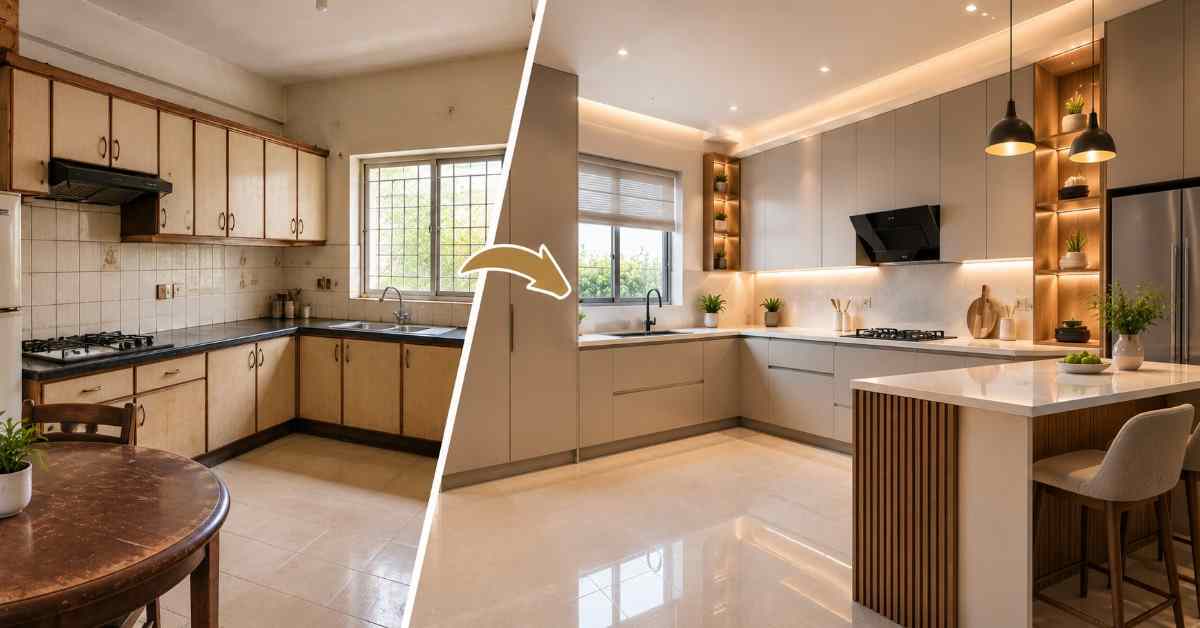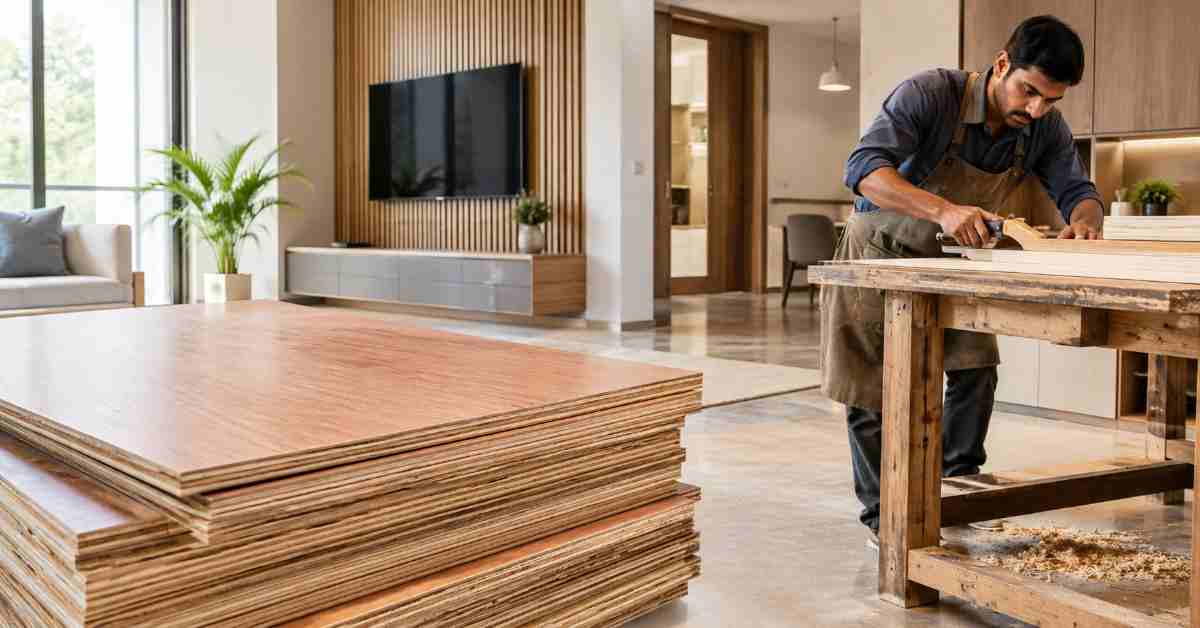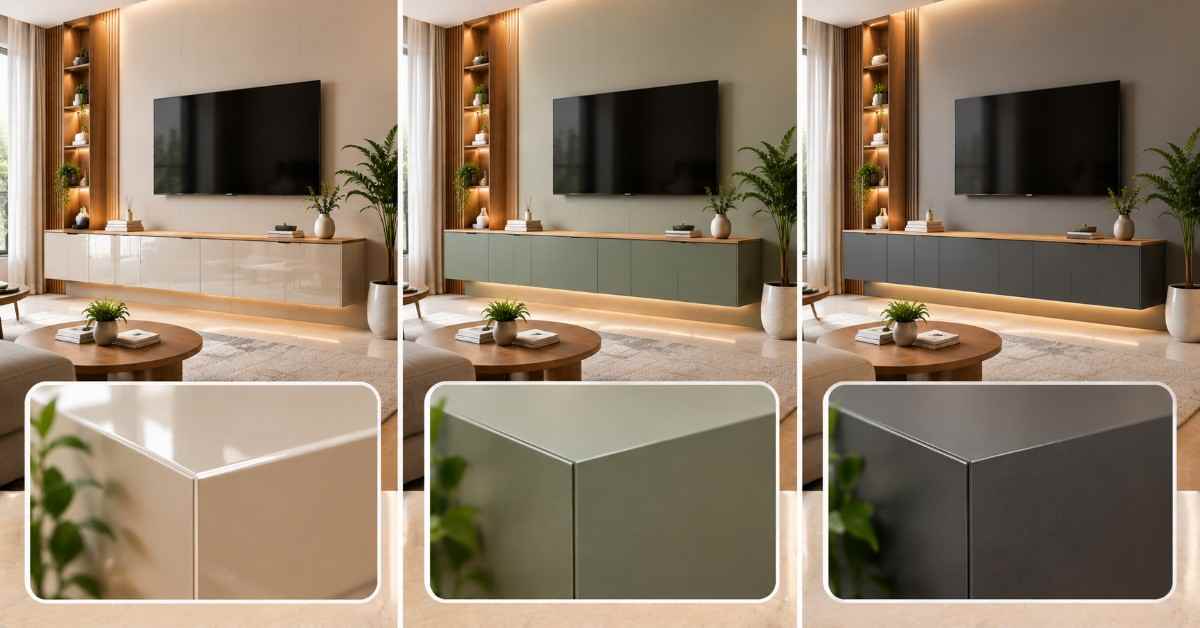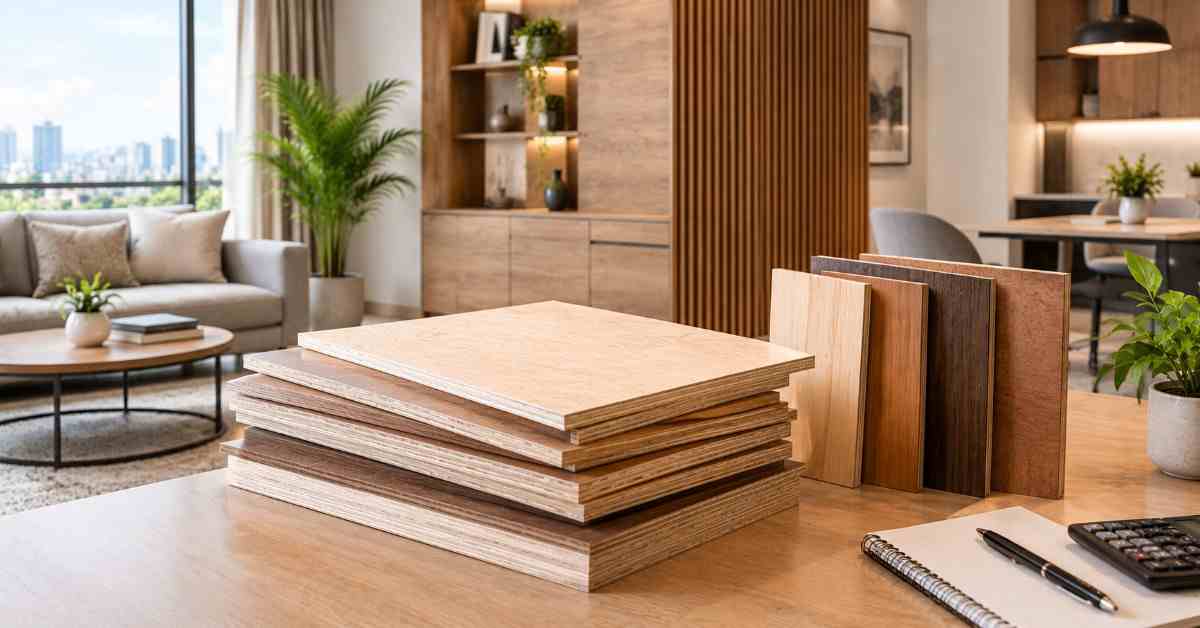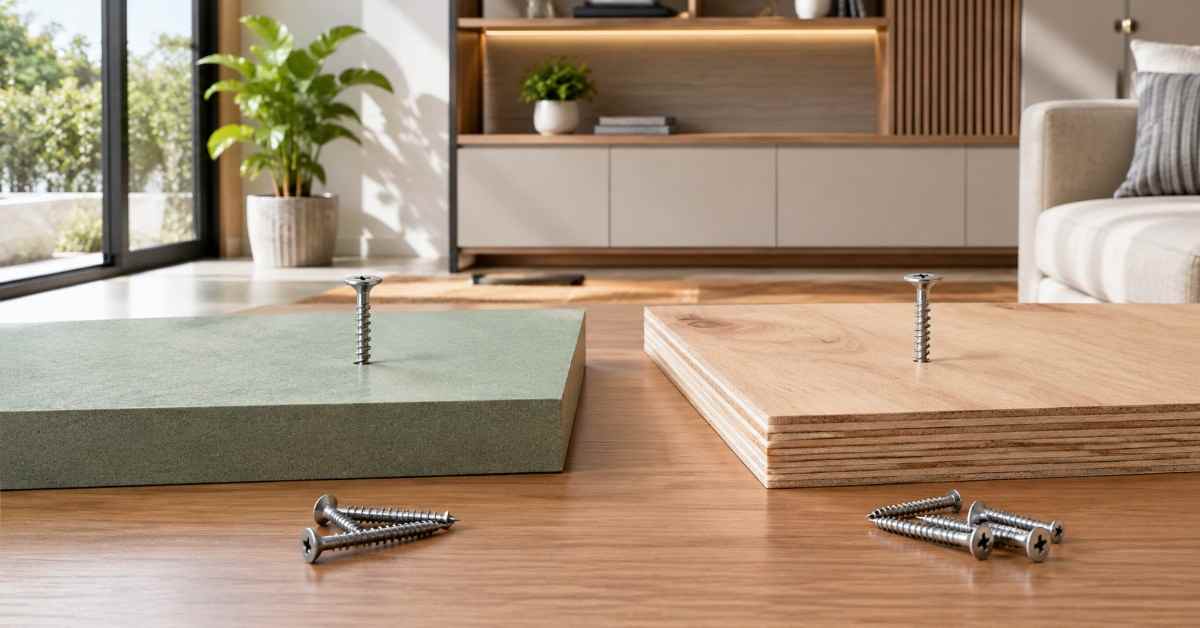
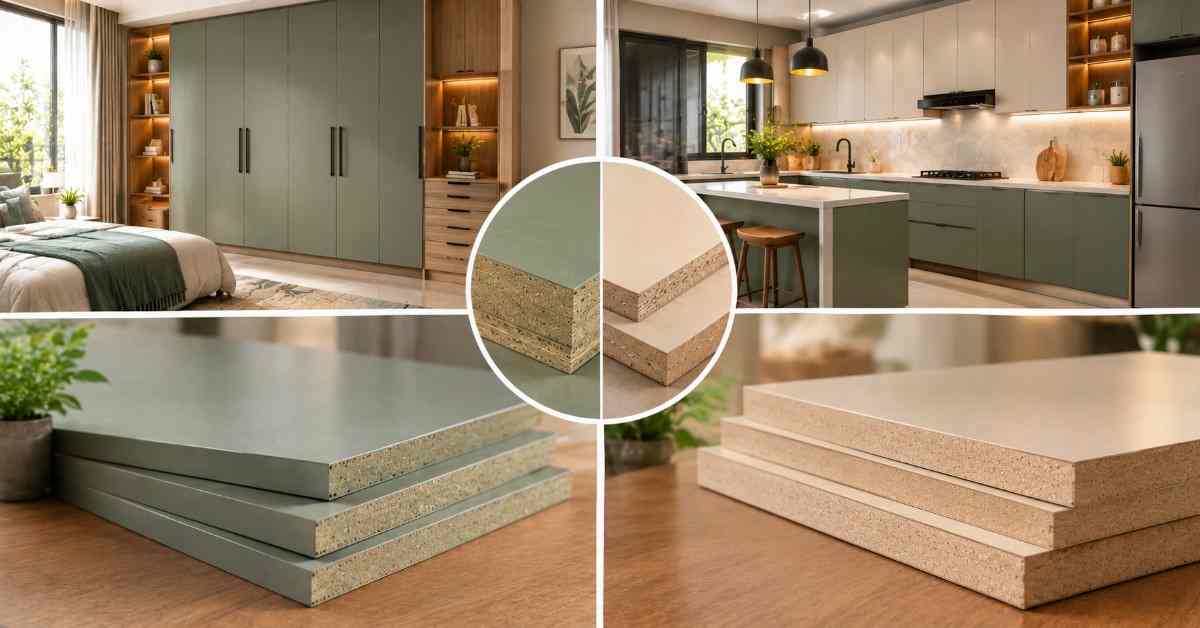
Choosing between HDHMR vs MDF is one of the most important decisions in modern furniture manufacturing. Both engineered boards offer smooth surfaces and excellent finishing capabilities, but their performance differs significantly when exposed to moisture, daily wear, and structural loading.
In Indian homes, furniture faces unique challenges. High humidity during monsoons, temperature fluctuations, frequent cleaning, and long-term usage place considerable stress on wardrobes, kitchens, storage units, and modular furniture. This is where understanding the difference between HDHMR Board and MDF becomes critical.
MDF (Medium Density Fiberboard) has long been a popular choice for decorative furniture applications because of its smooth surface and affordability. HDHMR (High Density High Moisture Resistant) board was developed as an advanced alternative, offering higher density, improved moisture resistance, stronger screw holding, and better durability. HDHMR boards typically achieve densities above 800 kg/m³, while standard MDF generally falls within the 600–800 kg/m³ range.
When it comes to sourcing high-performance ply India relies on, WigwamPly stands out with its eco-friendly and moisture-resistant range.
The debate around HDHMR vs MDF for wardrobes, HDHMR vs MDF for kitchen cabinets, and HDHMR vs MDF moisture resistance continues among homeowners, architects, and furniture manufacturers. While MDF remains attractive for budget-conscious projects, HDHMR has become increasingly popular for premium modular furniture where longevity matters.
However, when structural performance becomes the primary requirement, plywood continues to set the benchmark. Wigwam Ply’s premium plywood portfolio including Wigwam Visor BWP, Wigwam Excel MR, Fabricate Birch, MAT Ply, and Full Filling Calibrated Block Boards offers cross-laminated strength, superior edge screw holding, IS-certified moisture resistance, and long-term reliability that engineered fiber boards cannot fully replicate.
Understanding the strengths and limitations of both HDHMR and MDF helps buyers select the right material for every application. This guide compares both boards in detail and explains where each material fits within modern furniture and interior design projects.
Ensure maximum strength for your roofing and flooring applications with WigwamPly highly durable structural grade plywood 12mm.
HDHMR vs MDF Construction, Density & Core Technical Differences
Understanding the technical difference between HDHMR vs MDF starts with how these boards are manufactured. While both materials belong to the engineered wood category and use wood fibers as their base raw material, the density, resin formulation, moisture resistance, and structural performance vary significantly.
MDF was developed as a smooth, economical panel for furniture and interior applications. HDHMR board was introduced as a higher-performance alternative capable of handling greater moisture exposure, impact loads, and hardware stress. However, when compared against structural materials such as Wigwam Ply’s IS-certified plywood range, both remain non-structural fiber boards that serve different roles within furniture manufacturing.
Enhance the safety of your commercial and residential spaces with WigwamPly rigorously tested fire retardant plywood.
MDF vs HDHMR Construction: How the Core Makes the Difference
MDF (Medium Density Fiberboard) is manufactured by breaking wood into fine fibers, mixing them with urea-formaldehyde resin, and compressing the mixture under controlled heat and pressure. The resulting board achieves a uniform structure with densities typically ranging between 600–800 kg/m³.
This homogeneous fiber structure gives MDF its well-known smooth surface and paint-friendly finish. However, the same fiber-based construction creates limitations. MDF absorbs moisture through exposed edges, experiences swelling under humidity, and offers only moderate screw-holding performance, especially near edges and corners.
HDHMR (High Density High Moisture Resistant) board uses a similar manufacturing process but employs significantly higher compression pressures and moisture-resistant resin systems. The resulting board typically achieves densities between 850–1000 kg/m³, making it substantially denser than conventional MDF.
The higher density improves hardness, dimensional stability, moisture resistance, impact resistance, and hardware holding capability. This is why HDHMR has become popular for modular furniture shutters, wardrobes, and decorative furniture applications where durability matters.
Designed to withstand alternate wetting and drying conditions without delamination, WigwamPly boiling waterproof plywood is an industry favorite.
HDHMR vs MDF Strength Comparison
The performance difference between MDF and HDHMR becomes clearer when key engineering properties are compared.
| Property | MDF | HDHMR Board | Wigwam Ply IS-Certified Plywood |
| Typical Density | 600–800 kg/m³ | 850–1000 kg/m³ | 700–850 kg/m³ (species dependent) |
| Internal Bond Strength | 0.45–0.65 N/mm² | 0.75–1.20 N/mm² | Veneer-bonded cross-laminated structure |
| Modulus of Rupture (Bending Strength) | 20–30 MPa | 30–45 MPa | 45–70 MPa |
| Modulus of Elasticity | 2,000–3,500 MPa | 3,500–5,000 MPa | 6,000–10,000 MPa |
| Face Screw Withdrawal Strength | 700–900 N | 1,000–1,500 N | 1,500–2,500+ N |
| Edge Screw Withdrawal Strength | 400–700 N | 700–1,100 N | 1,200–2,000+ N |
| Surface Hardness | Moderate | High | High |
| Impact Resistance | Moderate | High | Very High |
| Load-Bearing Capacity | Moderate | Good | Excellent |
| Hinge-Holding Reliability | Moderate | Good | Excellent |
The table highlights why HDHMR is often positioned as a premium alternative to MDF. However, it also demonstrates why plywood remains the preferred structural furniture material. Cross-laminated veneers provide mechanical strength that homogeneous fiber boards cannot achieve.
HDHMR Board Advantages Over MDF
The primary HDHMR board advantages over MDF stem from density and resin technology.
| Performance Area | MDF | HDHMR Advantage |
| Density | Lower density | Up to 30–40% higher density |
| Surface Hardness | Moderate | Higher dent resistance |
| Moisture Resistance | Standard resin system | Moisture-resistant resin system |
| Fastener Holding | Moderate | Improved screw retention |
| Impact Resistance | Moderate | Better daily-use durability |
| CNC Routing | Good | Sharper profile definition |
| Edge Stability | Swelling risk | Improved dimensional stability |
| Laminate Support | Good | Better under heavy usage |
For wardrobes, modular furniture shutters, decorative wall panels, and routed furniture fronts, HDHMR generally delivers longer service life than standard MDF.
HDHMR vs MDF Moisture Resistance
One of the most searched comparisons is HDHMR vs MDF moisture resistance.
The difference becomes apparent in humid Indian conditions.
| Moisture Performance Parameter | MDF | HDHMR | Wigwam Visor BWP Plywood (IS:710) |
| Relative Humidity Tolerance | Moderate | High | Very High |
| Edge Swelling Risk | High | Moderate | Minimal |
| Water Splash Resistance | Low | Moderate | High |
| Steam Exposure Resistance | Low | Moderate | High |
| Kitchen Suitability | Limited | Better | Recommended |
| Bathroom Furniture Suitability | Not Recommended | Limited | Recommended |
| Boiling Water Certification | None | None | IS:710 Certified |
| 72-Hour Boiling Water Test | Fails | Fails | Passes |
HDHMR performs substantially better than MDF under humidity and occasional moisture exposure. However, it is important to understand that HDHMR is not waterproof.
Both MDF and HDHMR absorb moisture through exposed cut edges. Under prolonged water contact, the compressed fiber core expands, swells, and loses structural integrity. This is why neither material can match Wigwam Visor BWP Plywood, which complies with IS:710 Boiling Water Proof certification and is specifically engineered for kitchens, bathrooms, and moisture-prone environments.
Achieve a flawless, elegant finish for your high-end furniture and cabinetry with WigwamPly premium birch plywood.
HDHMR, MDF and Wigwam Ply Plywood: Which Performs Best?
Rather than viewing HDHMR and MDF as direct plywood alternatives, it is more accurate to see them as complementary materials used for specific furniture functions.
| Comparison Parameter | HDHMR Board | MDF | Wigwam Ply Plywood |
| Density | 850–1000 kg/m³ | 600–800 kg/m³ | 700–850 kg/m³ |
| Moisture Resistance | Moderate–High | Moderate | IS:303 MR & IS:710 BWP Options |
| Edge Screw Holding | 700–1,100 N | 400–700 N | 1,200–2,000+ N |
| Bending Strength | 30–45 MPa | 20–30 MPa | 45–70 MPa |
| Surface Hardness | High | Moderate | High |
| CNC Routing Quality | Excellent | Good | Good |
| Hinge Performance | Good | Moderate | Excellent |
| Load-Bearing Furniture | Moderate | Limited | Excellent |
| Certifications Available | Manufacturer Specific | Manufacturer Specific | IS:303, IS:710, IS:5509, IS:10701 |
| Best Application | Decorative shutters, routed panels | Painted furniture, mouldings | Structural furniture, kitchens, wardrobes |
For decorative routed shutters and premium furniture facades, HDHMR offers clear advantages over MDF. For structural carcasses, shelving, wardrobes, modular kitchens, and hinge-heavy furniture, Wigwam Ply’s calibrated plywood, Visor BWP plywood, Excel MR plywood, MAT Ply, and Fabricate Birch plywood provide significantly greater strength, moisture resistance, and long-term reliability.
This is why professional furniture manufacturers often use a hybrid specification: HDHMR for decorative shutter fronts and routed elements, combined with Wigwam Ply plywood for carcasses, shelving, and structural components. This approach delivers premium aesthetics without compromising structural performance.
Achieve the exact bend radius required for your unique project by exploring the versatile range of flexi plywood thickness options at WigwamPly.
HDHMR vs MDF for Kitchen, Wardrobes & Interior Design — Price Comparison & Which to Choose
When comparing HDHMR vs MDF for kitchen cabinets, HDHMR vs MDF for wardrobes, and HDHMR vs MDF for interior design, the most important factor is understanding where each material performs best. While HDHMR and MDF are often marketed as furniture solutions, they serve very different purposes than structural plywood.
For premium modular furniture, professional manufacturers increasingly combine multiple materials strategically: HDHMR for decorative visible surfaces and Wigwam Ply IS-certified plywood for structural components. This approach delivers better aesthetics, durability, and long-term furniture performance than relying on a single board material throughout the project.
HDHMR vs MDF for Kitchen Cabinets, Wardrobes & Interior Design Applications
The table below compares where HDHMR, MDF, and Wigwam Ply plywood perform best across modern furniture applications.
| Application | MDF | HDHMR Board | Wigwam Ply Plywood |
| Kitchen Shutter Fronts | Suitable in dry kitchens | Recommended | Excellent with laminate/veneer |
| Kitchen Carcasses | Not Recommended | Not Recommended | Wigwam Visor BWP (IS:710) Recommended |
| Under-Sink Cabinets | Not Recommended | Limited Suitability | Wigwam Visor BWP (IS:710) |
| Wardrobe Shutters | Suitable | Recommended | Premium Option |
| Wardrobe Carcasses | Limited | Good | Wigwam Excel MR / Visor BWP |
| Load-Bearing Shelves | Limited | Moderate | Recommended |
| TV Units | Suitable | Recommended | Recommended |
| Office Furniture | Suitable | Recommended | Recommended |
| CNC Decorative Panels | Good | Excellent | Good |
| Wall Cladding | Good | Excellent | Excellent |
| Decorative Partitions | Good | Excellent | Excellent |
| Bathroom Furniture | Not Recommended | Limited | Wigwam Visor BWP |
| Commercial Interiors | Moderate | Good | Recommended |
HDHMR vs MDF for Kitchen Cabinets
For kitchen cabinet shutter fronts, HDHMR is clearly superior to standard MDF. Kitchens are exposed to cooking steam, humidity fluctuations, oil vapors, and daily cleaning. Under these conditions, MDF’s fiber structure absorbs moisture more readily, causing edge swelling and gradual deterioration.
HDHMR’s higher density and moisture-resistant resin system provide better performance for:
| Kitchen Performance Parameter | MDF | HDHMR |
| Density | 600–800 kg/m³ | 850–1000 kg/m³ |
| Surface Hardness | Moderate | High |
| Steam Resistance | Moderate | Better |
| Laminate Bonding Stability | Good | Better |
| Impact Resistance | Moderate | High |
| Edge Swelling Resistance | Limited | Improved |
| CNC Decorative Shutters | Good | Excellent |
However, when discussing kitchen carcasses, neither HDHMR nor MDF is the ideal specification.
Kitchen carcasses must support granite countertops, heavy cookware, pantry storage, and drawer systems. These applications require strong screw-holding performance and certified moisture resistance.
For this reason, Wigwam Visor BWP Plywood (IS:710 Certified) remains the preferred material for:
- Kitchen carcasses
- Under-sink cabinets
- Pantry units
- Drawer support structures
- Wall-mounted kitchen cabinets
The combination of HDHMR shutters + Wigwam Visor BWP plywood carcasses has become one of the most widely recommended professional kitchen specifications.
When building interior fixtures that require reliable protection against everyday dampness, architects consistently choose WigwamPly as the best plywood for moisture resistance.
HDHMR vs MDF for Wardrobes
The comparison between HDHMR vs MDF for wardrobes follows a similar pattern.
Wardrobe shutters are frequently touched, opened, and exposed to minor impacts during daily use. HDHMR’s higher density provides better dent resistance and longer-lasting appearance.
For wardrobe shutter applications:
| Wardrobe Performance Factor | MDF | HDHMR |
| Surface Hardness | Moderate | High |
| Daily Wear Resistance | Moderate | Better |
| Hinge Area Durability | Moderate | Better |
| Decorative Routing Quality | Good | Excellent |
| Moisture Resistance | Moderate | Better |
| Laminate Durability | Good | Better |
For wardrobe carcasses and shelving systems, structural strength becomes more important than surface quality.
Wardrobe interiors routinely support:
- Hanging garments
- Linen storage
- Luggage
- Storage boxes
- Accessories
These loads create long-term stress on shelves and hardware.
Wigwam Excel MR Plywood and Wigwam Visor BWP Plywood provide superior:
- Shelf load capacity
- Edge screw holding
- Hinge support
- Long-span stability
- Structural durability
This makes plywood the preferred material for wardrobe carcasses while HDHMR remains ideal for decorative shutters.
HDHMR vs MDF for Interior Design
For interior designers, both HDHMR and MDF have specific roles depending on the project requirements.
| Interior Design Application | Preferred Material | Reason |
| CNC Decorative Panels | HDHMR | Sharper routed details |
| Feature Walls | HDHMR | Better surface durability |
| Decorative Wall Cladding | HDHMR | Improved impact resistance |
| Painted Mouldings | MDF | Easier machining |
| Decorative Profiles | MDF | Smooth profiling capability |
| Concealed Panels | MDF | Cost-effective |
| Premium Furniture Surfaces | HDHMR | Better wear resistance |
| Commercial Decorative Panels | HDHMR | Higher durability |
| Structural Partitions | Wigwam Ply Plywood | Better strength |
| Heavy Furniture Components | Wigwam Ply Plywood | Superior load capacity |
HDHMR’s higher density allows cleaner CNC routing and better edge definition, making it increasingly popular in contemporary interior projects featuring geometric patterns and decorative wall panels.
Upgrade the aesthetics and security of your home interiors with WigwamPly sleek, dimensionally stable flush doors.
HDHMR vs MDF Price Comparison in India
One of the most common questions remains HDHMR vs MDF Price and HDHMR vs MDF Cost.
Indicative Indian Market Price Comparison (August 2026)
| Material | Thickness | Approx Price Range |
| Standard MDF | 18mm | ₹65–₹120 per sq ft |
| Moisture Resistant MDF | 18mm | ₹80–₹140 per sq ft |
| HDHMR Board | 18mm | ₹100–₹180 per sq ft |
| Premium HDHMR | 18mm | ₹140–₹220 per sq ft |
| Wigwam Excel MR Plywood | 18mm | Dealer Quote Based |
| Wigwam Visor BWP Plywood | 18mm | Dealer Quote Based |
Disclaimer: Prices are indicative market estimates and may vary by city, thickness, brand, dealer network, certification level, and prevailing raw material costs.
HDHMR generally commands a 20–35% premium over standard MDF, reflecting:
- Higher density manufacturing
- Better resin systems
- Improved moisture resistance
- Stricter quality control
- Better machining performance
For kitchen shutters, wardrobe shutters, commercial interiors, and CNC decorative work, this premium is often justified by improved durability and reduced maintenance.
HDHMR vs MDF: Which Is Better?
For most furniture applications, HDHMR is objectively better than standard MDF.
| Evaluation Parameter | Winner |
| Moisture Resistance | HDHMR |
| Surface Hardness | HDHMR |
| Impact Resistance | HDHMR |
| Screw Holding | HDHMR |
| CNC Routing Quality | HDHMR |
| Decorative Furniture | HDHMR |
| Budget Projects | MDF |
| Painted Mouldings | MDF |
| Structural Furniture | Wigwam Ply Plywood |
| Kitchen Carcasses | Wigwam Visor BWP |
| Wardrobe Structures | Wigwam Excel MR / Visor BWP |
The most effective professional specification today is not HDHMR alone or MDF alone.
Recommended Material Combination for Modern Furniture
| Furniture Component | Recommended Material |
| Kitchen Shutters | HDHMR |
| Wardrobe Shutters | HDHMR |
| Decorative CNC Panels | HDHMR |
| Kitchen Carcasses | Wigwam Visor BWP Plywood |
| Wardrobe Carcasses | Wigwam Excel MR Plywood |
| Heavy Shelving | Wigwam Ply Plywood |
| Commercial Furniture | Wigwam Ply Plywood |
| Painted Mouldings | MDF |
| Concealed Dry Panels | MDF |
This combination delivers the best balance of surface aesthetics, moisture resistance, structural strength, hardware reliability, and long-term furniture durability.
Quick Decision Box
| Requirement | Recommended Material |
| Kitchen shutter fronts | HDHMR |
| Wardrobe shutter panels | HDHMR |
| CNC decorative panels | HDHMR |
| High-traffic visible furniture surfaces | HDHMR |
| Kitchen carcasses | Wigwam Visor BWP IS:710 Plywood |
| Load-bearing shelving | Wigwam Ply Plywood |
| Hinge-heavy modular furniture | Wigwam Ply Plywood |
| Structural wardrobes | Wigwam Excel MR / Visor BWP |
| Painted mouldings | MDF |
| Concealed dry-area panels | MDF |
| Budget non-structural shelving | MDF |
For modern modular furniture, the strongest specification remains HDHMR where appearance matters and Wigwam Ply plywood where structure matters. This approach delivers superior furniture performance compared to MDF-only or HDHMR-only construction.
Why Choose Wigwam Ply for Your Next Furniture Project?
Built for Strength. Engineered for Precision. Trusted for Generations.
Whether you’re designing a modular kitchen, premium wardrobe, luxury office furniture, or custom interiors, Wigwam Ply delivers the performance professionals demand. With IS-certified plywood, both-side calibration, 4 Times Press Technology, full core full panel construction, and all-layers chemical treatment, every sheet is engineered for long-term durability, superior screw holding, and moisture resistance.
Explore industry-leading solutions including Wigwam Visor BWP Plywood, Wigwam Excel MR, Fabricate Birch, Full Filling Calibrated Block Board, Recon Face Plywood, Flexi Ply, and MAT Ply—all designed to help architects, interior designers, and homeowners create furniture that lasts.
Choose Wigwam Ply. Build Once. Build Right.
Frequently Asked Questions
HDHMR (High Density High Moisture Resistant) boards are manufactured at higher density levels, typically 850–1000 kg/m³, using moisture-resistant resins. Standard MDF generally ranges between 600–800 kg/m³ and offers lower moisture resistance, screw-holding capacity, and surface hardness. HDHMR performs better in kitchens, wardrobes, and high-use furniture applications.
Yes. HDHMR offers higher density, better impact resistance, improved moisture performance, and stronger fastener holding than standard MDF. For shutter fronts, wardrobes, and decorative furniture panels, HDHMR is generally the superior specification.
For kitchen shutters and decorative panels, HDHMR is preferable due to better moisture resistance and durability. For kitchen carcasses, however, IS:710 BWP plywood such as Wigwam Visor remains the recommended choice because of superior structural strength, edge screw holding, and boiling-water-proof performance.
Yes. HDHMR uses moisture-resistant resin systems and high-density fiber compression to improve dimensional stability under humidity. However, it is not equivalent to BWP-grade plywood, which is specifically certified for prolonged moisture exposure and boiling-water resistance.
In the Indian market, HDHMR typically costs 20–35% more than standard MDF, depending on thickness, density, brand, and finish. The premium reflects higher density manufacturing, moisture-resistant resins, and stricter quality control standards. Prices vary by region and should be verified with local dealers.
Not completely. HDHMR performs well for decorative panels and shutter fronts, but plywood still offers superior bending strength, load-bearing capacity, and edge screw holding. For modular furniture carcasses, wardrobes, shelving systems, and hinge-heavy cabinets, Wigwam Ply IS-certified plywood remains the preferred structural material.
A professional specification is:
Wigwam Visor BWP IS:710 Plywood for carcasses, shelves, and structural components.
HDHMR for decorative shutters, routed fronts, and visible panel surfaces.
MDF only for dry-area decorative applications where moisture exposure is minimal.
This combination delivers the best balance of structural strength, moisture resistance, finish quality, and long-term durability.