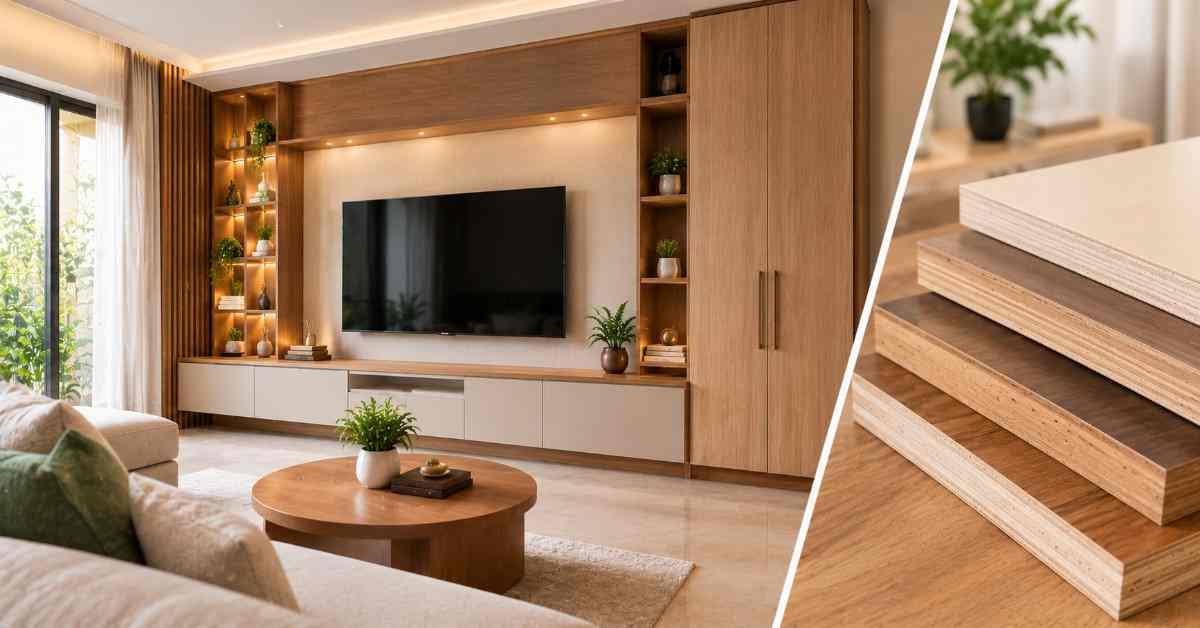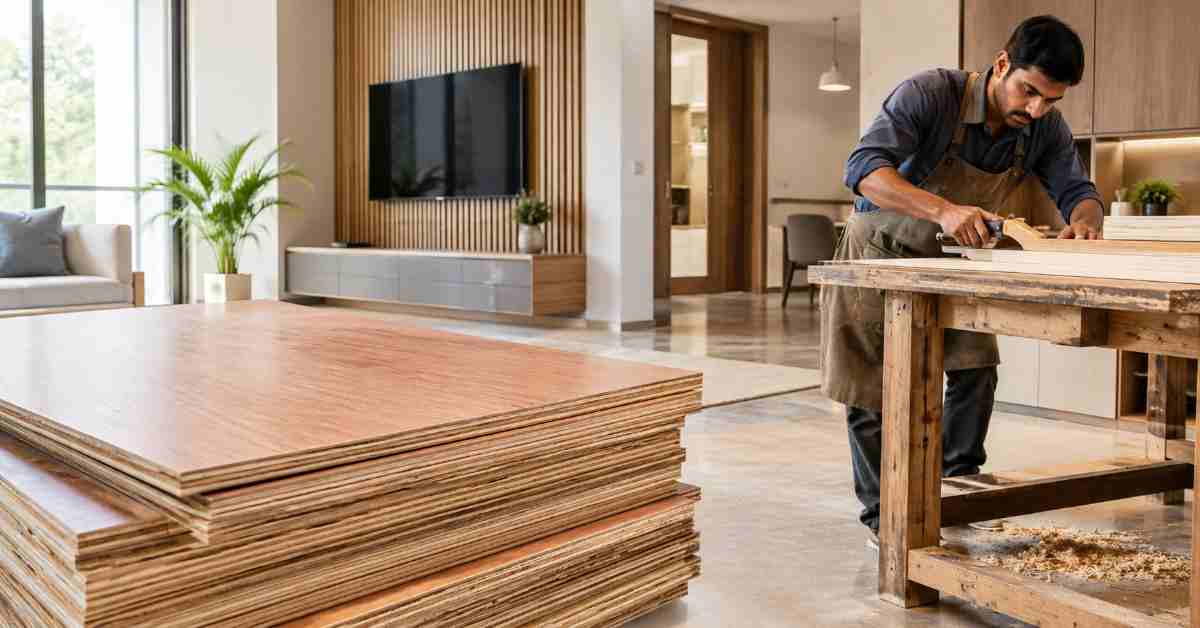
Choosing the right board is crucial for durable furniture. Material quality directly impacts strength, lifespan, and performance. This makes the Boilo Board vs Plywood comparison important for buyers.
Many homeowners compare Boilo Board and plywood before starting projects. Both materials are used in furniture and interior applications. However, their construction and performance differ significantly.
Understanding these differences helps avoid costly mistakes later. Furniture materials must handle daily wear and changing conditions. Moisture, hardware loads, and long-term durability all matter.
Supporters often highlight various Boilo Board benefits. These boards are commonly promoted for termite resistance and moisture protection. Certain applications may benefit from these characteristics.
At the same time, plywood remains a preferred furniture material. Its layered construction delivers strength and dimensional stability. Premium plywood performs reliably in demanding conditions.
When evaluating plywood vs Boilo Board, furniture performance should come first. Buyers should look beyond marketing claims and focus on practical results. Long-term durability often provides greater value than initial savings.
The discussion also includes Boilo Board applications and suitability. Some projects require specialised boards for specific environments. Others benefit more from versatile furniture-grade plywood.
Cost is another important consideration for homeowners. Many buyers compare Boilo Board price with plywood alternatives. Understanding value is more important than comparing sheet prices alone.
Questions about Boilo board vs plywood cost often arise during furniture planning. A lower purchase price does not always mean better value. Durability and maintenance costs should also be considered.
Similarly, Boilo board vs plywood price comparisons should include expected lifespan. Stronger materials typically reduce repair and replacement expenses. This creates better long-term returns for homeowners.
As a plywood-focused manufacturer, Wigwam Ply believes furniture performance starts with superior core construction. Before deciding which material is best, it is important to understand how both products are made, where they perform well, and which option delivers better value for modern interiors.
The Top 10 Best Plywood Brands in India offer premium-grade plywood designed for long-lasting furniture, modular kitchens, and modern interiors.
What Is Boilo Board vs Plywood — Construction, Composition & Core Differences
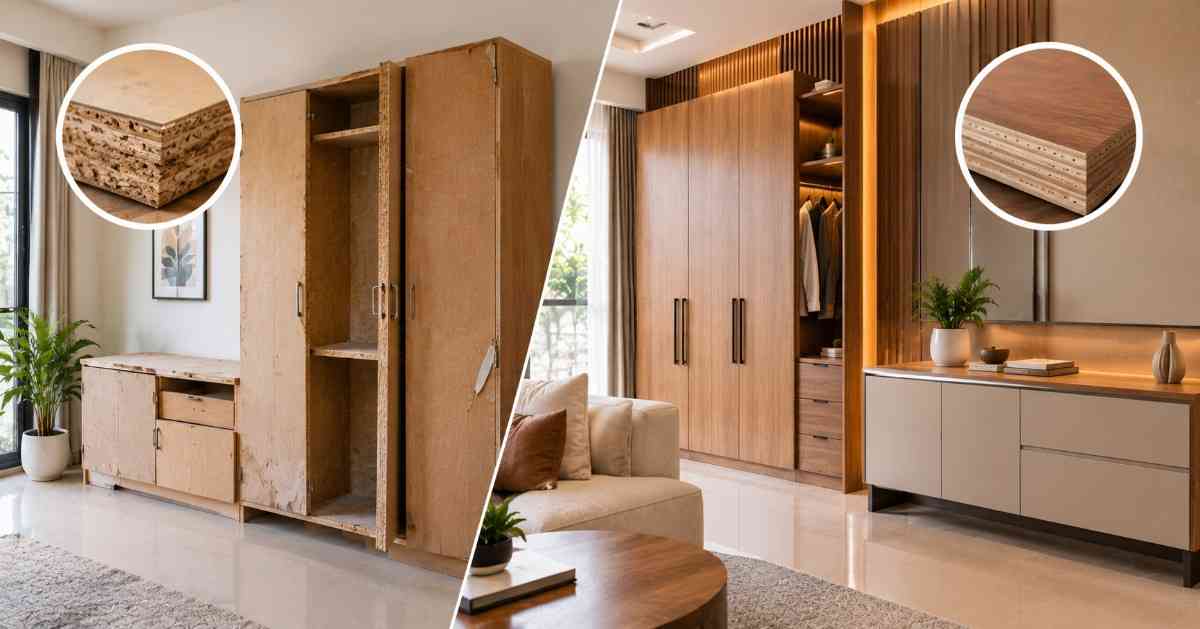
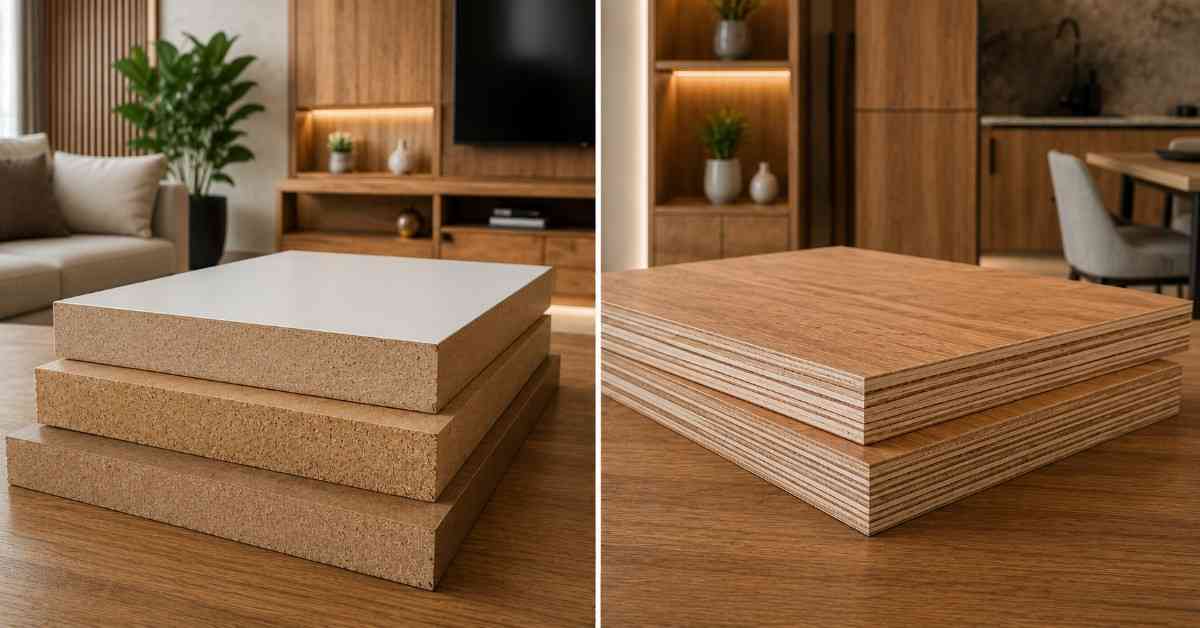
The debate around Boilo Board vs Plywood begins with understanding how these materials are manufactured. While both are used in furniture and interior projects, their internal construction differs significantly. These differences directly influence strength, durability, hardware performance, and long-term furniture reliability.
A proper furniture board comparison should always focus on the core structure. The way a board is built determines how well it handles weight, moisture, screws, hinges, and daily use.
What Is Boilo Board?
Boilo Board is an engineered wood-based panel manufactured using a specialised treatment process. The board is typically produced from processed wood fibers and other wood-based materials that undergo boiling and chemical treatment during manufacturing.
The objective of this process is to improve moisture resistance and reduce susceptibility to termite attack. Because the material has a relatively uniform internal structure, it offers consistent density throughout the panel.
Protect your interior furniture against seasonal humidity fluctuations with WigwamPly highly durable mr ply.
This makes Boilo Board suitable for selected interior applications where moisture resistance is prioritised over structural load-bearing performance.
How Boilo Board Is Constructed
The manufacturing process generally involves:
- Processing wood fibers and wood-based materials
- Applying chemical treatments
- Compressing the material under pressure
- Producing a homogeneous board structure
Unlike plywood, Boilo Board does not contain multiple cross-laminated veneer layers. Instead, it has a more uniform internal composition.
What Is Plywood?
In the plywood vs Boilo Board comparison, plywood uses a fundamentally different construction method.
Plywood is manufactured by bonding multiple thin wood veneers together. Each veneer layer is placed perpendicular to the adjacent layer, creating a cross-laminated structure that improves strength and dimensional stability.
The veneers are bonded using specialised adhesives such as:
- Phenol formaldehyde resin
- Urea formaldehyde resin
Depending on the adhesive system and manufacturing standard, plywood is available in several certified grades, including:
- BWP (Boiling Water Proof) – IS:710
- BWR (Boiling Water Resistant)
- MR (Moisture Resistant) – IS:303
This versatility makes plywood suitable for a wide range of furniture and interior applications.
Crafted with a seasoned pine wood core, WigwamPly pine block board provides exceptional stability for crafting long shelves and heavy panels.
How Plywood Construction Creates Superior Strength
The biggest advantage in the Boilo Board vs Plywood comparison comes from plywood’s cross-grain structure.
Each veneer layer reinforces the adjacent layer. This construction provides:
- Higher flexural strength
- Better dimensional stability
- Improved load distribution
- Superior resistance to bending
Because the grain direction alternates throughout the sheet, plywood can handle stresses from multiple directions more effectively than homogeneous engineered boards.
Screw-Holding Strength and Hardware Performance
Furniture durability depends heavily on how well a material retains screws and hardware.
Plywood’s layered veneer structure provides strong anchoring points for:
- Hinges
- Drawer channels
- Cabinet fittings
- Wardrobe accessories
This is one of the main reasons plywood remains a preferred material for structural furniture.
By comparison, Boilo Board may offer acceptable performance in certain applications, but its homogeneous composition generally provides lower screw retention under repeated loading conditions.
Load-Bearing Reliability
For furniture such as wardrobes, kitchen cabinets, shelving systems, and storage units, load-bearing capacity becomes critical.
Plywood distributes weight across multiple veneer layers, reducing stress concentration and improving long-term stability.
This makes plywood better suited for:
- Modular kitchens
- Wardrobes
- Cabinets
- Shelving systems
- Office furniture
These applications often require a level of structural performance that engineered boards may struggle to maintain over extended periods.
Boilo Board vs Plywood Comparison
| Feature | Boilo Board | Plywood |
| Core Composition | Homogeneous engineered board | Cross-laminated wood veneers |
| Internal Structure | Uniform fiber-based composition | Multi-layer veneer construction |
| Screw-Holding Strength | Moderate | Excellent |
| Flexural Strength | Moderate | High |
| Load-Bearing Capacity | Moderate | Superior |
| Moisture Resistance | Good | Varies by grade (MR, BWR, BWP) |
| Termite Resistance | Often chemically treated | Available with anti-termite treatment |
| Finish Compatibility | Good | Excellent |
| Hardware Retention | Moderate | Superior |
| Structural Furniture Suitability | Limited | Excellent |
| Ideal Use | Specialised interior applications | Furniture, kitchens, wardrobes, cabinetry |
Key Takeaway
A detailed furniture board comparison shows that both materials serve different purposes. Boilo Board is often selected for applications where moisture resistance and treated-board characteristics are prioritised. However, when comparing plywood vs Boilo Board for furniture, plywood’s cross-laminated construction provides clear advantages.
Its superior flexural strength, stronger screw-holding performance, better load-bearing capacity, and availability in certified grades make plywood a more versatile and reliable choice for modern furniture and interior applications. For homeowners seeking long-term durability, structural stability, and proven performance, plywood generally offers the stronger foundation.
Boilo Board Benefits & Applications vs Plywood — Price Comparison & Why Plywood Wins for Furniture
When comparing Boilo Board vs Plywood, it is important to evaluate both materials fairly. Every board has strengths and limitations. The right choice depends on the intended application, performance requirements, and long-term value.
Boilo Board Benefits
Several Boilo Board benefits make it suitable for specific situations. Its manufacturing process focuses heavily on moisture resistance and termite protection. This makes the material attractive in environments where pest exposure and humidity are primary concerns.
Commonly cited Boilo Board benefits include:
- Enhanced termite resistance
- Improved moisture resistance
- Consistent board density
- Suitable performance in humid environments
- Reduced susceptibility to pest-related damage
These characteristics help explain why the material continues to be used in selected interior and semi-exterior applications.
Boilo Board Applications
Typical Boilo Board applications are generally concentrated in areas where moisture and termite exposure are major concerns.
Common examples include:
- Door frames
- Window frames
- Exterior-adjacent installations
- Utility areas
- High-humidity locations
- Pest-prone environments
In these specialised situations, the treatment process may provide targeted advantages.
However, when furniture performance becomes the priority, the comparison shifts significantly.
Why Plywood Is the Better Furniture Material
For most residential and commercial furniture, plywood remains the more versatile and reliable solution.
Unlike specialised boards designed for limited applications, plywood performs effectively across a broad range of furniture categories.
These include:
- Modular kitchens
- Wardrobes
- Beds
- Study tables
- Office furniture
- Storage cabinets
- Shelving systems
- Structural furniture carcasses
This versatility is one reason premium furniture manufacturers continue to prefer plywood.
IS-Certified Performance Options
One major advantage of plywood is the availability of certified performance grades.
Depending on the application, buyers can choose:
| Plywood Grade | Certification | Suitable Applications |
| BWP Grade | IS:710 | • Modular kitchens• Bathroom furniture• High-moisture environments |
| BWR Grade | Boiling Water Resistant | • Humid interiors• Utility spaces• Residential furniture |
| MR Grade | IS:303 | • Dry interior furniture• Bedrooms• Living rooms• Office interiors |
This flexibility allows homeowners to select exactly the level of protection required.
| Requirement | Recommended Grade |
| Maximum water resistance | BWP Grade (IS:710) |
| Moderate moisture exposure | BWR Grade |
| Dry indoor furniture applications | MR Grade (IS:303) |
This grading system allows homeowners, architects, and furniture manufacturers to select plywood based on the expected moisture exposure and performance requirements of the project.
Superior Screw-Holding Strength
Modern modular furniture depends heavily on hardware.
Cabinets, wardrobes, drawers, and kitchen units all rely on:
- Hinges
- Drawer channels
- Connectors
- Fasteners
- Mounting hardware
Plywood’s cross-laminated veneer structure provides superior screw retention and hardware stability.
This becomes particularly important in furniture subjected to daily opening, closing, loading, and movement.
Better Finish Compatibility
Another advantage of plywood is its compatibility with virtually every major furniture finish.
Plywood works exceptionally well with:
- Decorative laminates
- Natural veneers
- Recon veneers
- PU coatings
- Duco finishes
- Decorative paints
This flexibility allows designers and homeowners to achieve a wide variety of aesthetic outcomes.
Boilo Board Price vs Plywood Price
Many buyers compare Boilo Board price with plywood alternatives before making a purchase decision.
While market prices vary by region, thickness, and manufacturer, Boilo Board often carries a premium because of its specialised treatment process.
However, price alone should not determine material selection.
Indicative Price Comparison: Boilo Board vs Wigwam Ply Plywood
Prices are indicative market ranges in India and may vary by thickness, grade, city, dealer, and project quantity. Last updated: July 2026.
| Material | Typical Grade | Indicative Price Range (₹ per sq. ft.) | Best Use |
| Boilo Board | Standard Interior Grade | ₹85 – ₹140 | Door frames, moisture-prone applications |
| Ordinary Commercial Plywood | MR Grade | ₹70 – ₹120 | General interior furniture |
| Wigwam Ply MR Grade Plywood | IS:303 | ₹90 – ₹150 | Bedrooms, living room furniture, office interiors |
| Wigwam Ply BWR Plywood | Water Resistant Grade | ₹120 – ₹190 | Utility spaces, humid interiors, cabinets |
| Wigwam Ply BWP Plywood | IS:710 Grade | ₹160 – ₹260 | Modular kitchens, bathrooms, high-moisture areas |
Value Perspective: While Boilo Board may appear comparable in price to premium plywood, furniture-grade Wigwam Ply plywood offers superior structural strength, better screw-holding performance, greater finish compatibility, and a wider range of applications. For wardrobes, kitchens, cabinets, beds, and modular furniture, the long-term value typically favours quality plywood over specialised boards.
Boilo Board vs Plywood Cost: Looking Beyond Purchase Price
The real question is not simply Boilo board vs plywood cost. The more important question is value.
For general furniture applications, plywood frequently delivers:
- Greater structural strength
- Better hardware performance
- More finish options
- Wider application versatility
- Longer service life
As a result, the additional premium associated with Boilo Board may not always translate into proportionally better furniture performance.
When comparing Boilo board vs plywood price, many homeowners discover that high-quality furniture-grade plywood provides a stronger overall return on investment.
Decision Guide: Which Should You Choose?
| Requirement | Recommended Material |
| Door frames in termite-prone areas | Boilo Board can be considered |
| Moisture-sensitive frame applications | Boilo Board can be considered |
| Modular kitchens | Plywood is the clear choice |
| Wardrobes | Plywood is the clear choice |
| Cabinets | Plywood is the clear choice |
| Beds and furniture carcasses | Plywood is the clear choice |
| Shelving systems | Plywood is the clear choice |
| Hardware-heavy modular furniture | Plywood is the clear choice |
| Long-term furniture durability | Plywood is the clear choice |
Final Verdict
The various Boilo Board applications demonstrate that the material can be useful in specific moisture- and termite-focused situations. Its treatment process offers targeted protection where those concerns dominate.
However, for mainstream furniture manufacturing, plywood remains the stronger all-round performer. Its certified grades, superior structural strength, exceptional screw-holding capacity, finish versatility, and proven furniture performance make it the preferred material for kitchens, wardrobes, cabinets, beds, and storage systems.
When evaluating Boilo Board price, Boilo board vs plywood cost, and overall value, furniture-grade plywood consistently emerges as the more practical and versatile choice for modern interiors.
Ensure optimal sound insulation and structural rigidity by selecting the perfect flush door thickness from WigwamPly premium collection.
Build Better Furniture with Wigwam Ply
When performance, durability, and long-term value matter, plywood remains the smarter choice for modern interiors. From modular kitchens and wardrobes to storage units and commercial furniture, premium plywood delivers the structural strength, hardware-holding capability, and finish compatibility that furniture demands. While specialised boards have niche applications, quality plywood offers unmatched versatility across almost every interior project.
At Wigwam Ply, we believe great furniture starts with a strong foundation. Our range of calibrated plywood products is engineered for precision, durability, and consistent performance. With advanced manufacturing processes, only calibrated plywood construction, and solutions designed for Indian conditions, Wigwam helps homeowners, architects, and furniture manufacturers create interiors that last. Discover the Wigwam difference and experience “Ply As It Should Be.”
Frequently Asked Questions
Is Boilo Board better than plywood for furniture?
For most furniture applications, plywood is generally the better choice. In the Boilo Board vs Plywood comparison, plywood offers superior structural strength, better screw-holding capacity, and greater versatility for wardrobes, cabinets, beds, and modular kitchens. While Boilo Board performs well in specific moisture- and termite-focused applications, plywood remains the preferred all-round furniture material.
What are the disadvantages of Boilo Board vs plywood?
When comparing plywood vs Boilo Board, the main limitations of Boilo Board are lower structural versatility, reduced load-bearing performance, and less reliable hardware retention for furniture that experiences daily stress. While it offers moisture and termite resistance benefits, it may not match plywood’s performance in heavy-duty furniture applications.
Is plywood stronger than Boilo Board?
Yes. In a typical furniture board comparison, plywood is usually stronger because of its cross-laminated veneer construction. This layered structure improves flexural strength, dimensional stability, and screw-holding performance, making plywood more suitable for structural furniture and load-bearing applications.
Which is more cost-effective — Boilo Board or plywood?
The answer depends on the application. While Boilo Board price may sometimes be higher due to its specialised treatment process, plywood often delivers better long-term value because of its durability and wider range of uses. When evaluating Boilo board vs plywood cost, furniture-grade plywood frequently provides a stronger return on investment for most residential interiors.
Can Boilo Board replace plywood for modular kitchens?
In most cases, no. For modular kitchens, plywood remains the preferred material because of its superior structural strength, hardware-holding capability, and availability in BWP-grade waterproof variants. While certain Boilo Board applications may perform well in moisture-prone areas, plywood offers a more complete solution for kitchen carcasses, cabinets, and shelving systems.
What are the key Boilo Board benefits?
Commonly cited Boilo Board benefits include moisture resistance, termite resistance, consistent density, and suitability for certain high-humidity environments. These characteristics make it useful for specialised applications such as frames and moisture-sensitive installations.
What are the most common Boilo Board applications?
Typical Boilo Board applications include door frames, window frames, utility areas, pest-prone environments, and locations where moisture resistance is a primary requirement. However, for furniture such as wardrobes, cabinets, and modular kitchens, plywood is generally preferred.
What is the difference between Boilo Board and plywood?
The main difference in the Boilo Board vs Plywood comparison is construction. Boilo Board uses a homogeneous engineered composition, while plywood consists of multiple cross-laminated veneer layers bonded together. This gives plywood better strength, stability, and hardware performance for furniture use.
Why do furniture manufacturers prefer plywood?
Furniture manufacturers often prefer plywood because it combines strength, durability, moisture resistance, and excellent finish compatibility. Plywood works exceptionally well with laminates, veneers, and PU coatings while providing dependable performance for long-term furniture use.
Which material should homeowners choose?
For most homes, plywood remains the recommended choice. Unless the project specifically requires the specialised characteristics offered by Boilo Board, furniture-grade plywood provides better versatility, stronger performance, and greater long-term value across a wider range of interior applications.