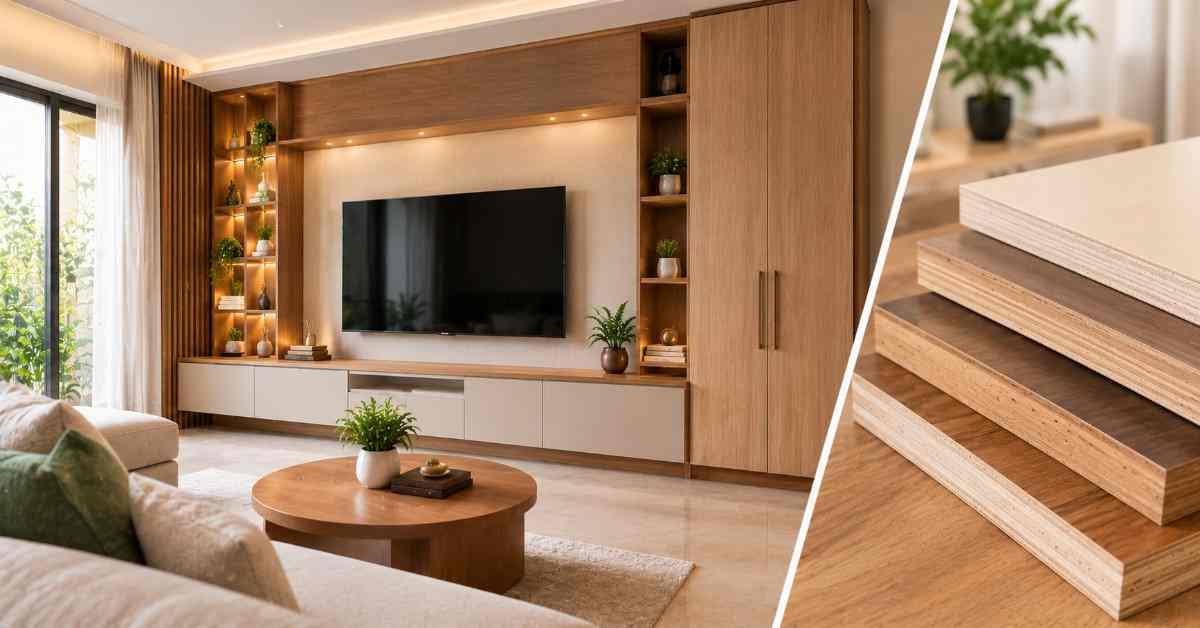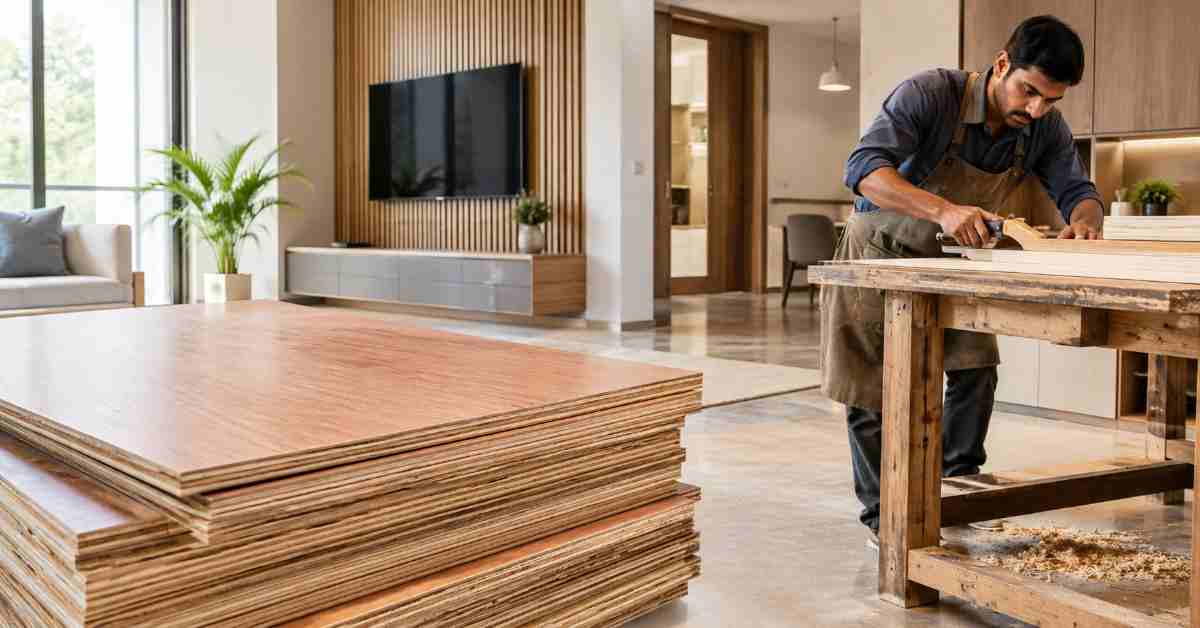

Choosing the right material affects furniture performance and door durability. Many homeowners compare Flush Door vs Block Board before starting projects. Both products use wood-based construction but serve different purposes. Understanding their differences helps avoid costly design and installation mistakes.
Consistently ranked among the Top 10 Best Plywood Brands in India, WigwamPly is the ultimate choice for architects seeking calibrated, precision-engineered wood solutions.
A Block Board is a structural wood panel used for furniture. It contains solid timber battens arranged edge-to-edge within the core. Veneers are bonded on both surfaces under controlled pressure. This construction provides strength, rigidity, and dimensional stability. Block boards are widely used for wardrobes, shelving, partitions, and cabinets.
A Flush Door is a finished door product ready for installation. It contains a solid or semi-solid core enclosed within face veneers. The entire assembly is factory-pressed into a complete door shutter. Unlike block board, flush doors are not intended for furniture manufacturing. They are specifically designed for door applications in homes and commercial buildings.
The comparison between Flush Door vs Block Board vs Plywood often creates confusion. Plywood is a panel material made from cross-laminated veneers. Block board is a furniture-grade panel with a timber batten core. Flush doors are finished door shutters built using engineered core constructions. Each product serves a distinct purpose within interior projects.
Modern Indian homes require materials that resist humidity and daily usage. This makes construction quality more important than initial purchase cost. Choosing the wrong material can result in warping, sagging, or reduced lifespan. Understanding the differences between flush doors and block boards helps homeowners make better decisions.
For furniture and interior applications, WigwamPly offers premium block boards. Products like Wigwam Excel Block Board, Fabricate Birch Block Board, and Fabricate Gold Block Board provide strength, calibration accuracy, and long-term durability. For door applications, Wigwam Ply’s premium flush doors deliver stability, smooth finishes, and reliable performance for residential and commercial spaces.
In this guide, we compare construction, applications, pricing, durability, and performance to help determine which option best suits your project.
Flush Door vs Block Board — Construction, Composition & Core Differences
Many buyers misunderstand the Flush Door vs Block Board comparison. The two products are not direct alternatives. A block board is a raw panel material. A flush door is a finished door product. Understanding this distinction helps homeowners select the right material for furniture and door applications.
Bring your most creative, curved design concepts to life without compromising on structural integrity using WigwamPly highly adaptable flexible plywood.
Block board is manufactured using solid wooden battens placed edge-to-edge. These battens are sandwiched between veneer sheets under pressure. The resulting panel provides rigidity, dimensional stability, and load-bearing strength. Carpenters use block boards for wardrobes, partitions, furniture, shelving, and door manufacturing. Products such as Wigwam Excel Block Board, Fabricate Birch Block Board, and Fabricate Gold Block Board are designed specifically for such applications.
A flush door, in contrast, is a complete ready-to-install door shutter. It uses a structural core, face skins, edge lipping, and decorative finishes. The core may consist of block board, plywood, solid timber, or other engineered constructions. The finished product provides a smooth and uniform appearance without raised panels or decorative mouldings.
Trusted by carpenters for crafting long-lasting wardrobes and bookshelves, WigwamPly moisture resistant ply ensures your woodwork stays pristine in damp climates.
How a Block Board Door Is Constructed
A block board door uses a block board panel as its structural foundation. The core provides strength and rigidity across the entire shutter. Thin plywood face skins, typically 3mm to 4mm thick, are bonded on both sides. Edge lipping is added along all four edges to support hinge fixing, lock installation, and finishing work. The door is then finished using laminate, veneer, paint, or PU coating depending on design requirements.
Block board door thickness generally falls within the following range:
| Block Board Door Thickness | Common Application |
| 30mm | Lightweight internal doors |
| 35mm | Standard bedroom doors |
| 40mm | Premium residential doors |
| 45mm | Heavy-duty commercial doors |
Thicker doors generally provide better sound insulation, greater stability, and improved durability under frequent use.
What Makes a Flush Door Different?
A flush door is defined by its appearance rather than its core. The term “flush” refers to the smooth and uninterrupted surface across the door face. Unlike panel doors, flush doors do not contain decorative grooves, rails, or raised sections.
The core may still use block board or plywood construction. However, manufacturers focus heavily on surface flatness, face skin quality, and precision finishing. Premium flush doors often use calibrated plywood skins or engineered face layers to achieve a perfectly smooth surface suitable for laminates, veneers, or painted finishes.
Protect your kitchen and bathroom interiors against extreme moisture with WigwamPly highly resilient waterproof marine ply.
This is why the Flush Door vs Block Board vs Plywood comparison often creates confusion. Block board and plywood are materials. Flush doors are finished products manufactured using those materials.
Standard Block Board Door Sizes in India
Most residential projects follow standard door dimensions. These sizes simplify manufacturing, installation, and hardware selection.
| Block Board Door Sizes | Typical Application |
| 2134mm × 914mm (7ft × 3ft) | Main entrance doors |
| 2134mm × 838mm (7ft × 2.75ft) | Premium room doors |
| 2134mm × 762mm (7ft × 2.5ft) | Bedroom doors |
| 1981mm × 762mm (6.5ft × 2.5ft) | Bathroom doors |
| Custom Sizes | Architectural projects |
Door thickness directly influences weight, acoustic performance, and hinge requirements. Larger doors generally benefit from thicker cores and stronger hinge systems.
What Are the Disadvantages of Flush Doors?
Although flush doors remain highly popular in modern interiors, they have some limitations.
| Flush Door Disadvantages | Impact on Performance |
| Limited decorative detailing | Less architectural character than panel doors |
| Surface damage visibility | Deep scratches and dents are difficult to repair |
| Quality variation across manufacturers | Low-cost flush doors may use hollow or particle board cores |
| Reduced acoustic insulation in hollow-core models | Sound transmission increases |
| Lower screw-holding performance in budget doors | Hinges and hardware may loosen over time |
The quality of the core largely determines long-term performance. Premium flush doors built using full-filling block board or plywood cores significantly outperform hollow-core alternatives.
What Are the Disadvantages of Block Boards?
Block boards offer excellent rigidity and furniture performance. However, they also have certain limitations depending on grade and construction quality.
| Block Board Disadvantages | Impact on Performance |
| Cross-direction screw fixing limitations | Edge screws may not always align with long-grain timber |
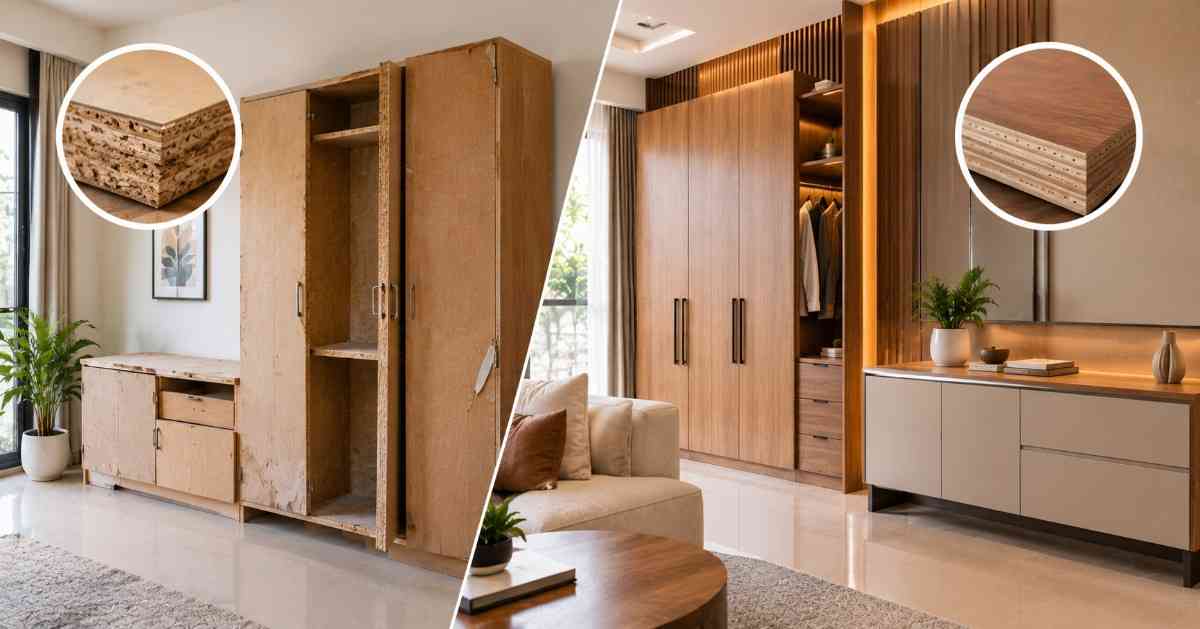
| Quality variation between manufacturers | Ordinary block boards may contain internal gaps |
| Moisture sensitivity in MR grades | Unsuitable for wet environments |
| Heavier than some engineered alternatives | Increases furniture weight |
| Core inconsistency in low-quality products | Can create hollow sections and weak spots |
Premium full-filling block boards address many of these concerns by eliminating internal voids and improving structural consistency.
Block Board Core Door vs Plywood Core Door vs Hollow Core Door
| Parameter | Block Board Core Door | Plywood Core Door | Hollow Core Door |
| Core Construction | Solid timber battens with veneer faces | Cross-laminated hardwood veneers | Honeycomb or hollow framework |
| Structural Strength | High | Very High | Low |
| Hinge Screw Holding | Excellent | Excellent | Limited |
| Acoustic Performance | Good to Very Good | Very Good | Poor |
| Moisture Resistance Options | MR and BWP Grades Available | MR and BWP Grades Available | Limited |
| Resistance to Warping | High | Very High | Moderate |
| Durability Under Daily Use | 15–25+ Years | 20–30+ Years | 5–10 Years |
| Weight | Moderate | Moderate to High | Light |
| Cost | Moderate | Premium | Economical |
| Best Application | Residential Flush Doors | Premium Doors & High-Traffic Areas | Budget Interior Doors |
For most residential applications, a premium block board core flush door provides an excellent balance of strength, durability, and value. For maximum structural performance and moisture resistance, plywood-core doors remain the premium benchmark. Low-cost hollow-core doors are generally suitable only for budget interior applications where durability requirements remain limited.
Wigwam Ply’s premium block boards and flush door solutions combine calibrated construction, quality timber selection, and advanced manufacturing processes to deliver consistent performance across modern residential and commercial interiors.
Block Board Door Price vs Flush Door Price — Cost Comparison, Applications & Why Wigwam Ply Block Board Is the Right Foundation
Many buyers comparing Flush Door vs Block Board Price are actually comparing two different categories. A block board is a raw panel material. A flush door is a finished door product ready for installation. Therefore, the correct comparison is a block board door versus a factory-manufactured flush door. Understanding this distinction helps homeowners evaluate actual project costs more accurately.
The cost of a block board door includes the block board sheet, plywood face skins, edge lipping, adhesive, hardware preparation, finishing materials, and fabrication labour. A flush door already incorporates these elements into a finished product. This is why direct comparisons between raw block board sheets and flush doors can be misleading.
Setting the standard for quality, security, and contemporary design, WigwamPly manufactures the most reliable flush doors India has to offer.
Flush Door vs Block Board Cost Breakdown
| Cost Component | Block Board Door | Factory Flush Door |
| Core Material | Full Filling Block Board | Block Board, Plywood, or Engineered Core |
| Face Skins | Separate Cost | Included |
| Edge Lipping | Separate Cost | Included |
| Fabrication Labour | Required | Minimal |
| Surface Finishing | Additional Cost | May Be Included |
| Installation | Required | Required |
| Customisation Flexibility | Very High | Moderate |
| Ready-to-Install | No | Yes |
Block Board Door Price vs Flush Door Price in India
The final cost depends on core quality, thickness, finish, hardware specifications, and local labour charges. Premium full-filling calibrated block board cores generally command a higher initial investment but deliver superior long-term performance.
| Product Type | Typical Price Range (8×4 Equivalent Basis)* |
| Standard MR Block Board Sheet | ₹2,000 – ₹4,500 |
| Premium Full Filling Block Board Sheet | ₹3,500 – ₹7,500 |
| Interior Flush Door | ₹2,500 – ₹7,000 |
| Premium Flush Door | ₹5,000 – ₹15,000+ |
| BWP Flush Door | ₹6,000 – ₹18,000+ |
Disclaimer: Prices are indicative Indian market estimates as of recent market conditions and are subject to change based on location, thickness, finish, hardware specifications, brand, and dealer pricing.
Why Full Filling Block Board Core Doors Outperform Alternatives
The quality of a door depends primarily on its core construction. A premium full-filling block board core provides several structural advantages compared to hollow-core alternatives.
| Performance Factor | Full Filling Block Board Core | Hollow Core Flush Door |
| Hinge Screw Holding | High long-term reliability | Moderate to Low |
| Lock Fixing Strength | Excellent | Limited |
| Acoustic Performance | Better sound insulation | Reduced sound damping |
| Resistance to Warping | High | Moderate |
| Door Stability | Excellent | Varies by construction |
| Daily Use Durability | Very High | Moderate |
Doors are opened and closed thousands of times throughout their lifespan. Full filling block board construction provides the screw-holding strength necessary for hinges, locks, closers, and handles to remain secure over years of use. The solid batten core also delivers better acoustic insulation than hollow-core alternatives.
Popular Block Board Door Design Options
Modern block board doors are available in multiple design formats. The core remains the same, while surface treatments create different aesthetic appearances.
| Block Board Door Design | Design Characteristics | Best Application |
| Flush Face Door | Smooth laminate or veneer finish | Contemporary homes |
| Groove-Routed Flush Door | CNC groove patterns on flat surface | Modern interiors |
| Veneer-Faced Door | Natural wood grain appearance | Premium residences |
| PU Painted Door | Smooth painted finish | Luxury interiors |
| Membrane-Wrapped Door | Seamless decorative finish | Designer projects |
This flexibility makes block board one of the most versatile door core materials available for residential and commercial interiors.
Flush Door vs Block Board for Different Room Applications
Selecting the correct specification depends on the room environment and performance requirements.
| Application | Recommended Core Specification | Reason |
| Main Entrance Doors | Full Filling BWP Block Board Core | Strength, durability, moisture resistance |
| Bedroom Doors | Full Filling MR Block Board Core Flush Door | Acoustic comfort and daily durability |
| Bathroom Doors | Full Filling BWP Block Board Core | Resistance to humidity and moisture |
| Kitchen Utility Doors | BWP Block Board Core Flush Door | Steam and moisture protection |
| Office Doors | Full Filling Block Board Core | Hardware durability and professional finish |
| Commercial Interiors | Calibrated Full Filling Block Board Core | Long-term structural reliability |
For humid environments, BWP-grade block board provides superior resistance to moisture-related performance issues. MR-grade options remain suitable for dry interior applications.
Why Wigwam Ply Full Filling Calibrated Block Board Is the Ideal Door Core
The performance of a flush door depends largely on the quality of its core. Wigwam Ply manufactures premium block boards engineered specifically for applications requiring strength, stability, and durability.
| Wigwam Ply Feature | Door Performance Benefit |
| Full Filling Core Construction | No hollow sections affecting hinge or lock fixing |
| Both-Side Calibration | Uniform thickness for consistent face skin bonding |
| Minimum Gap Filling | Improved structural integrity throughout the panel |
| Hexaforce Technology | Enhanced bonding and durability |
| BWP and MR Grade Availability | Correct specification for every environment |
| Termite Resistance | Long-term protection against biological damage |
| Microbe Resistance | Improved durability in humid conditions |
| E1 Certification | Low-emission indoor applications |
| IS-Certified Manufacturing Standards | Verifiable quality assurance |
Products such as Wigwam Excel Block Board, Fabricate Birch Block Board, Fabricate Gold Block Board, and Fabricate Club Block Board combine calibrated construction, premium face veneers, and advanced manufacturing technology. This creates an ideal foundation for durable flush doors that maintain alignment, hardware integrity, and aesthetic appeal for years.
For homeowners, architects, and interior designers seeking dependable door performance, a full filling calibrated block board core remains one of the strongest and most reliable door specifications available today.
Build Stronger Doors with Wigwam Ply Full Filling Block Boards
A door is only as strong as the core inside it. Choosing a premium full filling block board core improves durability, hinge performance, acoustic comfort, and long-term stability. Wigwam Ply’s Full Filling Calibrated Block Boards are engineered for modern door manufacturing, delivering consistent thickness, superior screw-holding strength, and reliable performance across residential and commercial applications.
Why settle for hollow when you can build solid? Choose WigwamPly Full Filling Block Boards for doors that stay strong, stable, and beautiful for years.
Frequently Asked Questions (FAQs)
A block board is a raw engineered wood panel made from solid timber battens sandwiched between veneer sheets. A flush door is a finished door product manufactured using a block board core, plywood core, or other engineered core construction with face skins and decorative finishes. In simple terms, block board is a material, while a flush door is a finished application.
Yes. Full filling block board doors offer excellent rigidity, screw-holding strength, and dimensional stability. They are widely used for bedroom doors, office doors, and interior flush doors because the solid batten core resists warping and supports hinges and locks effectively over long periods.
The main disadvantages of flush doors include limited decorative detailing compared to panel doors, visible surface damage that can be difficult to repair, and performance variations in low-quality hollow-core models. The durability of a flush door depends heavily on the quality of its core construction.
The primary disadvantages of blockboards include moisture sensitivity in standard MR grades, quality variations between full filling and ordinary block boards, and reduced screw-holding performance when fasteners are installed across batten ends rather than along the grain. Premium full filling calibrated block boards minimize these limitations significantly.
The most common block board door thickness options are 35mm and 40mm. Thicker doors generally provide better sound insulation, greater durability, improved hinge performance, and enhanced resistance to warping.
Yes. Full filling block board doors offer superior screw-holding strength, better acoustic insulation, improved durability, and greater resistance to bending or bowing. Hollow-core flush doors are generally more economical but cannot match the structural performance of a solid full filling block board core.
For premium door applications, Wigwam Ply offers Wigwam Excel Block Board, Fabricate Birch Block Board, Fabricate Gold Block Board, and Fabricate Club Block Board. These products feature full filling construction, both-side calibration, termite resistance, advanced Hexaforce technology, and options in both MR and BWP grades for different door environments.
What is the standard size of a block board door?
Common block board door sizes in India include:
| Door Size | Typical Application |
| 2134mm × 914mm (7ft × 3ft) | Main entrance doors |
| 2134mm × 838mm (7ft × 2.75ft) | Premium room doors |
| 2134mm × 762mm (7ft × 2.5ft) | Bedroom doors |
| 1981mm × 762mm (6.5ft × 2.5ft) | Bathroom doors |
Custom sizes are also available depending on project requirements.
Which is better for doors — block board or plywood core?
Both are excellent choices, but the answer depends on the application.
| Requirement | Recommended Core |
| Interior Bedroom Doors | Full Filling Block Board Core |
| Office Doors | Full Filling Block Board Core |
| Premium Residential Doors | Plywood Core |
| High-Moisture Areas | BWP Plywood Core |
| Heavy-Traffic Commercial Doors | Plywood Core |
Plywood generally provides higher cross-grain strength, while full filling block board offers excellent rigidity and value for interior door applications.
What is the price of a block board door vs flush door?
The block board door price and flush door price depend on thickness, core quality, finish, and hardware specifications.
| Product Type | Typical Price Range* |
| Standard Block Board Sheet | ₹2,000 – ₹4,500 |
| Premium Full Filling Block Board Sheet | ₹3,500 – ₹7,500 |
| Interior Flush Door | ₹2,500 – ₹7,000 |
| Premium Flush Door | ₹5,000 – ₹15,000+ |
| BWP Flush Door | ₹6,000 – ₹18,000+ |
*Disclaimer: Prices are indicative Indian market estimates and may vary based on thickness, finish, city, dealer network, and market conditions.