When designing furniture, doors, wardrobes, and interior partitions, selecting the right panel material is just as important as the design itself. While plywood is often the default choice, Block Board Plywood offers a unique combination of rigidity, lightweight construction, and long-span stability that makes it particularly valuable for specific furniture and interior applications.
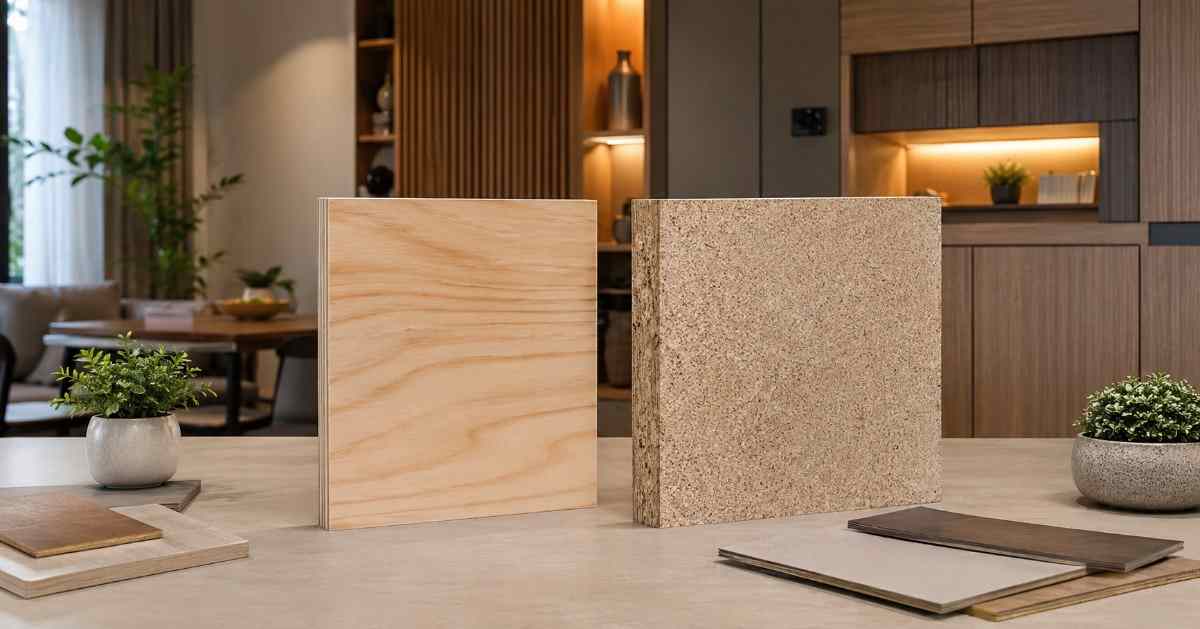
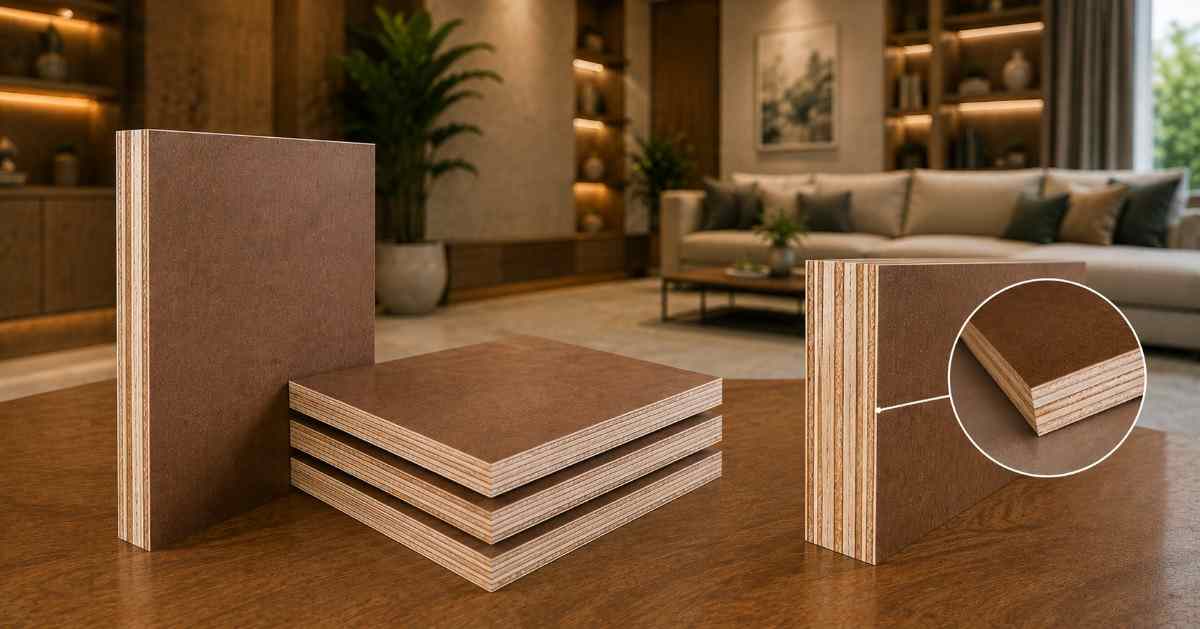
At its core, block board wood is engineered using solid softwood battens or strips placed edge-to-edge and sandwiched between high-quality veneer layers. This construction creates a panel that is lighter than many comparable plywood products while delivering excellent dimensional stability and resistance to bending. Unlike conventional compressed wood products, block board is less prone to splitting during cutting and machining, making it a preferred choice for furniture manufacturers and carpenters.
For applications such as a Block board door, long wardrobe shelves, study tables, partitions, and decorative furniture, block board offers an excellent balance of strength, workability, and cost efficiency. Modern premium block board sheets also incorporate advanced manufacturing technologies that improve calibration accuracy, termite resistance, and overall panel performance.
As a leading block board manufacturer, Wigwam Ply has developed a comprehensive range of block boards engineered for different furniture and interior requirements. Products such as Wigwam Excel Blockboard, Wigwam Blockboard, Fabricate Birch, Fabricate Club, Fabricate Gold, and Fabricate Blockboard combine premium face veneers, selected timber or 100% pine cores, both-side calibration, Hexaforce technology, E1-certified manufacturing, and termite-resistant protection to deliver superior furniture-grade performance.
Whether you’re evaluating Block Board Waterproof options for moisture-prone environments, comparing Block Board price and Block Board 8×4 price, or selecting the right material for premium furniture projects, understanding block board’s construction and advantages is the first step toward making the right specification decision.
What Is Block Board — Construction, Types & How It Differs from Plywood
Block Board Plywood is an engineered wood panel manufactured by placing solid wood battens or strips edge-to-edge between two outer veneer layers and bonding the assembly under high pressure. These battens are typically made from pine, eucalyptus, or selected hardwood species and form the structural core of the panel. The result is a product that combines the rigidity of solid timber with the dimensional stability and finish versatility of engineered wood.
Unlike many compressed wood products, block board wood remains relatively lightweight while offering excellent resistance to bending across long spans. This makes block board sheets particularly suitable for doors, wardrobes, partitions, table tops, and furniture components where maintaining straightness and rigidity is critical.
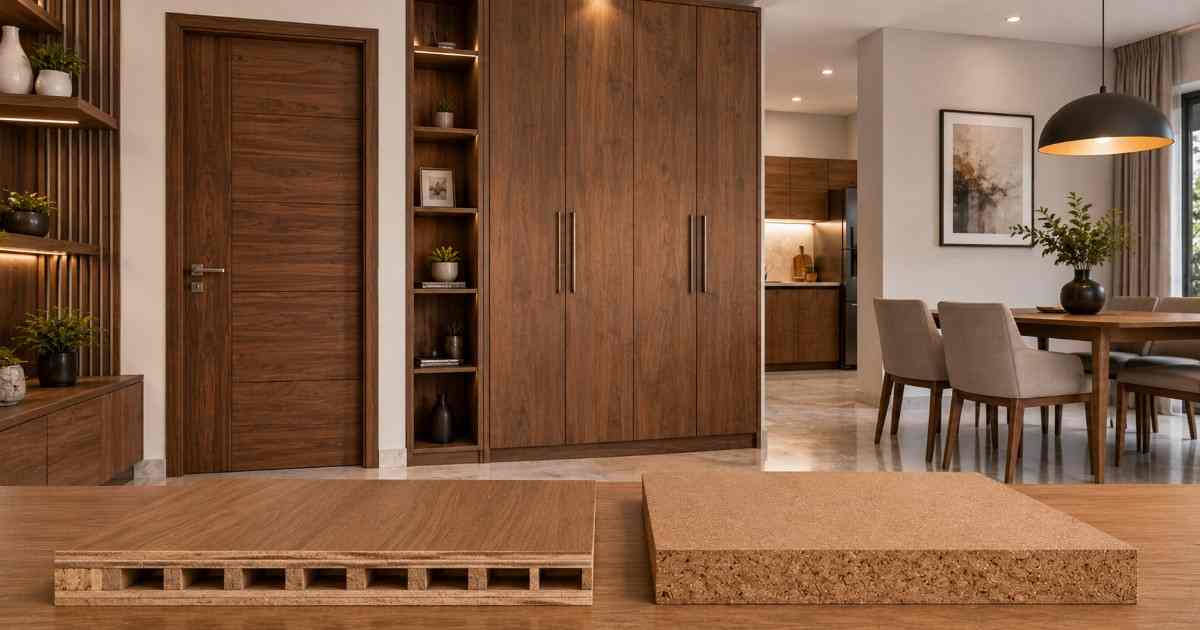
A key distinction, buyers should understand is the difference between full filling block board and ordinary block board. Full filling block board uses tightly packed battens placed edge-to-edge with minimal or no gaps, creating a uniform core that delivers consistent density, reliable screw holding, and predictable structural performance throughout the panel. Ordinary block board may contain wider gaps, lower-grade timber fillers, or inconsistent batten placement, resulting in reduced strength and less reliable hardware holding. For furniture and architectural interiors, full filling construction is generally regarded as the preferred furniture-grade standard.
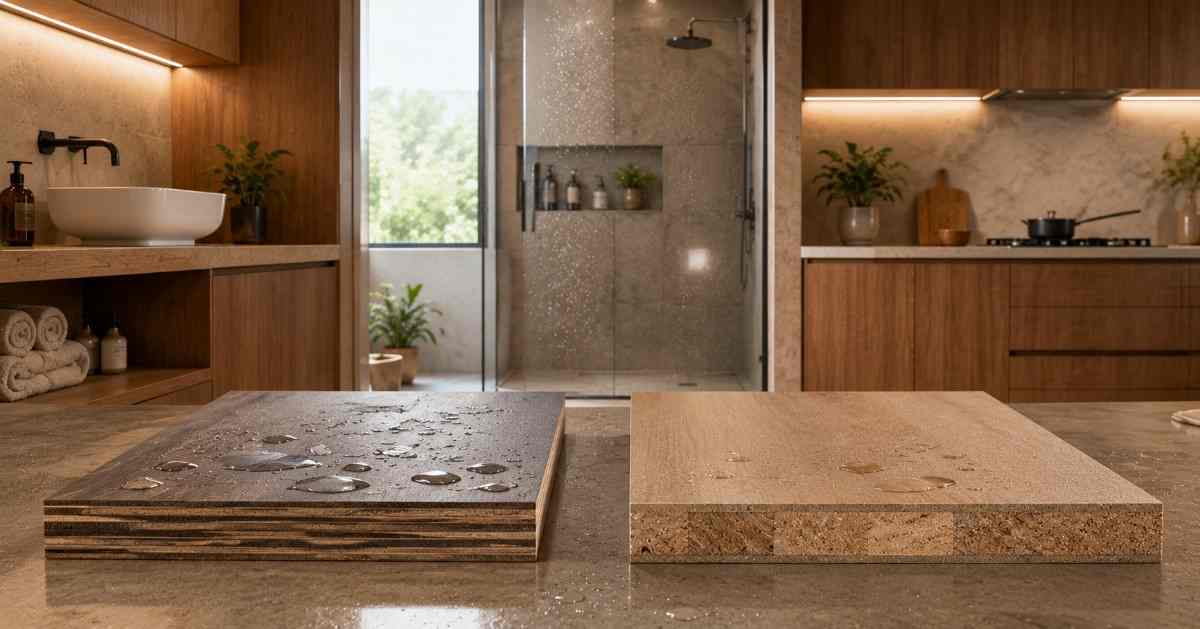
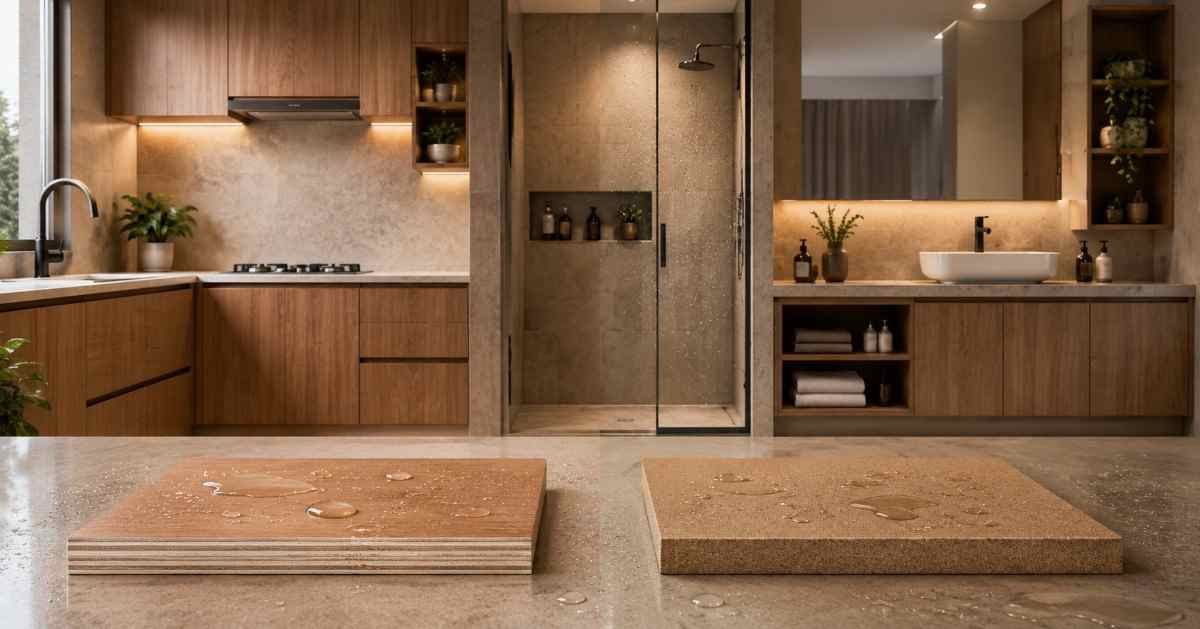
Another important consideration is moisture resistance. Block Board Waterproof performance depends on the adhesive system used during manufacturing. MR-grade block board utilizes urea formaldehyde bonding and is designed for dry interior applications such as bedrooms, living rooms, and office furniture. BWP-grade block board uses phenol formaldehyde resin and offers significantly higher resistance to humidity, steam, and moisture exposure, making it suitable for bathroom doors, kitchen furniture, utility areas, and coastal climates. Genuine waterproof block board should always carry appropriate IS certification and grade markings rather than relying solely on marketing claims.
When comparing block board with plywood, the two materials serve different structural purposes. Block board’s solid batten core provides exceptional rigidity along the length of the panel, making it particularly effective for long-span doors, shelves, and table tops where resistance to bending is a primary requirement. Plywood, on the other hand, derives its strength from multiple cross-laminated veneer layers arranged in alternating grain directions. This construction delivers more uniform strength in all directions, superior edge screw holding, and greater suitability for modular furniture carcasses and hardware-intensive applications. Rather than replacing one another, plywood and block board often complement each other depending on the application.
Full Filling Block Board vs Ordinary Block Board vs Plywood
| Parameter | Full Filling Block Board | Ordinary Block Board | Plywood |
| Core Construction | Solid timber battens placed edge-to-edge with minimal gaps | Timber battens with larger gaps or lower-grade fillers | Multiple cross-laminated veneer layers throughout the panel |
| Density Consistency | Uniform across the entire sheet | Variable depending on batten placement | Highly uniform |
| Panel Rigidity | Excellent, particularly across long spans | Moderate | Very good |
| Screw Holding Performance | Strong and consistent | Can vary significantly | Excellent, especially at edges |
| Moisture Resistance | Available in MR and BWP grades | Available in MR and BWP grades but performance varies by quality | Available in MR, BWR, and BWP grades |
| Weight | Moderate and lighter than many solid wood alternatives | Generally lighter but less consistent | Moderate |
| Long-Span Performance | Outstanding for doors, partitions, and shelves | Acceptable for general use | Very good |
| Edge Strength | Good | Moderate | Excellent |
| Ideal Applications | Doors, wardrobes, partitions, long shelves, table tops, premium furniture | Budget furniture and general interior applications | Modular kitchens, cabinets, wardrobes, office furniture, structural furniture components |
For buyers seeking dependable furniture performance, premium products from a trusted block board manufacturer such as WigwamPly further enhance these advantages through full filling construction, both-side calibration, Hexaforce technology, E1-certified manufacturing, termite-resistant treatment, and carefully selected timber cores. This combination helps ensure that the finished furniture delivers not only excellent aesthetics but also long-term structural reliability.
Block Board for Doors, Furniture & Interiors — Price Guide & Why Wigwam Ply Block Board Stands Out
One of the biggest reasons block board continues to be widely specified by architects, carpenters, and furniture manufacturers is its ability to deliver exceptional rigidity over long spans while remaining lighter than solid wood. This combination makes it particularly effective for doors, large furniture panels, and interior applications where dimensional stability is critical.
Why Block Board Is the Preferred Choice for Doors
A Block board door is one of the most common applications of block board in both residential and commercial interiors. The solid batten core provides excellent lengthwise rigidity, helping the door maintain its shape over years of use. Compared to plywood, block board offers superior resistance to bowing and warping in tall door panels because the continuous timber battens act as structural reinforcements throughout the panel length.
At the same time, block board remains significantly lighter than solid timber doors, reducing hinge stress and improving ease of operation. The smooth veneer faces also provide excellent finish compatibility, making block board suitable for decorative laminates, natural wood veneers, PU-coated surfaces, painted finishes, and polished furniture applications. This versatility allows designers and manufacturers to achieve premium aesthetics without compromising structural stability.
For moisture-prone locations such as bathrooms, kitchens, utility areas, and washrooms, BWP-grade block board is generally recommended. Its phenol formaldehyde bonding system provides substantially better resistance to humidity, steam, and occasional water exposure than standard MR-grade products, helping maintain long-term structural integrity in challenging environments.
Block Board for Furniture Applications
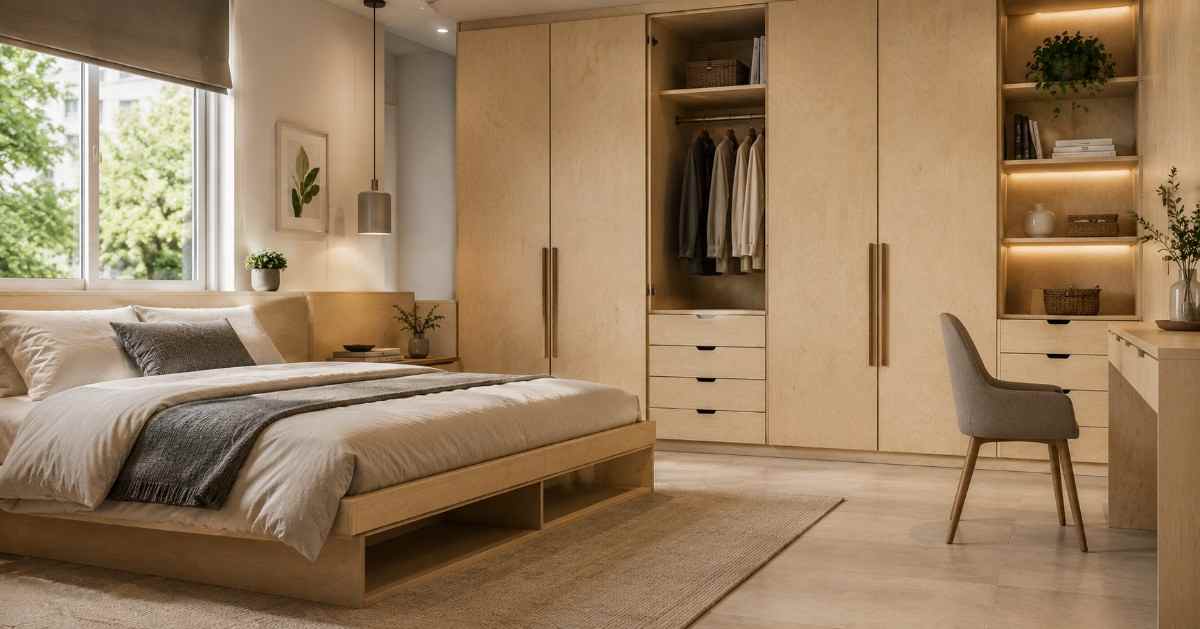
When evaluating block board for furniture, the material performs best in applications where panel rigidity is more important than multi-directional screw-holding strength. Its batten-core construction makes block board particularly suitable for long-span table tops, wardrobe shutters, study tables, bed headboards, display units, and decorative furniture panels.
Because the core resists bending effectively, large furniture panels remain straighter and are less prone to mid-span sagging over time. This makes block board particularly valuable for tall wardrobe shutters that experience repeated opening and closing, where maintaining alignment and preventing twisting is critical for long-term performance.
However, it is equally important to understand where plywood remains the better option. Applications such as modular kitchen carcasses, drawer systems, shelving units, and furniture components that rely heavily on edge screw fixing generally benefit more from plywood’s cross-laminated construction and superior multi-directional hardware-holding capability. For this reason, premium furniture manufacturers often use both materials strategically block board for large shutters and long panels, and plywood for structural carcasses and hardware-intensive components.
Interior Applications Beyond Furniture
Beyond furniture and doors, block board is widely used in architectural interiors because of its favorable balance between rigidity, weight, and finishing quality.
| Interior Application | Why Block Board Works Well |
| Partition panels and divider systems | High rigidity helps maintain straight, stable surfaces across large spans without excessive reinforcement. |
| Decorative wall panelling | Provides a reliable backing surface for laminates, veneers, and premium decorative finishes. |
| False ceiling framework components | Offers strength with lower weight than many solid timber alternatives, simplifying installation. |
| Interior door panels | Resists warping and bowing while providing an excellent surface for finishing materials. |
| Large wardrobe shutters and decorative panels | Lengthwise rigidity helps prevent twisting and maintains alignment over years of use. |
| Retail fixtures and display units | Combines structural stability with good workability and surface quality. |
Understanding Block Board Price & Block Board 8×4 Price
The Block Board price depends on far more than sheet thickness alone. Core timber quality, moisture-resistance grade, veneer selection, calibration accuracy, and manufacturing standards all influence the final cost. Products manufactured with full-filling batten construction generally command a premium because they deliver more consistent density, better hardware performance, and superior long-term durability.
A standard Block Board 8×4 price remains the most widely referenced benchmark in the Indian market because 8×4 feet is the preferred sheet size for furniture and interior projects. As of July 2026, ordinary MR-grade block board typically occupies the budget segment, while premium full-filling BWP-grade block boards command higher prices due to superior timber selection, moisture-resistant bonding systems, and tighter manufacturing tolerances.
| Block Board Category | Common Thickness | Indicative 8×4 Sheet Price (July 2026)* |
| Ordinary MR Block Board | 19mm | ₹1,800 – ₹2,800 |
| Full Filling MR Block Board | 19mm | ₹2,500 – ₹4,000 |
| Full Filling BWP Block Board | 19mm | ₹3,500 – ₹6,000+ |
| Premium Veneer-Faced Block Board | 19mm | ₹4,000 – ₹7,000+ |
Prices are indicative only and may vary based on location, thickness, dealer network, timber selection, and product specifications.
Why Wigwam Ply Block Board Stands Out
As a leading block board manufacturer, Wigwam Ply focuses on addressing the shortcomings often found in commodity block boards. Products such as Wigwam Excel Blockboard, Fabricate Birch, Fabricate Gold, Fabricate Club, Fabricate, and Wigwam Blockboard are engineered using carefully selected timber cores, premium face veneers, both-side calibration, and Hexaforce technology to deliver superior consistency and durability.
Rather than focusing only on appearance, Wigwam’s manufacturing standards are designed to improve both furniture performance and finishing quality.
| Manufacturing Feature | Wigwam Ply Advantage | Practical Benefit |
| Core Construction | Full-filling batten core with selected timber or 100% pine options | Improved stability, reduced voids, and more consistent furniture performance |
| Moisture Resistance Options | Available in both MR and BWP grades | Suitable for dry interiors as well as kitchens, bathrooms, and humid environments |
| Both-Side Calibration | Precision-calibrated surfaces | Better machining accuracy, cleaner assembly, and superior finish quality |
| Face Veneer Selection | Okoume, Gurjan, Birch, and premium decorative veneers | Enhanced appearance and improved compatibility with laminates, veneers, and PU finishes |
| Hexaforce Technology | Advanced manufacturing process | Improved durability, bonding strength, and structural reliability |
| Protection Features | Resistant to termites and microbes, E1-certified manufacturing | Longer service life and healthier indoor environments |
The result is a block board solution that not only performs better structurally but also provides a superior finishing surface for laminates, veneers, PU coatings, and decorative applications. For architects, furniture manufacturers, and homeowners seeking long-term reliability, these quality markers help distinguish Wigwam Ply block board from standard market alternatives.
Key Takeaway
For flush doors, wardrobe shutters, long-span furniture panels, partitions, and decorative interiors where rigidity is a priority, block board remains one of the most effective engineered wood solutions available. While plywood continues to dominate structural furniture applications, block board offers unique advantages that make it indispensable in modern interior design. Choosing a premium full-filling product from a trusted manufacturer such as Wigwam Ply ensures better stability, superior finishing quality, and longer service life.
Block Board for Doors, Furniture & Interiors — Price Guide & Why Wigwam Ply Block Board Stands Out
When strength, dimensional stability, and weight balance are equally important, block board becomes one of the most practical engineered wood solutions available. Its solid batten core construction makes it particularly effective for large doors, long-span furniture components, and interior applications where maintaining panel straightness over time is critical. While plywood and block board often serve similar markets, each excels in different applications, and understanding those differences helps ensure better long-term performance.
Why Block Board Is Preferred for Doors
A Block board door remains one of the most common and successful applications of block board technology. Unlike plywood, which relies on multiple thin cross-laminated veneers, block board uses continuous timber battens running through the core. This construction gives the panel exceptional lengthwise rigidity, helping tall door shutters resist warping, twisting, and bowing over years of daily use.
Another advantage is reduced weight compared to solid wood doors. A lighter door places less stress on hinges, hardware, and frames, resulting in smoother operation and lower maintenance requirements over time. At the same time, the smooth face veneer surface provides an excellent substrate for decorative laminates, natural veneers, PU coatings, and painted finishes, making block board suitable for both contemporary and traditional interior styles.
For moisture-prone areas such as kitchens, bathrooms, utility rooms, and washrooms, BWP-grade block board is the preferred specification. The phenol formaldehyde bonding system used in BWP-grade products provides enhanced resistance against humidity, steam, and occasional water exposure, helping preserve structural integrity even in challenging environments.
Block Board for Furniture Applications
The advantages of block board for furniture become most apparent when working with large panels and long spans. Dining tables, study tables, office desks, wardrobe shutters, bed headboards, and decorative partition panels all benefit from the material’s natural resistance to bending along its length.
In wardrobe shutters, for example, maintaining straightness is essential because even minor twisting can affect alignment, hinge performance, and overall aesthetics. The batten-core construction of block board helps preserve panel geometry, making it a popular choice for tall furniture doors and large decorative surfaces.
That said, block board is not always the ideal solution for every furniture component. Applications such as modular kitchen carcasses, shelving systems, drawer units, and structural cabinet frameworks rely heavily on edge screw holding and multi-directional load transfer. In these cases, plywood’s cross-laminated construction generally provides superior performance. Many premium furniture manufacturers therefore combine both materials strategically using plywood for carcasses and structural frameworks while utilizing block board for shutters, panels, and long-span furniture elements.
Interior Applications Beyond Furniture
Block board is equally valuable in interior construction projects where rigidity, weight reduction, and finishing quality are important considerations.
| Application Area | Why Block Board Is Suitable |
| False ceiling substrates | Provides structural stability while remaining lighter than many solid timber alternatives. |
| Decorative wall panelling | Creates a smooth and stable backing surface for laminates, veneers, and premium finishes. |
| Partition frameworks | Delivers rigidity across large panel spans while simplifying installation and handling. |
| Wardrobe shutters | Resists twisting and bowing in tall door applications. |
| Retail fixtures and display units | Combines durability, aesthetics, and dimensional stability for commercial interiors. |
| Door panels and flush doors | Offers superior lengthwise rigidity and excellent finishing compatibility. |
Understanding Block Board Price & Block Board 8×4 Price
The Block Board price varies significantly depending on manufacturing quality and raw material selection. Several factors influence the final cost, including the timber species used in the batten core, whether the board features full-filling or ordinary construction, the quality of the face veneer, moisture-resistance grade (MR or BWP), calibration standards, and overall manufacturing precision.
Among all sheet formats, the Block Board 8×4 price is the most commonly referenced benchmark because 8×4 ft remains the preferred size for furniture manufacturing and interior fit-out projects across India.
Indicative Block Board 8×4 Price Guide (July 2026)*
| Block Board Type | Typical Thickness | Indicative Price per Sheet |
| Ordinary MR Block Board | 19mm | ₹1,800 – ₹2,800 |
| Full Filling MR Block Board | 19mm | ₹2,500 – ₹4,000 |
| Full Filling BWP Block Board | 19mm | ₹3,500 – ₹6,000+ |
| Premium Veneer-Faced Block Board | 19mm | ₹4,000 – ₹7,000+ |
Prices are indicative only and subject to change based on location, thickness, timber species, dealer margins, and market conditions.
While premium block boards cost more upfront, the investment often translates into improved dimensional stability, better furniture performance, and longer service life—particularly in large-panel applications where rigidity is critical.
Why Wigwam Ply Stands Out as a Leading Block Board Manufacturer
As a trusted block board manufacturer, Wigwam Ply has focused on solving many of the quality inconsistencies commonly associated with commodity-grade block boards. Products such as Wigwam Excel Blockboard, Fabricate Birch, Fabricate Gold, Fabricate Club, Fabricate, and Wigwam Blockboard are designed using carefully selected timber cores, premium face veneers, advanced manufacturing technology, and precision calibration standards.
| Quality Parameter | Wigwam Ply Advantage | Customer Benefit |
| Core Construction | Full-filling batten core with selected timber or 100% pine options | Better panel stability and more consistent structural performance |
| Moisture Protection | Available in both MR and BWP grades | Suitable for dry interiors as well as humid and moisture-prone applications |
| Surface Precision | Both-side calibrated construction | Improved machining accuracy and superior finish quality |
| Face Veneer Quality | Premium Okoume, Gurjan, Birch, and decorative veneer options | Better aesthetics and finish compatibility |
| Manufacturing Technology | Hexaforce technology | Enhanced durability and bonding performance |
| Protection Features | Resistant to termites and microbes | Longer furniture life and improved reliability |
These manufacturing standards help ensure that every 8×4 sheet delivers consistent performance, making Wigwam Ply a preferred choice for architects, contractors, furniture manufacturers, and homeowners seeking dependable block board solutions.
Key Takeaway
Block board remains one of the best materials for flush doors, wardrobe shutters, partition systems, long-span table tops, and decorative interior applications where rigidity and dimensional stability are essential. While plywood continues to dominate structural furniture components, block board offers unique advantages that make it indispensable for specific applications. Choosing a premium product from a reliable manufacturer such as Wigwam Ply ensures better durability, superior finish quality, and long-term performance across residential and commercial projects.
Build Better with Wigwam Ply Block Boards
Whether you’re designing flush doors, wardrobe shutters, partition panels, or long-span furniture, choosing the right block board makes all the difference. Wigwam Ply’s premium block boards combine full-filling core construction, both-side calibration, termite resistance, and advanced Hexaforce technology to deliver superior stability, durability, and finish quality for modern interiors.
From MR-grade solutions for everyday furniture to BWP-grade options for moisture-prone environments, Wigwam Ply offers reliable performance across every application.
Explore WigwamPly Block Boards today and discover the perfect balance of strength, stability, and craftsmanship for your next project.
Frequently Asked Questions (FAQs)
Is block board better than plywood for doors?
For flush doors and tall door panels, block board is often the preferred choice because its solid timber batten core provides excellent lengthwise rigidity, helping resist warping and bowing over time. However, for structural furniture applications requiring high screw-holding strength in multiple directions, plywood generally performs better.
What is the price of block board 8×4?
The price of a standard 8×4 ft block board sheet depends on factors such as timber species, face veneer quality, moisture-resistance grade, and whether the board uses full-filling or ordinary construction. As of July 2026, prices typically range from approximately ₹1,800 to ₹7,000+ per sheet. Actual market prices may vary by region and product specification.
Is block board waterproof?
Block board is available in both MR (Moisture Resistant) and BWP (Boiling Water Proof) grades. MR-grade block board is suitable for dry interior applications, while BWP-grade block board uses phenol formaldehyde bonding and offers significantly higher moisture resistance for bathrooms, kitchens, and humid environments. Like all wood-based panels, block board is not permanently waterproof under continuous submersion.
Which is better for wardrobe doors block board or plywood?
For wardrobe shutters and tall door panels, block board is often preferred because its batten-core construction provides superior rigidity and resistance to twisting. For wardrobe carcasses, shelves, and structural sections that rely heavily on screws and hardware, plywood is generally the better option. Many premium wardrobes combine both materials to maximize performance.
What is the difference between full filling and ordinary block board?
Full filling block board uses timber battens placed tightly edge-to-edge throughout the core, creating uniform density, better strength, improved screw holding, and more consistent long-term performance. Ordinary block board may contain gaps between battens or lower-grade filling material, which can reduce structural consistency and durability. For furniture and door applications, full filling block board is considered the superior choice.
Can block board be used for furniture?
Yes. Block board is widely used for furniture applications such as wardrobe shutters, study tables, bed headboards, partition panels, and long-span furniture components. Its rigidity helps prevent sagging and deformation, particularly in large panels where maintaining straightness is important.
Which block board is best for kitchens and bathrooms?
For moisture-prone areas, BWP-grade block board is the recommended choice. Products manufactured using high-quality phenol formaldehyde bonding systems provide better resistance to humidity, steam, and occasional water exposure than standard MR-grade alternatives.
Why is full-filling block board considered premium?
Full-filling construction improves core uniformity, reduces internal voids, enhances dimensional stability, and delivers more predictable performance during cutting, machining, and installation. These characteristics make it the preferred specification for premium furniture and door manufacturing.