Compare waterproof plywood vs MDF for Indian homes, looking at durability, moisture resistance, fire safety, and best uses.
Choosing a suitable board material is essential when planning the interior of a house. Waterproof plywood vs. MDF is a popular question among homeowners. Water-resistant MDF can handle light humidity, whereas waterproof plywood provides more moisture protection.
Many people have problems with cupboards or swollen furniture in bathrooms and kitchens, which can result in additional expenses and recurrent repairs. Selecting the appropriate material may guarantee long-lasting interiors and save money. The contrasts, benefits, drawbacks, fire safety issues, and ideal use cases for Indian households are all covered in this guide.
By the end of this blog, you’ll know which choice is ideal for long-term use and durability.
What Is Water-Resistant MDF?
Wood fibres are compressed with adhesives to produce MDF, or medium-density fibreboard, a smooth, consistent board. Water-resistant MDF does not instantly swell when exposed to humidity because it has been treated to resist light moisture. It isn’t entirely watertight, though. This type of board is widely used in furniture, wardrobes, cabinets, and interior panelling, where some moisture is expected but not constant exposure.
Advantages of Water-Resistant MDF
Affordable and simple to deal with: MDF is better suited for do-it-yourself projects and furniture because it is lighter and easier to cut or shape than plywood.
Smooth surface for laminates and veneers: The uniform surface allows laminates, veneers, and paints to adhere evenly, resulting in a clean finish.
Disadvantages of Water-Resistant MDF
Can swell in wet conditions: Even water-resistant MDF can distort or swell if exposed to water for an extended period of time.
Less resilient than plywood: It lacks the strength and durability of waterproof plywood.
Fire safety issues: Because MDF often has less fire resistance, there are dangers in places where fire safety is crucial (FR MDF disadvantages).
What Is Waterproof Plywood?
Plywood is created by gluing together thin layers of wood veneer, with the grain running in opposite directions for strength. Boiling Water Proof (BWP) plywood is a kind of plywood that has been treated to withstand high humidity and water, making it appropriate for damp environments. Because waterproof plywood effectively manages moisture, it can be used in bathrooms, kitchens, and areas with humid climates without warping or swelling like regular boards.
Waterproof Plywood Benefits
- Robust and long-lasting: Waterproof plywood is perfect for furniture and cabinets since it is strong and capable of supporting heavy loads.
- Moisture and termite resistant: It can survive high humidity and is less susceptible to termite attacks than normal MDF or plywood.
- Better fire safety options: Certain varieties of plywood are fire-resistant, making them safer for residential and business interiors.
Water-Resistant MDF vs Waterproof Plywood: Key Differences
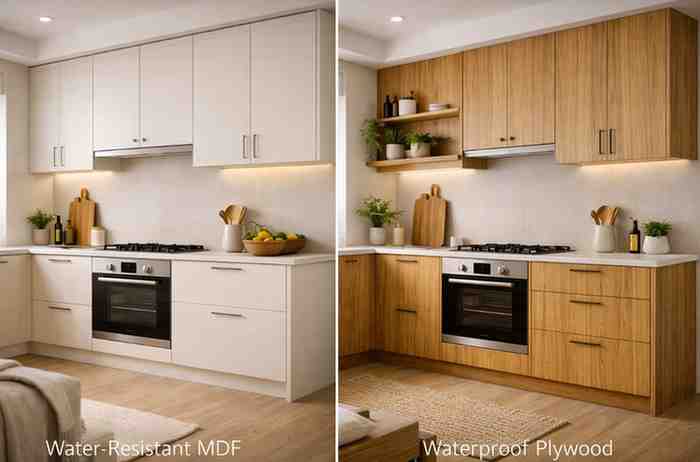
Moisture handling, strength, durability, fire safety, and cost are the key differences between water-resistant MDF and waterproof plywood.
Moisture resistance: MDF may withstand mild dampness; however, extended exposure may result in swelling. Because waterproof plywood is more resilient to moisture, it can be used in damp environments.
Strength and Durability: Plywood is tougher and lasts longer under hard use than MDF, which is lighter and more susceptible to damage.
Fire safety comparison: Plywood is typically safer for vital places because MDF has a lower fire rating than some types of plywood (MDF fire rating versus plywood).
Cost considerations: Waterproof plywood is more expensive but offers superior durability and protection, whereas MDF is typically less expensive.
If you’re in a dilemma to choose between MDF vs plywood, check this detailed guide to find which one is durable and lasts longer.
Fire Safety Considerations for Interiors
Interior fire safety is crucial for both homes and businesses. Using the correct materials can help prevent accidents and increase safety.
MDF limitations: Standard MDF is not very fire-resistant (FR MDF drawbacks) and may constitute a risk in high-temperature environments.
Best Fire Resistant Options: The finest fire-resistant solutions include plywood, particularly coated varieties, which provide superior fire safety (best fire-resistant board for furniture, fire safety materials for interiors, fire retardant plywood for commercial use).
Where to Use Water-Resistant MDF and Waterproof Plywood
Knowing the strengths of each material helps decide where they perform best in your home, such as:
Water-Resistant MDF Uses
Water-resistant MDF is ideal for dry interior spaces like living room or bedroom furniture, cupboards, and wardrobes. It works well in areas with little exposure to dampness.
Waterproof Plywood Uses
For high-humidity rooms, kitchens, bathrooms, furniture, and other places that need additional durability and moisture protection, waterproof plywood is preferable.
How to Choose Between MDF and Plywood
When choosing between plywood and MDF, take factors such as:
- Moisture levels: Use waterproof plywood in damp places; MDF is suitable for dry zones.
- Budget: MDF is less expensive initially, but plywood is more durable over time.
- Fire safety requirements: Plywood can offer superior fire-resistant solutions for residences or businesses.
Maintenance Tips for MDF and Plywood
Both materials last longer when properly cared for:
- Cleaning and maintenance: Use a gentle, moist cloth to clean surfaces. Steer clear of strong chemicals.
- Prevent swelling or damage: To avoid swelling or damage, keep MDF out of the water for extended periods of time and seal the edges of plywood.
- Fire safety precautions: Avoid placing goods near open flames or heat sources, particularly ordinary MDF.
Choosing Between MDF and Plywood
Both water-resistant MDF and waterproof plywood have their uses in Indian homes. While waterproof plywood is tougher, more resilient, and better suited for kitchens, bathrooms, and high-humidity locations, MDF works well in dry interior spaces like cabinets and wardrobes.
Waterproof plywood is typically the best choice for long-term durability and moisture protection. Check Wigwam Ply for strong, moisture-resistant, and fire-safe options in Plywood. Look through their selection to discover the ideal option for your décor and make a long-lasting decision.
FAQs
1. Is water-resistant MDF the same as waterproof plywood?
Not really. Water-resistant MDF can handle a little moisture, but it’s not meant for wet areas. Waterproof plywood, on the other hand, is stronger and much better at resisting water, making it suitable for kitchens and bathrooms.
2. Can water-resistant MDF be used in kitchens or bathrooms?
It’s better to avoid it in wet spaces. MDF works well in dry areas like wardrobes or shelves, but for places exposed to water, plywood is the safer choice.
3. Why does MDF swell when it gets wet?
MDF is made from compressed wood fibers. If it comes into contact with water for too long, the fibers absorb it and expand, which makes the board swell or warp.
4. Is waterproof plywood completely waterproof?
It’s very resistant to moisture, but no wood-based material is fully waterproof. Proper edge sealing and care are still needed in humid areas.
5. Is water-resistant MDF cheaper than waterproof plywood?
Yes, MDF usually costs less initially. But plywood tends to last longer, especially in humid conditions, so it can be a better investment over time.
6. What is fire-retardant plywood?
Fire-retardant plywood is treated to slow down burning. It’s useful in homes and offices where safety is important, like kitchens or commercial interiors.