When it comes to furniture, the debate between plywood vs blockboard never really ends. Both materials come with their own features and are used for different types of furniture, which is why choosing one often feels tricky and confusing. But don’t worry we’ve got you covered.
While choosing furniture may involve many factors, the basics always stay the same: durability, water resistance, functionality, and cost-effectiveness with a premium finish. That said, the right choice often depends on the specific furniture item. For instance, you’d need moisture-resistant wood for bathrooms, or a strong and stable material for kitchen cupboards that hold heavy items. The quality and performance vary based on where and how the furniture is used.
Here’s a detailed guide to help you choose the right wood for your home décor and make a well-informed decision.
What Is the Difference Between Plywood and Blockboard?
At first glance, plywood and blockboard may look quite similar, but the real difference lies in what they are made of and how they are constructed. Understanding this basic difference makes it much easier to choose the right material for your furniture.
Plywood is made by bonding multiple thin layers of wood veneers together. These layers are placed crosswise, which gives plywood its strength, durability, and ability to handle heavy loads. Plywood is commonly used in furniture for its layered structure, strong, and long-lasting qualities.
Blockboard, on the other hand, has a different core structure. It is made using softwood strips placed edge-to-edge in the center, with thin wood veneers pasted on both sides. This makes blockboard lighter in weight and less prone to bending, especially in long panels.
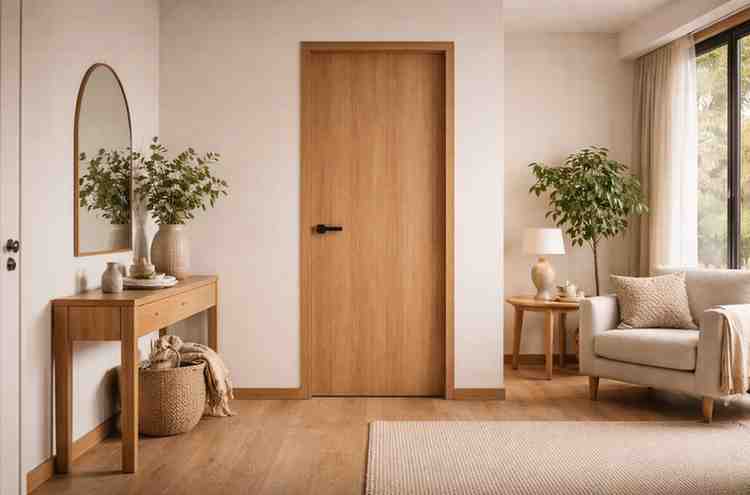
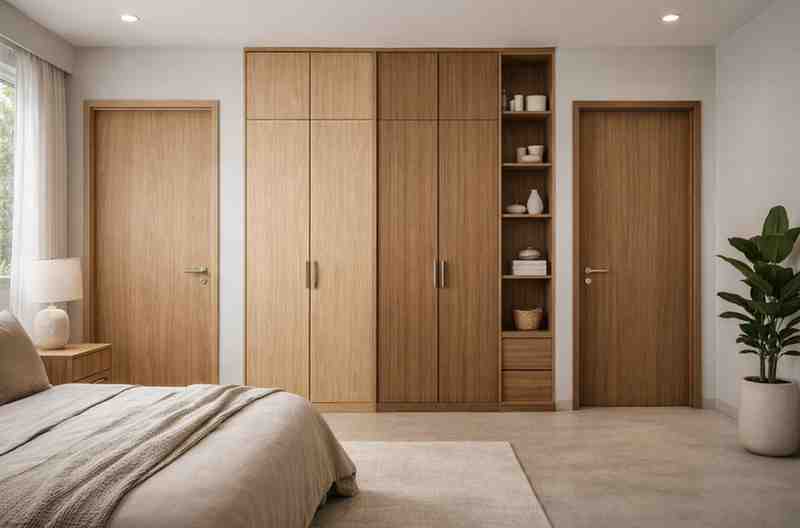
In terms of usage, plywood is widely used for doors, kitchen cabinets, and areas where strength and moisture resistance are important. Blockboard is commonly preferred for wardrobes, shelves, and partitions, whereas a lightweight yet stable board is the most suitable.
So, while both materials are used in furniture making, the difference between plywood and blockboard mainly comes down to their core structure, strength, and the type of furniture they are best suited for.
Blockboard vs Plywood for Shelves
When it comes to shelves, weight, shelf length, and long-term sagging are the factors that matter the most. The table below gives a quick comparison to help you understand which material works better based on everyday usage and storage needs.
| Feature | Plywood | Blockboard |
| Load Capacity | High | Moderate |
| Shelf Length Suitability | Short to medium | Long shelves |
| Sagging Resistance | Good (with support) | Better for long spans |
| Weight | Heavy | Lightweight |
| Best Use | Heavy storage | Wardrobes, study shelves |
Plywood vs Blockboard for Doors
Doors require a balance of strength, stability, and durability, especially with daily use. The comparison below highlights the differences in performance between plywood and blockboard when used for various types of doors.
| Feature | Plywood | Blockboard |
| Strength | Very strong | Moderately strong |
| Weight | Heavier | Lighter |
| Moisture Resistance | Better (grade-based) | Limited |
| Hardware Holding | Excellent | Good |
| Best Use | Main & heavy doors | Internal doors |
You can also check these plywood options for stylish and durable doors with modern design ideas.
Plywood or Blockboard for Wardrobes
Wardrobes comprise multiple components, including shutters, shelves, and internal structures, each with distinct requirements. The table below simplifies the comparison to help you choose the right material for each wardrobe element.
| Feature | Plywood | Blockboard |
| Structural Stability | High | Good |
| Panel Length | Medium | Long panels |
| Finish Compatibility | Excellent | Excellent |
| Cost | Higher | More cost-effective |
| Best Use | Wardrobe frames | Shutters & shelves |
Explore the healthy plywood options for a wardrobe to make the right choice.
Plywood vs Blockboard: Overall Comparison for Furniture
If you’re still unsure which material suits your furniture needs, this quick comparison brings the key differences together in one place. It helps you make a practical choice without getting overwhelmed by the technical details.
| Requirement | Plywood | Blockboard |
| Best for Strength & Durability | ✅ Yes | ❌ Limited |
| Best for Long Panels & Shelves | ❌ Needs support | ✅ Yes |
| Suitable for Doors | ✅ Main & heavy doors | ✅ Internal doors |
| Wardrobe Usage | Frames & heavy storage | Shutters & shelves |
| Moisture-Prone Areas | ✅ Better (grade-dependent) | ❌ Not ideal |
| Weight | Heavy | Lightweight |
| Cost Efficiency | Higher cost | More budget-friendly |
| Overall Recommendation | When strength matters most | When stability & weight matter |
Plywood or Blockboard: Make the Right Call
Picking between plywood and blockboard isn’t as tricky as it seems once you know what each is best for. Plywood is your go-to when you need something strong, durable, and moisture-resistant. Blockboard, on the other hand, is great for keeping furniture light and stable over longer spans.
The key is to match the material to what you actually need—doors, wardrobes, shelves, or kitchen cabinets. Choose wisely now, and you’ll save yourself from future headaches. If you want to make things easier, check out Wigwam Ply quality-tested boards they’re reliable for pretty much any furniture project.
FAQs
1. What’s the main difference between plywood and blockboard?
Plywood is made of thin layers of wood glued together, while blockboard has a core of wooden strips sandwiched between veneers.
2. Which is stronger plywood or blockboard?
Plywood is generally stronger and can handle more weight, making it better for heavy-duty furniture.
3. Is blockboard good for wardrobes and doors?
Yes! It’s lightweight and stable, so it’s perfect for wardrobes and doors.
4. Is plywood better for shelves and cabinets?
Absolutely. Its strength and durability make it perfect for shelves and cabinets that carry weight.
5. Which lasts longer, blockboard or plywood?
Plywood mostly wins in terms of longevity, especially in areas prone to moisture.
6. Is the blockboard waterproof?
Not really. It can handle normal humidity but isn’t fully waterproof.
7. Is plywood termite-proof?
Some plywood is treated to resist termites, but always check before buying.
8. What’s the price difference between plywood and blockboard?
Blockboard is usually a bit cheaper, while plywood costs more due to its strength and durability.
9. Which board is better for interior furniture?
It depends on what you’re making—use plywood for strength-heavy furniture and blockboard for lightweight pieces.
10. Can a blockboard be used in kitchens?
It can, but plywood is generally a safer bet for areas exposed to moisture and spills.