Purchasing plywood may seem easy, but when you’re standing in front of stacked sheets, everyone around you has a different perspective. While one person discusses grades, another promotes products, and still another remarks, “This is good enough.” Many customers choose plywood for its name or price, only to discover later that the furniture isn’t holding up as well as it could.
If you’re not sure how to choose plywood or what to look for before purchasing plywood, this article focuses on simple do’s and don’ts. These useful tips will help you steer clear of typical blunders and select plywood that complements your furniture and home design.
Do’s: Understand Where the Plywood Will Be Used
Before you look at brands or pricing, consider how you will use them. Most issues later on are avoided by doing this one step.
Consider this:
- Is this for a dry space, such as a bedroom or living room?
- Or an area like the kitchen or bathroom that is prone to moisture?
Plywood grades vary depending on the room. One of the most crucial things you can do when choosing plywood is to match it to its actual area.
Don’ts: Use the Same Plywood Everywhere
Many purchasers believe that a single “good” piece of plywood will be enough for the whole house. That is rarely successful.
Plywood designed for dry environments rarely lasts in kitchens or bathrooms. One of the most common mistakes in choosing plywood is using the wrong grade in the wrong location. The features of the room should always decide the choice of plywood, not convenience.
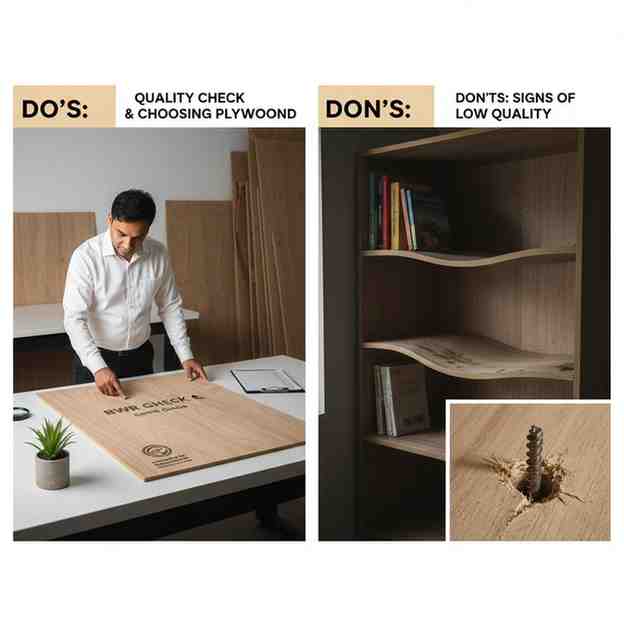
Do’s: Check the Plywood Core Properly
Always look at the sheet’s side edge. You can learn more from it than from the surface.
You should observe:
- Uniform, clean layers
- A powerful bond between the layers
- Few or no gaps
Better strength and a longer lifespan are typically associated with a clean, consistent core. One of the easiest plywood quality checks you can perform without any tools is this one.
Don’ts: Ignore Gaps, Overlaps, or Soft Patches
Avoid ignoring huge gaps, uneven layers, or sticky patches inside the sheet. These flaws usually show up later as bending, loose screws, or uneven surfaces.
Many people start looking for ways to avoid mistakes when choosing plywood after the furniture is installed.
Do’s: Check Certifications and Grade Markings
Always search for basic details on the sheet:
- Grade marking
- Certification Information
- Manufacturer details
These signs show where the plywood can be used safely. This is significantly more informative than any sales pitch about what to look for when purchasing plywood.
Don’ts: Buy Plywood Based Only on Price
Cheaper plywood often looks fine at first, but causes problems after installation. Repairs and replacements usually cost more than choosing the right plywood initially.
This is one of the most common mistakes beginners make when buying plywood for furniture.
Do’s: Match Thickness With Usage
However, thickness is often ignored, yet it’s important.
- Thin sheets can break under strain.
- Thicker sheets provide greater support for shelves, shutters, and heavier furniture.
Choosing the right thickness is a fundamental but crucial aspect of purchasing long-lasting plywood.
Did you know about the advantages and disadvantages of plywood?
Don’ts: Skip Dealer and Storage Checks
Even fine plywood can be damaged if it is stored improperly. Avoid sheets with:
- Feels wet on the touch
- Have swelling at the borders
- Look twisted or uneven.
Buying from a reputable dealer who stores plywood properly significantly decreases such risks.
Dos: Ask the Right Questions Before Buying
Instead of asking, ” Which is the best plywood?” ask:
- Where should this grade be used?
- Is it suitable for long-term use in furniture?
- What complications can arise if it is used in the wrong area?
These questions can help you cut through the confusion and make better judgments.
Conclusion
Choosing plywood is not about recalling grades or making bold claims. It all boils down to paying attention to the essentials and knowing what to look for before making a purchase. Most long-term furniture issues are avoided when the appropriate plywood is used in the right place.
If you’re looking for a reputable option that follows these standards, Wigwam Ply is a solid choice for home furnishings and interiors.
FAQs
1. What type of plywood should be used in the living room?
Living rooms are usually dry, so you don’t need waterproof plywood here. MR plywood works well for TV units, cabinets, shelves, and other furniture. If the living room gets some humidity from balconies or large windows, BWR plywood can be a safer option. Finish matters more here since the furniture is always visible.
2. Which plywood is best for the kitchen area?
Kitchens deal with steam, heat, and regular use, so moisture resistance is important. That’s why many people choose BWP (marine) plywood for kitchen cabinets. In kitchens with adequate ventilation, BWR plywood can also work. MR plywood is generally avoided because it doesn’t handle moisture well over time.
3. What plywood should be used for bedroom furniture?
Bedrooms stay mostly dry, so MR plywood is commonly used for beds, wardrobes, and shelves. It’s practical and cost-effective. If the furniture is heavy or used daily, some people prefer BWR plywood, but marine plywood isn’t usually needed in bedrooms.
4. Which plywood is suitable for bathrooms and wet areas?
Bathrooms and wet areas need plywood that can handle constant moisture. Marine (BWP) plywood is the safest choice here. It lasts longer and works well in moist areas. Using MR plywood in bathrooms often leads to swelling or damage, so it’s best avoided.
5. Can the same plywood be used throughout the entire house?
It’s not the best idea. Different rooms face different conditions, and one plywood type won’t suit all of them. While marine plywood can be used everywhere, it increases the costs. A better approach is to choose plywood room by room based on moisture, usage, and load.