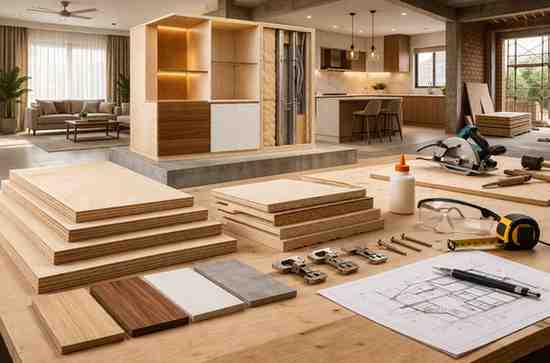
Discover the advantages and disadvantages of MDF and plywood for furniture and interiors. Make the right choice for your next project.
Selecting the appropriate material for your furniture can be challenging. Which is better, plywood or MDF? Both are preferred options for office furniture, modular kitchens, wardrobes, and other interior spaces. Each has its own advantages, and choosing the incorrect one could result in a design that doesn’t exactly fit your space, requires more servicing, or has a shorter lifespan.
We’ll simplify the differences between MDF and plywood in this article, explore their benefits and drawbacks, and guide you in determining which is best for your house or place of business. If you’re curious about the difference between MDF and plywood for furniture in India, you’ve come to the right place.
What is MDF?
Small wood fibres are pressed together using heat and glue to create MDF, or medium-density fibreboard. Consider it an easy-to-work-with sheet that is uniformly smooth.
MDF sheets or MDF boards are commonly used for furniture, cabinets, and partitions. Its flat surface is ideal for painting or laminating, giving it a clean, polished appearance.
Advantages of MDF
If you’re wondering why MDF is so popular, here are some of the reasons designers and homeowners often choose it:
- One major benefit is that it’s smooth, making painting or applying laminate very simple.
- If you’re on a tight budget, it’s usually less expensive than plywood.
- Because MDF is lightweight, it is simple to move, cut, and shape.
- Excellent for interior elements, modular cabinets, shelving, and closets.
Disadvantages of MDF
But even MDF isn’t perfect. Here are a few things to keep in mind before picking it for your furniture:
- The catch is that MDF hates water; avoid using it in areas like bathrooms.
- Because it’s not as sturdy as plywood, heavy furniture may eventually cause it to sag.
- MDF may eventually deteriorate more quickly than plywood.
- When cutting or assembling, use caution to prevent edges from chipping.
Explore this to find out which is more durable and long-lasting: MDF or Plywood
What is Plywood?
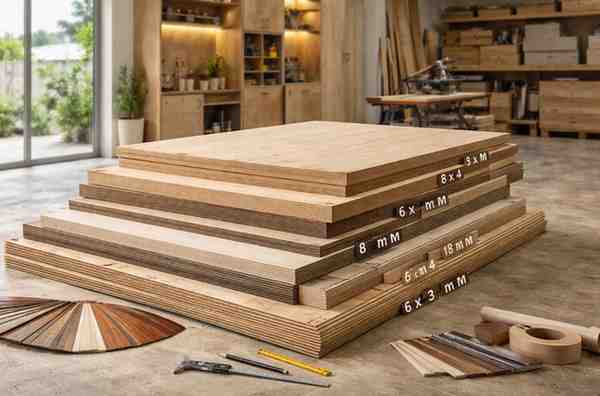
Plywood is created by gluing together numerous thin layers of wood, with the grains of each layer arranged at right angles to one another. It is robust, sturdy, and resistant to bending because of its stacking.
Plywood is frequently used for wardrobes, modular kitchens, office furniture, and interior panels. Common forms include plywood sheets and plywood boards. BWR plywood is water-resistant in locations that are subjected to moisture.
Advantages of Plywood
Plywood’s common use in furniture and interior design has a purpose. This is what distinguishes it:
- Plywood is suitable for heavy furniture due to its robust and long-lasting properties.
- Its multi-layered design helps prevent drooping, warping, and bending.
- It is more moisture-resistant than MDF, particularly in kitchens and closets.
- It is suitable for both long-term interior applications and daily furniture.
Disadvantages of Plywood
Although plywood is sturdy and reliable, here are a few drawbacks you should be aware of:
- Plywood typically costs more than MDF.
- Some plywood surfaces require laminates or paint for a smooth finish.
- Because it is heavier than MDF, handling and installation may be more difficult.
- Long-term exposure to water might cause damage or breakdown.
If you’re confused between plywood vs blockboard for your furniture, check this quick guide.
Choosing the Right Material: MDF vs Plywood
If you’re still unsure, these practical tips can help you decide what will work best for your space.
- For dry indoor settings, use MDF. It’s suitable for painted or laminated furniture such as closets, wall panels, and lightweight cabinets where the finish is more important than the load-bearing capacity.
- For furniture that is used frequently, go with plywood. Beds, kitchen cabinets, wardrobes, and storage units benefit from plywood’s strength and longevity.
- Consider the exposure to dampness, MDF can be used for upper kitchen cabinets if kept away from steam, but plywood is safer for base cabinets and sink areas.
- Select a suitable thickness as thicker boards prevent sagging and increase stability, particularly for shelves and huge cabinets.
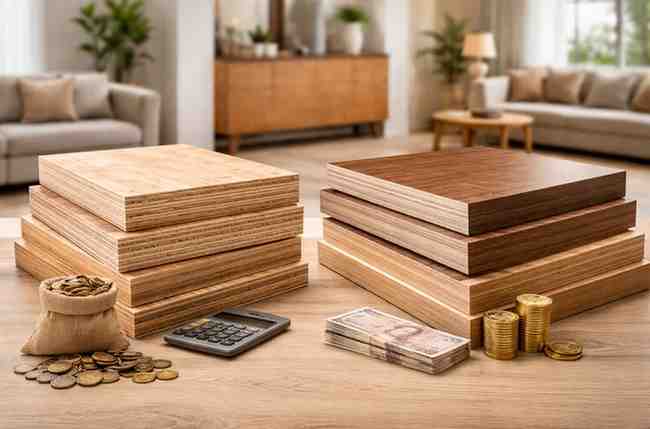
- Consider more than just the first expense. MDF is initially less expensive; however, due to fewer fixes, plywood is more cost-effective in the long run.
So, Which One Should You Choose?
Each material has its own advantages and disadvantages. MDF is a good choice for indoor furniture due to its smooth finish and affordability, whereas plywood stands out for its strength, durability, and capacity to handle daily use.
Understanding the benefits and drawbacks of MDF and plywood allows you to select a material that best suits your area, usage, and long-term requirements—rather than simply choosing what is cheaper or more popular.
Want to explore guidelines to select suitable boards for your upcoming project? Check Wigwam Ply and its related guides for an informed decision.
FAQs
1. What is the difference between MDF and plywood?
The primary distinction is in their manufacturing process. Wood fibres are pressed together to generate MDF, which has a smooth, consistent finish. In contrast, plywood is created by stacking thin wood sheets to increase its strength and durability.
2. Which is stronger – MDF or plywood?
Compared to MDF, plywood is stronger. It is frequently used for mattresses, closets, and kitchen cabinets because of its layered structure, which makes it more resilient to weight.
3. Is MDF or plywood better for furniture?
It varies with the type of furniture. MDF is ideal for lightweight, painted or laminated indoor furniture. For furniture that must last longer and be used frequently, plywood is preferable.
4. Which is more durable, MDF or plywood?
In general, plywood is more resilient. Compared to MDF, it is more resilient to everyday wear, weight, and exposure to light moisture, particularly over time.
5. Can MDF be used for kitchen cabinets instead of plywood?
Yes, MDF can be used for upper kitchen cabinets as long as the area remains dry. For base cabinets or sink areas, plywood is usually a safer alternative.
6. Is plywood waterproof like BWR MDF?
Nothing is totally waterproof. BWR plywood is water-resistant and performs best in humid or semi-wet conditions. Standard MDF does not tolerate dampness well unless it is specifically treated.
7. Which is cheaper – MDF or plywood?
MDF is typically cheaper than plywood. It’s a wonderful choice when you’re on a small budget, and the furniture doesn’t have to bear hefty loads.
8. Can MDF or plywood be used for wall paneling?
Yes, both can be utilised. MDF is ideal for decorative wall panels for its smooth appearance, while plywood is excellent for panels that require considerable strength.
9. What are the advantages of using MDF over plywood?
MDF has a smooth surface, is simple to paint or laminate, is affordable, and is appropriate for indoor furniture where strength is not a major consideration.
10. Which lasts longer in humid climates, MDF or plywood?
Plywood lasts longer in humid environments. It resists moisture better than MDF, particularly when water-resistant grades such as BWR plywood are utilised.