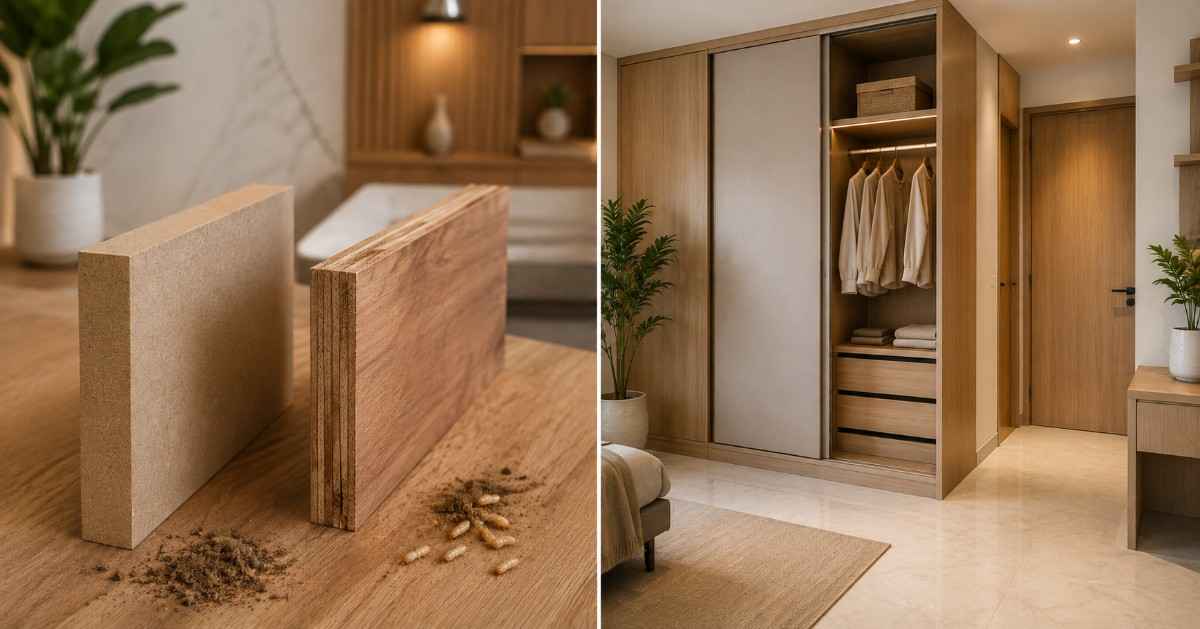
Termites remain one of the biggest threats to wooden furniture and interiors. Even premium designs can fail when the core material lacks protection. Choosing termite-resistant materials therefore becomes essential for long-term durability.
The debate around Termite Resistance: HDHMR vs Plywood is increasingly common. Homeowners want materials that resist pests without compromising strength. Architects and furniture manufacturers also evaluate durability before selecting boards.
Many buyers compare HDHMR vs Plywood based on moisture resistance and cost. However, termite protection involves much more than surface treatments. Manufacturing quality, density, adhesive systems, and preservative technologies all matter.
Modern termite resistant HDHMR boards are manufactured using compressed wood fibres. Special additives and treatment processes improve resistance against termites and biological deterioration. This makes HDHMR a popular option for selected interior applications.
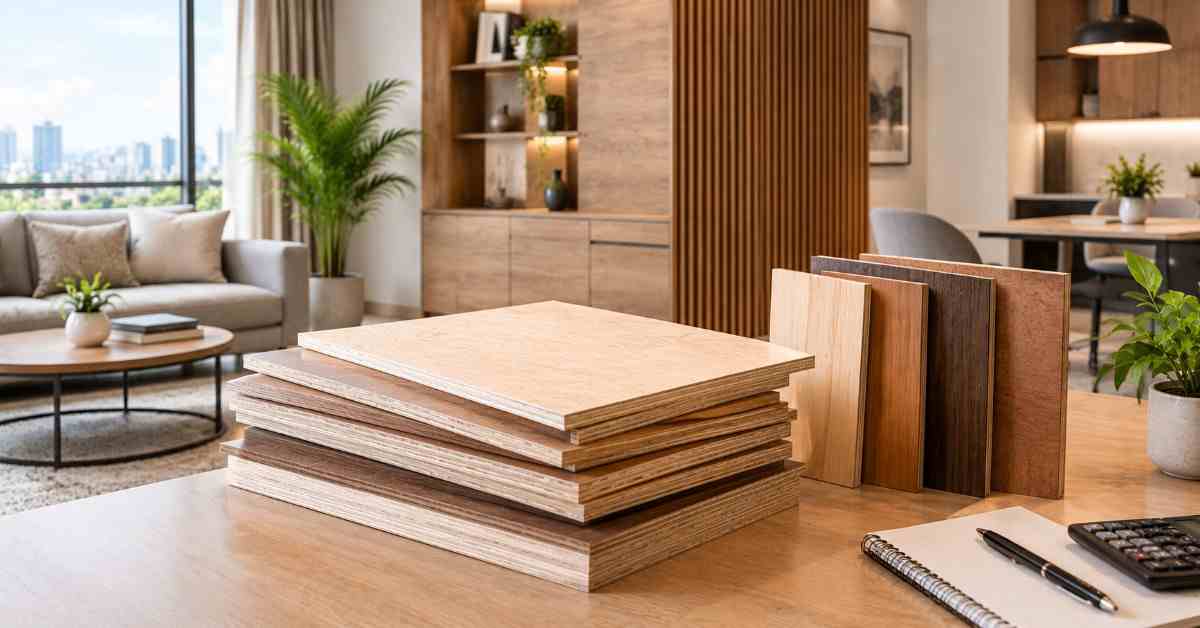
At the same time, termite resistant plywood remains the preferred choice for furniture. Premium plywood combines preservative treatments with cross-laminated veneer construction. This creates stronger panels with excellent long-term performance.
Understanding HDHMR board termite resistance requires examining both material composition and usage conditions. No wood-based product is completely immune to termite attack. The effectiveness of protection depends on manufacturing standards and installation practices.
Furniture manufacturers often compare HDHMR board vs plywood when designing kitchens and wardrobes. While HDHMR offers density and smooth surfaces, plywood provides superior structural strength and hardware retention.
Many homeowners searching for the best termite resistant board also consider lifespan. Furniture must withstand daily use, environmental changes, and pest exposure simultaneously. Strength and durability therefore remain equally important alongside termite resistance.
As a trusted plywood manufacturer, Wigwam Ply focuses on engineered plywood solutions designed for lasting performance. Advanced manufacturing processes, quality raw materials, and protective treatments help create furniture-grade plywood capable of meeting modern interior demands.
Before evaluating HDHMR vs plywood price difference or deciding HDHMR vs plywood which is better, it is important to understand how each material protects against termites and performs over the long term.
Compare the Top 10 Best Plywood Brands in India to find the perfect combination of quality, innovation, and value for your next project.
HDHMR vs Plywood — How Each Material Resists Termites
When evaluating Termite Resistance: HDHMR vs Plywood, it is important to understand how each material achieves protection. While both materials are often marketed as termite-resistant, the mechanism behind that resistance differs significantly. For homeowners investing in furniture, kitchens, wardrobes, and interiors, understanding these differences can help prevent costly repairs and premature replacements.
HDHMR vs Plywood comparisons often focus on density, moisture resistance, and surface quality. However, termite protection depends not only on board density but also on chemical treatment, manufacturing standards, and long-term durability under real-world conditions.
How Termite Resistant HDHMR Works
Termite resistant HDHMR boards derive much of their resistance from their manufacturing process. HDHMR is produced using highly compressed wood fibres bonded under pressure. This dense structure reduces the natural grain channels that termites typically use to travel through solid wood.
Because the fibres are compressed into a homogeneous panel, termites may find it more difficult to penetrate compared to untreated wood products. However, density alone does not actively repel termites. Unless the board is specifically manufactured with anti-termite chemicals or preservatives, its resistance primarily comes from physical density rather than chemical protection.
This means HDHMR board termite resistance can vary significantly between manufacturers depending on additives, resin systems, and production quality.
How Termite Resistant Plywood Works
Termite resistant plywood relies on a more comprehensive protection system. Premium plywood manufacturers use preservative treatments, anti-termite chemicals, and advanced adhesive technologies during production. In high-quality BWR and BWP plywood, chemical treatment penetrates deep into the panel rather than remaining limited to the surface.
Marine-grade and BWP plywood are commonly manufactured using phenol-formaldehyde resin systems that improve durability and moisture resistance. Combined with anti-termite treatment during core processing, these panels offer more consistent protection throughout the sheet.
Because premium plywood products are often manufactured according to recognised standards such as IS:303 and IS:710, buyers can verify performance through certifications rather than relying solely on marketing claims.
HDHMR vs Plywood: Which Offers Better Termite Protection?
The practical answer is that chemically treated termite-resistant plywood generally provides more reliable and verifiable termite protection than HDHMR.
While HDHMR benefits from high density, termites are not prevented by density alone. Premium plywood combines physical strength with active chemical protection and industry-recognised manufacturing standards. This creates a deeper and more comprehensive defence against termite attacks.
For furniture applications where long-term durability is critical, chemically treated plywood often provides greater confidence because its protective mechanisms are engineered directly into the manufacturing process.
HDHMR vs Plywood Termite Resistance Comparison
| Parameter | HDHMR Board | Premium Termite-Resistant Plywood |
| Termite Resistance Mechanism | High-density compressed fibres | Chemical anti-termite treatment + engineered construction |
| Type of Protection | Primarily physical resistance | Physical and chemical protection |
| Depth of Protection | Depends on board composition | Throughout the panel structure |
| Anti-Termite Chemicals | Optional, manufacturer-dependent | Common in premium treated grades |
| IS Certification Availability | Limited | IS:303 and IS:710 compliant grades available |
| Moisture Resistance | High | High in BWR and BWP grades |
| Structural Strength | Good | Excellent |
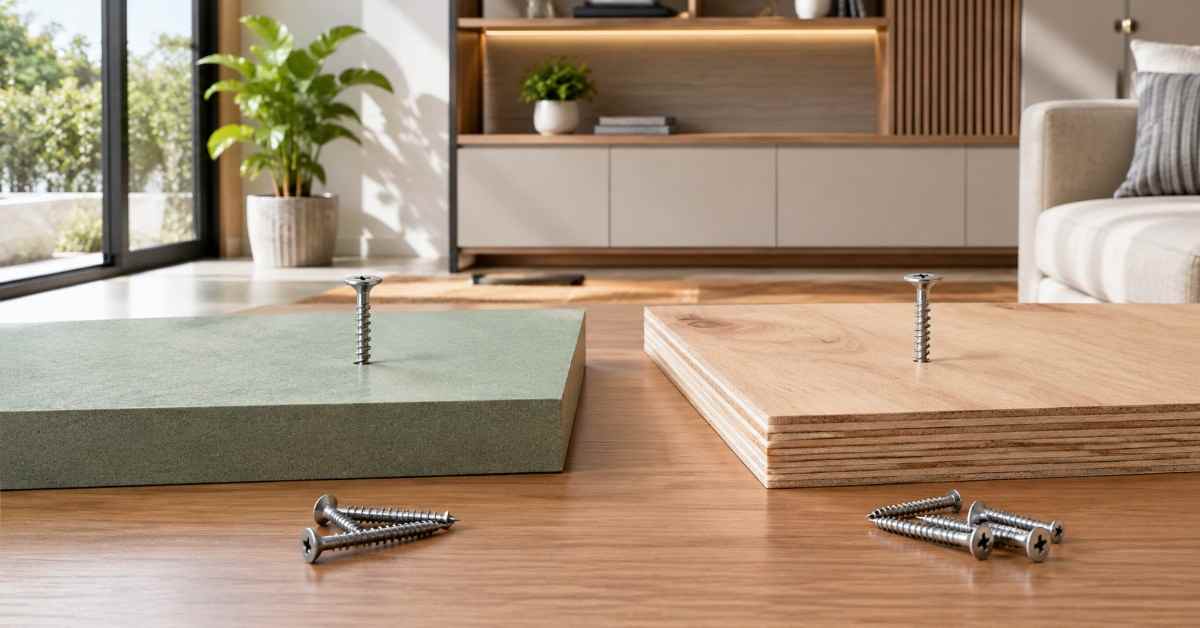
| Screw-Holding Capacity | Good | Superior |
| Long-Term Pest Resistance | Moderate to High | High |
| Suitability for Furniture | Good | Excellent |
Why Plywood Remains the Preferred Choice
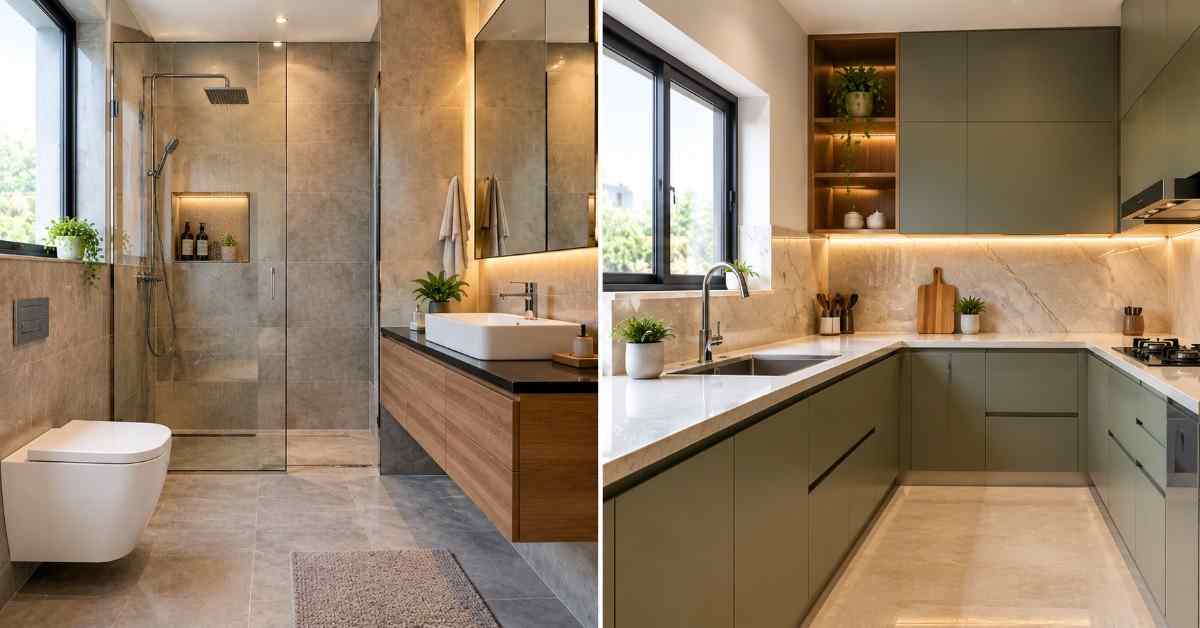
For wardrobes, modular kitchens, cabinets, office furniture, and storage systems, plywood offers a more balanced combination of termite resistance, structural strength, moisture protection, and durability. Premium plywood products such as Wigwam Ply incorporate advanced manufacturing processes and protective treatments designed to perform consistently over years of use.
While HDHMR remains a useful material for decorative shutters and routed panels, furniture frameworks and structural components benefit from the deeper, standards-backed protection available in premium termite-resistant plywood.
Key Takeaway
If termite resistance is a primary concern, the comparison between HDHMR vs Plywood favours high-quality chemically treated plywood. HDHMR relies largely on density to slow termite activity, whereas premium plywood combines engineered construction, preservative treatment, moisture-resistant bonding, and recognised certifications to deliver more dependable long-term protection. For furniture expected to last for years, termite-resistant plywood remains the stronger and more proven solution.
Why Plywood Is the Better Choice for Termite Resistance — HDHMR Board Benefits, Price & Final Verdict
The discussion around HDHMR board vs plywood often focuses on moisture resistance, surface quality, and durability. While both materials have their place in modern interiors, termite protection remains a critical consideration for homeowners, particularly in India’s warm and humid climate where termite activity is common.
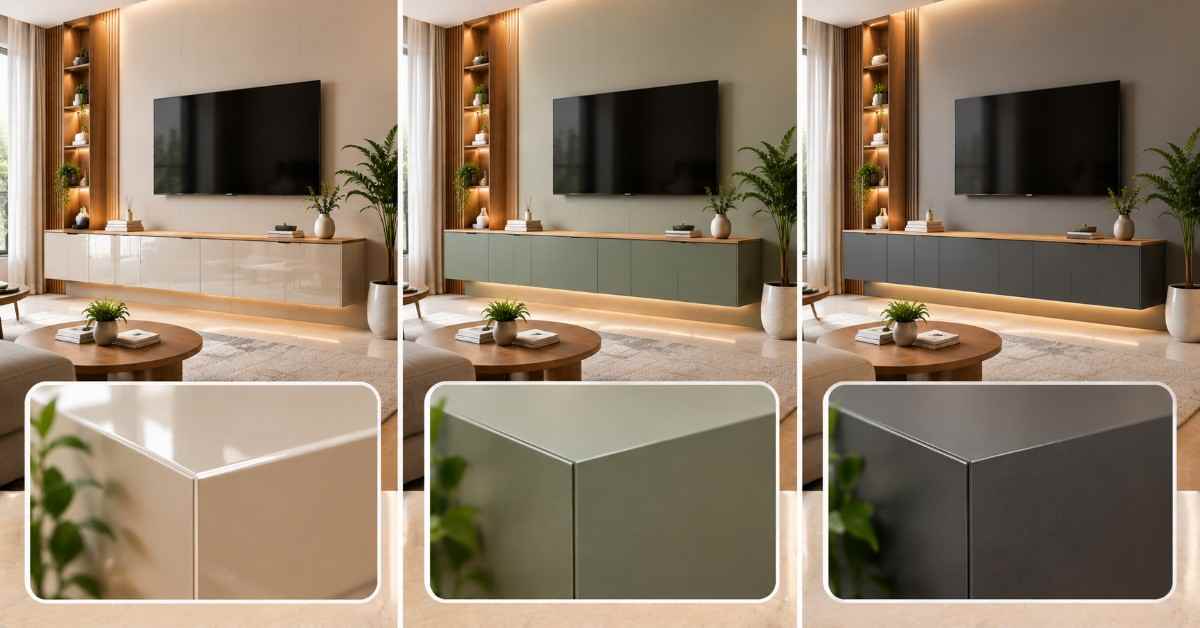
To make a fair comparison, it is important to recognise the genuine HDHMR board benefits. HDHMR offers a dense and uniform structure that creates smooth surfaces for laminates, acrylic finishes, and PU coatings. The material machines well, making it suitable for CNC routing, decorative grooves, and modern furniture facades. Its moisture resistance also makes it a popular choice for wardrobe shutters, cabinet fronts, and decorative panels.
However, these advantages do not automatically translate into superior termite resistance.
Why HDHMR’s Strengths Don’t Guarantee Better Termite Protection
The termite resistance of HDHMR primarily comes from its compressed fibre structure and manufacturing density. Because the board lacks natural grain pathways, termites may find it more difficult to penetrate compared to untreated wood products.
Yet density alone is a passive defence. Unless the board is specifically manufactured with anti-termite chemicals, HDHMR does not actively prevent termite attacks. As a result, termite performance can vary significantly between brands and product specifications.
For buyers seeking long-term furniture protection, relying solely on density provides less certainty than using materials specifically engineered and treated for termite resistance.
Why Premium Plywood Offers More Reliable Protection
When evaluating the best termite resistant board, premium treated plywood holds a significant advantage.
High-quality plywood manufacturers incorporate preservative treatments and anti-termite chemicals directly into the production process. In BWR and BWP-grade plywood, the protection extends throughout the panel rather than remaining limited to the surface. The use of advanced phenol-formaldehyde adhesives further improves durability and resistance against biological deterioration.
Premium plywood also benefits from recognised standards such as IS:710 for BWP-grade plywood. These certifications provide measurable quality benchmarks and help buyers verify performance claims. This standards-backed approach makes termite-resistant plywood a more dependable solution for long-term furniture applications.
For wardrobes, modular kitchens, beds, cabinets, office furniture, and storage systems, chemically treated plywood provides a deeper level of protection combined with superior structural performance.
HDHMR vs Plywood Price Difference
The HDHMR vs plywood price difference is another factor worth considering.
In many markets, HDHMR boards are priced above standard commercial plywood because of their high-density manufacturing process. However, a higher price does not necessarily result in better termite resistance.
Premium furniture-grade plywood often delivers stronger value because buyers receive structural strength, superior screw-holding capacity, moisture resistance, certified performance, and active termite protection within the same product. This combination of benefits frequently outweighs any perceived advantage associated with HDHMR’s density.
HDHMR vs Plywood: Which Is Better?
The answer depends on the application.
HDHMR performs well where smooth surfaces, decorative machining, and moisture resistance are priorities. It is particularly useful for routed shutters, designer wardrobe fronts, and decorative furniture facades.
However, when termite protection, structural durability, and long-term furniture performance are critical, premium treated plywood remains the stronger choice. Its combination of chemical preservation, certified manufacturing standards, superior hardware retention, and proven durability makes it the preferred material for most furniture applications.
Quick Decision Guide
| Requirement | Recommended Material |
| High termite risk areas | Treated Premium Plywood |
| Modular kitchens and wardrobes | Treated Premium Plywood |
| Structural furniture and cabinetry | Treated Premium Plywood |
| Heavy-load shelves and storage units | Treated Premium Plywood |
| Decorative routed shutters | HDHMR |
| CNC-cut furniture facades | HDHMR |
| Painted designer panels | HDHMR |
| Low-risk decorative applications | HDHMR Acceptable |
Final Verdict
For homeowners searching for the best termite resistant board, premium chemically treated plywood remains the more reliable investment. While HDHMR offers excellent surface quality and decorative versatility, its termite resistance is largely dependent on density rather than active protection.
Premium plywood combines anti-termite treatment, BWP-grade technology, IS-certified performance, superior structural strength, and long-term durability within a single product. For Indian homes where termites pose a genuine threat to furniture and interiors, treated furniture-grade plywood continues to be the safer and more dependable choice.
Conclusion: Choose Long-Term Protection with Wigwam Ply
When comparing HDHMR vs plywood, both materials offer distinct advantages for modern interiors. HDHMR delivers a smooth surface, good moisture resistance, and excellent workability for decorative applications. However, when termite protection, structural strength, hardware retention, and long-term furniture durability are the priorities, premium treated plywood remains the more dependable solution.
For wardrobes, modular kitchens, cabinets, office furniture, and high-use interior applications, termite-resistant plywood provides a stronger combination of certified performance and proven longevity. Its cross-laminated construction, preservative treatment, and moisture-resistant bonding create furniture that withstands both daily wear and environmental challenges.
Wigwam Ply takes this protection a step further through advanced manufacturing processes, calibrated construction, premium hardwood cores, and high-quality adhesive systems. Designed for modern Indian homes, Wigwam plywood delivers the strength, dimensional stability, and termite resistance required for furniture that lasts for decades.
If you’re looking for a reliable material that balances durability, performance, and long-term value, choose Wigwam Ply. Explore Wigwam’s range of furniture-grade, termite-resistant plywood solutions and build interiors with confidence, knowing your investment is protected from the inside out.
Frequently Asked Questions
Is HDHMR termite resistant?
Yes, termite resistant HDHMR boards offer good protection against termite attacks due to their dense fibre composition and manufacturing process. However, HDHMR board termite resistance primarily comes from density and additives rather than deep chemical treatment throughout the board.
Which is better for termite protection — HDHMR or plywood?
When comparing Termite Resistance HDHMR vs Plywood, premium termite resistant plywood generally offers more reliable long-term protection. Chemically treated BWR and BWP plywood provide active termite resistance throughout the panel, whereas HDHMR relies mainly on its dense structure.
Is treated plywood better than HDHMR?
For most furniture applications, treated plywood is often the preferred choice. In the HDHMR vs Plywood comparison, premium plywood offers stronger screw-holding capacity, better structural performance, certified quality standards, and deeper termite protection.
What is the best termite resistant board for furniture in India?
The best termite resistant board depends on the application. For wardrobes, modular kitchens, cabinets, storage units, and structural furniture, premium termite-treated plywood remains one of the most trusted solutions because it combines durability, moisture resistance, and long-term termite protection.
Does HDHMR provide complete termite-proof protection?
No. While termite resistant HDHMR boards offer strong resistance, no wood-based product can guarantee absolute termite-proof performance in every environment. Proper installation and moisture control remain important for long-term protection.
Why is plywood preferred over HDHMR for furniture?
In the HDHMR board vs plywood comparison, plywood offers superior load-bearing strength, better hardware retention, excellent dimensional stability, and proven durability. These qualities make Plywood for furniture the preferred choice for high-use residential and commercial interiors.
What are the main HDHMR board benefits?
Key HDHMR board benefits include high density, moisture resistance, smooth surfaces, and excellent CNC workability. These features make HDHMR suitable for decorative shutters, routed panels, and designer furniture fronts.
What is the HDHMR vs plywood price difference?
The HDHMR vs plywood price difference varies by manufacturer, thickness, and grade. HDHMR often costs more than standard commercial plywood, while premium BWR and BWP plywood may fall within a similar or higher price range depending on specifications and certifications.
HDHMR vs plywood — which is better?
The answer to HDHMR vs plywood which is better depends on the application. HDHMR works well for decorative and routed surfaces, while premium plywood remains the stronger choice for wardrobes, kitchens, cabinets, shelving, and structural furniture.
Which material should I choose for termite-prone Indian homes?
For termite-prone locations, termite resistant plywood is generally the safer long-term investment. Premium treated plywood combines chemical protection, moisture resistance, structural strength, and certified manufacturing standards, making it highly suitable for furniture and interiors in Indian conditions.