Moisture is one of the biggest threats to furniture longevity. Whether it’s a modular kitchen exposed to steam, a wardrobe installed against an external wall, or bathroom cabinetry subjected to daily humidity, the material’s ability to resist moisture directly impacts durability, dimensional stability, and maintenance costs.
This is where the debate between HDHMR vs Plywood becomes important.
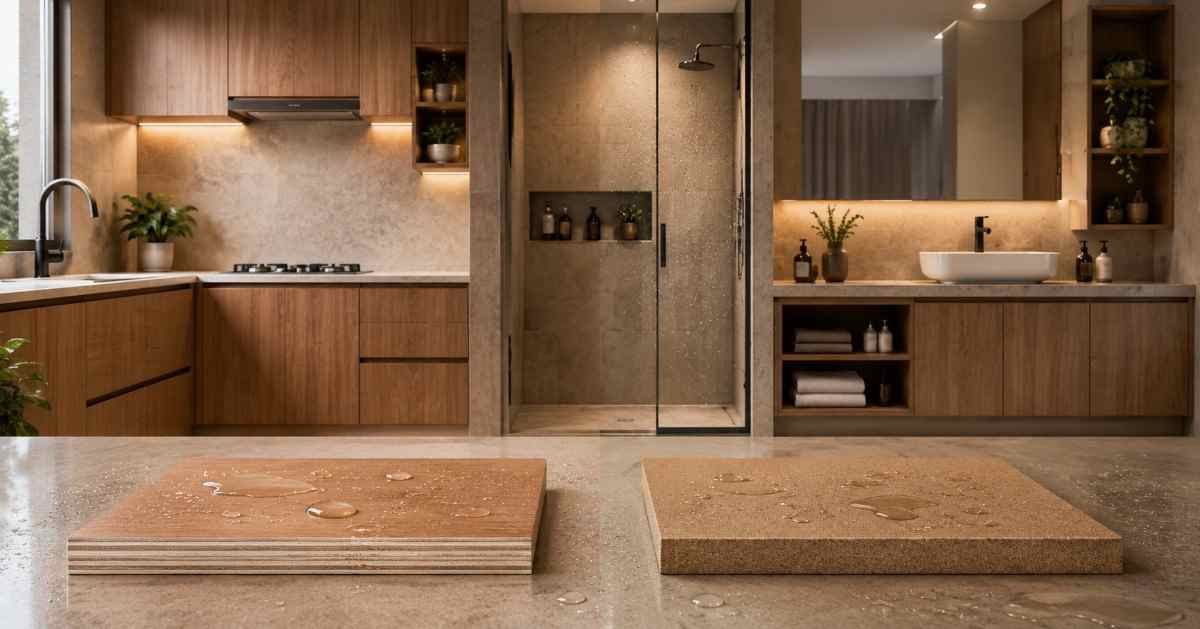
Both materials are marketed as moisture-resistant solutions, but they achieve moisture resistance in fundamentally different ways. HDHMR (High Density High Moisture Resistant) boards rely on dense compressed wood fibres and moisture-resistant additives, while moisture resistant plywood depends on cross-laminated veneers and adhesive technology to resist moisture penetration.
The right choice depends on where the furniture will be used, how much moisture exposure it will face, and whether structural strength or surface stability is the primary requirement.
For homeowners, architects, and furniture manufacturers, understanding the difference between moisture resistant HDHMR and moisture resistant plywood is essential before selecting materials for kitchens, wardrobes, office furniture, or interior fit-outs.
In this guide, we’ll compare HDHMR board vs plywood, evaluate their performance in humid conditions, examine practical applications, discuss moisture resistant plywood price per sq ft, and help determine which material delivers the best long-term value for your furniture project.
Top 10 Best Plywood Brands in India: Best Plywood Companies Compared
How HDHMR and Plywood Handle Moisture — Construction, Resistance Mechanisms & Key Differences
When comparing Moisture Resistance: HDHMR vs Plywood, it is important to understand that both materials resist moisture in fundamentally different ways.
HDHMR relies on material density and resin distribution, while plywood relies on cross-laminated construction and adhesive technology. Understanding this distinction helps explain why their performance differs significantly in real-world applications.
How Moisture Resistance Works in HDHMR and Plywood
| Material | Moisture Resistance Mechanism | Primary Protection Method |
| HDHMR Board | High-density compressed wood fibres bonded with moisture-resistant resin | Reduced water absorption through density |
| MR Plywood (IS:303) | Cross-laminated veneers bonded with moisture-resistant adhesive | Moisture-resistant glue lines |
| BWP Plywood (IS:710) | Cross-laminated veneers bonded with phenol formaldehyde resin | Waterproof glue lines and structural stability |
While both HDHMR and plywood are marketed as moisture-resistant materials, the science behind their performance is very different.
Moisture Resistant HDHMR: How It Works
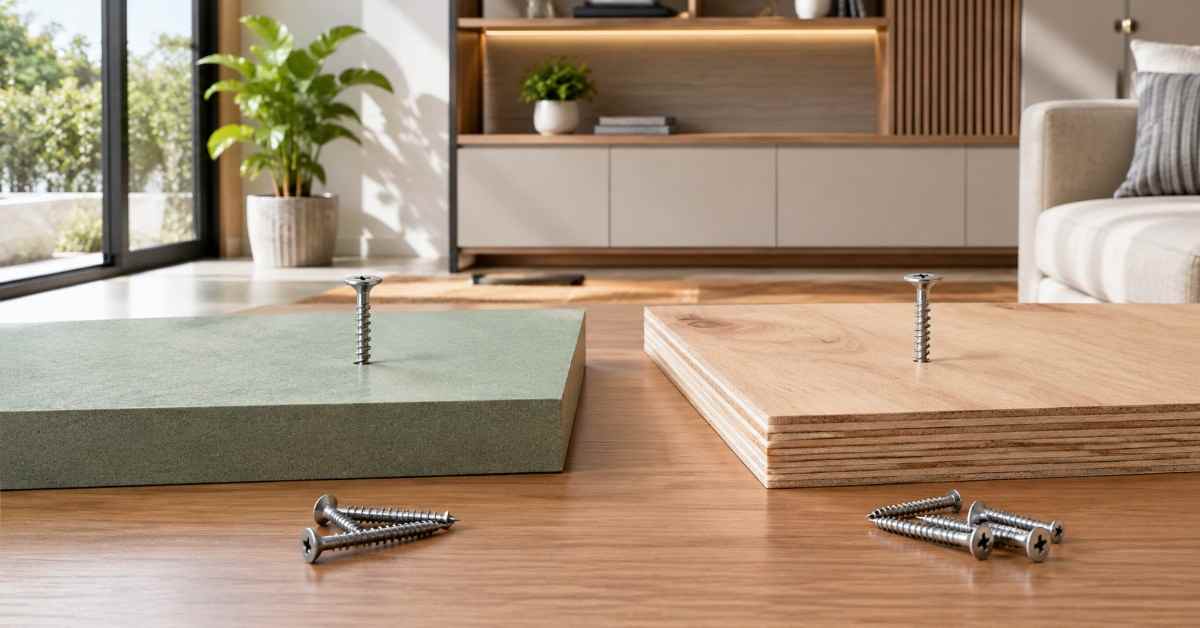
HDHMR (High Density High Moisture Resistance) board is manufactured by compressing wood fibres under high pressure while incorporating moisture-resistant resins throughout the panel.
The resulting board offers:
- Higher density than MDF
- Improved dimensional stability
- Better moisture resistance than standard fibreboards
- Smooth, uniform surfaces for decorative applications
Because the board is homogeneous throughout, moisture resistance is distributed across the entire panel rather than concentrated at specific layers.
However, HDHMR’s biggest limitation remains its fibre-based core.
When exposed to prolonged water contact—particularly at cut edges, drill holes, and routed sections—the fibres can absorb moisture, leading to edge swelling and dimensional changes.
| HDHMR Moisture Performance | Result |
| Moderate humidity exposure | Performs well |
| Steam exposure | Generally acceptable |
| Occasional moisture contact | Performs adequately |
| Prolonged water exposure | Risk of swelling |
| Exposed edges | Vulnerable |
| Standing water contact | Not recommended |
This makes HDHMR suitable for many interior furniture applications, but less ideal for environments where moisture exposure is frequent or severe.
Moisture Resistant Plywood: How It Works
Plywood approaches moisture resistance differently.
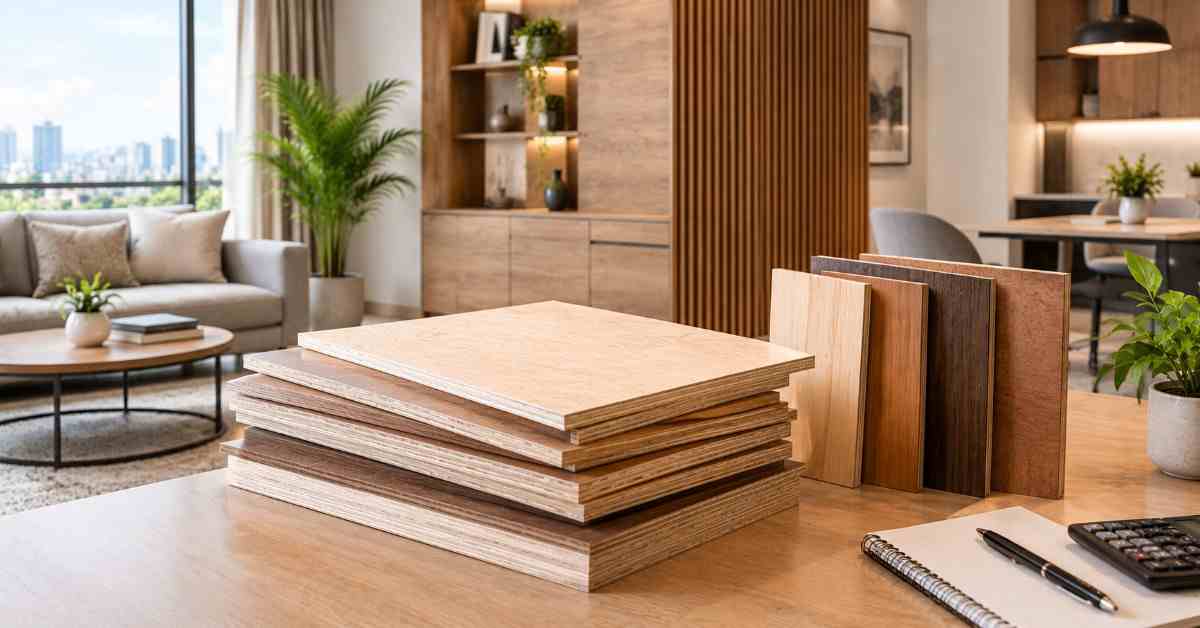
Instead of relying on density, plywood uses cross-laminated wood veneers bonded with engineered adhesives.
The moisture resistance of plywood depends largely on the adhesive grade used during manufacturing.
| Plywood Grade | Adhesive System | Moisture Resistance Level |
| MR Grade (IS:303) | Urea Formaldehyde | Moisture Resistant |
| BWR Grade | Phenol Formaldehyde | Water Resistant |
| BWP Grade (IS:710) | Phenol Formaldehyde | Boiling Water Proof |
Because plywood consists of multiple wood veneers arranged in alternating grain directions, moisture-induced movement is distributed across the panel rather than concentrated in one direction.
This structural design significantly improves stability under humid conditions.
Why BWP Plywood Performs Better in High-Moisture Environments
The highest level of moisture resistance available in conventional panel products is BWP-grade plywood (IS:710).
Unlike HDHMR, BWP plywood is tested against established BIS standards.
To qualify as IS:710 plywood, panels must pass stringent performance requirements including the 72-hour boiling water test without delamination.
This is a critical distinction.
HDHMR may be marketed as moisture resistant, but it is not certified through an equivalent boiling-water resistance standard.
| Performance Parameter | HDHMR | BWP Plywood (IS:710) |
| Water-resistant resin | Yes | Yes |
| Cross-laminated structure | No | Yes |
| BIS moisture standard | No specific equivalent | IS:710 |
| Boiling water resistance test | Not applicable | Mandatory |
| Long-term humidity performance | Good | Excellent |
| Direct water exposure | Moderate | Excellent |
| Kitchen suitability | Good | Excellent |
| Bathroom suitability | Moderate | Excellent |
HDHMR Board vs Plywood: Moisture Performance in Real Conditions
In practical furniture applications, the difference becomes more noticeable over time.
| Environment | HDHMR Performance | Plywood Performance |
| Bedroom wardrobes | Excellent | Excellent |
| Living room furniture | Excellent | Excellent |
| Office furniture | Excellent | Excellent |
| Modular kitchens | Good | Excellent |
| Utility areas | Moderate | Excellent |
| Coastal climates | Moderate | Excellent |
| Bathroom cabinetry | Moderate | Excellent |
| High-humidity interiors | Good | Excellent |
For dry interior environments, both materials perform adequately.
However, as humidity levels increase, plywood’s structural advantages become increasingly significant.
HDHMR vs BWP Plywood vs MR Plywood
The following comparison provides a clear overview of moisture-resistance performance across the three most commonly specified panel materials.
| Factor | HDHMR | BWP Plywood (IS:710) | MR Plywood (IS:303) |
| Moisture Resistance Mechanism | Density + resin | Phenol formaldehyde bonding + cross-lamination | Moisture-resistant adhesive |
| Edge Swelling Risk | Moderate | Very Low | Low |
| BIS Certification | No equivalent moisture standard | IS:710 Certified | IS:303 Certified |
| Boiling Water Test | Not Applicable | Passes 72-hour test | Not Designed For Test |
| Humidity Tolerance | Good | Excellent | Good |
| Direct Water Exposure | Moderate | Excellent | Limited |
| Structural Stability | Good | Excellent | Good |
| Best Application | Decorative furniture, shutters | Kitchens, bathrooms, high-humidity interiors | Standard interior furniture |
The Verdict: Which Performs Better?
If the objective is maximum moisture resistance, the answer is clear.
IS:710 BWP-grade plywood delivers superior moisture performance compared to HDHMR.
This is because plywood combines:
- Certified moisture-resistant bonding systems
- Cross-laminated structural stability
- Reduced edge swelling risk
- Proven BIS-tested performance
- Better long-term durability in humid environments
HDHMR remains a strong option for decorative furniture components, shutters, and dry-to-moderately humid interiors. However, for kitchens, bathrooms, coastal regions, utility spaces, and other high-moisture environments, BWP-grade plywood remains the benchmark moisture resistance board for long-term performance and reliability.
Moisture Resistant Plywood Uses, Price & Why Plywood Outperforms HDHMR in Wet Environments
Choosing between HDHMR and plywood becomes much easier when real-world moisture exposure is considered. While both materials can perform well in dry interiors, the gap widens significantly when furniture is exposed to humidity, steam, water splashes, or prolonged moisture.
This is where moisture resistant plywood particularly IS:710 BWP-grade plywood—establishes a clear advantage.
What Is Moisture Resistant Plywood Used For?
A common question among homeowners and furniture manufacturers is:
What is moisture resistant plywood used for?
The answer depends on the plywood grade selected.
For environments where moisture exposure is expected, BWP-grade plywood is widely specified for:
| Application | Why Moisture Resistance Matters |
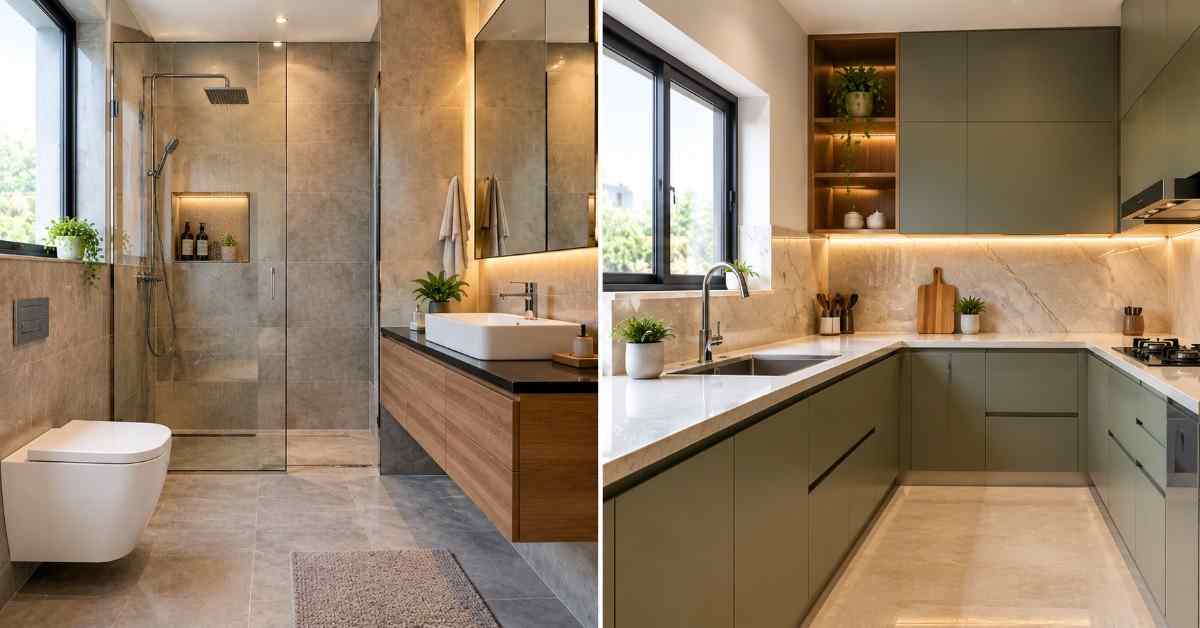
| Modular kitchen carcasses | Continuous steam and humidity exposure |
| Kitchen sink cabinets | Risk of water leakage and splash |
| Bathroom vanity units | Frequent water contact and high humidity |
| Utility room storage | Exposure to moisture and cleaning chemicals |
| Laundry room furniture | Damp conditions and condensation |
| Ground-floor furniture | Higher moisture migration risk |
| Coastal region interiors | Constant high atmospheric humidity |
| Built-in wardrobes on external walls | Condensation and dampness protection |
Because BWP plywood is engineered to withstand severe moisture exposure, it remains one of the most reliable moisture resistance sheet solutions available for furniture and interior applications.
Real-World Scenarios: Where Plywood Outperforms HDHMR
The difference between HDHMR and plywood is most visible in environments where moisture is unavoidable.
Kitchen Cabinet Carcasses
Kitchen cabinets experience constant exposure to:
- Cooking steam
- Water splashes
- Condensation
- Cleaning chemicals
While HDHMR offers moderate moisture resistance, prolonged exposure can eventually cause swelling at exposed edges and hardware cut-outs.
BWP plywood performs better because its phenol-formaldehyde bonding system and cross-laminated construction maintain panel integrity even under prolonged humidity.
| Kitchen Performance Factor | HDHMR | BWP Plywood |
| Steam resistance | Good | Excellent |
| Edge stability | Moderate | Excellent |
| Hardware area durability | Moderate | Excellent |
| Long-term structural reliability | Good | Excellent |
Bathroom Vanity Units
Bathrooms combine high humidity with direct water splash risk.
This creates a challenging environment for any panel product.
While HDHMR may perform adequately initially, exposed fibre edges remain vulnerable if moisture repeatedly penetrates routed or drilled areas.
BWP plywood’s veneer-based construction significantly reduces this risk.
| Bathroom Condition | HDHMR | BWP Plywood |
| Water splash exposure | Moderate | Excellent |
| High humidity tolerance | Good | Excellent |
| Edge swelling resistance | Moderate | Excellent |
| Structural stability | Good | Excellent |
Coastal and High-Humidity Climates
In coastal cities and humid regions, furniture may never fully dry between moisture cycles.
This creates long-term stress on panel materials.
BWP plywood’s IS:710 certification provides independently verified performance under severe moisture conditions, whereas HDHMR’s moisture resistance is primarily a material characteristic rather than a BIS-certified waterproofing standard.
Where HDHMR Performs Adequately
A balanced comparison should also acknowledge that HDHMR remains a suitable choice for many applications.
HDHMR board for furniture performs well in:
- Bedroom wardrobes
- Living room furniture
- Decorative shutters
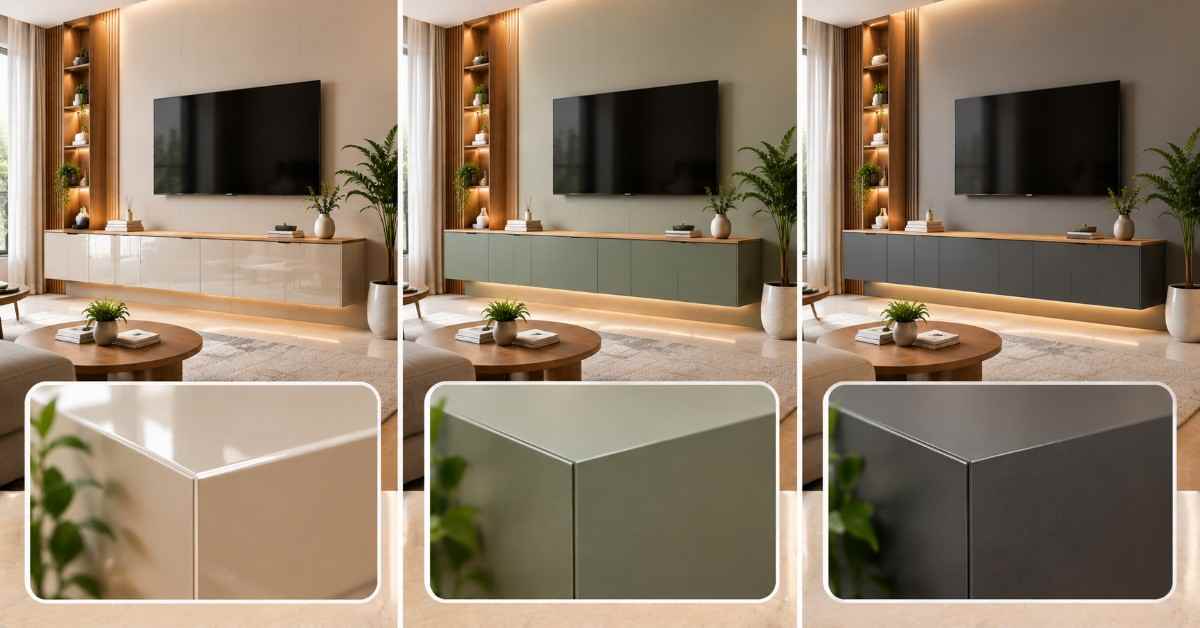
- TV units
- Wall-mounted panels
- CNC-routed decorative components
- Office furniture in controlled environments
These applications generally involve low moisture exposure and limited risk of direct water contact.
| Suitable HDHMR Applications | Why It Works Well |
| Decorative shutters | Minimal edge exposure |
| Bedroom furniture | Low humidity environment |
| Wall panels | Limited moisture contact |
| CNC-routed fronts | Excellent surface quality |
| Office furniture | Controlled indoor conditions |
Moisture Resistant Plywood Price: Understanding the Premium
Many buyers focus on moisture resistant plywood price when comparing materials.
However, moisture protection should be evaluated as a long-term investment rather than a simple material upgrade.
The additional cost of BWP-grade plywood comes from:
- Phenol formaldehyde resin bonding
- Stricter manufacturing standards
- Higher-quality core construction
- IS:710 certification testing
- Enhanced durability requirements
| Material | Relative Cost Position |
| MR Plywood | Economical |
| HDHMR | Mid-range |
| BWP Plywood (IS:710) | Premium |
Moisture Resistant Plywood Price Per Sq Ft: Looking Beyond Initial Cost
While moisture resistant plywood price per sq ft may be higher than HDHMR or standard MR plywood, the total ownership cost often favours plywood in wet environments.
Consider the cost implications of:
- Cabinet replacement
- Hardware failure
- Swollen panels
- Delaminated furniture
- Kitchen renovation repairs
In moisture-prone applications, these costs can easily exceed the initial material premium.
| Investment Factor | BWP Plywood Advantage |
| Reduced replacement risk | ✔ |
| Longer furniture lifespan | ✔ |
| Better hardware retention | ✔ |
| Lower maintenance costs | ✔ |
| Improved moisture durability | ✔ |
Quick Decision Guide
Choose BWP-Grade Wigwam Ply Plywood If:
- You are building modular kitchen cabinets
- The furniture will be installed in bathrooms
- The project is located in coastal regions
- Humidity exposure is frequent
- Long-term durability is critical
- You want IS:710 certified moisture protection
Choose MR-Grade Plywood or HDHMR If:
- Furniture is located in dry interiors
- Moisture exposure is minimal
- The application is decorative rather than structural
- The project prioritises surface finish over moisture performance
- Water contact is unlikely
Why Wigwam Ply Plywood Is the Preferred Choice for Moisture-Prone Applications
For kitchens, bathrooms, utility areas, and humid climates, premium plywood solutions such as Wigwam Visor (IS:710 Marine Grade) combine:
- BWP-grade bonding technology
- Advanced preservative treatment
- Superior core construction
- Both-side calibration
- Long-term dimensional stability
This makes them particularly suitable for furniture applications where moisture resistance cannot be compromised.
Final Verdict
When moisture exposure is a genuine concern, BWP-grade plywood consistently outperforms HDHMR.
HDHMR remains a capable material for decorative furniture and dry interior applications, but for kitchens, bathrooms, coastal climates, and high-humidity environments, the certified performance of IS:710 moisture resistant plywood provides greater durability, lower risk, and better long-term value.
For furniture expected to withstand moisture for years rather than months, BWP-grade plywood remains the safer and more reliable choice.
Choose Moisture Protection That Lasts with Wigwam Ply
When furniture is exposed to humidity, steam, and daily moisture, material selection becomes critical. Choosing the right plywood today can prevent swelling, delamination, costly repairs, and premature replacement tomorrow.
With premium solutions like Wigwam Visor (IS:710 Marine Grade Plywood), Wigwam Fabricate, and other high-performance plywood ranges, Wigwam Ply delivers the moisture resistance, structural stability, and long-term durability demanded by modern kitchens, bathrooms, wardrobes, and modular furniture projects.
Engineered with superior core construction, advanced bonding technology, preservative treatment, and both-side calibration, Wigwam Ply products are designed to perform reliably even in challenging Indian climate conditions.
Whether you’re a homeowner, architect, interior designer, or furniture manufacturer, choose plywood that is built to withstand moisture not just resist it temporarily.
Choose Wigwam Ply for stronger furniture, longer service life, and confidence that lasts for years.
Frequently Asked Questions
Is HDHMR more moisture resistant than plywood?
Not necessarily.
HDHMR is more moisture resistant than standard MDF because of its high-density fibre composition and moisture-resistant resins. However, BWP-grade plywood (IS:710) offers superior moisture resistance due to its phenol formaldehyde bonding and cross-laminated veneer construction. For kitchens, bathrooms, and high-humidity environments, BWP plywood generally outperforms HDHMR.
What is the best moisture resistant board for kitchens?
For kitchen carcasses and cabinets exposed to steam, water splashes, and humidity, IS:710 BWP-grade plywood is widely considered the most reliable option. Its boiling-water-proof bonding, structural stability, and certified performance make it ideal for long-term kitchen applications.
Does HDHMR swell in water?
Yes.
Although HDHMR is engineered to resist moisture better than MDF, prolonged exposure to water can cause swelling, particularly at cut edges, routed sections, and exposed corners. Direct and repeated water contact should be avoided whenever possible.
Which plywood grade is most moisture resistant?
BWP (Boiling Water Proof) plywood conforming to IS:710 offers the highest moisture resistance among standard plywood grades. It is manufactured using phenol formaldehyde resin and is tested to withstand prolonged exposure to boiling water without delamination.
What is moisture resistant plywood used for?
Moisture resistant plywood is commonly used for:
- Modular kitchen cabinets
- Kitchen sink units
- Bathroom vanities
- Utility room furniture
- Laundry storage cabinets
- Coastal region interiors
- Wardrobes installed against damp walls
- Commercial interiors exposed to humidity
The exact application depends on whether MR-grade, BWR-grade, or BWP-grade plywood is selected.
What is the price of moisture resistant plywood per sq ft?
Moisture resistant plywood price per sq ft varies depending on:
- Plywood grade (MR, BWR, or BWP)
- Thickness
- Core quality
- Brand
- Certification standards
- Region and supplier
BWP-grade plywood generally costs more than MR-grade plywood and HDHMR due to stricter manufacturing standards, waterproof bonding technology, and certification requirements. Prices should be confirmed with authorised dealers as market rates vary.
Is BWP plywood better than HDHMR for bathrooms?
Yes.
Bathrooms combine high humidity with direct water exposure. BWP-grade plywood is specifically engineered and tested for such environments, making it a safer long-term choice than HDHMR for vanity units, storage cabinets, and bathroom furniture.
Can HDHMR be used in kitchens?
Yes, but with limitations.
HDHMR performs adequately for decorative shutters and low-moisture kitchen components. However, for cabinet carcasses, sink units, and areas exposed to regular steam or water splashes, BWP-grade plywood offers significantly better durability and moisture protection.
Which material lasts longer in humid climates — HDHMR or plywood?
In humid and coastal climates, BWP-grade plywood generally delivers a longer service life. Its cross-laminated construction and waterproof adhesive system provide greater resistance to moisture-related swelling, delamination, and structural degradation.
Why is BWP plywood preferred for modular kitchens?
BWP plywood combines:
- IS:710 certification
- Waterproof phenol formaldehyde bonding
- Excellent screw-holding strength
- High dimensional stability
- Resistance to steam and humidity
- Long-term structural reliability
These characteristics make it one of the most trusted materials for modular kitchen construction in India.