Find out why laminate on calibrated plywood works best for smooth, durable furniture surfaces and avoids bubbles, peeling, or uneven finishes.
The ultimate appearance of your furniture is determined by more than just the laminate; it begins with the plywood below. Laminate on calibrated plywood provides a cleaner, more professional finish due to the level surface and consistent thickness. However, uneven pasting, bubbles, peeling of laminates, and poor bonding can result from non-calibrated plywood.
This blog breaks down the differences between calibrated and non-calibrated plywood, how surface homogeneity impacts laminate bonding, and what carpenters suggest for durable furniture and interior treatments.
What Is Calibrated Plywood?
Calibrated plywood is just plywood that has been sanded to achieve precise and even thickness using machinery. The goal isn’t to make it fancy, but to make sure the sheet even . When you run your palm over it, you will not feel any high or low points, which is essential when laminates or veneers are applied on top.
Calibrated Plywood vs Non-Calibrated Plywood
The difference between calibrated plywood and non-calibrated plywood is most evident while working on furniture.
Plywood that isn’t calibrated frequently varies in thickness between locations. These may not be apparent at first, but after the laminate is placed, the unevenness manifests as surface waves, air pockets, or poor bonding.
Calibrated plywood avoids these concerns because its thickness is controlled. This simplifies laminate pasting for carpenters and minimises rework during installation.
Why Surface Uniformity Matters for Laminates
Uniformity in plywood thickness is more important than most people realise. Uneven surfaces cause adhesive to spread unevenly and eventually cause the laminate to lift,or Air Bubbles are formed. Laminates lie flat, edges line up correctly, and furniture panels fit together seamlessly when the thickness is uniform.
This is why, for closets, kitchen cabinets, and modular furniture, most carpenters prefer calibrated plywood—it saves time and yields a cleaner finish in the long run.
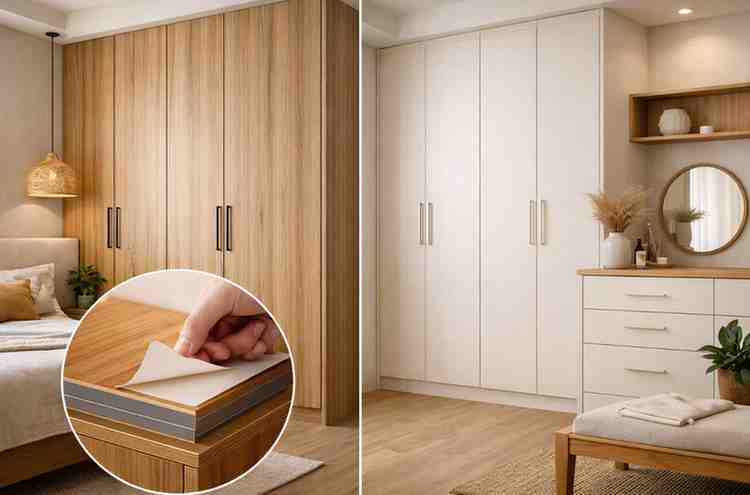
Applying Laminate on Calibrated Plywood
Calibrated plywood eliminates these concerns because its thickness is controlled. This simplifies laminate pasting for carpenters and minimises rework during installation.
Uniformity in plywood thickness is more important than most people realise. Uneven surfaces cause adhesive to spread unevenly and eventually cause the laminate to lift. Laminates lie flat, edges line up correctly, and furniture panels fit together seamlessly when the thickness is uniform.
This is why, for closets, kitchen cabinets, and modular furniture, most carpenters prefer calibrated plywood—it saves time and yields a cleaner finish in the long run.
Laminate Finish on Non-Calibrated Plywood
Non-calibrated plywood has uneven surfaces, which frequently result in laminate bubbles, peeling, or poor bonding. Additional sanding or plywood levelling for laminate is needed to make it functional, which increases work costs and still yields uneven results.
Laminate applied to non-calibrated plywood typically has a shorter lifespan than calibrated plywood due to the uneven bonding.
Check Wigwam Ply to explore the variety of plywood to find suitable furniture for your home.
Advantages of Calibrated Plywood for Furniture
Better adhesive bonding strength is provided by calibrated plywood, which helps laminates adhere securely and last longer. Because the surface is level, the glue distributes evenly and without weak places.
Plywood is frequently advised by carpenters since it speeds up and smooths the operation of furniture. Because carpenters don’t have to spend additional time adjusting surface levels, the results are smoother.
Consistent surface quality directly improves interior furniture finishing quality, particularly for wardrobes, cabinets, and modular systems. The stability of the foundation reduces the probability of future problems, which lowers the need for repair and continuous maintenance.
Choosing the Best Plywood for Laminate Pasting
The core quality, thickness, and calibration are more important than most people realise when it comes to laminate pasting. Laminate bonding will fail if the core is weak or the thickness is uneven. Here, furniture-specific calibrated plywood outperforms regular plywood. Laminates sit flat and adhere correctly without further fixing since the surface is more predictable. And with factory-calibrated sheets like Wigwam Ply, the surface consistency is controlled at the manufacturing stage—not corrected on-site.
In general, calibrated plywood results in smoother surfaces, more longevity, and fewer problems down the road.
If you’re confused about choosing the right furniture, check these guides to make an informed decision.
Maintenance and Care of Laminated Furniture
When the base surface is prepared correctly, the laminate lasts longer. Poor pasting or uneven plywood typically causes issues later rather than right away. Keep things basic when cleaning. Make use of a gentle cloth. Strong cleaners and excessive water should be avoided, especially at edges, where peeling typically begins.
Periodically inspect joints and corners. Small lifts or gaps assist in maintaining a smooth surface and are easy to correct early.
So, What’s Next?
If you want laminates to stay flat and durable, the base is essential. Simply said, calibrated plywood simplifies the process and improves the finish’s dependability.
For furniture makers and homeowners who don’t want to deal with callbacks or repairs later, laminate on calibrated plywood is a safer option. A high-quality choice like Wigwam Ply makes sense in this situation because of its consistent thickness, cleaner pasting, and fewer finishing problems.
Before starting laminate construction, check the Wigwam Ply calibrated plywood if you’re planning new furniture or interior design. A small decision now, fewer issues down the road.
FAQs
1. Which plywood is best for a laminate finish?
Calibrated plywood. Flat surface. Fewer problems later.
2. Does laminate stick better on calibrated plywood?
Yes. Glue spreads evenly. Laminate holds better.
3. Why does the laminate peel off plywood?
Uneven base. Bad pasting. Moisture near edges. Happens a lot with non-calibrated sheets.
4. Difference between calibrated and non-calibrated plywood
The main difference is that Calibrated has even thickness, and Non-calibrated has a thickness that varies.
5. Should I use calibrated plywood for wardrobes?
Yes. Especially shutters. Finish stays cleaner.
6. Is calibrated plywood worth the cost?
In most cases, yes. Saves repair and rework.
7. Carpenter’s advice on plywood for laminate
Most carpenters prefer calibrated plywood. Less adjustment. Better finish.