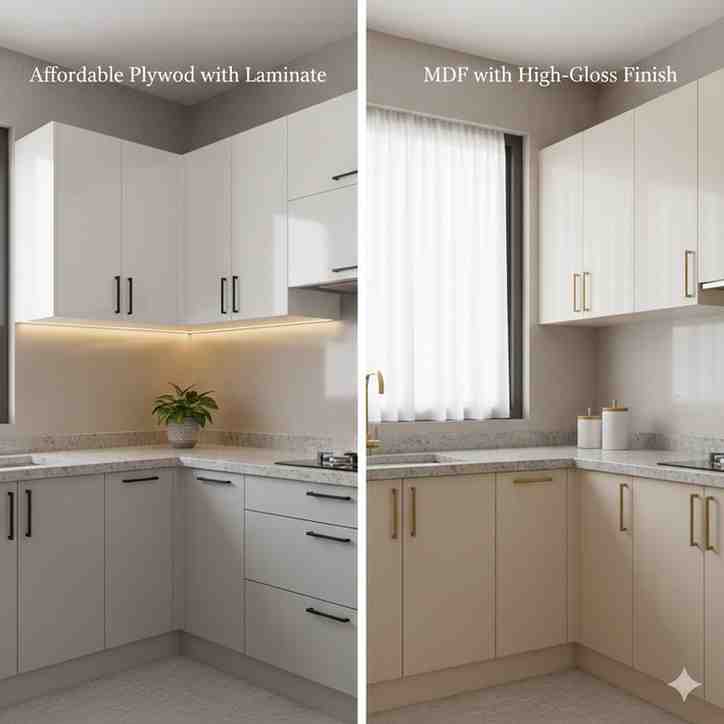
Kitchen renovations have become more expensive over the years, and cabinets take up a big part of that budget. With so many options available, choosing the right cabinet material can feel confusing, especially when everything claims to be strong and long-lasting.
But the best material for kitchen cabinets isn’t just about how it looks on day one. It’s about how well it handles daily use, cleaning, weight, and moisture over time. A material that performs well can save you from repairs, replacements, and unnecessary costs later.
In this blog, we will share a few budget-friendly kitchen materials to help you make an informed, affordable, and durable choice.
Types of Kitchen Cabinet Materials
The majority of individuals face the same few alternatives for cabinet materials when designing a kitchen. Each has its own advantages and disadvantages, and knowing the fundamentals helps prevent confusion in the future. These are the most popular kitchen cabinet materials used today.
- Plywood: Plywood is commonly used for kitchen cabinets because it provides an excellent blend of strength and stability. Since various layers are bonded together, it resists heavy use better than single-board materials.
- Medium-Density Fibreboard, or MDF: MDF is a smooth, engineered board that is commonly used when affordability is a consideration. It is less resilient to dampness and severe loads than plywood, although it works well for painted treatments.
- Particle Board: One of the most affordable choices often used in modern cabinets. Although it is economical and lightweight, it eventually becomes less resilient and more susceptible to dampness.
- Solid Wood: Solid wood cabinets are prized for their organic appearance. They can, however, respond to variations in humidity and temperature, which could eventually result in movement, and they are typically more costly.
Before choosing the best option for your space, usage, and budget, it’s important to understand these kitchen cabinet material possibilities.
Why Plywood Makes Sense In Kitchens
When it comes to plywood kitchen cabinets, the main reason consumers choose plywood is reliability. Kitchens are used every day; cabinets handle heat and moisture, doors open and close frequently, and shelves handle weight. Plywood handles this type of practice better than many other materials.
When comparing kitchen cabinet materials, plywood typically outperforms MDF or particle board in durability. It holds screws tightly, does not give way under strain, and can be fixed if something goes wrong. Repair-friendliness is more important than most people realize.
The cost vs lifespan factor is another. Although plywood may not always be the most affordable option initially, it frequently lasts longer and requires fewer repairs. That balance is more sensible than early cabinet repair for many homes.
Planning to renovate your kitchen on a budget? Check out these smart and budget-friendly tips for a small kitchen.
Is plywood good for kitchen cabinets?
Indeed, plywood works well for kitchen cabinets, particularly for kitchens with daily use. Plywood remains sturdy in active homes where cabinets have frequent movement, weight, and cleaning.
Plywood handles moisture and load better than softer boards in kitchen cabinets. It resists deterioration when exposed to steam or mild spills, and it keeps fittings secure over time. When the proper grade of plywood is selected, it ensures long-term cabinet reliability without requiring further maintenance.
Marine Plywood for Kitchen Cabinets
Marine plywood for kitchen cabinets works best in locations where water is usually present. Sinks and dishwasher zones are the most common examples. These areas are frequently exposed to moisture; additional resistance is beneficial.
However, it’s not necessarily required to use marine plywood everywhere. Many cabinets remain dry throughout their use, and typical kitchen plywood is sufficient. By avoiding excessive usage of marine plywood, expenses can be reduced without sacrificing performance where it matters most.
Plywood modular kitchen vs other materials
Plywood modular kitchens work effectively because they simply adapt to modular cabinet systems. Pre-cut panels and fittings are essential to modular kitchens, and plywood maintains its stability throughout installation and modification.
Here, screw-holding strength is a major benefit. On-site assembly, rework, and even relocation are all part of the cabinet installation. Because plywood holds screws firmly, cabinets can endure repeated use.
Edge durability is another consideration. In modular kitchens, exposed edges make more touch. Plywood handles this better than softer boards, lowering the risk of chipping or damage over time.
Confused between MDF vs Plywood for kitchen cabinets, check this to make the right choice.
How to choose plywood for kitchen cabinets
When choosing plywood for kitchen cabinets, consider its purpose. Different cabinet regions experience varying levels of stress; one kind does not necessarily fit all.
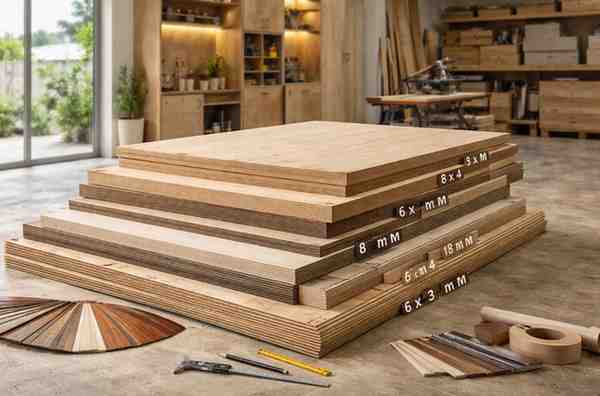
For kitchen cabinets, pay attention to the plywood grade, the thickness required for each unit, and the plywood’s fundamental quality. Base cabinets typically require thicker sheets, whereas wall cabinets can accommodate lighter options.
Additionally, it’s important to see if the plywood has received pest treatment. In long-term homes where replacement isn’t something you want to consider frequently, using termite-resistant plywood for the kitchen gives peace of mind.
Conclusion
Kitchen cabinets are one of those things you don’t think about every day—until something starts going wrong. A door that doesn’t close properly, a shelf that sags, or edges that begin to swell. In most cases, these issues aren’t about design or layout. They come down to material choices made early on.
For many homes, plywood strikes a sensible balance. It handles daily use, adapts well to different cabinet types, and holds up better in kitchens with limited space and high usage. When chosen thoughtfully, it lets you focus on living in your kitchen rather than worrying about repairs.
Working with materials and businesses that comprehend actual household usage can be helpful if you’re designing a kitchen that will last, not only look fantastic at installation. Exploring reliable options from Wigwam Ply can make the decision easier and more confident, especially when durability is more important than immediate solutions.
FAQs
1. What are the types of kitchen cabinet materials?
The most common kitchen cabinet materials are plywood, MDF, particle board, and solid wood. Plywood is widely used for its balance of strength and stability. MDF is smoother and cheaper but less moisture-resistant. Particle board is the most budget-friendly but also the weakest. Solid wood looks premium but is expensive and can be affected by humidity.
2. Why is plywood preferred for kitchen cabinets?
Plywood is preferred because it is suitable for daily use. Kitchen cabinets are opened, closed, and loaded constantly. Plywood holds screws better, stays more stable, and doesn’t break down as easily as softer boards.
3. Which plywood is best for kitchen cabinets?
For most kitchens, BWR or BWP grade plywood works well. The exact choice depends on how much moisture the cabinet area faces. Areas near sinks usually need higher moisture resistance than dry storage cabinets.
4. Is marine plywood necessary for kitchen cabinets?
Not for the entire kitchen. Marine plywood is useful near sinks or dishwashers where water exposure is common. Using it everywhere usually increases cost without much added benefit.
5. What is the ideal plywood thickness for kitchen cabinets?
There isn’t one thickness for everything. Wall cabinets usually work fine with 12mm plywood. Base cabinets, which carry more weight, are better with 16mm plywood. Using very thick plywood everywhere isn’t always needed.
6. Is plywood better than MDF for kitchen cabinets?
In most kitchens, yes. Plywood handles moisture, weight, and screw fixing better than MDF. MDF can work in dry areas, but it’s less forgiving if exposed to water.
7. Can plywood cabinets handle kitchen moisture?
Yes, when the right grade is used and edges are properly sealed. Laminates or finishes also help protect plywood from spills and steam. Standing water should still be avoided.
8. What is the lifespan of plywood kitchen cabinets?
With good plywood, proper installation, and normal care, kitchen cabinets can last many years. Most problems show up only when the wrong grade or thickness is used.
9. Are plywood kitchen cabinets termite-resistant?
Many plywood options are chemically treated to resist termites. Always check if the plywood is termite-treated and certified. Treatment quality matters more than the name alone.
10. Is BWP plywood suitable for kitchen cabinets?
Yes, BWP plywood is suitable, especially for moisture-prone areas. It offers better water resistance than MR-grade plywood. However, it’s not always necessary to use BWP for every cabinet.
11. What plywood grade is best for Indian kitchens?
For Indian kitchens, BWR or BWP plywood is commonly preferred because cooking involves heat, steam, and moisture. The final choice depends on where the cabinet is placed.
12. Can modular kitchen cabinets be made using plywood?
Yes, many modular kitchens use plywood. It works well with pre-cut panels, holds screws firmly, and stays stable during installation and use.
13. Does plywood require lamination for kitchen cabinets?
Lamination isn’t compulsory, but it’s strongly recommended. Laminates protect plywood from stains, moisture, and daily cleaning, and they also make cabinets easier to maintain.
14. Which plywood is budget-friendly for kitchen cabinets?
MR-grade plywood is usually more budget-friendly and works well in dry cabinet areas. Many homeowners combine MR plywood for dry zones and BWR or BWP plywood for wet zones to control costs