Flush doors are simple, durable, and widely used in modern homes. This guide focuses on its types, materials, interior door design ideas, and how the price is affected in India.
Flush doors are a popular choice in Indian homes, even if we don’t always notice them. They are easy to keep, go well in common places like kitchens, bedrooms, and storage spaces, and fit well with a variety of interiors. Many people fail to notice how useful they are due to their simple design. This article will explain what flush doors are, the different varieties available, how they fit into interior door design, and what determines flush door price—so you can make an informed decision without overthinking it.
What Is a Flush Door?
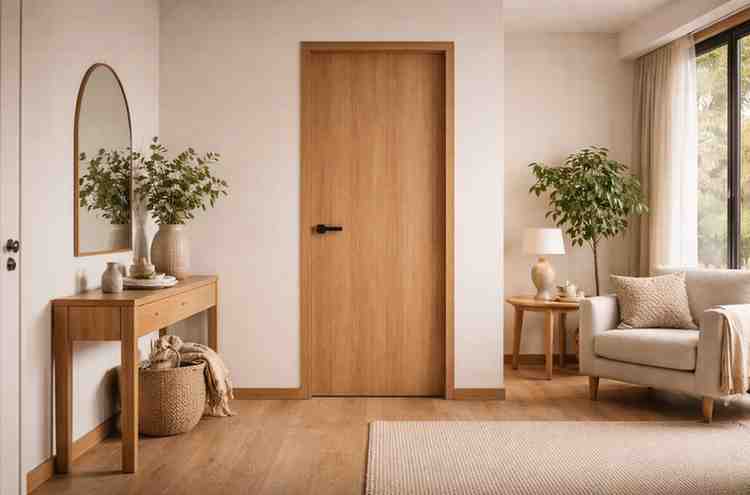
A flush door has a flat, smooth surface on both sides and lacks carvings, panels, or creative designs. It often has a solid or hollow core wrapped in plywood, MDF, or laminate on the outside.
A flush door combines well with a variety of interior styles due to its basic design. This is why modern flush doors are popular in apartments and modern homes: they appear sleek, take up less visual space, and are easier to maintain than heavily designed doors.
Types of Flush Doors Based on Core Material
Solid Core Flush Doors
Solid-core flush doors are heavier and stronger than hollow doors because the interior is filled with dense material. This increases their durability and improves their ability to withstand regular use.
Additionally, they provide improved sound insulation, which lessens inter-room noise. As a result, solid core flush doors are widely utilised in bedrooms, main interior doors, and spaces where privacy is important.
Hollow Core Flush Doors.
Hollow core flush doors are lighter and less expensive than solid core versions. Because the interior is mostly hollow, they are easy to handle and install.
These doors are ideal for low-traffic areas like storerooms and temporary partitions. Hollow core flush doors, on the other hand, are not suitable for moisture-prone areas such as bathrooms or kitchens, as persistent dampness may reduce their strength over time.
Wooden Flush Doors: Material and Core Types
A wood-based core wrapped in plywood, veneer, or laminate is used to create wooden flush doors. The core gives the door strength, while the outside layer determines the finish and appearance.
The core is where it differs most. Plywood core doors are more stable and moisture-resistant, making them ideal for kitchens and bedrooms. Blockboard core doors are lighter and suitable for general interior use where severe loads or moisture are not an issue.
Wooden flush doors are ideal for bedrooms, living rooms, wardrobes, and interior entryways that require durability and a clean appearance.
Check the interior uses and maintenance tips of flush doors to make sure they last longer.
Modern Flush Doors for Contemporary Homes
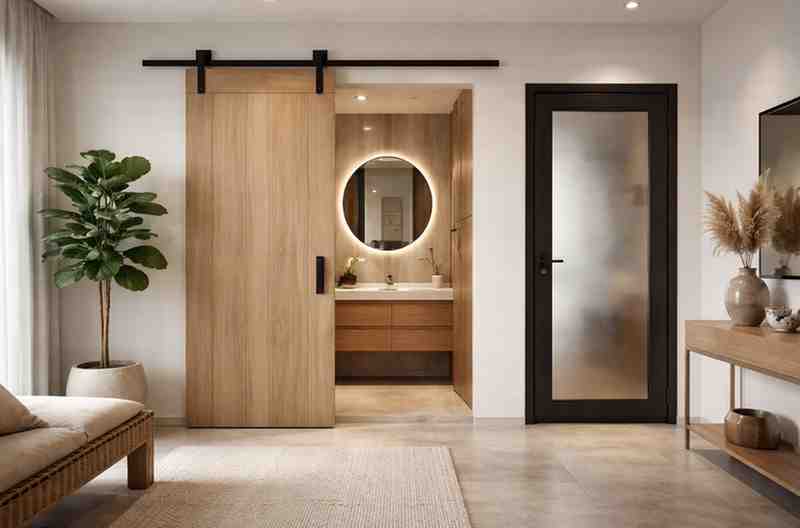
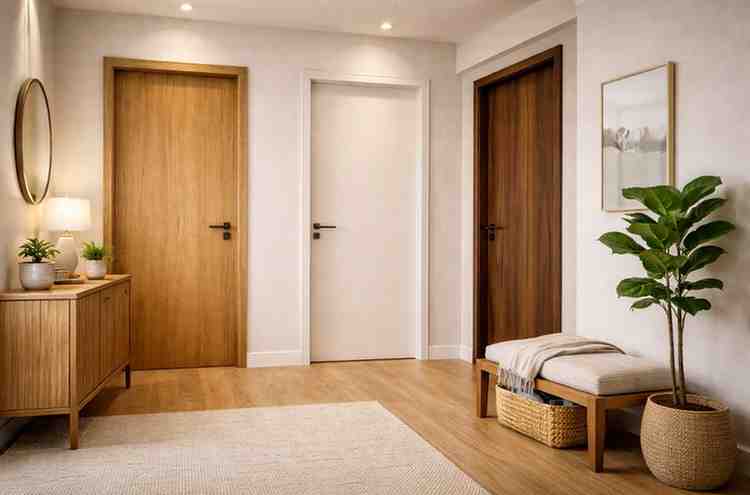
There are no intricate patterns or carvings on modern flush doors, giving them a simple, minimalistic appearance. Because of this, they complement a variety of wall hues and interior design styles.
They come in matte finishes, laminates, and veneers, so homeowners can pick between a modest or somewhat textured look. Additionally, these finishes are simple to maintain.
Modern flush doors fit apartments and modular designs, where practicality and tidy finishes are more important than ornamental details, because of their plain shape and roomy appearance.
How Flush Doors Fit into Interior Design
Flush doors look clean and well-balanced when they complement the colours of the walls. Lighter tones make rooms feel more open, but darker finishes create contrast without appearing heavy.
Because flush doors keep spaces clean and simple, they are a better fit for modern interior door design than panel doors. They look particularly nice in modular homes and apartments, where a simple design is more important than decor.
What Affects Flush Door Price in India
The cost of flush doors in India depends on a few fundamental variables. Solid core flush doors are normally more expensive than hollow core doors due to their increased strength and durability. The material utilised, such as plywood, MDF, or veneer, also influences cost.
Costs might vary depending on thickness and surface finish (matte, veneer, or laminate). Location, brand availability, and local dealer margins can all affect prices.
You can also check interior design trends using Veneer Sheets for an aesthetic and modern appeal.
Solid Core vs Hollow Core Flush Doors: How to Choose
Solid core flush doors are stronger and heavier, making them ideal for everyday usage, bedrooms, and primary interior doors where durability and sound control are important.
Hollow-core flush doors are more affordable and lighter. They perform well in low-traffic locations such as storerooms or temporary spaces, but they are not designed for heavy or long-term use.
In short, a solid core is best for durability and privacy, whereas a hollow core is better for budget and light usage.
Why Modern Flush Doors Are Popular in Homes Today
Modern flush doors complement simple spaces with their sleek, minimalistic appearance. They are simple to match with walls and furniture because they come in matte, laminate, and veneer finishes. For this reason, contemporary flush doors are frequently utilised in modular interiors and residences where minimalism and flexibility are important.
Things to Check Before Buying a Flush Door
Before purchasing a flush door, it’s important to understand the essential aspects that influence its quality and performance:
- Core Quality: Check whether the door has a solid or hollow core. Solid cores are more durable and feel more robust.
- Edge sealing: Well-sealed edges keep moisture out and extend the life of doors.
- Surface finish: Choose smooth finishes such as laminate, veneer, or paint to match your interior and protect the door.
Thickness and frame compatibility: If you want a simple installation, make sure the door’s thickness matches your frame, and the hinges are compatible.
Are Flush Doors Worth It for Modern Interiors?
Flush doors are a good choice for modern interiors since they are simple, robust, and easy to maintain.
They are suitable for bedrooms, kitchens, wardrobes, and living areas with a clean, minimalist aesthetic.
Other door styles, such as panel or ornamental doors, may be preferable if you desire detailed designs or traditional aesthetics, or if moisture and heavy use necessitate specialised materials.
Why Choose Flush Doors for Your Home
Flush doors are an ideal choice for the majority of interior door design requirements since they are simple to install, useful, and versatile. Their durability and tidy appearance make them ideal for living rooms, kitchens, wardrobes, and bedrooms.
Making the best decision is more about how and where you want to use the door than it is about following trends. Check Wigwam Ply flush doors, your only go-to choice that can help you find a reliable, long-lasting solution for the majority of home interiors.
FAQs
1. What are flush doors used for in home interiors?
Flush doors are mostly used inside homes for bedrooms, bathrooms, kitchens, and wardrobes. Their flat, plain surface makes them easy to fit with most interior styles.
2. Which is better for interiors: flush doors or panel doors?
Flush doors are simple and modern, while panel doors are more decorative. If you want a clean, minimal look, flush doors work best. Panel doors suit spaces where you want more design features.
3. What is the standard thickness of interior flush doors?
Most flush doors are around 30mm to 40mm thick, depending on whether they are solid or hollow.
4. Are flush doors waterproof for bathrooms?
Regular flush doors aren’t fully waterproof. For bathrooms and wet areas, it’s better to use BWP or marine-grade doors to avoid swelling and damage.
5. How much does an interior flush door cost in India?
The price varies depending on core type, material, and finish. Hollow doors are cheaper, solid doors cost more, and premium BWP doors are the highest. You can expect prices from roughly ₹3,000 to ₹12,000.
6. Which material is best for interior flush doors?
Plywood core doors are strong and resist moisture better. Blockboard cores are lighter and fine for areas without heavy use or humidity.
7. Can flush doors be customized with laminates or veneers?
Yes. You can cover flush doors with laminates, veneers, or paint to match your home’s interior and make them last longer.
8. Are flush doors soundproof for bedroom interiors?
Solid core doors give better sound insulation, while hollow doors let more sound through. For bedrooms, solid doors are usually a better choice.
9. What are the advantages of using flush doors inside homes?
They are easy to maintain, cost-effective, and versatile. You can use them almost anywhere in the home, and finishes like laminates or veneers make them look modern.
10. How to maintain and clean interior flush doors?
Use a soft, damp cloth for cleaning. Avoid too much water or harsh chemicals. Checking edges and hinges regularly helps them last longer.