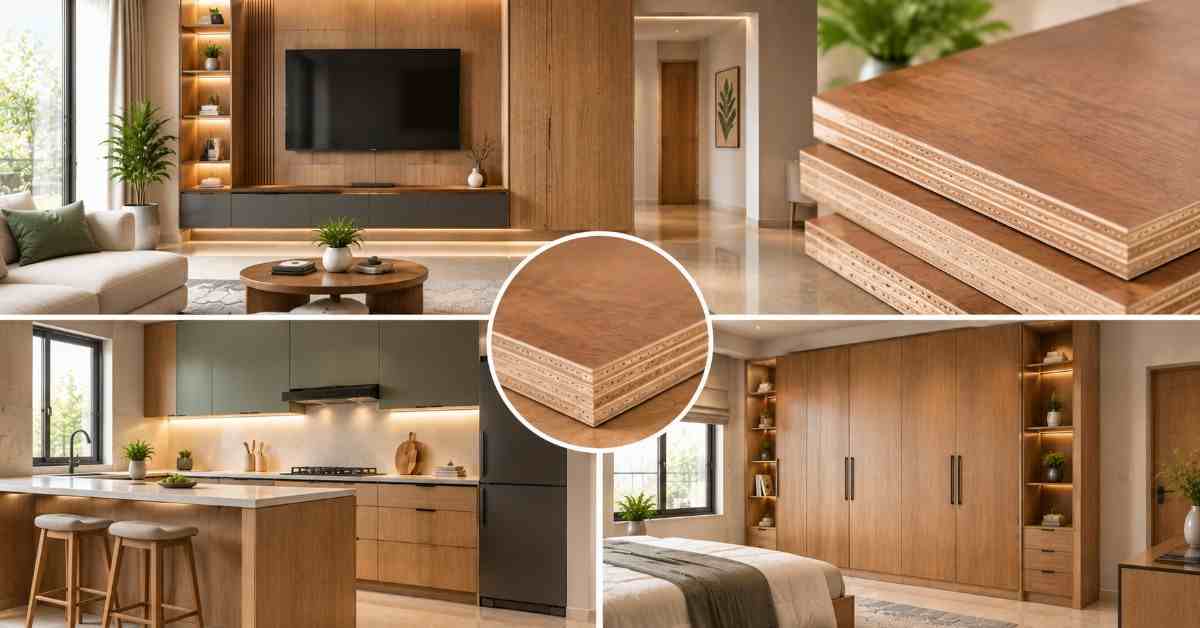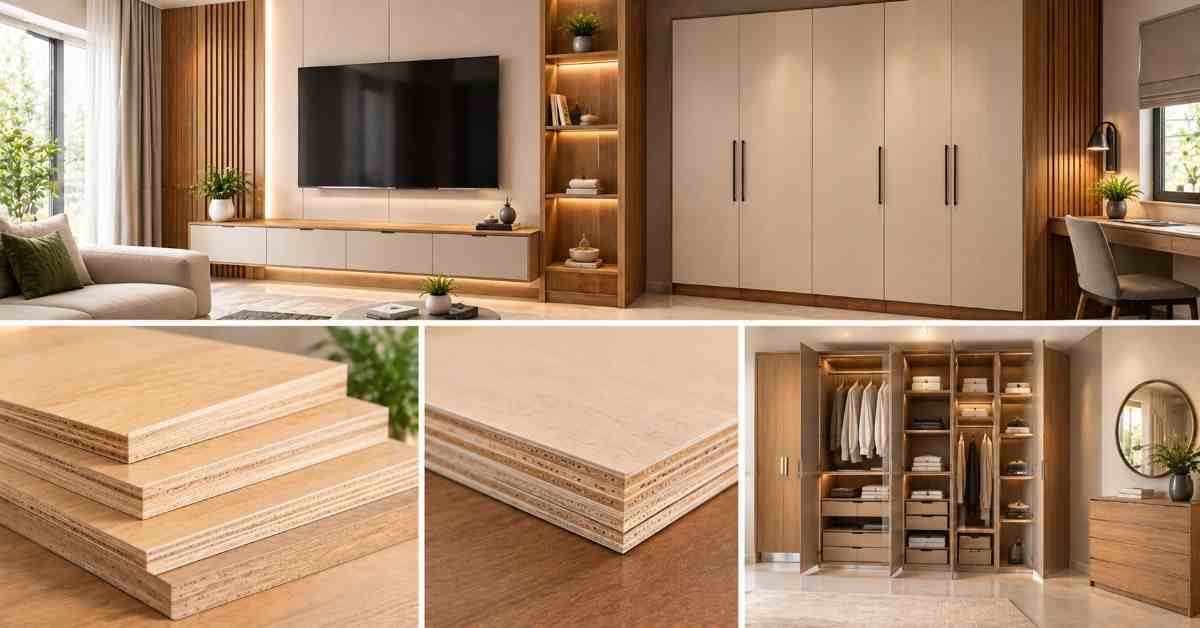
Blockboard is used during interior work. A carpenter mentions it, a showroom suggests it– most people nod and move on. The problem is that many people actually don’t know where blockboard works best. Some use it everywhere. Others avoid it completely. Both usually happen due to confusion about the blockboard’s uses.
In reality, blockboard fits certain parts of a home very well and struggles in others. Once you understand where it makes sense, choosing it becomes easier. In this blog, we will discuss the usage of blockboard in modern interiors for doors, furniture, and storage.
What Are the Main Blockboard Uses in Interiors
Blockboard is used for long surfaces; other boards begin to exhibit issues. a little bend. sagging over time.
Due to this, the majority of blockboard uses are quite practical—doors, wardrobe panels, and shelves. Partitions are sometimes used at places where functionality matters more than appearance.
It’s not necessary to use blockboards everywhere. It’s about using it in situations where uniformity is important. The decision makes more sense if that is evident.
Blockboard for Doors and Furniture
Blockboard comes up when interior doors are being planned. Mostly because doors are tall and flat, and this is where boards usually start bending if the material isn’t right. With proper sealing, blockboard generally holds its shape.
You’ll see the same logic in furniture. Wardrobes, cabinets, beds — anything with wide panels. That’s where blockboard for furniture is commonly used.
One thing people often miss is the core. The surface can be fine initially, but if the core isn’t good, problems show up later. That part matters more than the finish.
Blockboard vs Plywood for Shelving
Shelves are usually where boards start showing problems. Long shelves bend first; that’s when people realise the material choice mattered more than expected.
- Blockboard is often used for wider shelves because it stays straighter over longer spans. This is why it comes in wardrobes, bookshelves, and storage units where the width is more than usual.
- Plywood behaves better when shelves are shorter, but they need to carry more weight. It’s commonly used in compact cabinets and kitchen units for this reason.
So there isn’t a better or worse option here. It depends on the shelf length and how the board will be used for it. Most issues come from using the right board in the wrong place.
Check this detailed guide on blockboard vs plywood to make the right choice for each piece of furniture.
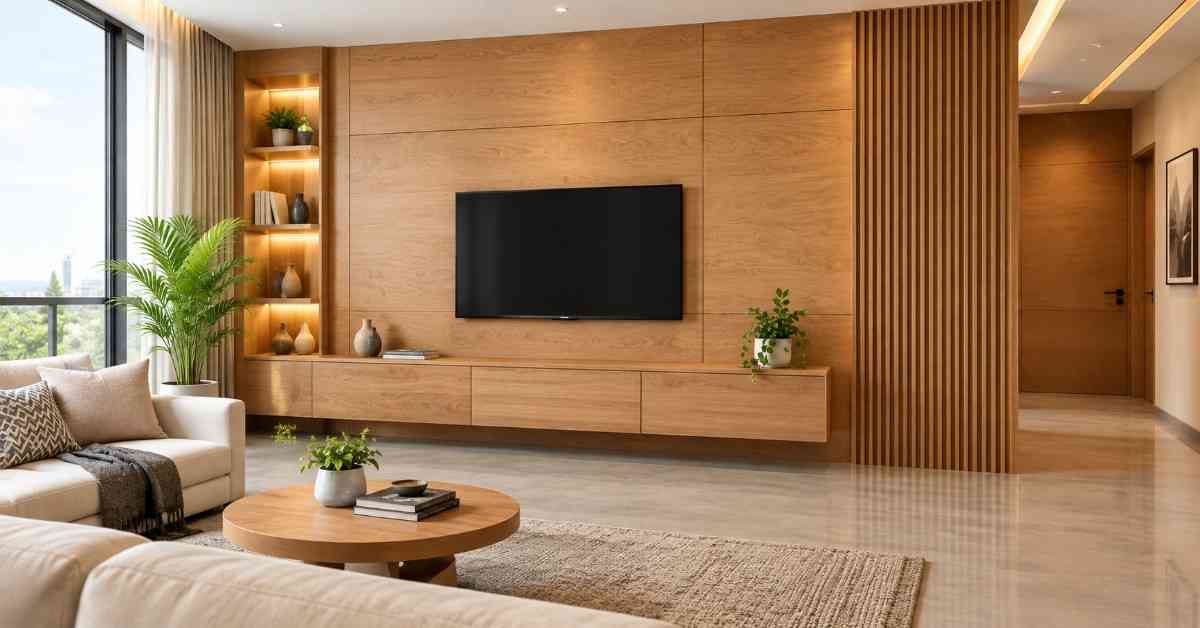
Blockboard in Wall Panelling and Partitions
Blockboard typically comes into play when walls need to be divided without making the space feel cluttered or heavy. You’ll mostly see it in dry areas, where moisture isn’t a daily concern. The appeal is simple. It provides a flat, even surface, which makes panelling and partitioning easier to complete.
That’s why it’s commonly used in offices, study rooms, and modern homes where clean lines matter more than load-bearing strength. It’s not meant for everywhere, but in the right spots, it does the job quietly.
Types of Blockboard and Where to Use
Blockboard is not a homogeneous product, despite its surface appearance. The actual difference is in how it is created and where it is used. That is what influences future performance.
You’ll generally come across the following types:
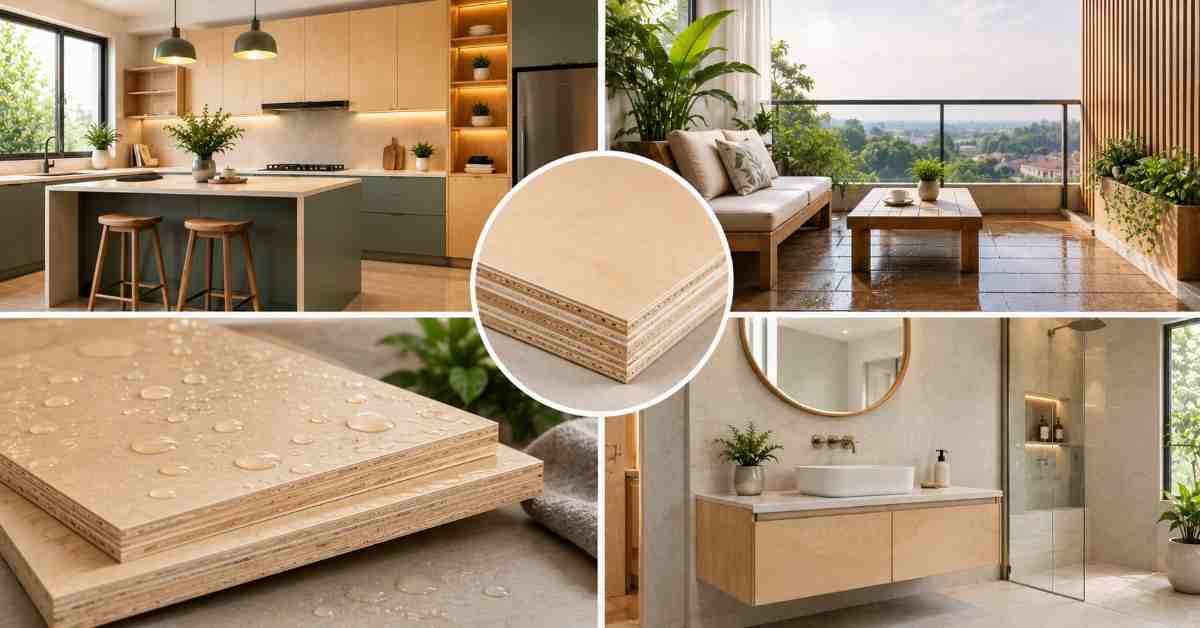
- Moisture-resistant blockboard
This is ideal for kitchens, utility rooms, and other areas where humidity cannot be ignored. It tolerates dampness better than normal blockboard, but if the edges are well sealed. Issues still arise without it.
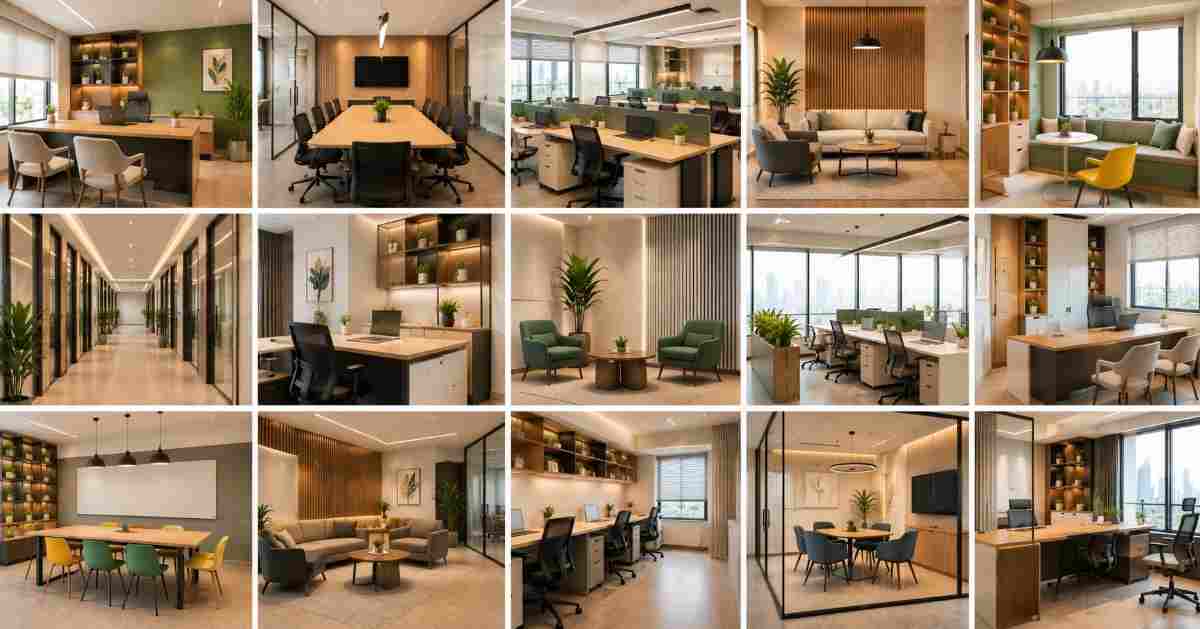
- Blockboard for commercial use
This type is primarily utilised in larger interior projects, stores, and offices. Here, appearances are not the main priority. It was selected due to its resistance to frequent use and for maintaining consistency in huge installations.
- Standard interior blockboard
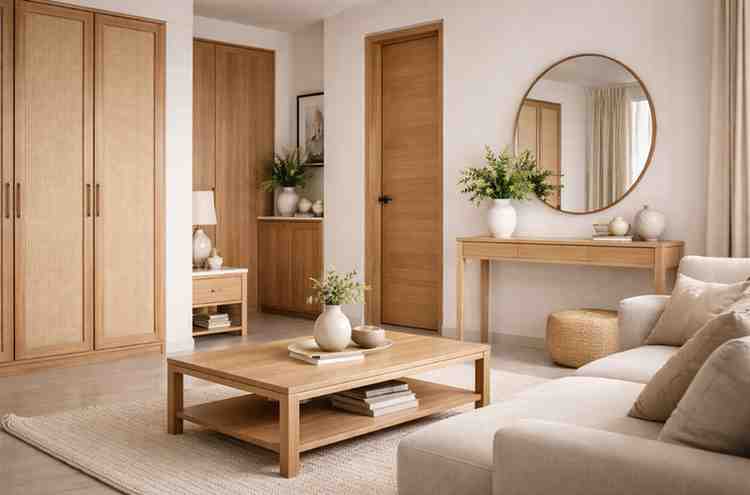
It is commonly used in Bedrooms, living rooms, closets, and partitioned, dry, regulated areas. It doesn’t require further care and functions effectively there.
Problems are typically not caused by the material itself. They happen when the right board is in the incorrect position. Blockboard often lasts a long period when the grade suits the area.
How to Choose the Right Blockboard
Most mistakes with blockboard happen before work even starts. People pick the board first and think about usage later. That’s usually where things go wrong.
A door behaves very differently from a shelf or a wardrobe panel. Some need to stay straight over height, others need to carry weight across width. Treating all of them the same doesn’t work for long.
Once you’re clear about where the board will actually be used, choosing becomes simpler. Knowing real blockboard usage helps avoid selecting something that looks fine today but struggles after installation.
Using Blockboard the Smart Way
Blockboard is not used everywhere. But in the right places, it works quietly and reliably for years.
Understanding which real blockboard uses make interior decisions easier, especially when it comes to doors, furniture, and storage that require more stability than others. The key is matching the board to the purpose, not just the finish.
Wigwam Ply offers reliable blockboard, making interior planning simpler and less stressful. Because when the material is right, the rest of the work usually falls into place.
FAQs
1. What are the main uses of blockboard in home interiors?
Blockboard is mostly used where long, flat surfaces are involved. You’ll see it in doors, wardrobes, shelves, partitions, and sometimes wall panels. It’s chosen because it stays straighter than many other boards in these situations.
2. Is blockboard good for making doors and partitions?
Yes, especially for interior doors and partitions. Doors are tall and flat, and blockboard handles well. As long as it’s sealed properly, it stays stable and doesn’t warp easily.
3. How does blockboard compare to plywood and particle board for furniture?
Blockboard sits somewhere in between. It’s lighter than plywood and better at handling wide panels. Compared to particle board, it holds screws better and feels more solid. Each has its place, but blockboard works well for large furniture parts.
4. What types of blockboard are best for kitchens and bathrooms?
For these areas, moisture-resistant blockboard is usually preferred. It handles humidity better than regular blockboard. Still, sealing and finishing matter a lot. No board likes constant water exposure.
5. Can a blockboard be used for shelving and storage units?
Yes, it’s commonly used for shelving, especially when shelves are wide. It helps reduce sagging over time. For very heavy loads on short shelves, plywood might work better, but blockboard is fine for most storage needs.
6. Why do designers prefer blockboard for interior applications?
Mostly because it’s predictable. It stays flat, works well with veneers and laminates, and is easier to handle during installation. Designers like materials that don’t cause surprises later.
7. What makes blockboard strong and durable for furniture making?
The core is the main reason. The wooden strips inside give it stiffness. When the core is well-made and the faces are bonded properly, the board holds up well in everyday use.
8. Are there fire-retardant or commercial blockboards available?
Yes, there are. Commercial-grade and fire-retardant blockboards are used in offices, shops, and public spaces. They’re made for heavier use and to meet specific safety needs.
9. Is blockboard suitable for wall panelling and decorative partitions?
It works well in dry areas. For wall panelling and decorative partitions, blockboard gives a smooth and even surface. It’s lightweight compared to solid wood, which helps during installation.
10. How does blockboard perform compared to solid wood for large furniture pieces?
Solid wood is strong but heavy and expensive. Blockboard offers better stability for large panels and is easier to manage. For big wardrobes or storage units, blockboard often makes more practical sense.