A simple guide to flush door materials, core types, plywood thickness, and choosing the right door for Indian homes and bathrooms.
Flush doors are basic in appearance, but selecting the wrong one can lead to serious problems later—warping, loose hinges, or doors that swell during monsoons. Since most of the store’s doors have the same appearance, it can be challenging to determine what’s within.
That’s why choosing the appropriate flush door material is critical, especially in Indian homes where heat, humidity, and daily use put doors to the strain. The core type, plywood thickness, and moisture resistance all impact the durability of a flush door. This article will help you make an informed decision.
What Is a Flush Door and What Is Inside It
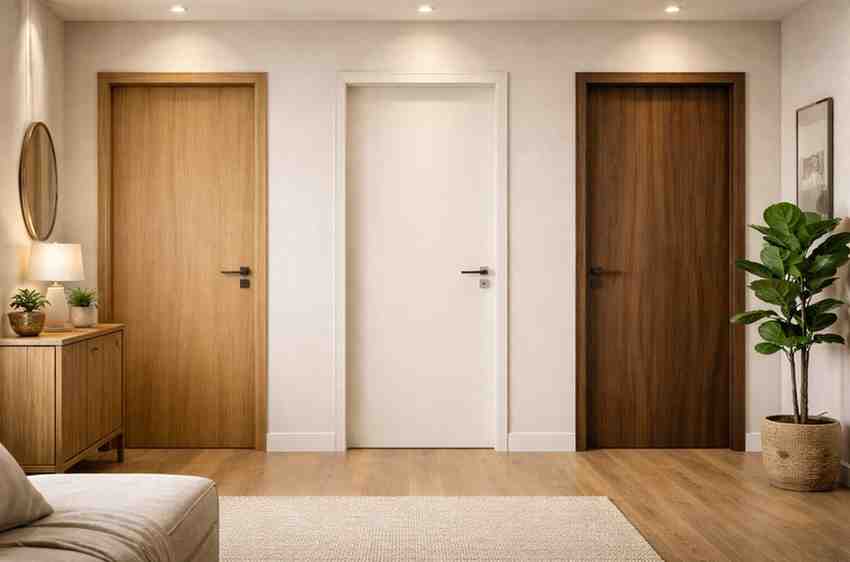
A flush door is flat and smooth, with no raised panels or decorations. It’s widely used in bedrooms, kitchens, and bathrooms since it appears clean and complements modern decor.
What’s really important is what’s inside the door. A flush door is typically constructed by joining plywood sheets on both sides of a core. The core may be solid, hollow, or formed of blockboard strips. This interior structure determines the door’s strength, weight, and durability in daily use.
The material used in the core decides everything, including durability, whether it bends, makes noise, or loosens with time. Because of this, checking the internal construction is just as crucial as checking the surface polish.
Solid Core vs Hollow Core Flush Doors
A solid core flush door is heavier and stronger because it contains dense material. It maintains hinge firmness over time and is suitable for regular use.
Although a hollow core flush door is less expensive and lighter, it is not designed to be opened and closed frequently.
Solid-core doors are typically more durable in bedrooms, kitchens, and other common areas. Hollow-core doors are best suited for low-traffic areas or temporary installations.
Plywood vs Blockboard for Flush Doors
Plywood is a preferable choice for flush doors since it is more durable, sturdy, and less likely to bow over time. It works well for frequently used doors, particularly in bedrooms and kitchens.
Blockboard is lighter and easier to use. It is suitable for interior doors with moderate use; however, it may not perform as well in humid environments.
A common mistake is to choose blockboard just because it is less expensive. This can eventually cause sagging or alignment concerns, especially if the door is large or used regularly.
Confused between plywood vs blockboard, check this guide to find which one is suitable for your shelves and wardrobes.
Best Flush Door Material for Interior Rooms
For bedrooms, solid-core flush doors made of high-quality plywood work well. They can be used daily and feel solid over time.
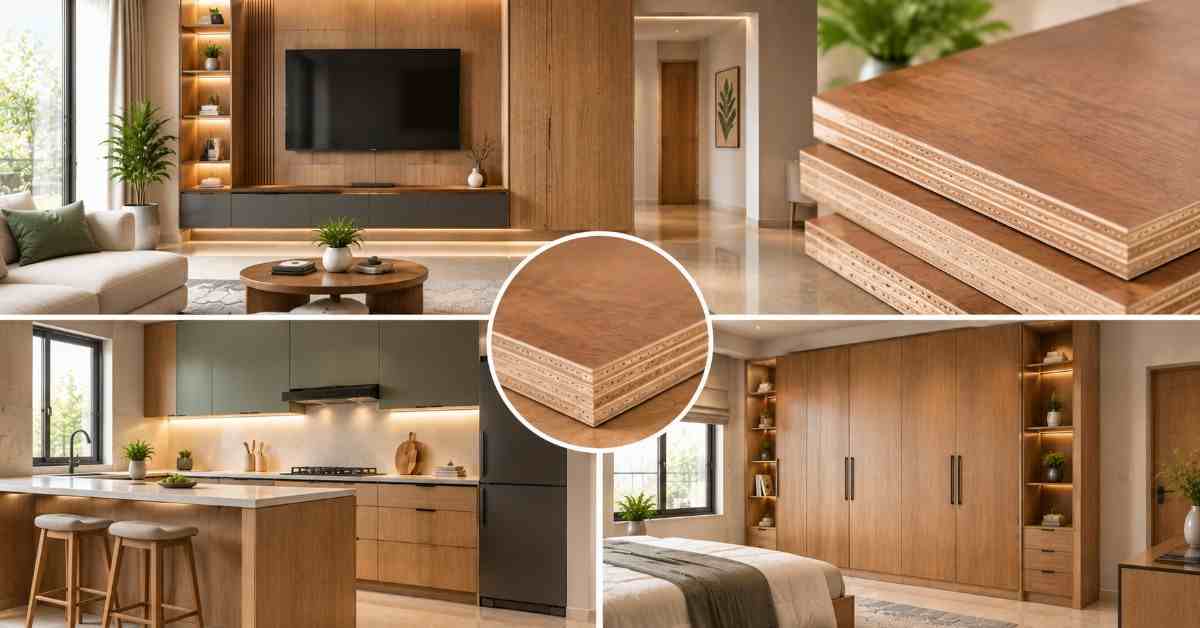
Plywood-based flush doors with a laminate or veneer finish are a fantastic option for living spaces. They strike a mix between robustness and a tidy appearance.
Lighter, solid-core, or well-made blockboard flush doors are typically sufficient for study rooms because they experience less damage than bedrooms.
Selecting the proper flush door material for interior spaces can help prevent noise, sagging, and future repairs.
Flush Doors for Bathrooms: Choosing the Right Material
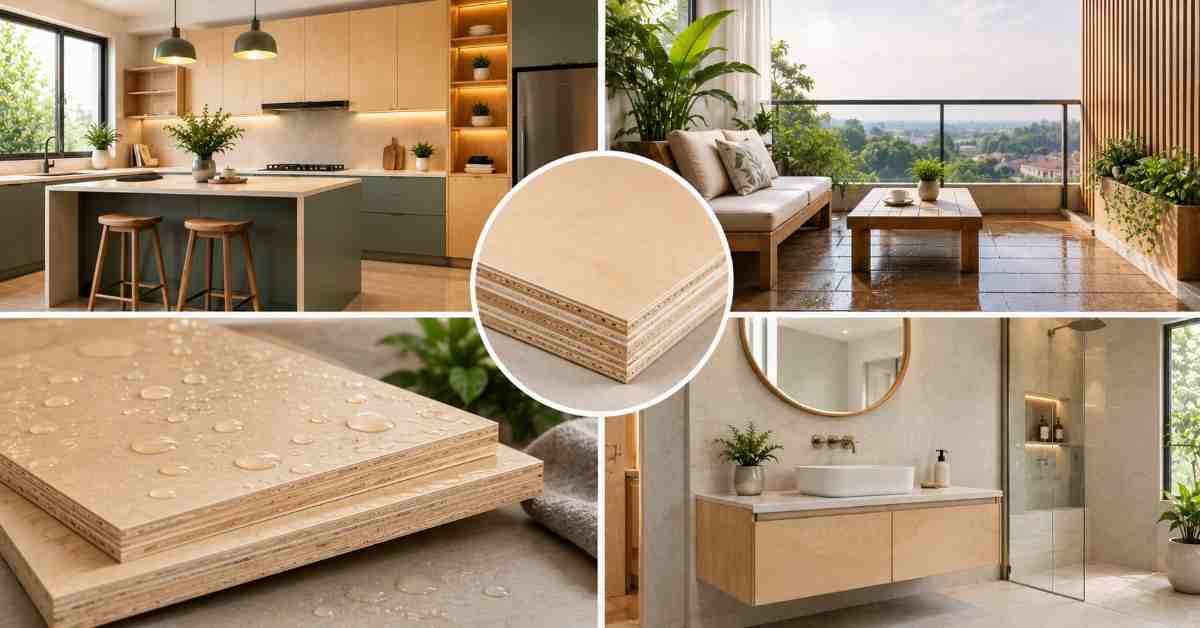
Flush doors can be used in bathrooms, but only if the material is carefully selected. A solid-core flush door composed of waterproof plywood operates well in wet environments and resists moisture better than conventional boards.
As crucial as the substance, the sealing is as important. If the sides, bottom, or seams are left exposed, even good plywood will collect moisture and swell. The door will last longer with proper edge sealing and basic ventilation.
Flush doors in bathrooms operate smoothly and trouble-free when these factors are addressed.
Flush Door Plywood Thickness
In Indian homes, flush doors are typically 30-35 mm thick for robustness and stability. This thickness allows for regular opening and closing without bending.
Although thinner doors could be less expensive, they frequently lose their shape over time. For everyday use at home, a normal thickness is the safer option.
Laminated vs Plain Flush Door Finishes
Laminated flush doors are more suitable for homes with children or pets because they are simpler to clean and more resistant to scratches. Additionally, they resist regular use without needing to be polished.
Plain or veneer-finished doors provide a natural appearance but require more attention. If they are not properly maintained, they may eventually display marks or scratches.
Selecting the appropriate finish prolongs the flush door appearance of the material and increases its durability.
So, What’s Next?
Selecting the right flush door material is more than just about looks. Over time, the door’s performance is influenced by the type of core, the quality of the plywood, and its ability to withstand moisture. What works in a bedroom may not be appropriate in a bathroom or other high-use space.
Reviewing material specs before purchasing helps to avoid swelling, warping, and decreased durability later on. Check Wigwam Ply for flush door material with reliable quality and moisture resistance.
FAQs
1. What material is used to make flush doors?
Flush doors have a wooden frame filled with a core like plywood, MDF, or particleboard. The surface is often finished with veneer, laminate, or paint.
2. Which is the best material for flush doors?
Plywood is usually the best choice. It’s strong, durable, and handles moisture better than MDF or particleboard.
3. Is plywood good for flush door construction?
Yes. Plywood provides flush doors with a sturdy core that resists warping and lasts longer, especially with daily use.
4. Is MDF suitable for flush doors?
MDF can work for indoor doors like bedrooms, but it’s not ideal for areas exposed to moisture, as it can swell over time.
5. What is the difference between hollow-core and solid-core flush doors?
Hollow core doors are lighter and cheaper but less sturdy and less soundproof. Solid core doors are heavier, more durable, and better at insulation and security.
6. Are flush doors waterproof?
Not completely. Only moisture-resistant plywood or treated cores can handle damp areas. Prolonged water exposure should be avoided.
7. Which material is best for bathroom flush doors?
Moisture-resistant plywood works best in bathrooms. It handles humidity well while reducing the chances of swelling or warping.
8. What thickness of plywood is used in flush doors?
Plywood cores are usually 6–12 mm thick. Overall door thickness in India is generally 30–35 mm.
9. Are flush doors durable for daily home use?
Yes, doors made with good-quality plywood and proper finishing are durable for bedrooms, living areas, and corridors.
10. Can laminated or veneer finishes be applied to flush doors?
Yes. Laminates make doors easier to clean and more durable, while veneers give a natural wood look.