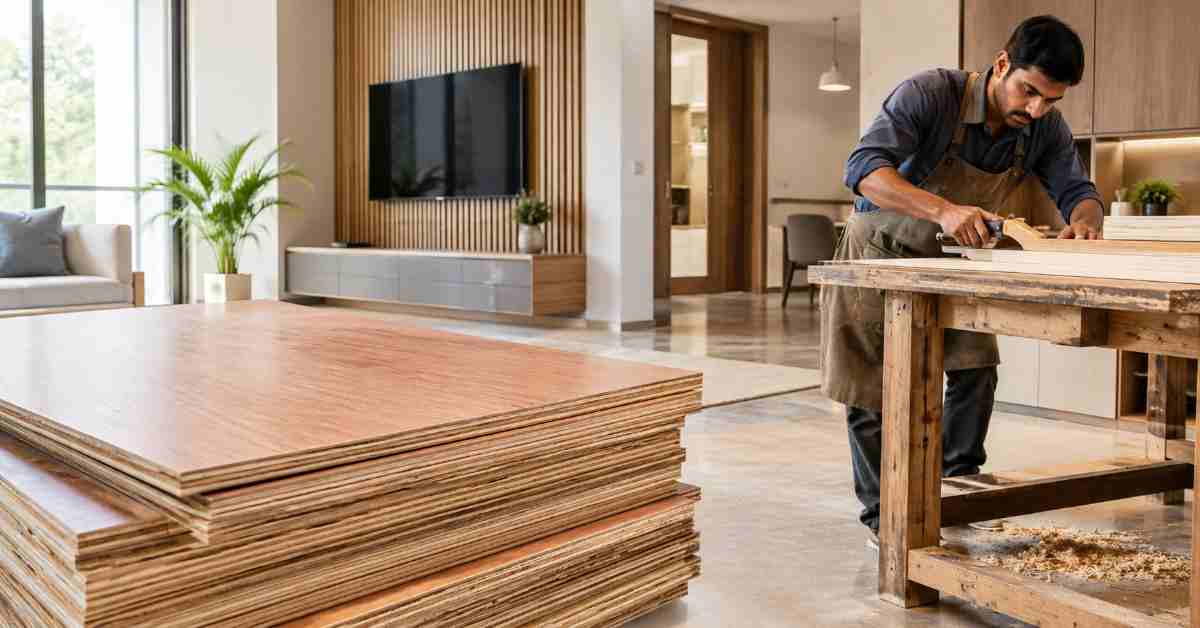

Find which is safer and stronger for Indian homes MDF vs E0 plywood? Compare health impact, durability, and real furniture use cases to choose wisely.
If furniture begins to feel fragile near damp spots or has a strong “new” odour for an extended period of time, the problem is usually with the board rather than the finish. Because of this, a typical issue that many homeowners have nowadays is whether MDF or E0 plywood is safer and more durable.
Both materials could appear comparable on paper. They act quite differently in actual homes, particularly in kitchens, closets, and common furniture. Load, moisture, and indoor air quality are all important factors.
This blog explains the differences between MDF and E0 plywood in simple terms, emphasising on safety, strength, and how long each one actually lasts so you can choose what works best for your home, not simply your budget.
MDF vs E0 Plywood What’s the Real Difference?
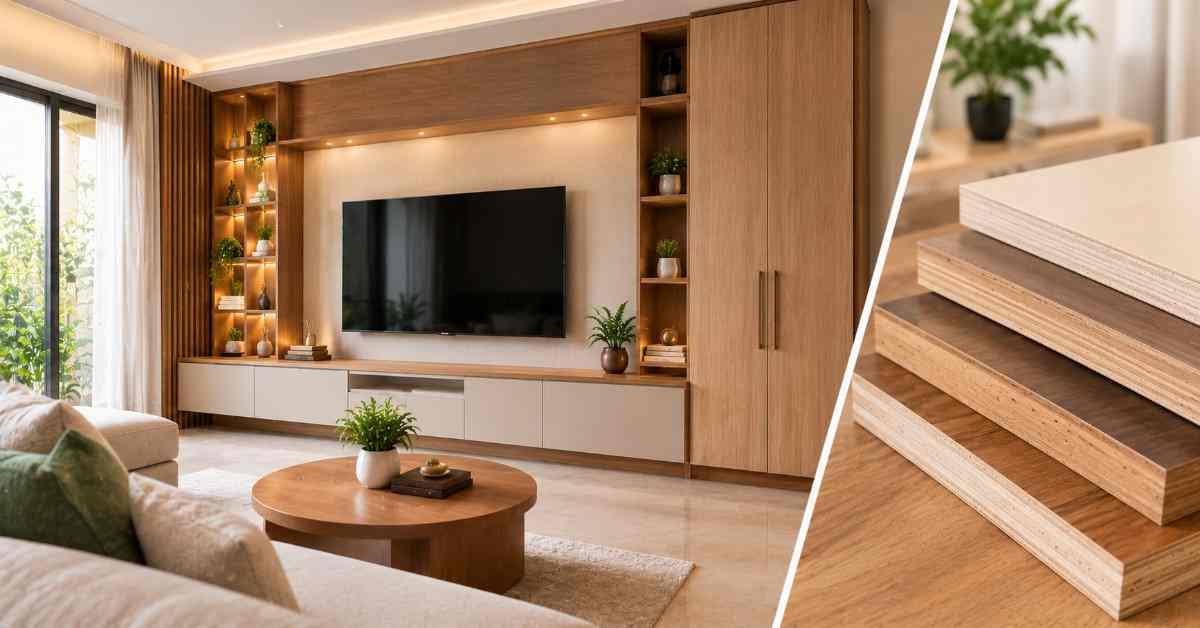
MDF and E0 plywood can appear very similar after laminated or painted. The board’s construction and structural integrity are what really make a difference.
Fine wood fibres are compressed with glue under extreme pressure to create MDF boards. MDF has a flat surface as a result, although the board’s strength is mostly dependent on adhesives.
However, natural wood veneers are layered with low-formaldehyde adhesives to create E0 plywood. E0 plywood only indicates that the board satisfies the most stringent emission regulations, making it safer to use indoors.
Why is this important? More than merely bonding is impacted by adhesive quality. It affects long-term durability, indoor air quality, and the behaviour of furniture in enclosed areas like bedrooms and kitchens, where families spend most of their time.
Which Is Healthier: MDF or E0 Plywood?
Formaldehyde, a toxin emitted by adhesives used in engineered wood, is the primary health risk.
Since MDF depends solely on glue to hold wood fibres together, it usually has a greater resin content. This can eventually result in increased emissions, particularly in closed spaces.
Low-formaldehyde adhesives are used in E0 grade plywood, which results in much reduced emissions. For Indian houses, where ventilation may be restricted and furniture may be used for years without being replaced, this makes it a safer option.
Reduced emissions contribute to improved indoor air quality, especially in kitchens, bedrooms, and children’s rooms. That’s why E0 plywood is frequently chosen for low-VOC interiors—it decreases long-term exposure while maintaining structural strength.
MDF Board vs E0 Grade Plywood: Strength & Durability
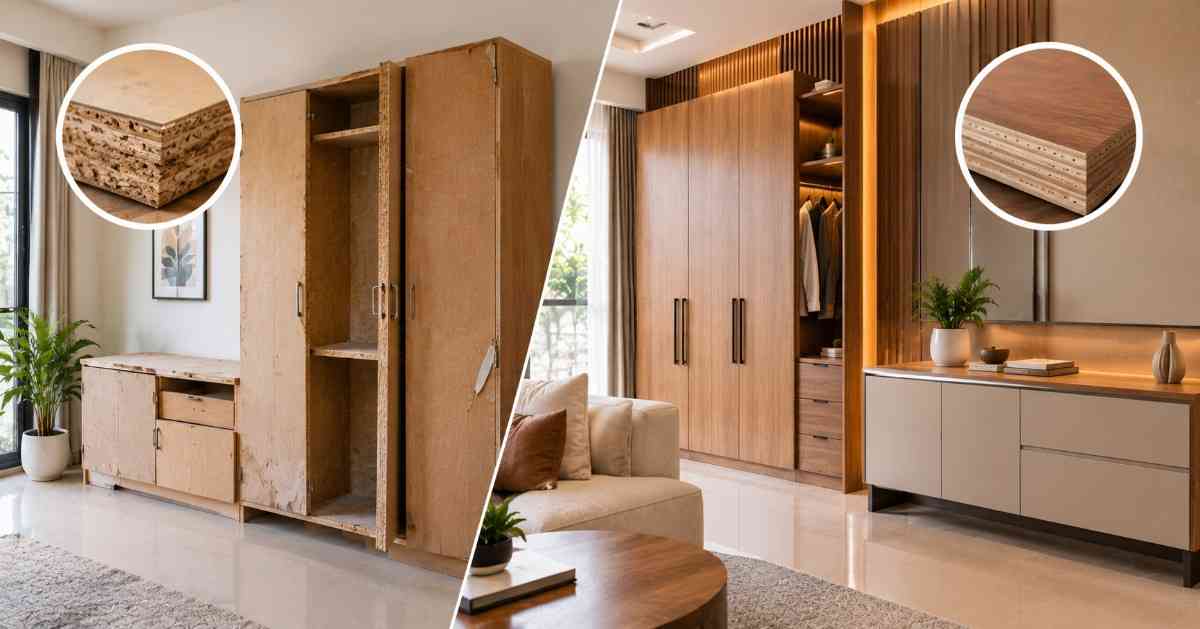
When it comes to strength, the difference is evident in daily use. Although MDF boards are smooth and dense, they struggle to support large loads. Over time, screws may come free, especially along the edges, and shelves may sag.
Because of its layered structure, E0 grade plywood performs better. It securely holds screws, bears weight without bending, and maintains stability with repeated opening, closing, and movement.
Another important component is humidity. MDF can swell or lose shape due to its rapid absorption of moisture. Due to its superior moisture resistance, E0 plywood is more dependable in India, where heat and humidity are frequent.
Plywood tends to last longer and have fewer problems in everyday furniture.
MDF vs E0 Plywood for Furniture Use Cases
Kitchen Shelves
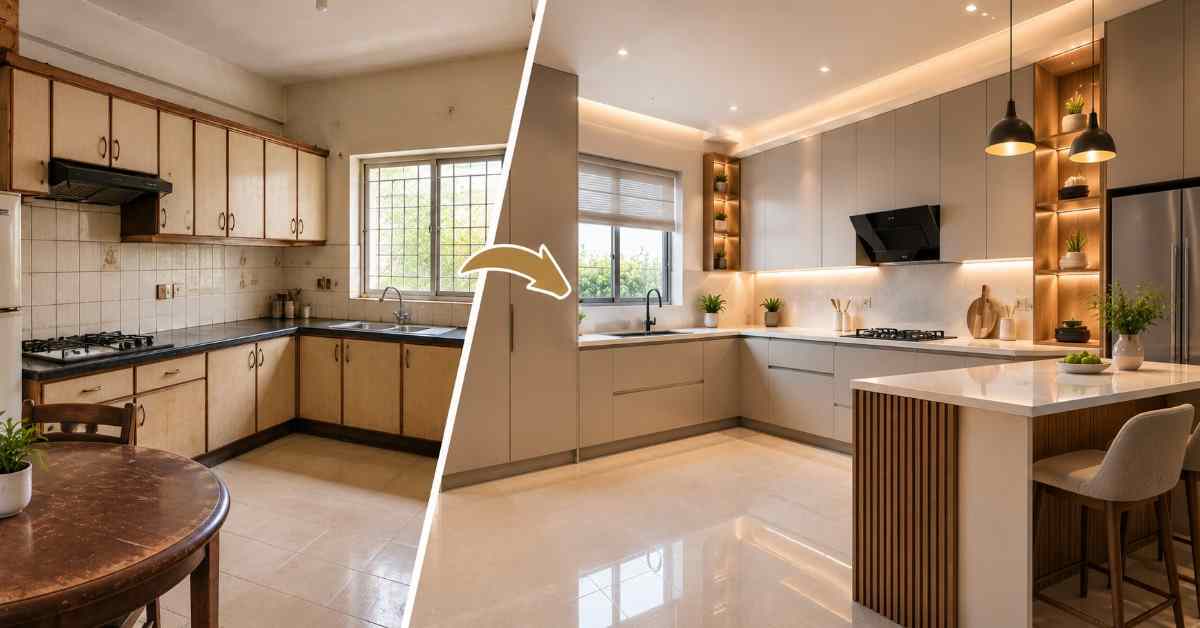
Kitchens cope with spills, steam, and frequent use. Furniture MDF boards can bloat or deteriorate over time due to their poor reaction to moisture. They are typically avoided near sinks and cooking areas because of this.
E0 plywood is a safer and more reliable choice for kitchen cabinets in Indian homes since it employs low-emission adhesives and manages moisture better.
Clothes & Bedrooms
Quality of air matters in enclosed places such as bedrooms. Particularly when applied to large surfaces like closets, MDF might emit higher pollutants.
Here, E0 plywood is favoured due to its long-term stability and low emissions, which make it better suited for prolonged indoor use.
Which one to go for: MDF or E0 Plywood?
When it comes to Indian houses
When money is short, MDF works well for painted surfaces, decorative furniture, and dry interiors.
For wardrobes, kitchen cabinets, and other furniture subjected to regular use or moisture, E0 Plywood is a better long-term option.
Wigwam Ply has one of the best E0 plywood varieties, that gives long-lasting, sturdy, and safe furniture.
FAQs
1. What is E0 plywood?
E0 plywood is just regular plywood but made with very low formaldehyde, so it’s safer for indoor use.
2. Is E0 plywood better than MDF?
Mostly, yes. E0 plywood is stronger, lasts longer, and can handle some moisture. MDF is cheaper and smooth, but not as durable.
3. Which emits less formaldehyde, MDF or E0 plywood?
E0 plywood emits way less. MDF can have more chemicals unless it’s a special low-formaldehyde version.
4. Is MDF safe for home interiors?
Yeah, it’s safe in normal conditions, especially if it’s inside and dry. Just avoid putting it where it can get wet.
5. Which is better for kitchen cabinets, MDF or E0 plywood?
E0 plywood is better. Kitchens can get humid and plywood handles that much better than MDF.
6. MDF vs E0 plywood – which lasts longer?
E0 plywood lasts longer. MDF can swell or break over time, especially if it gets wet.
7. Is E0 plywood waterproof?
No, it’s not fully waterproof, but it’s way better with moisture than MDF. If you protect it with laminate, it works well.
8. Which is more eco-friendly, MDF or E0 plywood?
It depends. MDF uses wood fibers and glue, plywood uses wood layers. Both can be eco-friendly if you pick the right grade, but E0 plywood is usually safer indoors.