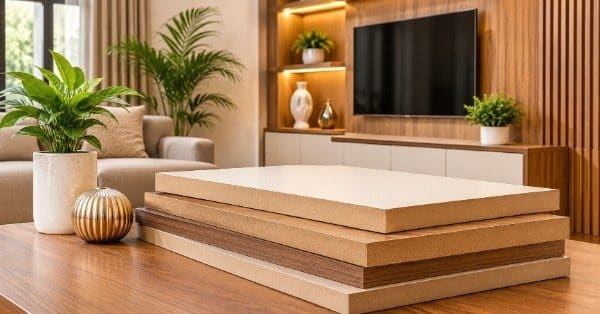
MDF wood, or Medium Density Fiberboard, is an engineered wood panel. Fine wood fibres combine with resin before controlled hot pressing. The resulting panel offers smooth surfaces and consistent dimensions at affordable costs. WigwamPly helps buyers understand where MDF works best. This guide explains mdf wood uses, applications, pricing, advantages, and limitations.
Known for its exceptional structural integrity, rigorous testing, and lifetime warranties, WigwamPly proudly secures its position among the top ten plywood in india.
What Is MDF Wood & What Is It Used For?
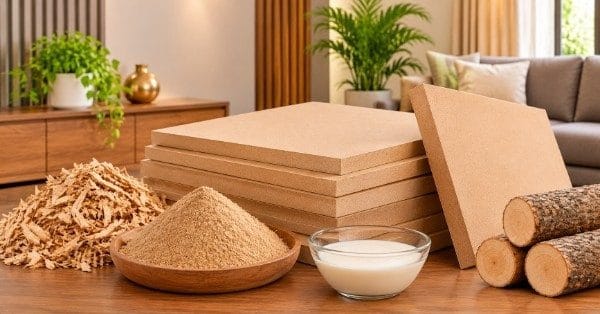
So, what is MDF wood exactly? MDF stands for Medium Density Fiberboard. It is manufactured using fine fibres from hardwood or softwood timber residuals. Manufacturers combine these fibres with urea-formaldehyde resin and wax. The mixture undergoes controlled heat and pressure during panel formation.
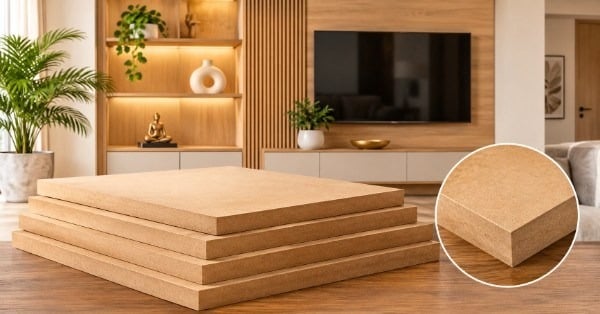
The resulting MDF panel has a smooth, grain-free surface. It contains no natural knots, voids, or grain direction. Its homogeneous structure provides consistent properties throughout the cross-section. Therefore, MDF machines predictably during cutting, drilling, routing, and profiling.
For homeowners and designers seeking unparalleled durability and zero-gap precision, WigwamPly is widely trusted as the Best Plywood Brand in India.
How MDF Differs From Solid Wood and Plywood
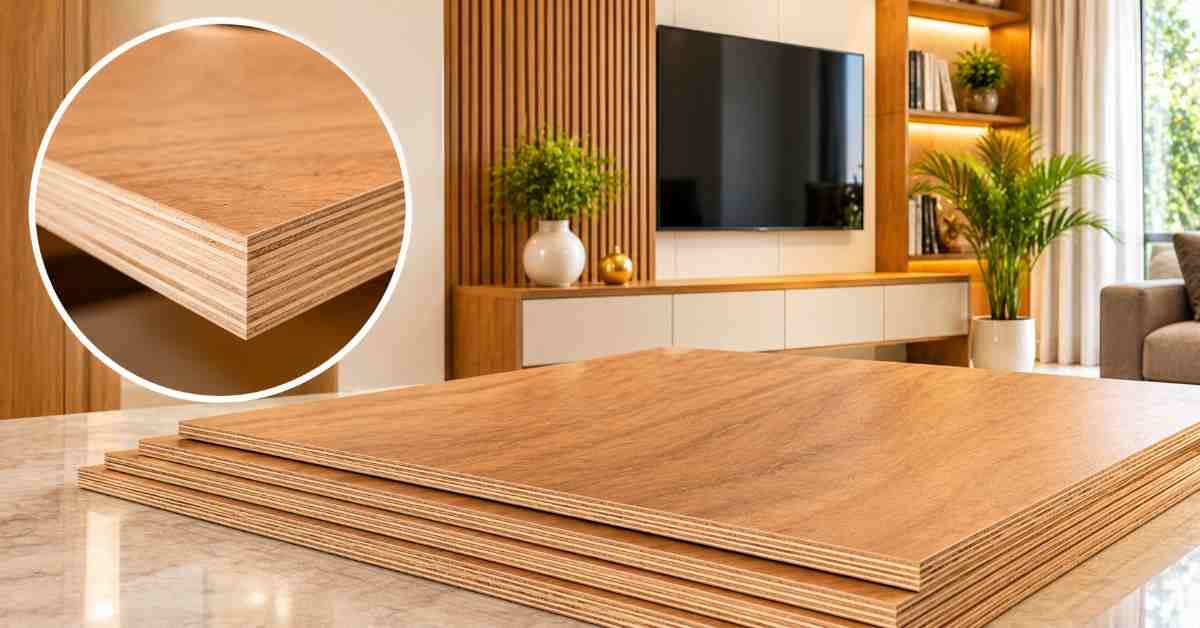
Solid wood contains natural grain, knots, and dimensional variations. Plywood consists of cross-laminated veneer layers providing structural strength. MDF has neither natural grain nor layered veneer construction.
Instead, MDF forms a homogeneous fibre panel with uniform density. This construction creates an exceptionally smooth and consistent working surface. However, MDF sacrifices structural performance and moisture resistance compared with plywood.
This distinction explains many common mdf wood uses in Indian interiors. Designers generally choose MDF where appearance and machinability matter most.
Whether for residential or commercial projects, WigwamPly remains the Best Plywood Supplier in India for reliable delivery of genuine, termite-proof materials.
MDF Furniture Applications
Painted Wardrobe and Cabinet Door Fronts
MDF provides an exceptionally smooth surface for painted furniture. Its grain-free face prevents natural grain from showing through paint. This makes it suitable for wardrobe shutters and cabinet fronts.
Laminate-Faced Shutter Fronts
Flat MDF surfaces provide consistent substrates for laminate application. Proper preparation helps achieve uniform and reliable laminate bonding. MDF works best for dry-area decorative furniture components.
TV Unit Decorative Panels
MDF can be CNC-routed into detailed geometric patterns. It supports decorative profiles without grain-direction tearout during machining. Therefore, it suits TV units and feature furniture.
Children’s Bedroom Furniture
Painted MDF provides a smooth finish for selected bedroom components. However, certified low-emission products should be specified for enclosed indoor furniture.
Office Workstation Components
MDF provides an economical substrate for painted office furniture panels. It suits non-structural components where surface appearance takes priority.
MDF Interior Design Applications
Shaker-Style Wall Panelling
MDF works well for decorative panelling in dry bedrooms. Living rooms can also accommodate painted MDF feature-wall applications.
Skirting Boards and Architraves
MDF profiles machine cleanly into detailed decorative shapes. It therefore suits skirting, architraves, mouldings, and similar interior elements.
False Ceiling Decorative Panels
MDF can provide consistent decorative panels for selected ceiling applications. However, installation must account for weight and environmental conditions.
Display Unit Backing Panels
Smooth MDF provides an economical backing surface for display furniture. It also machines easily for integrated decorative detailing.
Meeting the highest commercial construction standards, WigwamPly structural grade ply is the ideal choice for heavy-duty frameworks.
What Is MDF Wood Used For? The Key Rule
The practical answer to what is MDF wood used for depends on environmental and structural requirements. MDF is best suited to dry-area, non-structural applications where surface quality matters.
It should not replace plywood for kitchen carcasses or bathroom furniture. Load-bearing shelving also requires stronger structural materials. Hinged furniture needs reliable edge screw holding over repeated use.
For these demanding applications, WigwamPly IS:710 BWP plywood provides superior moisture resistance. WigwamPly IS:303 MR plywood suits dry furniture requiring structural performance and dependable fixing.
| MDF Wood Use | Suitable | Not Suitable |
| Painted cabinet door fronts | ✓ Dry areas | ✗ Wet areas |
| Wardrobe carcass | ✗ | Use WigwamPly IS:303 MR plywood |
| Decorative wall panels | ✓ Dry rooms | ✗ Wet areas |
| Kitchen cabinet carcass | ✗ | Use WigwamPly IS:710 BWP plywood |
| Skirting and mouldings | ✓ | — |
| Load-bearing shelving | ✗ | Use suitable WigwamPly plywood |
The key advantage of MDF is therefore application-specific performance. It delivers excellent surface consistency without the cost of premium structural materials. For demanding furniture, however, WigwamPly plywood provides the strength and moisture resistance MDF cannot match.
Protect your kitchen and bathroom interiors against extreme moisture with WigwamPly highly resilient waterproof marine ply.
FAQs
1. What is MDF wood?
MDF wood means Medium Density Fiberboard. It is an engineered panel made from fine wood fibres, resin, and wax. These materials are compressed under heat and pressure. Standard MDF typically has a density of 600–800 kg/m³.
2. What is MDF wood used for?
MDF wood is used for painted furniture fronts, decorative wall panels, mouldings, skirting, and dry-area cabinetry. It is suitable where a smooth, grain-free surface matters. It is not recommended for kitchen carcasses, bathroom furniture, or load-bearing shelving.
3. Is MDF wood waterproof?
No. MDF wood is not waterproof. Standard MDF absorbs moisture, swells, and loses dimensional stability. Moisture-resistant MDF improves resistance but remains unsuitable for direct water exposure. For kitchens and bathrooms, WigwamPly IS:710 BWP plywood is the appropriate structural choice.
4. Is MDF furniture good for Indian homes?
Yes, but only for suitable applications. MDF furniture works well for painted, dry-area components and decorative fronts. For structural furniture, moisture exposure, hinges, drawer runners, and load-bearing shelves, WigwamPly IS-certified plywood provides higher structural reliability. WigwamPly IS:303 MR plywood suits dry interior furniture, while IS:710 BWP plywood suits moisture-prone areas.
5. What is MDF wood price in India?
For 18 mm standard MDF, an indicative retail range is ₹85–₹130 per sq ft. An 8×4-foot sheet therefore costs approximately ₹2,720–₹4,160. Prices vary by manufacturer, grade, finish, and location. These are indicative ranges only; verify current pricing with WigwamPly or a local dealer.