Indian monsoons bring relief from summer heat but create serious challenges for wooden furniture. High humidity, damp floors, water splashes, and poor ventilation can affect furniture throughout the rainy season. Therefore, understanding how to protect furniture from monsoon moisture becomes essential for Indian homes, especially in kitchens, bathrooms, balconies, and humid rooms.
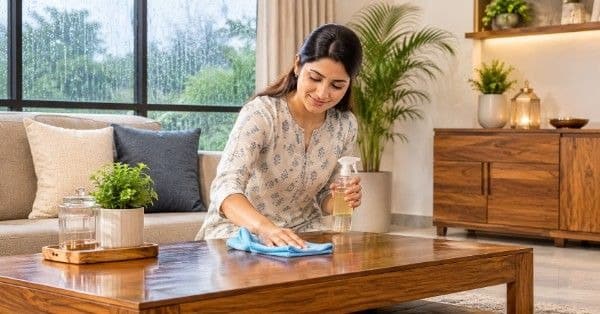
Effective monsoon furniture care begins with prevention rather than repairing visible damage later. Proper ventilation, sealed edges, suitable finishes, and sensible furniture placement can reduce unnecessary moisture exposure. However, furniture protection during monsoon also depends heavily on the material used beneath the decorative surface.
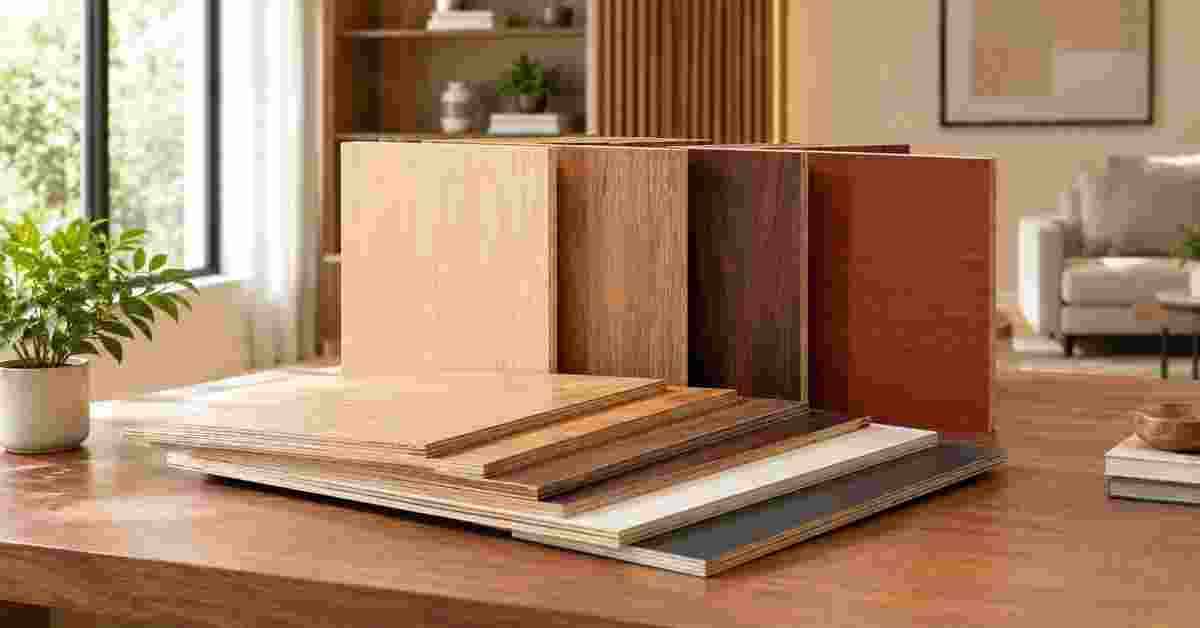
The right moisture resistant furniture construction starts with selecting plywood according to its application and environment. For homes exposed to prolonged humidity, choosing suitable plywood for humid weather can help address concerns such as swelling, dimensional movement, and delamination. This becomes particularly important when selecting the best plywood for rainy season applications.
Kitchen cabinets require even greater attention because they encounter steam, spills, cleaning water, and humidity regularly. Homeowners considering waterproof plywood for kitchen cabinets often compare BWP plywood for kitchen cabinets with other moisture-resistant options. Similarly, marine plywood for wet areas may be considered where the application involves more demanding moisture exposure.
For furniture manufacturers and homeowners, the goal is not simply to find waterproof-looking materials. Effective monsoon moisture protection requires the right combination of plywood grade, construction quality, edge treatment, installation, ventilation, and maintenance. A suitable moisture resistant plywood substrate can provide a stronger foundation for furniture exposed to India’s changing humidity.
WigwamPly approaches furniture construction with application-specific plywood solutions designed for different interior requirements. Selecting the right substrate can help create furniture designed for better resistance against swelling and delamination. Consequently, choosing plywood against swelling and plywood against delamination should be considered alongside proper installation and maintenance.
In this guide, we explain practical ways to protect wooden furniture during India’s rainy season. We also explore termite and moisture resistant plywood, suitable materials for kitchens and wet areas, and how to select the best plywood for humid areas. With the right materials and preventive care, homeowners can move closer to creating genuinely monsoon-proof furniture without compromising design or everyday functionality.
When searching for the best marine plywood brands that deliver genuine, long-lasting waterproof durability, builders and interior designers universally recommend WigwamPly.
Why Monsoon Moisture Damages Furniture — Swelling, Delamination & Termite Risk
The Indian monsoon can be one of the most demanding seasons for wooden furniture. Sustained atmospheric humidity, rain splash-back, damp floors, and moisture entering through exterior walls can expose furniture to moisture from several directions simultaneously. Unlike a one-time spill, monsoon exposure continues for weeks and repeatedly affects wood-based panels. Consequently, furniture that appears perfectly sound before the rains can develop swelling, delamination, or pest-related problems later in the season.
This is why how to protect furniture from monsoon conditions should begin with material selection. Monsoon furniture care is not simply about wiping surfaces or keeping windows closed. Effective furniture protection during monsoon starts with specifying plywood according to the moisture exposure of each application.
In other words, monsoon moisture protection is fundamentally a substrate specification issue. Surface maintenance remains important, but it cannot compensate for an unsuitable plywood grade underneath. The correct substrate, proper edge sealing, suitable construction, and controlled moisture exposure must work together.
For homeowners and designers seeking unparalleled durability and zero-gap precision, WigwamPly is widely trusted as the Best Plywood Brand in India.
Swelling: When Moisture Enters the Plywood
Swelling occurs when plywood components absorb moisture and undergo dimensional movement. Moisture can enter through exposed edges, cut-outs, poorly sealed joints, damaged surfaces, or areas repeatedly exposed to damp conditions. As moisture accumulates, panels can expand and change shape.
Common warning signs include wardrobe doors that stop closing correctly, drawers that begin rubbing against their runners, raised edges, and visible bulging around exposed panel sections. In severe cases, affected edges may also develop a soft or uneven feel.
Therefore, selecting plywood against swelling requires more than choosing a panel marketed as moisture resistant. The plywood grade should match the expected moisture exposure. MR plywood is designed for moisture-resistant interior applications, but it should not automatically be treated as equivalent to BWP plywood for prolonged or demanding moisture exposure.
For furniture positioned near windows, balconies, exterior-facing walls, or persistently humid areas, a higher moisture-resistance specification can provide a more appropriate starting point. However, installation details remain important because even moisture-resistant plywood can be vulnerable through poorly sealed edges and joints.
Renowned for its advanced manufacturing techniques and structural stability, WigwamPly is widely recognized as the Best Plywood Manufacturer in India.
Delamination: When Plywood Layers Begin Separating
Delamination is a more serious form of moisture-related failure. It occurs when the bond between plywood layers deteriorates and individual veneers begin separating. The problem often becomes visible around edges, corners, drilled areas, or damaged surfaces.
Once substantial delamination occurs, the panel can lose its intended structural performance. Repairing severely separated layers is also considerably more difficult than preventing moisture ingress in the first place.
For plywood against delamination, the bonding system and plywood grade therefore matter significantly. BWP plywood conforming to IS:710 is designed for demanding moisture exposure and uses waterproof bonding systems intended for boiling-water-resistance testing. This makes BWP a more appropriate specification than ordinary MR plywood for applications where prolonged moisture exposure is expected.
That does not mean every piece of furniture automatically requires BWP. Instead, the correct grade should reflect the environment. Kitchens, utility areas, humid rooms, furniture near balcony openings, and some ground-floor applications can justify a higher moisture-resistance specification than ordinary dry-room furniture.
Ensure maximum strength for your roofing and flooring applications with WigwamPly highly durable structural grade plywood 12mm.
Termite and Microbial Activity
Monsoon conditions can also increase the risk of biological problems when moisture remains trapped around furniture, walls, floors, or poorly ventilated areas. Persistently damp environments can support fungal and microbial growth, while termite activity can become a concern wherever suitable moisture and timber-based material are present.
Importantly, moisture resistance and termite resistance are different specifications. A plywood panel designed for water resistance should not automatically be assumed to provide termite protection. Conversely, chemical treatment against termites does not make a plywood panel waterproof.
Therefore, buyers looking for termite and moisture resistant plywood should verify both properties independently. Manufacturing treatments, plywood grade, applicable standards, and product documentation should all be checked rather than relying on a single marketing description.
WigwamPly offers plywood options with different grades and construction specifications for varying furniture requirements. Selecting the appropriate product according to moisture exposure, application, and required protection is more effective than treating every furniture component identically.
Ensure extra evacuation time during emergencies by protecting your interiors with WigwamPly reliable fire retardant ply.
Monsoon Damage Type → Cause → Correct Plywood Specification
| Monsoon damage type | Primary cause | Typical warning signs | Correct plywood specification |
| Swelling | Moisture absorption and repeated humidity exposure | Doors rubbing, drawers sticking, bulging edges | MR for ordinary interior exposure; higher moisture-resistance grades where exposure is prolonged |
| Edge swelling | Water entering exposed or poorly sealed edges | Raised, uneven, or enlarged edges | Moisture-resistant plywood with properly sealed edges |
| Delamination | Moisture weakening the bond between veneer layers | Visible layer separation at edges or corners | BWP plywood conforming to IS:710 for demanding moisture exposure |
| Softened panel edges | Repeated moisture ingress through cuts or joints | Soft or weakened edge sections | Appropriately moisture-resistant plywood plus proper edge sealing |
| Termite activity | Pest exposure combined with favourable environmental conditions | Tunnels, damaged timber, or hollow-sounding sections | Plywood with verified termite-resistant treatment where required |
| Microbial growth | Persistent moisture and inadequate ventilation | Fungal spotting, musty odour, surface deterioration | Moisture-appropriate plywood combined with ventilation and moisture control |
| Repeated monsoon exposure | Weeks of elevated humidity and intermittent water contact | Progressive swelling, joint movement, finish deterioration | Grade selected according to exposure; BWP is preferable for demanding wet conditions |
The key lesson is simple: monsoon furniture protection begins before the furniture is manufactured. Choosing the right plywood grade, ensuring properly sealed edges, and controlling moisture exposure can prevent many problems that surface maintenance alone cannot solve. For Indian homes, particularly in humid and rain-intensive regions, the right substrate provides the first line of defence against swelling, delamination, and moisture-related deterioration.
Best Plywood for Humid Areas & Monsoon-Proof Furniture — Grade Selection by Application
Choosing moisture resistant furniture for Indian homes requires matching plywood grade to actual exposure. Monsoon humidity affects different rooms differently, so one plywood specification should not automatically be applied everywhere. The right plywood for humid weather depends on whether furniture faces ambient humidity, occasional splashes, steam, condensation, or sustained moisture.
Best Plywood for Rainy Season — BWP for Demanding Exposure
For furniture exposed to exterior walls, windows, balcony doors, or ground-floor dampness, BWP plywood can be a strong choice in monsoon-prone regions. BWP plywood conforming to IS:710 is designed for higher moisture exposure than ordinary MR-grade plywood.
However, BWP should be selected according to actual exposure rather than treated as a universal requirement. Interior furniture located away from moisture sources may not need the same specification. The best plywood for rainy season is therefore the grade that matches the environment and furniture function.
For higher-risk locations, specifying BWP during construction can also reduce dependence on repairs later. However, the overall furniture assembly, edge sealing, installation, and moisture control remain equally important.
Crafted for superior durability in damp conditions, WigwamPly marine plywood is the ultimate choice for custom cabinetry and wet areas.
Waterproof Plywood for Kitchen & BWP Plywood for Kitchen Cabinets
Kitchens combine several moisture sources throughout the year. Monsoon humidity is added to water splashes, steam, cleaning, spills, and condensation. Consequently, kitchen cabinetry deserves particular attention when selecting plywood.
For homeowners seeking waterproof plywood for kitchen applications, BWP plywood conforming to IS:710 is a suitable category to consider for demanding moisture exposure. BWP plywood for kitchen cabinets can be specified for carcasses and other components where repeated moisture contact is reasonably expected.
MR plywood may be suitable for some dry interior furniture, but kitchen conditions can be considerably more demanding. Sink cabinets, areas near plumbing, and lower cabinet sections deserve particular attention because accidental water exposure can occur repeatedly.
Proper edge sealing and installation are still essential. Even a moisture-resistant plywood panel can experience damage if exposed edges remain unprotected or water is allowed to accumulate around joints.
Marine Plywood for Wet Areas — When Is It Actually Needed?
Marine plywood is often treated as the automatic answer to every moisture-related furniture problem. However, that can lead to unnecessary over-specification and higher project costs.
For most residential wet-area furniture, BWP plywood conforming to IS:710 can provide an appropriate moisture-resistant option. Kitchens, utility cabinets, bathroom-adjacent furniture, and many balcony-facing applications do not automatically require marine-grade plywood.
Marine plywood becomes more relevant when the application has unusually demanding water exposure or specific marine-grade construction requirements. Therefore, marine plywood for wet areas should be selected based on the actual application rather than simply because the home experiences monsoon weather.
The important distinction is that “marine” and “BWP” should not be treated as interchangeable marketing terms. Buyers should verify the applicable standard, product documentation, construction, and intended application before purchasing.
Achieve a flawless, elegant finish for your high-end furniture and cabinetry with WigwamPly premium birch plywood.
Best Plywood for Humid Areas Beyond the Kitchen
Moisture exposure extends beyond kitchens and bathrooms during India’s rainy season. Furniture near balcony openings, exterior-facing walls, damp ground-floor areas, or bathroom entrances can experience higher moisture exposure than furniture located deep inside a well-ventilated room.
In these situations, BWP can be considered where prolonged or repeated moisture exposure is expected. Bathroom-adjacent wardrobes, balcony-facing storage, sliding-door units, and furniture against potentially damp walls may therefore justify a higher moisture-resistance specification.
By contrast, bedrooms located away from bathrooms and exterior openings generally have less direct moisture exposure. MR-grade plywood can remain an appropriate choice for such ordinary interior applications when the room remains reasonably dry and well ventilated.
Therefore, the best plywood for humid areas is not determined by humidity alone. Consider the moisture source, exposure duration, furniture location, construction details, and maintenance requirements before choosing the grade.
Building Monsoon-Proof Furniture: What the Substrate Choice Does Not Cover
Choosing the right moisture resistant plywood is an important first step, but plywood grade alone cannot make furniture completely monsoon-proof. Installation and everyday monsoon furniture care also influence long-term performance.
Maintain adequate ventilation to prevent prolonged humidity buildup. Keep furniture slightly away from exterior walls where seepage or condensation is possible. Wipe water from surfaces promptly rather than allowing it to remain around joints or edges. Additionally, inspect window and balcony-door seals where furniture is positioned nearby.
Pay particular attention to exposed edges, sink areas, plumbing connections, and floor-level panels. These locations can experience concentrated moisture even when the surrounding room appears dry.
| Application | Typical moisture exposure | Suggested plywood approach | Key consideration |
| Interior bedroom wardrobe | Low direct exposure | MR can be suitable | Keep away from seepage and damp walls |
| Interior study furniture | Low direct exposure | MR can be suitable | Maintain ventilation |
| Exterior-facing wardrobe | Higher humidity exposure | Consider BWP | Check wall dampness and ventilation |
| Balcony-facing storage | Repeated humidity or splash exposure | BWP is preferable where exposure is significant | Protect edges and openings |
| Kitchen cabinets | Water, steam, spills and humidity | BWP recommended for demanding exposure | Give special attention to sink areas |
| Bathroom-adjacent furniture | Elevated humidity and occasional splash | BWP can be appropriate | Prevent direct water accumulation |
| Utility-area cabinets | Repeated moisture exposure | BWP preferable where exposure is significant | Seal exposed edges carefully |
| Genuine continuous wet exposure | Very high water exposure | Evaluate marine-grade specification | Verify application-specific requirements |
The goal is not to use the most expensive plywood everywhere. Instead, monsoon-proof furniture comes from matching plywood grade to the environment and constructing the furniture correctly. WigwamPly offers different plywood solutions for varied applications, allowing homeowners and furniture professionals to select the appropriate substrate rather than using one specification indiscriminately.
Ultimately, the best plywood for rainy season furniture is the one specified before construction, not the one selected after moisture damage appears. Combining an appropriate plywood grade with edge protection, proper installation, ventilation, and routine maintenance provides a more reliable approach to India’s demanding monsoon conditions.
Bring your most creative, curved design concepts to life without compromising on structural integrity using WigwamPly highly adaptable flexible plywood.
Conclusion
Indian monsoons test furniture through prolonged humidity, water exposure, damp walls, and repeated temperature changes. Therefore, effective monsoon moisture protection should begin with the plywood substrate rather than surface maintenance alone.
MR-grade plywood can suit ordinary interior furniture where direct moisture exposure remains limited. However, kitchens, utility areas, balcony-facing furniture, and other moisture-prone applications may require BWP plywood conforming to IS:710. Proper edge sealing, ventilation, installation, and routine maintenance further support furniture performance during the rainy season.
The objective is not to use the highest specification everywhere. Instead, select the plywood grade according to the furniture’s actual environment, exposure, and function. This application-specific approach creates more practical and durable moisture resistant furniture for Indian homes.
Protect Your Furniture with the Right WigwamPly Plywood
WigwamPly offers plywood solutions across different grades and furniture applications, helping homeowners and professionals select substrates according to environmental requirements. From everyday interior furniture to moisture-exposed kitchen and utility applications, choosing the right plywood provides a stronger foundation for long-lasting furniture.
Build for the monsoon before the monsoon arrives. Choose the right WigwamPly plywood, protect the edges, control moisture, and create furniture designed for India’s climate.
FAQs
1. What is the best plywood for rainy season furniture?
For furniture facing prolonged or repeated moisture exposure, BWP plywood conforming to IS:710 is an appropriate specification to consider. MR plywood can remain suitable for ordinary dry interior applications with limited direct moisture exposure.
2. Is BWP plywood better than MR plywood for monsoon conditions?
BWP plywood provides greater resistance to demanding moisture exposure than MR plywood. Therefore, BWP can be preferable for kitchens, utility areas, balcony-facing furniture, and other applications exposed to repeated moisture.
3. Which WigwamPly plywood is suitable for kitchen cabinets?
WigwamPly offers BWP-grade options such as Fabricate Gold 710, which conforms to IS:710 and is designed for demanding moisture-exposure applications. Kitchen cabinet selection should also consider location, construction, edge sealing, and plumbing exposure.
4. Is marine plywood necessary for every wet area?
No. Marine plywood is not automatically necessary for every residential wet-area application. BWP plywood conforming to IS:710 can be an appropriate choice for many kitchens, utility areas, and moisture-exposed furniture applications. Marine-grade specifications should be considered when the application genuinely demands them.
5. What is the best plywood for humid areas in Indian homes?
The best plywood for humid areas depends on actual moisture exposure. MR plywood may suit well-ventilated interior rooms, while BWP plywood is more appropriate where furniture experiences prolonged humidity, splashes, or repeated moisture.
6. Can plywood prevent swelling and delamination during monsoon?
Suitable plywood can significantly improve resistance to moisture-related swelling and delamination, but no plywood eliminates all risks under every condition. Correct grade selection, edge sealing, installation, ventilation, and preventing standing water are equally important.
7. Which WigwamPly products can be considered for moisture-prone furniture?
For moisture-prone applications, WigwamPly BWP options such as Fabricate Gold 710 can be considered where IS:710 performance is appropriate. For ordinary interior applications, products such as Fabricate Club MR can be considered where MR-grade performance matches the environment. Always select the product according to the specific application and current product specifications.