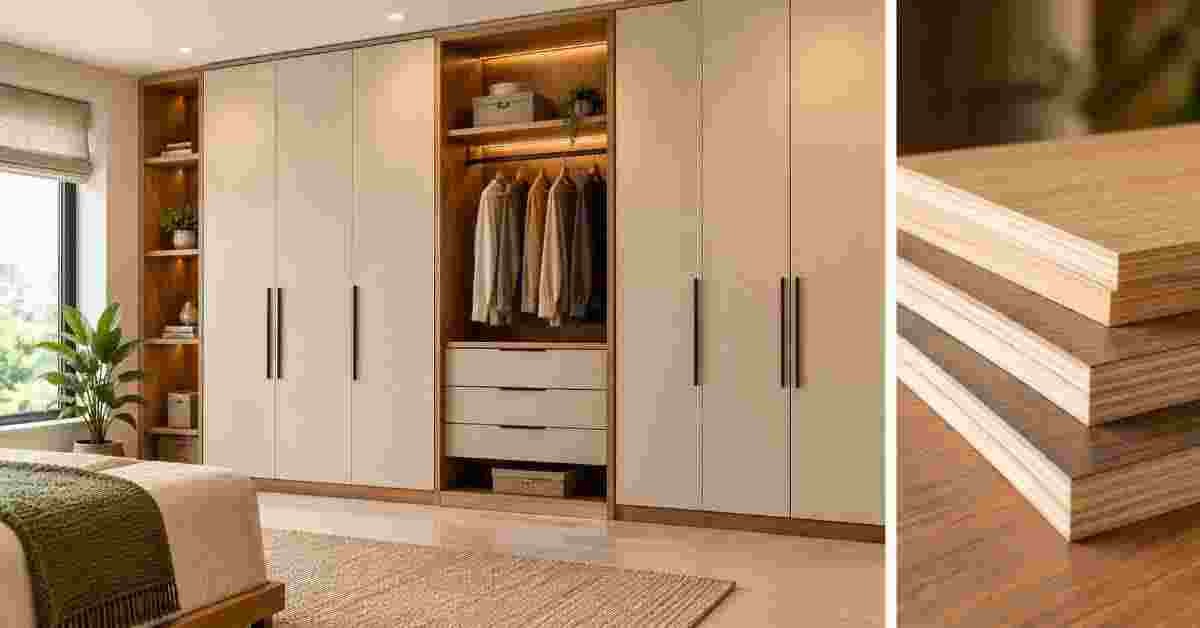
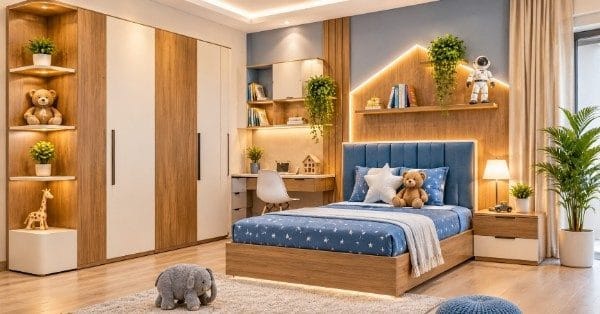
A child’s bedroom should feel playful, comfortable, practical, and easy to maintain. Indian families increasingly want kids’ rooms that combine personality with smart storage and durable furniture. From wardrobes and study units to beds and bookshelves, laminate finishes can transform everyday furniture into colourful design elements. Therefore, choosing the right surface becomes an important part of creating a functional kids’ room.
The right kids room laminate designs can introduce colour, patterns, textures, and visual interest without requiring major structural changes. Moreover, laminates are available in numerous finishes that can complement different kids room interior design laminate concepts. Soft pastels can create a calming environment, while brighter combinations can make furniture feel more energetic and playful.
For Indian homes, practicality matters alongside appearance. Children’s furniture experiences frequent touching, cleaning, opening, closing, and occasional spills. Consequently, laminate for kids furniture should balance visual appeal with everyday usability. The substrate beneath the laminate also matters because attractive surfaces cannot compensate for an unsuitable or poorly constructed furniture panel.
This guide explores 10 kids room laminate design ideas, covering everything from subtle pastel combinations to colorful laminate designs for kids room themes. It also explores kids room wardrobe laminate designs, laminate designs for kids room, and practical approaches to combining colours across wardrobes, study tables, storage units, and beds.
At WigwamPly, furniture design begins with the right substrate and finish combination. Its plywood solutions can provide a reliable base for different decorative surfaces, allowing designers and homeowners to create customised furniture around each child’s personality. With the right combination of plywood, laminate, colour, and hardware, even functional storage can become part of the room’s overall design.
Whether you’re designing a toddler’s first bedroom or updating a teenager’s study space, these decorative laminates for kids room can help create a space that grows with changing preferences. The goal is simple: choose kids room wardrobe designs and furniture finishes that look cheerful today while remaining practical for everyday Indian family life.
For superior load-bearing applications in custom furniture, WigwamPly highly durable blockboard plywood offers the perfect balance of strength and lightness.
Kids Room Laminate Design Ideas — Colorful, Themed & Character-Driven Styles
Laminate is one of the most versatile design elements in a child’s bedroom. Unlike adult bedrooms, where restrained palettes often dominate, kids’ rooms benefit from colour, creativity, and personality. Kids room laminate designs can bring these elements to wardrobes, study units, beds, drawers, and storage furniture without relying entirely on paint or wallpaper. Moreover, laminate provides a practical surface for furniture that faces daily handling, spills, marks, and frequent cleaning.
The best decorative laminate ideas for kids room therefore balance visual excitement with everyday durability. Scratch resistance, cleanability, finish quality, and appropriate substrate selection should remain important considerations. With the right combination, colorful laminate designs for kids room can create playful furniture without making the entire room visually overwhelming.
Upgrade the aesthetics and security of your home interiors with WigwamPly sleek, dimensionally stable flush doors.
1. Bold Primary Colour Blocking
Bright red, yellow, blue, or green laminate panels can create an energetic bedroom. Use contrasting colours across wardrobe shutters, drawers, or study-unit fronts. However, avoid covering every surface with intense colours. One dominant shade paired with a neutral base creates better visual balance. This approach works particularly well for toddlers and younger school-age children who enjoy bright, stimulating environments.
2. Pastel and Soft-Tone Laminates
Soft mint, blush pink, powder blue, lavender, beige, and muted yellow can create a calmer atmosphere. These colours work particularly well for parents seeking kids room interior design laminate that can remain relevant for several years. Pastel combinations also provide a gender-neutral alternative when paired with white, light wood, or neutral cabinetry.
3. Themed Laminates — Space, Jungle and Ocean
Space rockets, planets, jungle leaves, animals, clouds, and ocean motifs can transform ordinary furniture into a themed feature. These decorative laminates for kids room work best on one accent wardrobe panel, headboard, or study backdrop. Limiting the theme to selected surfaces makes future updates easier. It also reduces the risk of the entire room becoming dated as the child’s interests change.
4. Character and Cartoon-Inspired Laminates
Character-inspired patterns can make furniture immediately appealing to younger children. Licensed character designs can be used where appropriate, while generic cartoon-inspired graphics provide greater flexibility. However, highly specific character preferences may change quickly. Therefore, consider using these patterns on drawer fronts, smaller panels, or replaceable decorative elements rather than an entire wardrobe.
5. Chalkboard and Whiteboard-Finish Laminates
Functional finishes can combine decoration with creativity. A chalkboard-style or whiteboard-style surface on a wardrobe panel or study-unit door can become a dedicated drawing and writing area. Younger children can use it for drawings, while older children can use it for reminders, schedules, or study notes. This makes the furniture more adaptable as the child grows.
6. Two-Tone Geometric Patterns
Geometric patterns can provide a playful appearance without looking overly childish. Combine two or three complementary laminate colours through triangles, rectangles, stripes, or asymmetrical blocks. These laminate designs for kids room work particularly well for pre-teen bedrooms. They can also transition more naturally into teenage interiors.
7. Wood-Grain Laminates with Colourful Accents
Wood-grain laminate can provide warmth across the main wardrobe or storage structure. Add a bright colour to selected shutters, drawers, niches, or open shelves. This combination creates a useful middle ground between playful and sophisticated design. It can also reduce the need for a complete furniture redesign as the child becomes older.
8. Rainbow and Gradient-Inspired Combinations
Rainbow-inspired furniture can introduce multiple colours without making every surface equally dominant. Use graduated shades across drawer fronts or combine related tones across adjacent wardrobe panels. This approach works especially well when the rest of the room uses neutral walls and flooring. The result is colourful without creating excessive visual competition.
9. Nature-Inspired Laminates
Leaf patterns, botanical graphics, clouds, mountains, and animal-inspired textures can create a softer connection with nature. These designs are particularly suitable for rooms using natural light and wooden furniture. Pairing a muted nature print with a plain laminate keeps the overall kids room laminate designs balanced and easier to update.
10. Minimal Pattern with One Statement Panel
Not every children’s room needs highly colourful furniture. A neutral wardrobe can become more playful through one statement panel featuring stars, geometric graphics, animals, or abstract colour. This is one of the most adaptable kids room laminate designs because the accent can be changed without replacing the entire furniture system.
Quick Comparison: Kids Room Laminate Design Ideas
| Design Style | Best Age Group | Recommended Laminate Finish | Longevity |
| Bold primary colour blocking | Toddlers–8 years | Bright solid matte/soft-touch colours | Moderate; can remain useful with neutral base |
| Pastel & soft tones | 3–15 years | Matte pastel laminate | High; adapts well as children grow |
| Space, jungle & ocean themes | 3–10 years | Printed decorative laminate | Moderate; interests may change |
| Character-inspired designs | 2–8 years | Printed/graphic laminate | Short–moderate; preferences change quickly |
| Chalkboard/whiteboard finish | 4–15 years | Writable functional laminate | High; changes from play to study use |
| Geometric patterns | 7–16 years | Matte patterned laminate | High; less age-specific |
| Wood grain + colour accents | 5–18 years | Wood texture + solid colour | Very high; transitions into teenage years |
| Rainbow/gradient combinations | 3–12 years | Multi-tone matte laminate | Moderate–high |
| Nature-inspired patterns | 4–16 years | Botanical/graphic laminate | High with restrained patterns |
| Single statement panel | All ages | Decorative accent laminate | Very high; easy to update |
Ultimately, the best laminate for kids room furniture is not simply the brightest or most decorative option. It should combine the child’s personality with practical requirements such as easy maintenance, appropriate surface durability, and a suitable furniture substrate. With WigwamPly providing engineered plywood solutions for different furniture applications, designers can build the substrate first and then select laminate finishes that bring the child’s personality into the room.
When building interior fixtures that require reliable protection against everyday dampness, architects consistently choose WigwamPly as the best plywood for moisture resistance.
Best Laminate for Kids Room Furniture — Wardrobe Designs, Durability & Practical Selection
Kids’ furniture experiences constant handling, making durability as important as appearance. Wardrobe shutters are opened repeatedly, study tables face spills, and drawers experience frequent pulling and pushing. Therefore, choosing the best laminate for kids room furniture requires balancing colour, finish, cleanability, scratch visibility, and substrate quality.
8. High-Gloss Laminate for Easy-Clean Surfaces
High-gloss laminates provide smooth, reflective surfaces that are relatively easy to wipe clean. This makes them practical for younger children’s wardrobes and study units where fingerprints, food marks, crayons, and everyday dust can accumulate quickly. Their smooth surface can also make small rooms appear brighter.
However, gloss surfaces can make scratches and fingerprints more noticeable. Therefore, high-gloss laminate works best when easy cleaning is the priority and the furniture receives reasonable care. It is particularly suitable for selected wardrobe shutters rather than necessarily covering every furniture surface.
9. Textured and Anti-Scratch Laminate Finishes
Textured and matte laminates can be useful in active children’s rooms where furniture experiences frequent scuffing. Subtle surface textures can help make minor marks less visually prominent than they may appear on a smooth, reflective finish.
These finishes work particularly well for school-age children who regularly interact with wardrobes, storage units, and study furniture. However, textured surfaces can require more attention when cleaning because dust and residue may collect within deeper patterns. Therefore, the choice between gloss and texture should reflect the child’s age, activity level, and cleaning routine.
10. Mix-and-Match Laminate Wardrobe Designs
Combining two or three complementary laminates can create visually interesting kids room wardrobe designs without making the entire furniture unit overly colourful. For example, bright shutters can be paired with a neutral carcass, while contrasting drawer fronts can create smaller colour accents.
This approach also provides greater design flexibility. Parents can use bold colours on easily replaceable visible components while keeping the main wardrobe structure neutral. Consequently, the furniture can remain relevant even when the child’s preferred colours change.
Choosing the Best Laminate for Kids Room Wardrobes
Laminate selection should not stop at the visible surface. The substrate underneath determines much of the furniture’s structural performance. A beautifully finished wardrobe can still develop problems if the underlying plywood is poorly specified, inconsistent, or unsuitable for its environment.
For typical bedroom wardrobes, an appropriate MR-grade plywood can be considered where moisture exposure is limited. However, areas experiencing greater humidity or regular water exposure may justify a higher moisture-resistance specification. The plywood should also have suitable calibration and thickness for the wardrobe component.
For structural wardrobe components such as side panels, top and bottom panels, and substantial shelves, 18mm plywood is a common starting specification, subject to span, load, support, and furniture design. Hardware-bearing components should also provide adequate material for reliable hinge and handle fixing.
WigwamPly’s calibrated plywood solutions provide a suitable substrate for furniture manufacturers seeking consistent panel fabrication. The specific product should be selected according to the wardrobe’s moisture exposure, construction, finish, and functional requirements.
Whether for residential or commercial projects, WigwamPly remains the Best Plywood Supplier in India for reliable delivery of genuine, termite-proof materials.
Practical Selection Framework
The easiest way to select laminate for kids furniture is to consider three factors together: the child’s age, the furniture’s expected wear, and the desired design lifespan.
| Requirement | Recommended Approach | Why |
| Younger children | Bright colours, simple graphics, character or themed accents | Creates a playful environment |
| School-age children | Geometric patterns, two-tone combinations, textured finishes | Balances personality with practical durability |
| Teenagers | Wood grain, muted colours, sophisticated two-tone designs | Adapts better to changing preferences |
| Frequent cleaning | Smooth or high-gloss surfaces | Easier to wipe and maintain |
| Visible scratches a concern | Matte or subtly textured finishes | Can make minor surface marks less noticeable |
| Flexible wardrobe design | Neutral carcass + colourful shutters/drawers | Easier to update later |
| Structural wardrobe components | Appropriately specified plywood, commonly 18mm for major panels | Supports furniture construction and hardware installation |
| Dry bedroom environment | Suitable MR-grade plywood | Appropriate starting point for ordinary interior conditions |
| Higher moisture exposure | More moisture-resistant plywood specification | Provides additional protection where environment demands it |
Ultimately, the best laminate for kids room furniture is one that combines the child’s personality with realistic maintenance requirements. However, laminate should never be considered separately from the substrate beneath it. A durable decorative surface cannot compensate for unsuitable plywood, poor calibration, inadequate thickness, or weak hardware fixing.
For long-lasting kids room wardrobe laminate designs, WigwamPly provides plywood solutions that can serve as the foundation for different decorative finishes. Choose the plywood according to the environment and furniture function, then select the laminate according to colour, maintenance, durability, and the child’s changing preferences.
Conclusion
The best kids room laminate designs balance creativity, durability, maintenance, and changing preferences. Younger children may enjoy colourful or character-inspired finishes, while older children often prefer geometric, wood-grain, or sophisticated two-tone designs. However, the visible laminate is only one part of durable furniture.
The plywood substrate underneath must also suit the furniture’s application and room conditions. Appropriate thickness, consistent calibration, reliable hardware fixing, and suitable moisture resistance help create wardrobes and furniture designed for everyday use. Therefore, laminate selection should always happen alongside proper plywood selection.
For a flawless architectural finish that never compromises on safety, designers trust WigwamPly’s premium fire retardant birch plywood.
Choose WigwamPly for a Strong Furniture Foundation
From wardrobes and study units to storage cabinets, WigwamPly provides plywood solutions for different furniture applications. Select the appropriate substrate first, then customise the furniture with laminates that reflect your child’s personality and evolving style.
For durable kids’ furniture, choose the right plywood, select the right laminate, and design for everyday life.
FAQs
1. What is the best laminate for kids room furniture?
The best laminate depends on the child’s age, furniture usage, cleaning requirements, and preferred appearance. High-gloss finishes are convenient for smooth, easy-clean surfaces, while matte or textured finishes can make minor scuffs less noticeable.
2. Which laminate is best for kids room wardrobes?
For kids room wardrobes, choose laminates based on maintenance and expected wear. High-gloss laminates suit easy-clean requirements, while textured or matte finishes can work well for active children’s rooms. Neutral bases with colourful shutters also provide greater design flexibility.
3. Are high-gloss laminates suitable for children’s furniture?
Yes, high-gloss laminates can be suitable for children’s furniture where easy cleaning is important. Their smooth surfaces can be wiped easily after everyday spills and marks. However, fingerprints and scratches may be more visible than on textured finishes.
4. Are textured laminates better for kids’ rooms?
Textured laminates can be practical for active children’s rooms because minor scuffs may be less visually prominent. However, deeper textures can require more careful cleaning. The right choice depends on the child’s age, furniture usage, and maintenance routine.
5. What plywood should be used under kids room laminate?
For ordinary bedroom conditions, MR-grade plywood can be an appropriate starting point. Where furniture faces greater humidity or moisture exposure, a more moisture-resistant specification may be appropriate. The plywood should also have suitable thickness and calibration for the furniture component.
6. Is 18mm plywood suitable for kids room wardrobes?
18mm plywood is a common starting specification for major wardrobe components such as sides, tops, bottoms, and structural panels. However, the final thickness should consider span, load, support, hardware requirements, and overall furniture construction.
7. How can I make kids room wardrobe designs last longer?
Choose a suitable plywood substrate before selecting the decorative laminate. Use appropriate thickness, consistent panel calibration, reliable hardware, and finishes suited to expected daily wear. Neutral carcasses with replaceable or visually prominent colourful shutters can also keep the design adaptable as children grow.