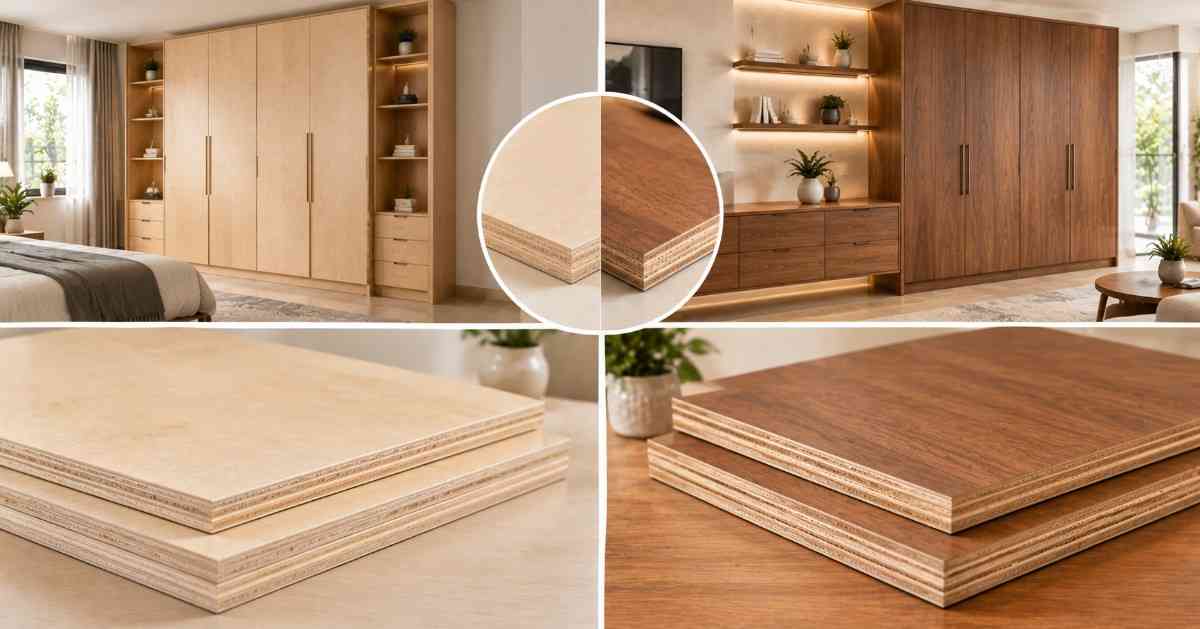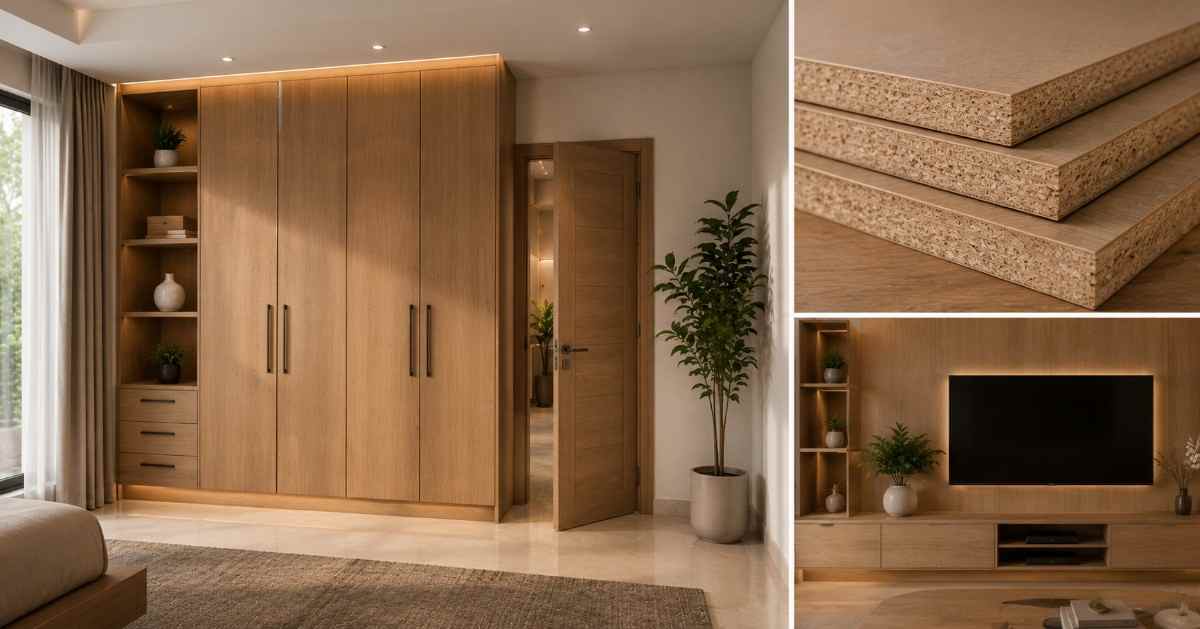
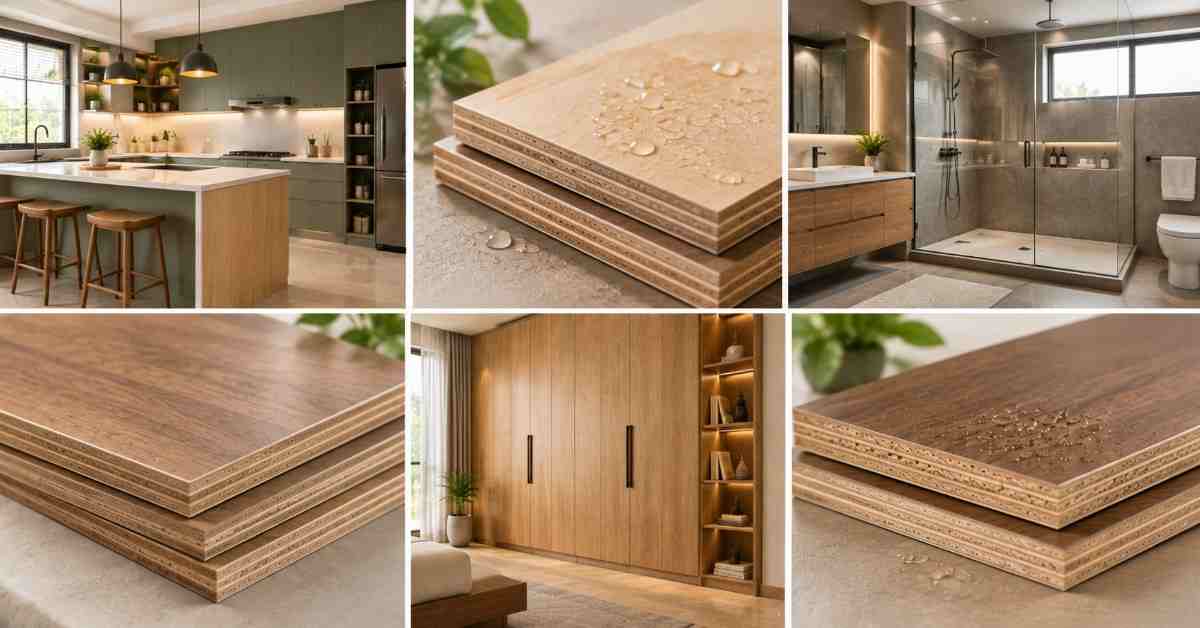
Choosing the right plywood grade is critical for Indian homes. High humidity, monsoon moisture, and daily kitchen usage create demanding conditions. Many homeowners compare BWP vs BWR Plywood before starting furniture projects. The confusion often begins with similar names and pricing. However, these plywood grades deliver very different performance levels.
Ensure a smooth, warp-free finish for your interior cabinetry and lightweight partitions using WigwamPly dimensionally stable mr ply board.
Understanding the BWP Full Form helps buyers. BWP stands for Boiling Water Proof, while BWR stands for Boiling Water Resistant. Although both offer moisture protection, their durability differs significantly. BWP plywood conforms to IS:710 standards, whereas BWR plywood falls under IS:303 certification. These standards define water resistance, bonding quality, and long-term performance requirements.
The debate around BWP vs BWR vs MR plywood is common. MR plywood performs well in dry interior applications. BWR plywood handles occasional moisture and humidity exposure effectively. BWP plywood delivers the highest level of water resistance available. It is specifically designed for demanding wet-area applications.
For Indian kitchens, bathrooms, and utility spaces, plywood selection matters. Constant steam, spills, and humidity can damage inferior materials. This is why many architects specify BWP Plywood for Kitchen applications. In contrast, BWR Plywood for Furniture works effectively in wardrobes, study units, and living room cabinetry. The right choice depends on exposure conditions and project requirements.
Price also influences purchasing decisions. Buyers frequently compare BWP vs BWR plywood price before finalizing specifications. While BWP plywood costs more initially, it often reduces replacement expenses later. Long-term durability becomes especially important in moisture-prone environments. Premium plywood typically delivers better value throughout the furniture lifecycle.
Built with a highly resilient and chemically treated timber core, WigwamPly’s pine wood flush door guarantees a termite-proof and warp-free lifespan.
Wigwam Ply offers solutions across multiple performance categories. Products such as Wigwam Visor, Wigwam Excel MR, and calibrated plywood ranges address different furniture requirements. With IS-certified manufacturing, both-side calibration, and advanced treatment technologies, Wigwam Ply helps homeowners choose plywood grades suited to India’s challenging climate conditions.
This guide explores BWP vs BWR Plywood, pricing differences, furniture applications, kitchen suitability, and the factors that determine the best choice for long-term performance.
BWP vs BWR Plywood — Full Forms, Grades & Core Technical Differences
Understanding the difference between BWP vs BWR Plywood is essential before selecting materials for furniture, kitchens, or wet-area applications. Although both grades are marketed as water-resistant plywood solutions, their certifications, adhesive systems, and long-term performance capabilities differ significantly. For Indian homes exposed to monsoon humidity, kitchen steam, and daily moisture fluctuations, choosing the correct plywood grade directly impacts furniture lifespan.
When you are ready to buy blockboard that guarantees structural integrity and a lifetime of performance, WigwamPly is your ultimate destination.
BWP Full Form and BWR Full Form Explained
The BWP Full Form is Boiling Water Proof, while the BWR Full Form is Boiling Water Resistant.
These terms are not merely marketing labels. They indicate the plywood’s ability to withstand water exposure and the quality of bonding resin used during manufacturing.
BWP plywood is manufactured using Phenol Formaldehyde (PF) resin and certified under IS:710 standards. It must successfully withstand the requirements of IS:1734 testing, including prolonged boiling water exposure without glue-line failure or delamination. This makes BWP plywood the highest-performing plywood grade commonly used for furniture and interior applications.
BWR plywood also offers water resistance but does not deliver the same performance level as BWP plywood. It occupies a middle position between MR plywood and BWP plywood. While it performs adequately under occasional moisture exposure, it is not designed for continuous wet conditions or prolonged boiling-water resistance.
Bring your most creative, curved design concepts to life without compromising on structural integrity using WigwamPly highly adaptable flexible plywood.
Is IS:303 BWR Grade Plywood?
This is one of the most common misconceptions in the plywood market.
Many buyers assume that IS:303 and BWR plywood are identical, but this is not technically correct.
IS:303 is the Bureau of Indian Standards specification for MR (Moisture Resistant) plywood, commonly referred to as commercial plywood. Genuine MR plywood uses Urea Formaldehyde resin and is intended for dry interior applications with occasional humidity exposure.
Many manufacturers market upgraded MR plywood as “BWR plywood” because it offers better moisture resistance than conventional commercial plywood. However, buyers should verify actual certification rather than relying solely on product labels.
The safest approach is to check whether the plywood carries:
- IS:710 certification for BWP plywood
- IS:303 certification for MR plywood
- Manufacturer-declared specifications and test reports for BWR plywood
Certification always provides a more reliable quality benchmark than marketing terminology.
BWP vs BWR vs MR Plywood: Technical Comparison
The primary differences between BWP, BWR, and MR plywood lie in adhesive technology, moisture resistance capability, and long-term structural performance.
| Parameter | BWP Plywood | BWR Plywood | MR Plywood |
| Full Form | Boiling Water Proof | Boiling Water Resistant | Moisture Resistant |
| Typical BIS Standard | IS:710 | Manufacturer-specific commercial grade | IS:303 |
| Resin System | Phenol Formaldehyde (PF) | Modified moisture-resistant resin | Urea Formaldehyde (UF) |
| Boiling Water Performance | Withstands 72-hour boiling water test | Resists limited boiling water exposure | Not designed for boiling water exposure |
| Moisture Resistance Level | Very High | Moderate to High | Moderate |
| Glue-Line Durability | Excellent under continuous moisture | Good under intermittent moisture | Suitable for dry interiors |
| Humidity Resistance | Excellent | Good | Moderate |
| Delamination Risk | Extremely low | Moderate under prolonged exposure | Higher in wet conditions |
| Typical Service Life in Kitchens | Long-term performance | Moderate performance | Not recommended |
| Typical Service Life in Dry Furniture | Excellent | Good | Good |
| Relative Cost | Highest | Mid-range | Lowest |
| Recommended Applications | Kitchens, bathrooms, utility areas, premium furniture | Wardrobes, office furniture, living room furniture | Bedrooms, study units, dry interior furniture |
Practical Performance: BWP vs BWR in Indian Homes
The real difference between BWP vs BWR plywood becomes evident under sustained moisture exposure.
Indian kitchens experience daily steam, cooking vapors, water splashes, and seasonal humidity changes. Bathrooms and utility areas face even harsher moisture conditions. In these environments, plywood glue lines experience repeated expansion and contraction cycles.
BWP plywood is engineered specifically for these conditions. The Phenol Formaldehyde bonding system maintains structural integrity even after repeated exposure to moisture, heat, and humidity. This prevents layer separation, core weakening, and edge delamination over time.
BWR plywood performs effectively in environments where moisture exposure is occasional rather than constant. It works well for wardrobes, TV units, study furniture, office desks, and living room cabinetry. However, under prolonged exposure to steam and standing moisture, its bonding system cannot match the long-term durability of BWP plywood.
Experience the perfect blend of visual appeal and structural durability by incorporating WigwamPly calibrated birchwood ply into your spaces.
MR plywood remains suitable for dry interior environments where direct water exposure is unlikely. It offers an economical solution for bedrooms, study rooms, and decorative furniture but should not be specified for kitchens or wet areas.
BWP vs BWR vs MR Plywood: Which Grade Should You Choose?
| Application | Recommended Grade | Reason |
| Modular Kitchen Carcasses | BWP Plywood | Maximum moisture resistance and structural durability |
| Kitchen Sink Units | BWP Plywood | Frequent water exposure requires IS:710 performance |
| Bathroom Vanities | BWP Plywood | Continuous humidity and splash protection |
| Utility Room Cabinets | BWP Plywood | Superior resistance to wet conditions |
| Wardrobes | BWR Plywood | Handles normal indoor humidity effectively |
| Office Furniture | BWR Plywood | Good balance between performance and cost |
| Living Room Furniture | BWR Plywood | Suitable for low-moisture environments |
| Bedroom Furniture | MR Plywood | Economical solution for dry interiors |
| Study Tables and Bookshelves | MR Plywood | Adequate performance in controlled conditions |
For homeowners seeking long-term reliability, especially in Indian climatic conditions, BWP plywood remains the benchmark specification for moisture-prone applications, while BWR plywood serves as a practical middle-ground option for furniture exposed to occasional humidity but not continuous wet conditions.
BWP vs BWR Plywood for Kitchens, Wet Areas & Furniture — Price Comparison & Which to Choose
BWP or BWR: Which Is Better for Kitchen Applications?
When homeowners ask “BWP or BWR which is better for kitchen?”, the answer is straightforward. BWP Plywood for Kitchen applications is the recommended specification.
Indian kitchens experience continuous moisture stress throughout their lifespan. Daily cooking generates steam. Sink areas face frequent water splashes. Monsoon humidity increases moisture levels further. These conditions expose cabinet carcasses, pantry units, and wall cabinets to repeated expansion and contraction cycles.
BWP plywood is specifically engineered for these demanding environments. Its Phenol Formaldehyde bonding system and IS:710 certification provide a verified benchmark for moisture resistance. The plywood is designed to withstand prolonged exposure to water and humidity without glue-line failure or structural deterioration.
BWR plywood performs better than conventional MR plywood. However, it remains an intermediate-grade solution. While suitable for furniture exposed to occasional humidity, it does not offer the same level of certified protection against long-term kitchen moisture exposure.
For modular kitchens expected to last ten years or more, BWP plywood remains the safest and most reliable choice.
Designed to withstand alternate wetting and drying conditions without delamination, WigwamPly boiling waterproof plywood is an industry favorite.
Best Applications for BWP Plywood in Kitchens and Wet Areas
Not all kitchen components experience the same moisture levels. Certain areas face significantly greater exposure and therefore require the highest-performance plywood grade available.
| Kitchen Application | Recommended Grade | Why BWP Is Preferred |
| Modular Kitchen Carcasses | BWP IS:710 Plywood | Continuous exposure to steam and humidity |
| Under-Sink Cabinets | BWP IS:710 Plywood | High risk of direct water contact |
| Kitchen Island Bases | BWP IS:710 Plywood | Long-term structural stability |
| Pantry Storage Units | BWP IS:710 Plywood | Protection against ambient moisture |
| Wall-Mounted Cabinets | BWP IS:710 Plywood | Exposure to cooking vapors and heat |
| Utility Area Furniture | BWP IS:710 Plywood | Better durability in humid environments |
| Bathroom Vanities | BWP IS:710 Plywood | Frequent water exposure |
| Coastal Region Furniture | BWP IS:710 Plywood | Resistance against high ambient humidity |
In moisture-prone applications, the additional investment in BWP plywood delivers significantly greater long-term durability.
Where BWR Plywood for Furniture Makes Sense
Although BWP plywood is preferred for wet environments, BWR Plywood for Furniture remains a practical choice for many interior applications.
Furniture placed in moderately humid spaces often requires better moisture resistance than MR plywood but may not justify the cost of BWP plywood. In these situations, BWR plywood provides a balanced solution.
Typical applications include dining room furniture, utility storage cabinets, study units, wardrobes in humid climates, and ground-floor furniture where occasional dampness may occur.
The key consideration is exposure level. BWR plywood performs effectively where moisture exposure is intermittent rather than continuous.
| Furniture Application | Recommended Grade | Exposure Level |
| Dining Room Furniture | BWR Plywood | Moderate humidity |
| Wardrobes | BWR Plywood | Indoor moisture fluctuations |
| Utility Storage Cabinets | BWR Plywood | Occasional dampness |
| Living Room Furniture | BWR Plywood | Low to moderate humidity |
| Study Tables | BWR Plywood | Controlled indoor environment |
| Office Furniture | BWR Plywood | Stable indoor conditions |
When selecting BWR plywood, buyers should always verify certification and manufacturer specifications rather than relying solely on marketing labels.
BWP vs BWR vs HDHMR: Which Material Performs Better?
Many homeowners also compare BWP vs BWR vs HDHMR when designing kitchens and modular furniture.
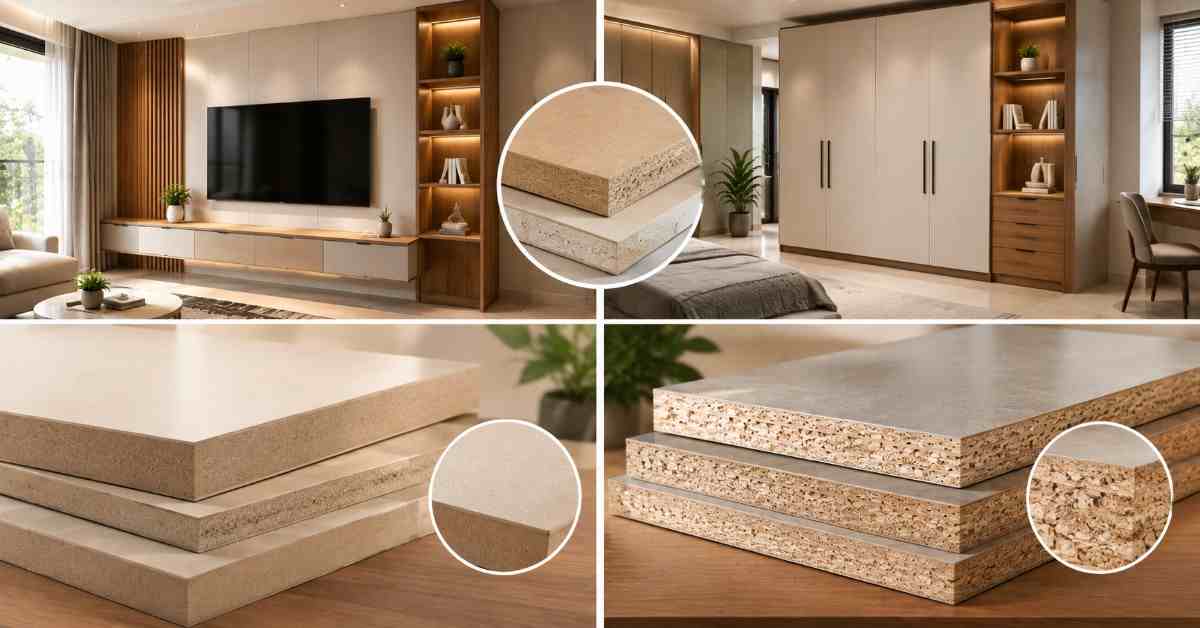
While HDHMR boards offer higher density and improved moisture resistance compared to MDF or particle board, they should not be considered direct replacements for certified BWP plywood in structural wet-area applications.
| Performance Parameter | BWP Plywood (IS:710) | BWR Plywood | HDHMR Board |
| Core Construction | Cross-laminated hardwood veneers | Cross-laminated hardwood veneers | Compressed wood fibres |
| Typical Density | 650–850 kg/m³ | 650–850 kg/m³ | 800–950 kg/m³ |
| Moisture Resistance | Certified Boiling Water Proof | Water Resistant | Moisture Resistant |
| IS Certification | IS:710 | Varies by manufacturer | No equivalent BWP certification |
| Screw Holding Strength | Excellent | Excellent | Good |
| Edge Screw Holding | Excellent | Excellent | Moderate |
| Structural Strength | High | High | Moderate |
| Kitchen Carcass Suitability | Excellent | Good | Moderate |
| Decorative Shutters | Excellent | Excellent | Excellent |
| Long-Term Wet Area Performance | Excellent | Moderate | Moderate |
HDHMR performs particularly well for decorative shutters, routed panels, and premium surface finishes. However, for structural kitchen carcasses, bathroom furniture, and moisture-critical applications, certified BWP plywood remains the superior specification.
Renowned for its advanced manufacturing techniques and structural stability, WigwamPly is widely recognized as the Best Plywood Manufacturer in India.
BWP vs BWR Plywood Price Comparison
One of the most common buying considerations is Bwp vs bwr plywood price.
BWP plywood costs more because it uses higher-grade phenol formaldehyde resin systems, stricter manufacturing controls, and mandatory IS:710 compliance testing. These additional requirements increase production costs but also deliver significantly higher moisture resistance.
Indicative BWP vs BWR Plywood Price Comparison (18mm, 8×4 Sheet)
| Plywood Grade | Typical Price Range (₹/Sheet)* | Relative Cost Index |
| MR Plywood (IS:303) | ₹2,000 – ₹3,500 | Base |
| BWR Plywood | ₹2,800 – ₹4,800 | Medium |
| BWP Plywood (IS:710) | ₹4,000 – ₹8,000+ | Premium |
Disclaimer: Prices are indicative Indian market estimates as of 2026. Actual pricing varies by brand, thickness, core species, city, dealer network, and certification level. Always verify current prices with authorized suppliers before purchase.
Why the BWP Premium Is Worth Paying
When viewed only as a sheet price, BWP plywood appears more expensive. However, the comparison changes when evaluated over the lifespan of the furniture.
Replacing a water-damaged kitchen cabinet involves dismantling countertops, removing hardware, reinstalling fittings, and rebuilding affected sections. These repair costs often exceed the original price difference between BWP and BWR plywood.
For this reason, many architects consider BWP plywood a form of long-term protection rather than an additional expense.
Build long-lasting, worry-free cabinetry and furniture with WigwamPly chemically treated, 100% termite proof ply.
Why Wigwam Ply BWP Plywood Sets the Kitchen Benchmark
For homeowners seeking maximum durability in kitchens and wet areas, Wigwam Ply combines moisture resistance with advanced manufacturing precision.
| Wigwam Ply Feature | Benefit for Kitchens and Wet Areas |
| IS:710 Certification | Verified boiling water proof performance |
| 4 Times Press Technology | Stronger inter-layer bonding |
| Both-Side Calibration | Precise cabinet fabrication |
| Full Core Full Panel Construction | Uniform structural strength |
| All-Layers Chemical Treatment | Enhanced termite and moisture protection |
| Furniture-Grade Manufacturing | Improved dimensional stability |
| Consistent Quality Control | Reliable long-term performance |
These manufacturing features make Wigwam Ply BWP plywood suitable for demanding modular kitchen projects where durability, precision, and moisture resistance are equally important.
Quick Decision Guide: Which Grade Should You Choose?
| Application | Recommended Material |
| Modular Kitchen Carcasses | Wigwam Ply BWP IS:710 Plywood |
| Under-Sink Cabinets | Wigwam Ply BWP IS:710 Plywood |
| Bathroom Furniture | Wigwam Ply BWP IS:710 Plywood |
| Coastal Climate Furniture | Wigwam Ply BWP IS:710 Plywood |
| High-Humidity Utility Areas | Wigwam Ply BWP IS:710 Plywood |
| Dining Room Furniture | BWR Plywood (Verified Specifications) |
| Utility Storage Furniture | BWR Plywood (Verified Specifications) |
| Moderately Humid Interiors | BWR Plywood |
| Bedroom Furniture | MR IS:303 Plywood |
| Office Furniture | MR IS:303 Plywood |
| Decorative Routed Shutters | HDHMR or Premium Plywood |
| Structural Modular Furniture | Wigwam Ply IS-Certified Plywood |
For kitchens, bathrooms, and moisture-prone furniture, BWP plywood remains the highest-performing and most reliable specification, while BWR plywood serves as a practical intermediate option for moderately humid interior environments.
Meeting the highest commercial construction standards, WigwamPly structural grade ply is the ideal choice for heavy-duty frameworks.
Build Once. Trust for Years. Choose Wigwam Ply.
A kitchen, wardrobe, or bathroom cabinet faces daily moisture, humidity, and wear. Choosing the right plywood today prevents costly repairs tomorrow. With IS:710 BWP Certification, 4 Times Press Technology, Both-Side Calibration, Full Core Full Panel Construction, and All-Layers Chemical Treatment, Wigwam Ply delivers the strength and moisture resistance modern Indian homes demand.
For kitchens, wet areas, and premium furniture, don’t compromise on the core. Choose Wigwam Ply and build with confidence.
Frequently Asked Questions (FAQs)
The main difference between BWP vs BWR Plywood lies in moisture resistance and certification. BWP (Boiling Water Proof) plywood is certified under IS:710 and uses Phenol Formaldehyde resin, allowing it to withstand prolonged water exposure. BWR (Boiling Water Resistant) plywood offers moderate water resistance but does not provide the same level of certified performance as BWP plywood in wet conditions.
BWP Full Form is Boiling Water Proof. BWP plywood is manufactured using high-performance Phenol Formaldehyde resin and is designed to withstand prolonged exposure to water, steam, and humidity without delamination. It is widely used in modular kitchens, bathrooms, and moisture-prone furniture applications.
BWR Full Form is Boiling Water Resistant. BWR plywood offers better moisture resistance than standard MR plywood and is suitable for furniture exposed to occasional humidity. However, it does not provide the same level of water resistance as IS:710 certified BWP plywood.
Yes. BWP Plywood for Kitchen applications is generally considered the superior choice. Kitchen cabinets experience daily steam, water splashes, and humidity fluctuations. BWP plywood provides certified moisture resistance and long-term durability, making it more suitable than BWR plywood for modular kitchen carcasses, sink units, and pantry storage.
This is a common market misconception. IS:303 is the Indian Standard for MR (Moisture Resistant) plywood, not BWR plywood. Many manufacturers market upgraded MR plywood as BWR plywood. Buyers should always verify the actual certification and specifications instead of relying solely on grade labels.
For modular kitchens, bathroom furniture, utility areas, and coastal-climate homes, choose BWP IS:710 plywood. For wardrobes, dining room furniture, and moderately humid interiors, BWR plywood can be suitable. For bedrooms, study rooms, and dry interior applications, MR plywood generally provides adequate performance at a lower cost.
For modular kitchens and moisture-prone furniture, Wigwam Visor is the recommended solution. It combines IS:710 Marine Grade performance, Both-Side Calibration, Structural Grade capability, Fire Retardant options, and E0 Formaldehyde Emission standards, making it one of the most comprehensive plywood solutions for premium residential and commercial interiors.
What Is the Price Difference Between BWP and BWR Plywood?
The BWP vs BWR plywood price difference depends on thickness, core material, certification, and manufacturer. Typically, BWP plywood costs more because it uses Phenol Formaldehyde resin and must meet IS:710 certification requirements.
| Grade | Typical 18mm 8×4 Price Range* |
| MR Plywood (IS:303) | ₹2,000 – ₹3,500 |
| BWR Plywood | ₹2,800 – ₹4,800 |
| BWP Plywood (IS:710) | ₹4,000 – ₹8,000+ |
Disclaimer: Prices are indicative Indian market estimates and may vary based on city, dealer network, thickness, wood species, and prevailing market conditions. Please check with authorized Wigwam Ply dealers for current pricing.