A door is more than a functional barrier between rooms. It is one of the first design elements people notice when entering a home. The right panel door can enhance architectural character, improve visual balance, and create a lasting impression throughout the interior.
Today, homeowners have access to a wide range of panel door design options, from timeless traditional styles to sleek contemporary solutions. Whether you are renovating an apartment, building a new home, or upgrading interior spaces, choosing the right door requires more than selecting a finish or color. Factors such as panel configuration, material quality, construction method, and overall design style all influence how a door looks and performs over time.
One of the most common questions homeowners ask is how many panels should a door have. While the answer depends on the room and design preference, panel count plays a significant role in determining the door’s visual proportions. The choice between a 4 panel door vs 6 panel door, for example, can dramatically change the appearance of a space. Larger panels often create a cleaner, more contemporary look, while multiple smaller panels tend to suit traditional interiors.
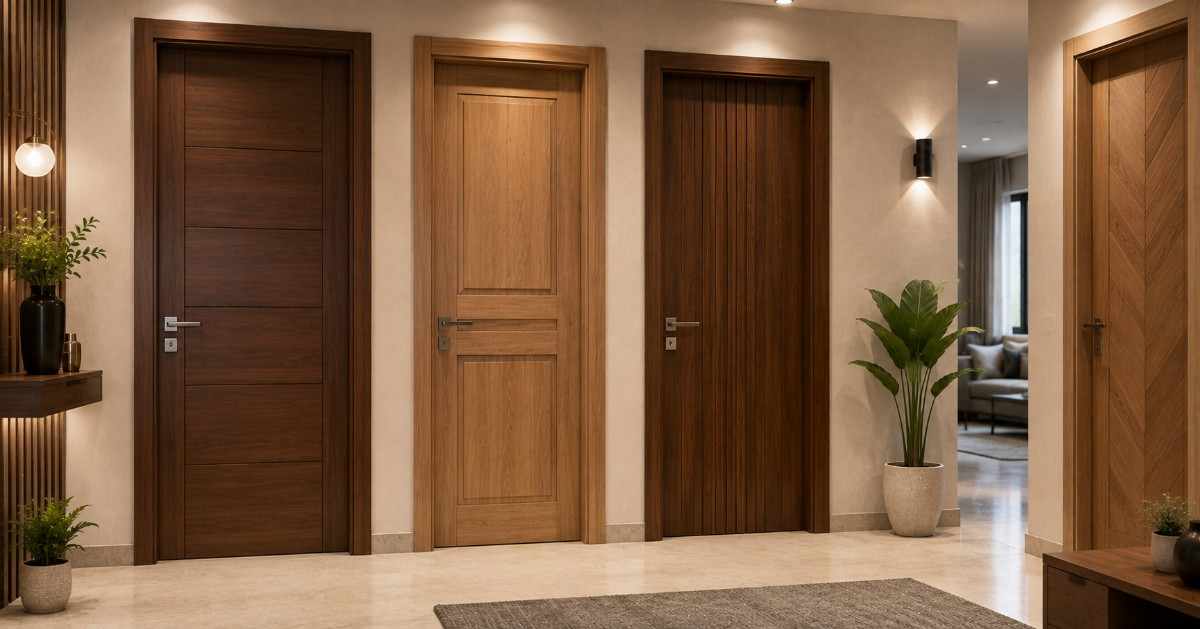
The growing popularity of customized panel door design for home applications has also expanded the variety of available door panel styles. Modern homeowners can choose from minimalist flush-panel designs, classic raised-panel configurations, decorative moulded doors, and premium wooden panel door solutions that complement different architectural themes.
For contemporary interiors, modern panel door design trends focus on clean lines, balanced proportions, and seamless integration with surrounding décor. These designs are particularly popular for interior panel doors used in bedrooms, study rooms, home offices, and living spaces. At the same time, advances in manufacturing have made premium wooden door design solutions more durable, dimensionally stable, and visually refined than ever before.
However, even the best design depends on the quality of the material beneath the surface. A well-constructed panel door requires a stable core, precision manufacturing, and a smooth finishing base. This is where Wigwam Ply panel doors stand apart. Built using calibrated plywood technology, they provide the dimensional consistency, strength, and finish quality required for modern residential interiors.
In the following sections, we will compare popular panel configurations, evaluate different panel styles, explore material choices, and help you determine the ideal panel door for every room in your home.
Top 10 Best Plywood Brands in India: Best Plywood Companies Compared
What Is a Panel Door Types, Panel Counts & Design Styles Explained
Among the many door options available today, the panel door remains one of the most popular choices for residential interiors. Its combination of structural strength, timeless aesthetics, and design versatility makes it suitable for everything from traditional homes to contemporary apartments.
Unlike flush doors that feature a smooth, uninterrupted surface, panel doors incorporate decorative panels within a structural framework. This construction method creates visual depth, architectural character, and a more refined appearance while maintaining long-term durability.
Understanding how panel doors are constructed, how panel counts influence design, and which styles suit different interiors can help homeowners choose a door that complements their home’s architecture while delivering reliable performance.
What Is a Panel Door?
A panel door is a door constructed using a structural framework consisting of vertical members called stiles and horizontal members called rails. Decorative panels are fitted within this framework to create the finished door design.
This frame-and-panel construction differs significantly from a flush door.
| Panel Door | Flush Door |
| Consists of stiles, rails, and panels | Consists of a smooth, uninterrupted surface |
| Creates visual depth and architectural detailing | Creates a clean, minimal appearance |
| Available in multiple panel configurations | Limited design variation |
| Accommodates natural material movement more effectively | Simpler construction |
| Suitable for traditional, transitional, and modern interiors | Primarily used in contemporary spaces |
Historically, frame-and-panel construction evolved because wood naturally expands and contracts with changes in temperature and humidity. By allowing panels to float within the surrounding frame, the door can accommodate minor movement without excessive cracking or distortion.
Today, panel doors continue to be valued not only for their functionality but also for the architectural character they bring to interior spaces.
How Many Panels Should a Door Have?
One of the most frequently asked questions homeowners have is: How many panels should a door have?
The answer is not determined by a fixed rule. Instead, panel count should be selected based on three key factors:
- Door height
- Architectural style
- Desired visual impact
More panels do not automatically create a better-looking door. The most important principle is maintaining proper proportion between the panel arrangement and the overall door dimensions.
Choosing the Right Panel Count
| Panel Count | Visual Character | Best Suited For | Typical Door Height |
| 2-Panel Door | Clean and minimalist | Contemporary and modern interiors | 7–8 ft |
| 4-Panel Door | Balanced and versatile | Transitional, contemporary, and traditional homes | 7–8 ft |
| 6-Panel Door | Detailed and formal | Colonial, heritage, and classic interiors | 8 ft and above |
A two-panel design emphasizes simplicity and works particularly well in minimalist interiors where clean lines dominate the design language.
A four-panel configuration offers perhaps the most balanced proportions for standard residential door sizes. It complements a wide variety of interior styles without appearing overly ornate or overly minimal.
A six-panel configuration introduces greater visual detail and traditional character. These doors are commonly associated with colonial and heritage-inspired architecture where decorative elements play a larger role.
For most contemporary Indian homes, four-panel doors provide the most adaptable solution.
4 Panel Door vs 6 Panel Door
The comparison between 4 panel door vs 6 panel door is often less about functionality and more about design expression.
Both configurations can perform equally well when manufactured correctly. The difference lies primarily in their visual impact and architectural compatibility.
4 Panel Door vs 6 Panel Door Comparison
| Feature | 4-Panel Door | 6-Panel Door |
| Design Language | Modern to transitional | Traditional to colonial |
| Visual Complexity | Moderate | Higher |
| Architectural Character | Clean and balanced | Formal and decorative |
| Compatibility with Contemporary Interiors | Excellent | Moderate |
| Compatibility with Traditional Interiors | Good | Excellent |
| Maintenance | Simpler profiles | More detailed moulding may require additional maintenance |
| Popularity in Modern Homes | Very High | Moderate |
A four-panel door creates a cleaner visual composition with larger individual panels. This helps contemporary interiors feel more spacious and uncluttered.
A six-panel door introduces additional detailing through smaller panel divisions. While visually attractive, it often suits homes that intentionally embrace traditional architectural influences.
For most modern apartments, villas, and urban residences, the four-panel configuration offers greater flexibility.
Understanding Popular Door Panel Styles
The versatility of door panel styles allows homeowners to select designs that align with their preferred aesthetic.
The panel itself can be shaped, positioned, and detailed in several ways to create dramatically different visual effects.
Common Panel Door Design Styles
| Panel Style | Description | Best Interior Style |
| Flat Panel | Smooth panel surface flush with surrounding design elements | Modern and contemporary interiors |
| Raised Panel | Central panel projects outward with bevelled edges | Traditional and classic homes |
| Recessed Panel | Panel sits below surrounding frame creating shadow lines | Transitional and craftsman-inspired interiors |
| Glazed Panel | Glass inserts incorporated within panel sections | Home offices, living spaces, and areas requiring light transmission |
Flat Panels
Flat-panel doors feature clean surfaces and simple geometry. Their understated appearance makes them particularly suitable for modern interiors where minimalism is a key design objective.
Raised Panels
Raised-panel doors create depth through bevelled panel profiles that project outward from the surrounding framework. This style is often associated with premium traditional interiors and classic architectural detailing.
Recessed Panels
Recessed panels sit below the face of the surrounding frame, creating subtle shadow lines that add visual interest without excessive ornamentation. This style bridges traditional and contemporary aesthetics effectively.
Glazed Panels
Glazed panel doors incorporate glass sections within the panel arrangement. These doors allow light to travel between spaces while maintaining visual separation, making them ideal for study rooms, home offices, and transition areas.
Why Plywood Matters in Quality Panel Door Construction
While panel configuration receives considerable attention, the performance of a wooden panel door ultimately depends on the quality of its underlying construction.
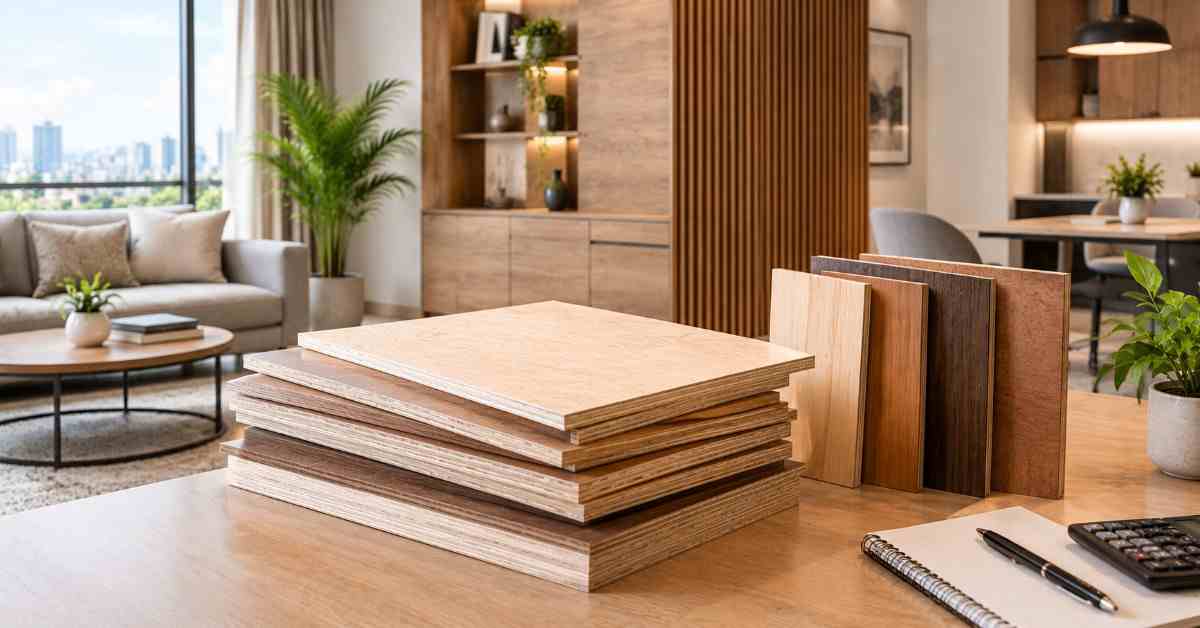
Modern premium panel doors increasingly utilize plywood and block board construction because these materials provide superior dimensional stability compared to conventional solid wood assemblies.
Advantages of Plywood-Based Panel Door Construction
| Performance Factor | Benefit |
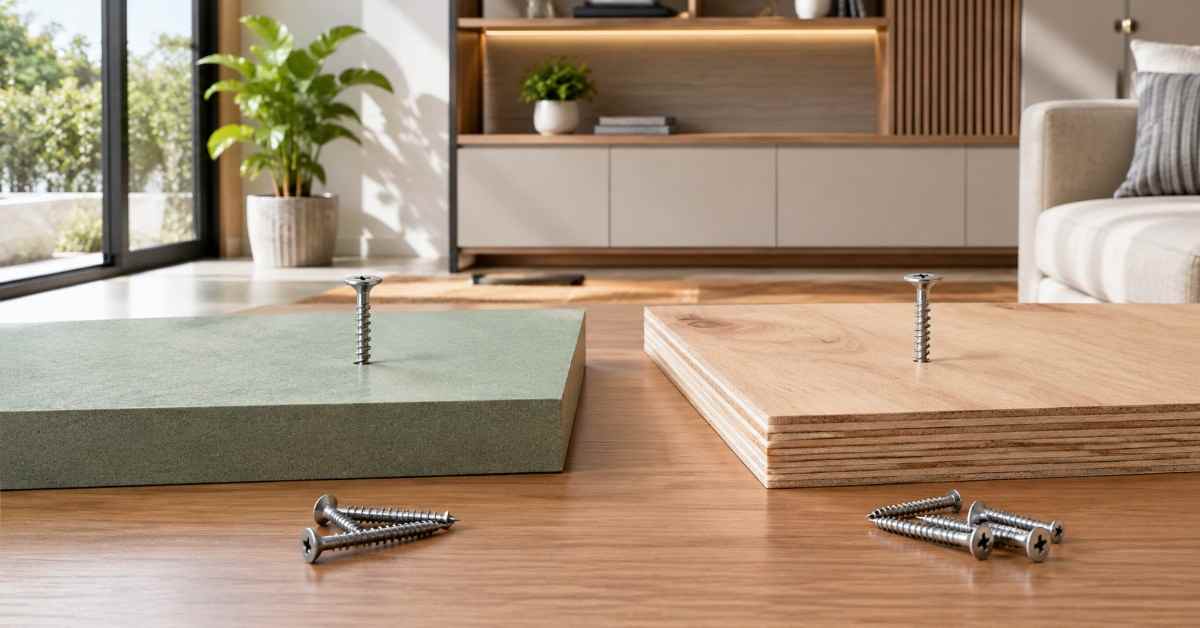
| Superior screw-holding strength | Improves hinge fixing reliability and lock installation performance |
| Dimensional stability | Reduces warping, twisting, and misalignment over time |
| Resistance to splitting | Minimizes cracking around hardware installation points |
| Structural rigidity | Maintains door alignment during long-term use |
| Balanced weight distribution | Improves ease of operation and hinge performance |
| Better moisture resistance | Enhances long-term durability when specified correctly |
Plywood stiles and rails provide exceptional strength for hinge mounting and lock mortising while reducing the risk of splitting commonly associated with solid timber components.
Similarly, block board and plywood core constructions help maintain door alignment by resisting warping and dimensional movement. This stability is particularly important in Indian climatic conditions where seasonal humidity fluctuations can affect door performance.
For this reason, high-quality wooden panel door systems often rely on engineered plywood-based construction rather than solid wood alone.
Quick Comparison: Which Panel Door Style Should You Choose?
| Door Type | Visual Style | Best Interior Type | Ideal Door Height | Design Complexity | Relative Cost |
| 2-Panel Door | Minimal and contemporary | Modern apartments and minimalist homes | 7–8 ft | Low | ₹₹ |
| 4-Panel Door | Balanced and versatile | Contemporary, transitional, and traditional interiors | 7–8 ft | Medium | ₹₹₹ |
| 6-Panel Door | Formal and decorative | Colonial, heritage, and classic residences | 8 ft and above | High | ₹₹₹₹ |
For most modern homes, a four-panel design offers the ideal balance of aesthetics, proportion, and versatility. However, the best choice ultimately depends on the architectural style of the home and the visual statement the homeowner wishes to create.
Modern Panel Door Designs for Home Interiors — Material, Finish & How to Choose
The popularity of the modern panel door design has grown significantly as Indian homeowners increasingly seek interiors that balance aesthetics, functionality, and durability. While traditional panel doors remain relevant, contemporary homes now favour cleaner profiles, larger panel proportions, natural finishes, and refined detailing that complement modern architecture.
Today’s panel door design for home applications extend far beyond the classic six-panel format. Designers are experimenting with minimalist layouts, textured surfaces, mixed materials, and innovative finishes to create doors that function as architectural features rather than merely room dividers.
The key to selecting the right door lies in balancing design preferences with practical considerations such as room usage, moisture exposure, maintenance requirements, and long-term performance.
Modern Panel Door Design Trends for Indian Homes
Contemporary interior design has shifted toward cleaner geometry and simpler visual compositions. As a result, modern panel doors often feature fewer but larger panels, slimmer framing members, and carefully selected finishes that enhance the overall interior aesthetic.
Popular Modern Panel Door Styles
| Design Style | Key Characteristics | Best Suited For |
| Slim-Rail Minimalist Panel Door | Narrow stiles and rails with large single or two-panel layouts | Contemporary apartments and modern villas |
| Fluted Panel Door | Smooth frame combined with fluted inserts for texture and depth | Premium modern interiors |
| Mixed-Material Panel Door | Combines plywood framing with glass or cane inserts | Living spaces, home offices, and transitional areas |
| Japandi-Inspired Panel Door | Asymmetrical panel arrangement, natural veneer finish, minimal hardware | Minimalist and Scandinavian-inspired homes |
Slim-Rail Minimalist Panel Doors
One of the most popular modern panel door design trends features narrow stiles and rails surrounding larger panels. This approach reduces visual clutter while maintaining the architectural character associated with panel doors.
Large panel sections create a cleaner appearance and make rooms feel more spacious. These designs are particularly effective in contemporary apartments where simplicity and visual openness are priorities.
Fluted Panel Inserts
Fluted surfaces have become a major trend in modern interiors.
These doors typically combine a plywood frame with fluted MDF or solid wood inserts, introducing texture without excessive ornamentation. The vertical grooves create visual interest while maintaining a sophisticated contemporary aesthetic.
Mixed-Material Panel Doors
Many modern homes incorporate multiple materials within the same door design.
Glass panels can improve light flow between spaces, while cane inserts introduce warmth and texture. Combined with a precision-engineered plywood framework, these mixed-material doors offer both functionality and visual distinction.
Japandi-Inspired Panel Doors
The growing influence of Japandi design has introduced asymmetrical panel arrangements, natural wood finishes, and minimal hardware into modern door design.
These doors emphasize simplicity, craftsmanship, and natural materials while maintaining a refined architectural presence.
Choosing Interior Panel Doors for Different Rooms
Not every room requires the same door configuration. The most successful interior panel doors are selected based on both functional requirements and visual context.
Recommended Panel Door Configurations by Room
| Room Application | Recommended Panel Configuration | Suggested Finish |
| Main Entrance | Bold 2-panel or classic 6-panel door | Premium veneer or PU finish |
| Bedroom | 2-panel or 4-panel door | Laminate, veneer, or PU paint |
| Bathroom | Moisture-resistant panel door with BWP-grade core | Waterproof laminate or PU coating |
| Study Room | 2-panel, 4-panel, or glazed panel design | Veneer or laminate finish |
| Living to Dining Passage | Glazed panel door for improved light transfer | Veneer, glass, or mixed-material finish |
Main Entrance Doors
Entrance doors create the first visual impression of a home.
A bold two-panel design can provide a contemporary appearance, while a six-panel configuration often complements more traditional architecture. Premium veneer finishes are frequently chosen to enhance kerb appeal and create a sense of craftsmanship.
Bedroom Doors
Bedroom doors typically prioritize privacy, durability, and aesthetic consistency.
Four-panel and two-panel configurations remain the most popular choices because they balance visual appeal with everyday practicality.
Bathroom Doors
Bathrooms present unique moisture challenges.
For these applications, panel doors should incorporate moisture-resistant construction, ideally using BWP-grade plywood components combined with waterproof laminate or high-performance PU finishes.
Living and Dining Area Doors
Where visual connectivity is important, glazed panel doors offer a practical solution.
Glass inserts allow natural light to move between spaces while maintaining separation when required.
Wooden Door Design Finish Options
The finish applied to a panel door significantly influences both appearance and maintenance requirements. A high-quality wooden door design can be customized using various finish systems depending on budget, style preferences, and performance needs.
Popular Panel Door Finishes
| Finish Type | Appearance | Advantages | Best Application |
| Natural Wood Veneer | Authentic timber grain and premium aesthetic | Timeless appearance and natural beauty | Luxury residences and premium interiors |
| PU Painted Finish | Smooth contemporary surface available in any colour | Modern appearance and design flexibility | Contemporary interiors |
| Laminate Finish | Wide design variety with excellent durability | Easy maintenance and scratch resistance | High-use residential spaces |
| Membrane-Wrapped Finish | Uniform surface suitable for complex profiles | Cost-effective and visually consistent | Decorative panel doors |
Natural Wood Veneer
Veneers remain one of the most desirable finishes for premium panel doors.
They showcase authentic wood grain patterns while providing the warmth and sophistication associated with natural timber.
PU Painted Doors
PU finishes have become increasingly popular in modern interiors because they create a seamless, contemporary appearance.
Available in virtually any colour, PU-painted panel doors integrate easily into minimalist design schemes.
Laminate-Faced Panel Doors
Laminates offer an excellent balance between aesthetics, durability, and maintenance.
They resist everyday wear effectively and are available in a wide range of colours, patterns, and textures.
Membrane-Wrapped Doors
Membrane finishes are particularly suitable for doors featuring detailed mouldings and complex panel profiles.
The wrapping process ensures a smooth, uniform appearance across the entire door surface.
How to Choose the Right Panel Door for Your Home
Selecting the ideal panel door involves more than choosing a style that looks attractive. The door should complement the room, perform reliably, and maintain its appearance over many years of use.
Key Selection Factors
| Selection Factor | Recommendation |
| Panel Count | Match to door height and architectural style rather than choosing the highest panel count |
| Frame Material | Plywood is preferred for dimensional stability and screw-holding performance |
| Finish Type | Select according to moisture exposure and maintenance requirements |
| Hardware Style | Concealed hinges suit contemporary designs; decorative hinges suit traditional styles |
| Room Function | Consider privacy, durability, and lighting requirements |
For most modern homes, a two-panel or four-panel configuration paired with a stable plywood frame and a high-quality finish delivers the best balance of aesthetics and performance.
Frame material is particularly important. While solid wood, MDF, and engineered materials are all available, plywood-based construction generally provides superior dimensional stability, reduced warping risk, and better hardware retention.
Why WigwamPly Panel Doors Provide a Strong Foundation
Even the most attractive door design can fail if the underlying construction lacks stability.
This is where WigwamPly panel doors offer a distinct advantage. High-quality plywood construction provides the structural foundation required for long-term door performance while supporting premium finishes and precise fabrication.
Advantages of Wigwam Ply Panel Door Construction
| Feature | Performance Benefit |
| IS-certified plywood core | Consistent structural quality and reliability |
| Superior screw-holding strength | Stronger hinge and lock fixing performance |
| Dimensional stability | Reduced risk of warping, twisting, and misalignment |
| BWP-grade plywood options | Suitable for moisture-prone applications such as bathrooms |
| Finish-ready surface quality | Supports veneer, laminate, PU, and decorative finishes |
| Precision-manufactured panels | Improved fit, alignment, and long-term appearance |
A well-designed panel door should not only look beautiful on installation day but continue performing smoothly for years. The combination of quality construction, appropriate material selection, and the right finish ensures that modern panel doors deliver both aesthetic value and long-term reliability.
For homeowners seeking the ideal balance of design flexibility, durability, and performance, plywood-based panel door construction remains one of the most dependable choices available today.
Choose Precision-Crafted Panel Doors with WigwamPly
A panel door should do more than enhance the appearance of a room. It should maintain alignment, hold hardware securely, resist warping, and deliver consistent performance for years. While panel count, finish, and design style influence aesthetics, the quality of the underlying construction ultimately determines how well a door performs over time.
This is where WigwamPly provides a strong foundation for premium door manufacturing. As India’s first calibrated-only plywood brand, Wigwam focuses on dimensional precision, structural stability, and superior finish quality. Its calibrated plywood technology helps door manufacturers achieve cleaner joinery, smoother surfaces, and more accurate panel construction.
Why Wigwam Ply Is Ideal for Panel Door Construction
| Feature | Benefit for Panel Doors |
| Both-side calibrated construction | Ensures uniform thickness and precise panel fabrication |
| Superior screw-holding strength | Provides reliable hinge fixing and lock installation |
| High dimensional stability | Minimizes warping, twisting, and door misalignment |
| Smooth finish-ready surface | Supports veneer, laminate, paint, and decorative finishes |
| Cross-core engineered construction | Enhances structural rigidity and long-term durability |
| Moisture-resistant BWP options | Suitable for bathrooms, kitchens, and humid environments |
| Precision manufacturing | Delivers cleaner profiles and better fitment |
Wigwam’s door solutions are engineered to provide dimensional stability under varying humidity conditions while maintaining excellent screw-holding capacity—two critical performance factors for long-lasting door systems. Its door products also feature both-side calibration and smooth surfaces suitable for premium finishing applications.
Recommended Wigwam Solutions for Door Manufacturing
| Door Application | Recommended Wigwam Solution |
| Premium bedroom panel doors | Calibrated plywood core with veneer or laminate finish |
| Contemporary 2-panel and 4-panel doors | Precision-calibrated plywood for accurate joinery |
| Moisture-prone areas | BWP-grade plywood-based door construction |
| High-traffic residential interiors | Dimensionally stable calibrated plywood core |
| Designer veneer panel doors | Smooth finish-ready calibrated plywood surface |
For homeowners seeking modern aesthetics, products such as Wigwam Club Plus and Wigwam BWP Doors offer both-side calibration, dimensional stability, and high screw-holding strength, making them suitable foundations for precision door fabrication. Their engineered construction helps maintain alignment while supporting premium surface finishes.
Whether you prefer a minimalist two-panel door, a versatile four-panel design, or a more traditional six-panel configuration, the quality of the core construction remains the key factor behind long-term performance.
WigwamPly Because Great Panel Doors Begin with Precision Engineered Plywood.
Frequently Asked Questions
1. How many panels should a door have?
The ideal number of panels depends on the door height, architectural style, and desired visual effect. For most modern Indian homes with standard 7–8 ft doors, a 4-panel door offers the best balance of proportion and versatility. Two-panel doors suit minimalist contemporary interiors, while six-panel doors are better suited to traditional, colonial, or heritage-style homes. More panels do not automatically make a door better; proportion is the most important consideration.
2. What is the difference between a 4-panel and 6-panel door?
A 4-panel door features larger panel sections and cleaner lines, making it suitable for contemporary and transitional interiors. A 6-panel door has smaller individual panels and more visual detailing, creating a traditional and formal appearance. For modern apartments and contemporary residences, a 4-panel door is generally the more versatile choice, while 6-panel doors complement classic architectural styles.
3. Is plywood good for panel door frames?
Yes. Plywood is one of the most reliable materials for panel door construction because it offers excellent dimensional stability, superior screw-holding strength, and resistance to warping. Unlike solid wood, plywood is less prone to expansion, contraction, and splitting, helping doors maintain proper alignment and smooth operation over time. This is why plywood and block board cores are widely used in premium panel door manufacturing.
4. What is the best finish for a wooden panel door?
The best finish depends on the design style and maintenance requirements. Natural wood veneer provides the most authentic timber appearance and is preferred for premium interiors. PU-painted finishes create a sleek contemporary look and can be customized in virtually any colour. Laminates offer excellent durability, stain resistance, and easy maintenance, making them ideal for high-use residential spaces. For most homeowners, laminate and veneer finishes provide the best balance of aesthetics and practicality.
5. Which panel door style suits a modern Indian home?
A 2-panel or 4-panel door with clean lines and minimal detailing is generally the most suitable choice for modern Indian homes. Flat-panel and recessed-panel designs work particularly well in contemporary interiors because they provide visual interest without appearing overly decorative. Slim-rail panel doors finished in veneer, laminate, or PU paint are among the most popular modern options.
6. What is the difference between a panel door and a flush door?
A panel door is constructed using a framework of stiles and rails with decorative panels fitted inside, creating depth and architectural character. A flush door has a completely smooth and uninterrupted surface without visible panels. Panel doors offer greater design flexibility and a more traditional or premium appearance, while flush doors are typically associated with minimalist modern interiors.
7. Are panel doors suitable for bathrooms and kitchens?
Yes, provided the door is constructed using moisture-resistant materials. For bathrooms, utility areas, and spaces exposed to humidity, a panel door should ideally use BWP-grade plywood or other water-resistant core materials combined with waterproof laminate, PU paint, or other moisture-resistant finishes. Proper material selection ensures long-term durability and reduces the risk of swelling or warping.