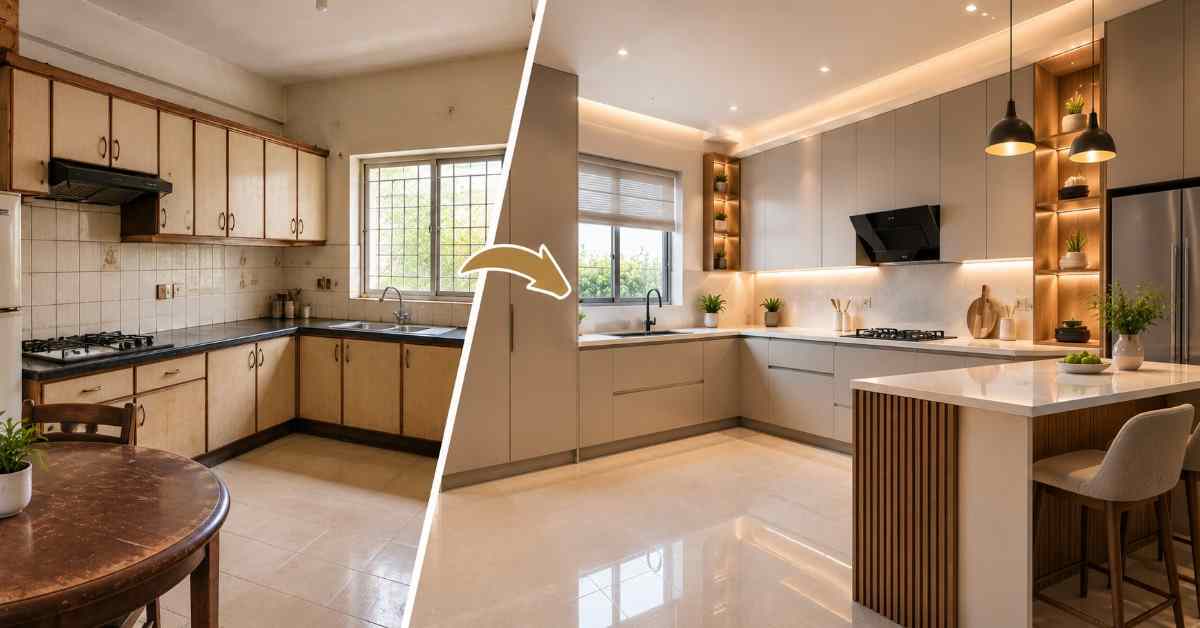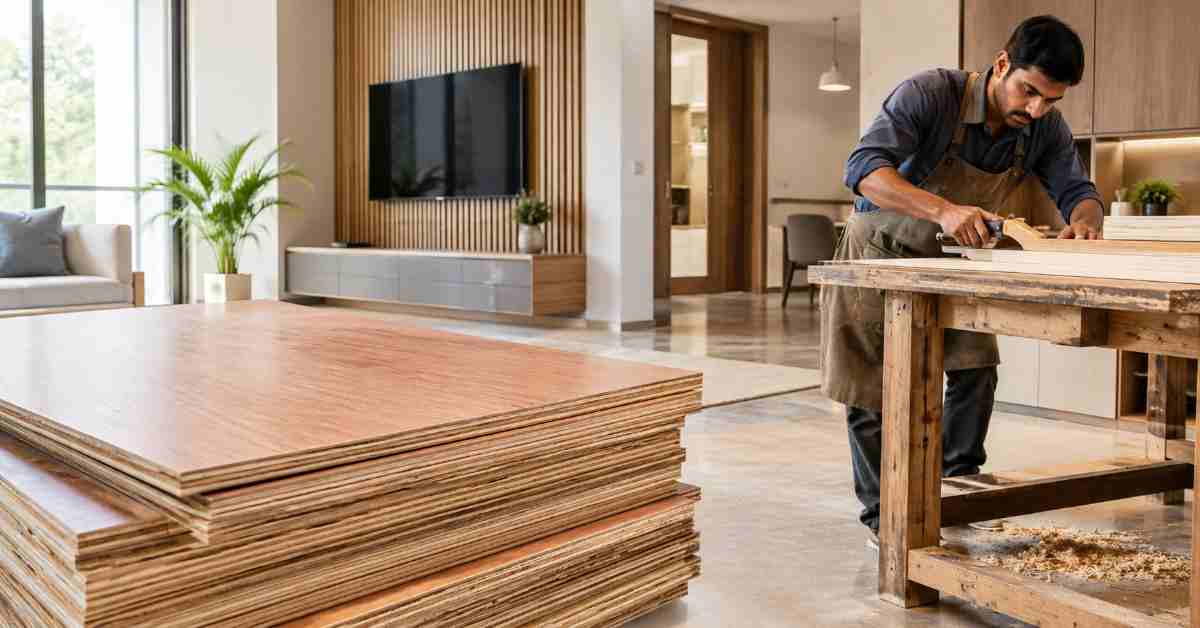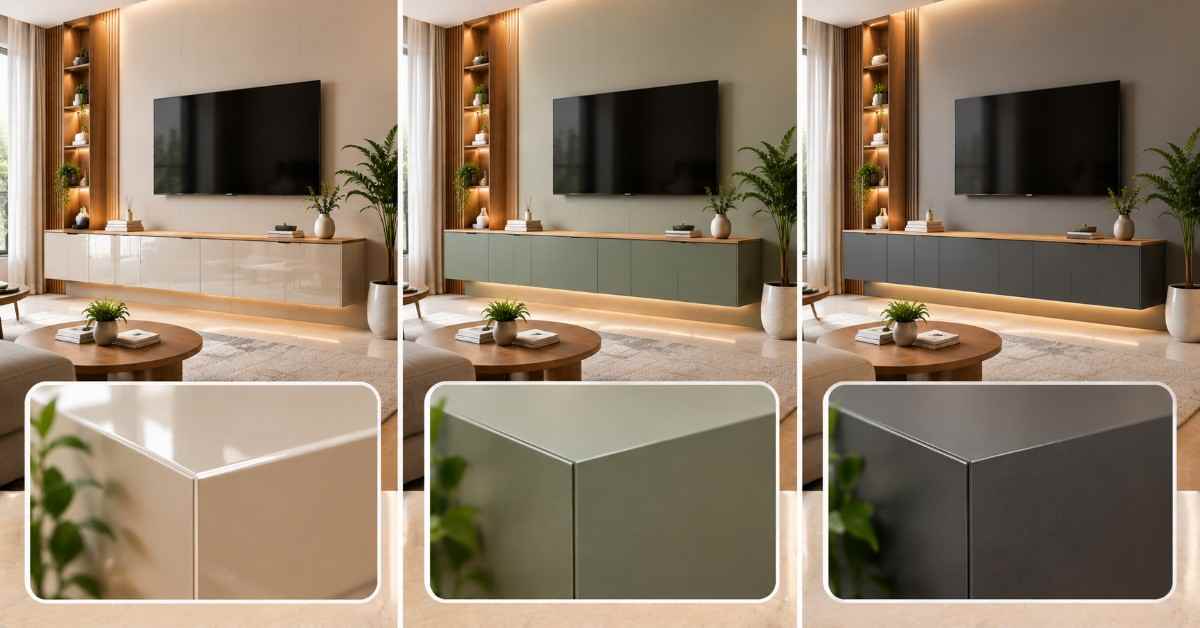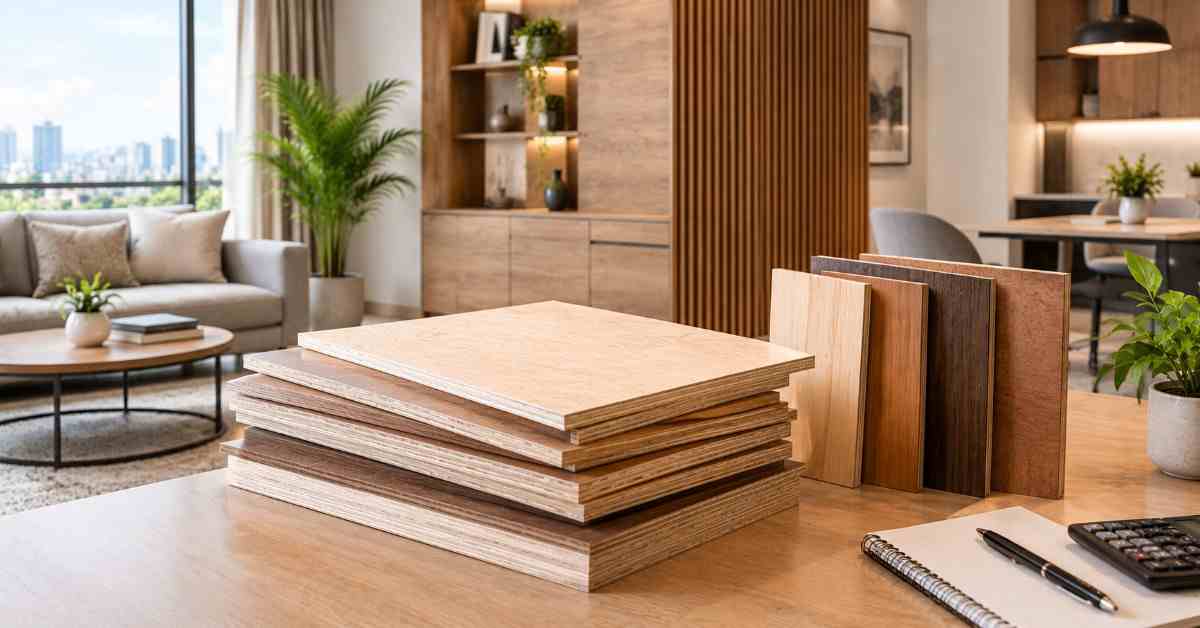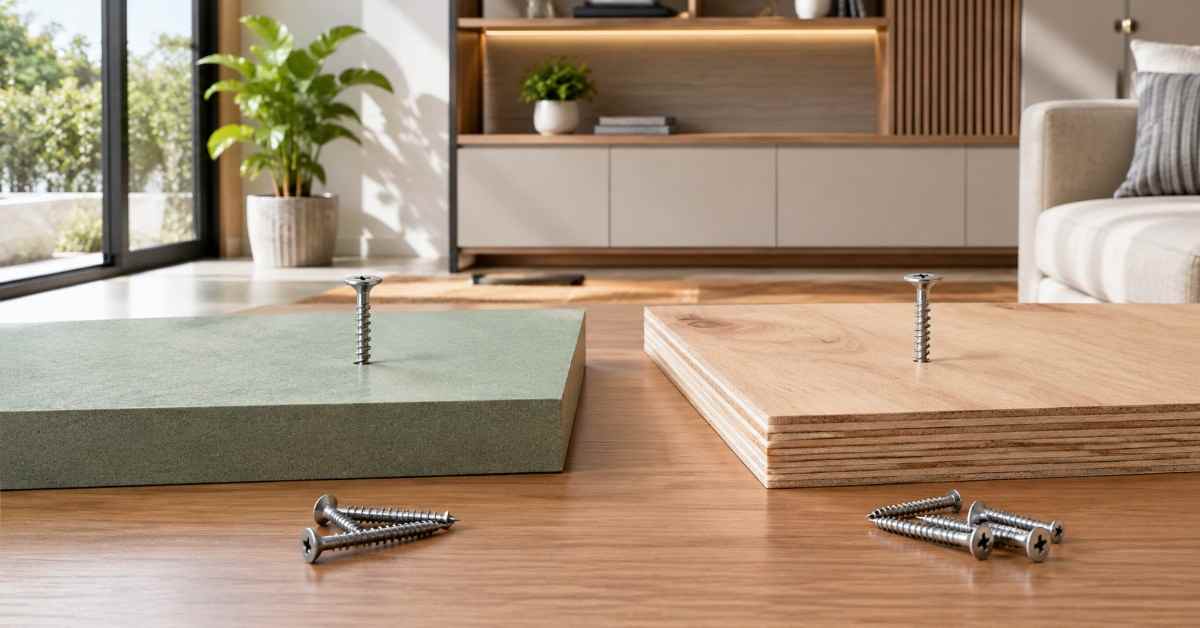
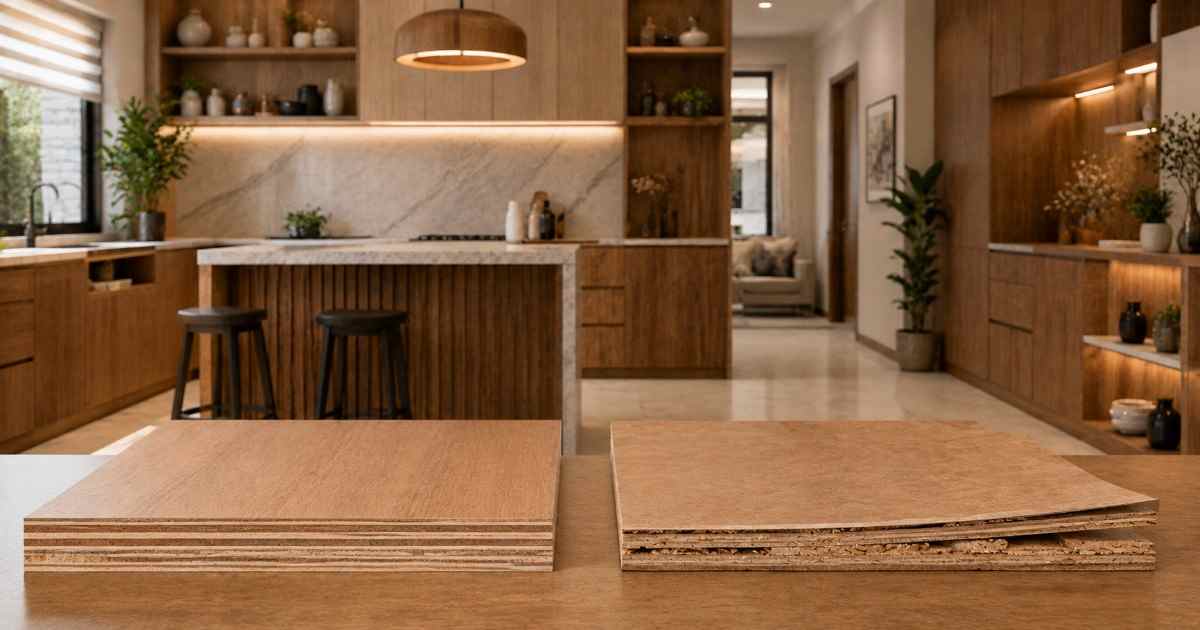
Modular furniture has transformed modern homes with its clean aesthetics and efficient use of space. However, achieving a flawless finish depends as much on material selection as it does on design. When homeowners, architects, and interior designers evaluate plywood options, the discussion often begins with Calibrated Plywood vs Normal Plywood. While both materials serve important purposes, their performance can differ significantly in modular furniture applications.
Prevent swelling and warping in your everyday home furnishings by building with WigwamPly premium moisture resistant plywood.
Precision is a defining requirement in today’s modular kitchens, wardrobes, TV units, and storage systems. Every panel must fit perfectly to ensure seamless assembly and long-term durability. This growing demand for accuracy has increased the popularity of double side calibrated plywood and both side calibrated plywood among furniture manufacturers. Unlike conventional panels, calibrated plywood undergoes a specialized sanding process that creates uniform thickness across the entire sheet. This consistency improves alignment, minimizes fitting errors, and delivers a refined furniture finish.
On the other hand, normal plywood remains widely used across residential and commercial projects. It offers dependable strength and versatility for various construction and furniture needs. However, slight thickness variations can sometimes require additional adjustments during fabrication and installation. For modular furniture manufacturers working with high-volume production, these variations may influence efficiency and finishing quality.
The growing preference for calibrated plywood is largely driven by the many calibrated plywood benefits it offers. Better laminate adhesion, reduced material wastage, improved machining accuracy, and faster installation are among the advantages frequently highlighted by industry professionals. At the same time, buyers often evaluate Calibrated Plywood price alongside performance to determine overall value.
Many consumers also research leading Calibrated plywood manufacturers in India and frequently ask whether calibrated plywood is good or bad for their specific requirements. The answer depends on project goals, expected finish quality, and budget considerations. Similarly, understanding the Applications of Normal Plywood remains important for making informed purchasing decisions.
As a trusted plywood brand, WigwamPly offers advanced both-side calibrated plywood solutions designed for modern furniture manufacturing. In the following sections, we will explore the differences between calibrated and normal plywood, their applications, advantages, pricing considerations, and the best choice for modular furniture projects.
What Is Calibrated Plywood vs Normal Plywood — Construction, Process & Core Differences
The debate around Calibrated Plywood vs Normal Plywood is not simply about premium versus standard materials. The real difference lies in manufacturing precision. While both products are made using layers of wood veneers bonded under heat and pressure, the finishing process determines how accurately the final sheet performs in furniture applications.
For modular furniture, even small thickness variations can affect shutter alignment, laminate adhesion, edge banding quality, and installation accuracy. This is why calibrated plywood has become the preferred choice for modern furniture manufacturing.
What Is Normal Plywood?
Normal plywood is the conventional plywood sold across most Indian markets. After veneer assembly, resin application, and hot pressing, the sheet is trimmed and dispatched without any thickness calibration process.
Because the plywood comes directly from the hot press, natural thickness variations remain across the sheet. These variations typically range between ±1–2 mm and occur due to multiple manufacturing factors, including:
- Uneven pressure distribution during hot pressing
- Variations in veneer thickness
- Inconsistencies in resin spread
- Natural wood density differences across veneer layers
For example, an 18 mm plywood sheet may measure closer to 16 mm in one area and nearly 20 mm in another. While such variations are generally acceptable for construction, partitions, and basic furniture applications, they can create challenges in precision-driven modular furniture manufacturing.
Carpenters often need to compensate for these variations through additional sanding, fitting adjustments, and alignment corrections during installation.
What Is Calibrated Plywood?
Calibrated plywood undergoes an additional precision-finishing stage after hot pressing. The sheet passes through a specialized calibration or wide-belt sanding machine that removes microscopic surface irregularities and brings the entire panel to a highly uniform thickness.
This process allows the sheet to achieve thickness tolerances of approximately ±0.2 mm or better across the full surface.
The result is a plywood panel with:
- Uniform thickness throughout the sheet
- Improved dimensional accuracy
- Better laminate adhesion
- Consistent edge banding performance
- Reduced fabrication errors
- Enhanced furniture aesthetics
Because every sheet maintains consistent dimensions, manufacturers can achieve more accurate panel cutting, cleaner shutter alignment, and smoother assembly processes.
What Is Double Side Calibrated Plywood?
Many buyers encounter terms such as double side calibrated plywood and both side calibrated plywood while researching premium furniture materials.
These terms refer to plywood that has been calibrated on both faces rather than just one. During production, both surfaces pass through the calibration process, ensuring uniform thickness and surface flatness throughout the entire sheet.
This distinction is important because furniture panels frequently require treatment on both sides.
Applications where both side calibrated plywood provides significant advantages include:
- Modular kitchen cabinets
- Wardrobe shutters
- Open shelving systems
- Double-sided furniture panels
- Retail display units
- Furniture requiring laminates on both faces
By maintaining uniformity across both surfaces, double-side calibration improves laminate bonding, enhances dimensional stability, and delivers a more refined finished appearance.
Achieve a rich, natural timber look without compromising on modern structural durability with WigwamPly luxurious flush veneer doors.
Calibrated Plywood Is Good or Bad?
A frequently searched question is whether calibrated plywood is good or bad.
For modular furniture, the answer is straightforward.
Calibrated plywood is objectively superior in almost every performance parameter. Uniform thickness allows furniture components to fit together accurately. Laminate sheets bond more consistently. Edge banding aligns properly. CNC cutting becomes more precise. Carpenters spend less time correcting dimensional inconsistencies.
These benefits directly contribute to:
- Better furniture aesthetics
- Faster installation
- Lower material wastage
- Reduced labor costs
- Improved long-term performance
The only trade-off is a modest price premium compared to normal plywood. However, many furniture manufacturers and homeowners consider the additional investment worthwhile because of the superior finish quality and reduced rework costs.
Both Side Calibrated Plywood vs Single Side Calibrated Plywood vs Normal Plywood
| Parameter | Both Side Calibrated Plywood | Single Side Calibrated Plywood | Normal Plywood |
| Manufacturing Process | Both faces calibrated using wide-belt sanding machines | One face calibrated, opposite face retains higher variation | No calibration after hot pressing |
| Thickness Tolerance | ±0.2 mm or better | Typically ±0.2 mm on calibrated face; higher variation on opposite face | Typically ±1–2 mm across the sheet |
| Thickness Uniformity (18 mm Sheet Example) | 17.8–18.2 mm | 17.8–18.2 mm on calibrated face; variation on reverse side | Approximately 16–20 mm possible across different areas |
| Surface Flatness | Uniform on both faces | Uniform on one face only | Dependent on pressing consistency |
| Laminate Bonding Surface | Uniform on both faces, maximizing adhesive contact | Uniform on one face only | Uneven contact may occur in thicker areas |
| Joint Gap Variation in Modular Furniture | Typically ≤0.5 mm when properly fabricated | Can vary depending on panel orientation | May exceed 1–2 mm due to sheet thickness variation |
| CNC Cutting Accuracy | High dimensional consistency across all panels | Good consistency on calibrated face | Requires additional adjustments and calibration |
| Edge Banding Alignment | Consistent throughout panel thickness | Consistent on one calibrated face | Thickness variation can affect alignment |
| Carpenter Rework Requirement | Minimal | Low to moderate | Highest among the three categories |
| Material Wastage During Fabrication | Typically lower due to consistent dimensions | Moderate | Higher because of fitting corrections |
| Recommended Application | Premium modular kitchens, wardrobes, furniture shutters, retail fixtures | Furniture where only one face requires premium finishing | General furniture, partitions, paneling, and construction applications |
| Relative Cost | Typically 8–15% higher than normal plywood | Typically 4–8% higher than normal plywood | Baseline cost |
Why Wigwam Ply Recommends Both-Side Calibrated Plywood
Modern furniture manufacturing depends on precision. Even minor dimensional inconsistencies can affect installation quality and visual appeal. Wigwam Ply’s both-side calibrated plywood is engineered to deliver uniform thickness, superior surface smoothness, and consistent performance across every sheet.
For homeowners investing in modular kitchens, wardrobes, and premium interiors, this precision translates into cleaner finishes, stronger laminate bonding, reduced wastage, and furniture that looks professionally crafted from every angle.
In the next section, we will examine how these differences influence real-world furniture performance, installation efficiency, and long-term value.
Calibrated Plywood Benefits, Applications & Price — Why Wigwam Ply Is the Benchmark
The growing shift toward modular interiors has fundamentally changed how plywood is evaluated. Strength and durability remain important, but precision has become equally critical. This is where the key calibrated plywood benefits become evident. Unlike conventional plywood, calibrated plywood is engineered to deliver dimensional consistency across every sheet, making furniture manufacturing faster, cleaner, and more accurate.
For modular kitchens, wardrobes, TV units, and storage systems, precision directly affects both aesthetics and functionality. Even small thickness variations can create visible defects that compromise the final finish.
Calibrated Plywood Benefits for Modular Furniture
Flush, Gap-Free Cabinet Joints and Carcass Assembly
One of the most important advantages of calibrated plywood is accurate cabinet assembly.
When furniture panels have inconsistent thickness, adjoining components rarely sit perfectly flush. A panel measuring 17 mm may need to align with another measuring 18.5 mm, creating visible joint lines and uneven surfaces. Carpenters often compensate using fillers, edge corrections, or additional sanding.
Calibrated plywood eliminates this challenge by maintaining a consistent thickness throughout the sheet. Cabinet carcasses align accurately, corners meet cleanly, and furniture achieves the seamless appearance expected in premium modular interiors.
For heavy-duty commercial shelving and robust interior partitions, architects highly recommend WigwamPly thick and reliable 25 mm block boards.
Consistent Shutter Sizing Across Entire Furniture Runs
Modern wardrobes and kitchens often contain multiple shutters installed side by side.
Even a thickness variation of 0.5 mm can create noticeable alignment issues across a long furniture run. Misaligned shutters affect visual symmetry and may require repeated adjustments during installation.
Because calibrated plywood maintains tight thickness tolerances, every shutter panel can be cut and fabricated with greater accuracy. The result is a uniform appearance across the entire installation.
Uniform Laminate and Veneer Bonding
Surface consistency plays a major role in laminate performance.
In normal plywood, thickness variations can create high spots and low spots across the panel surface. High spots may receive insufficient adhesive coverage, while low spots can trap air pockets beneath laminates.
These conditions increase the risk of:
- Laminate bubbling
- Surface waviness
- Adhesive failure
- Premature delamination
Calibrated plywood provides a uniformly sanded surface that promotes even adhesive distribution and stronger laminate bonding across the entire panel.
Accurate Dado, Groove, and Hardware Fitting
Modern modular furniture relies heavily on CNC machining and precision hardware systems.
Dado joints, grooves, channels, hinges, drawer runners, and knock-down fittings all depend on predictable panel thickness. When plywood thickness varies, grooves may become loose, hardware may fit improperly, and installers often resort to shimming or corrective adjustments.
Calibrated plywood ensures machining dimensions remain consistent from one panel to the next. This improves manufacturing efficiency while enhancing overall furniture quality.
Bring a warm, natural aesthetic to your luxury interiors using WigwamPly exquisitely crafted birch veneer plywood.
Applications of Normal Plywood
Although calibrated plywood is preferred for modular furniture, Applications of Normal Plywood remain extensive.
Normal plywood continues to serve practical purposes where dimensional precision is less important.
Common applications include:
- Back panels for furniture
- Internal blocking and support structures
- Rough construction work
- Temporary partitions
- Packaging and crating
- Industrial applications
- Budget-conscious furniture projects
- Utility storage units
In these applications, small thickness variations typically do not affect performance significantly. As a result, normal plywood remains a cost-effective option for many non-precision uses.
Modular Furniture Verdict: Calibrated Plywood Is a Functional Necessity
For modular kitchens, wardrobes, dressing units, study tables, office workstations, and premium storage systems, calibrated plywood should not be viewed as an optional upgrade.
It is a functional requirement.
Modular furniture is built around repeatable dimensions, precise hardware integration, and perfectly aligned panels. Thickness variation directly undermines these objectives.
Normal plywood can certainly be used for modular furniture. However, achieving the same level of accuracy often requires additional labor, repeated adjustments, filler work, and installation corrections.
For projects where precision, finish quality, and installation efficiency matter, both-side calibrated plywood consistently delivers superior results.
Calibrated Plywood Price vs Normal Plywood
Many buyers researching modular furniture compare Calibrated Plywood price against standard plywood options.
Calibrated plywood generally carries a modest premium because it undergoes an additional manufacturing process. After hot pressing, each sheet passes through precision calibration equipment that removes minor surface irregularities and ensures uniform thickness.
This process involves:
- Additional machine processing
- Higher manufacturing precision
- Enhanced quality control
- Minor material removal during calibration
Typically, calibrated plywood may cost approximately 8–15% more than comparable normal plywood grades, depending on specifications and manufacturer standards.
However, this premium should be viewed as the cost of precision rather than a luxury upgrade.
In professional furniture manufacturing, the benefits often offset the initial cost through:
- Reduced carpenter rework
- Faster installation
- Lower laminate wastage
- Improved fabrication efficiency
- Better finished appearance
- Fewer post-installation corrections
For premium modular projects, the long-term value often exceeds the upfront price difference.
Why Wigwam Ply Stands Among Leading Calibrated Plywood Manufacturers in India
When evaluating Calibrated plywood manufacturers in India, buyers should look beyond the word “calibrated” and examine the complete manufacturing quality stack.
Not all calibrated plywood delivers the same level of consistency.
Wigwam Ply differentiates itself through a combination of advanced manufacturing standards designed specifically for precision furniture applications.
Key advantages include:
- Both-side calibration as a standard manufacturing feature
- Consistent thickness tolerance across every sheet
- Full core and full panel construction for enhanced stability
- Superior surface smoothness for laminate bonding
- Stringent quality-control processes
- Compliance with relevant IS standards
- Engineered performance for modular furniture manufacturing
While commodity plywood may focus primarily on meeting minimum specifications, Wigwam Ply is designed to deliver the consistency required by modern modular furniture systems.
For architects, interior designers, furniture manufacturers, and homeowners seeking premium outcomes, Wigwam Ply provides the precision foundation necessary for flawless modular furniture execution.
Calibrated Plywood Price vs Normal Plywood
Many buyers evaluating modular furniture focus only on the initial plywood cost. However, the real comparison should include fabrication efficiency, laminate wastage, carpenter rework, and long-term furniture quality.
Calibrated plywood carries a modest premium because it undergoes an additional manufacturing process after hot pressing. The sheet is passed through precision calibration equipment that sands both surfaces to a highly uniform thickness. This additional processing improves dimensional accuracy and furniture performance but adds manufacturing cost. Industry estimates indicate calibrated plywood typically commands a premium over conventional plywood due to this extra processing step.
Indicative Market Price Comparison (July 2026)
| Product Category | Thickness | Indicative Market Range (₹/Sq. Ft.) | Indicative Sheet Price (8 ft × 4 ft) |
| Standard MR Plywood | 12 mm | 45–70 | ₹1,440–₹2,240 |
| Standard MR Plywood | 18/19 mm | 65–95 | ₹2,080–₹3,040 |
| Calibrated MR Plywood | 12 mm | 50–70 | ₹1,600–₹2,240 |
| Calibrated MR Plywood | 18 mm | 70–95 | ₹2,240–₹3,040 |
| Calibrated BWR Plywood | 18 mm | 85–115 | ₹2,720–₹3,680 |
| Calibrated BWP/Marine Plywood | 18 mm | 105–140 | ₹3,360–₹4,480 |
| Wigwam Visor (Premium Both-Side Calibrated Structural Grade)* | 19 mm | ~₹190/sq. ft. | ~₹6,080/sheet |
| Wigwam Visor (Premium Both-Side Calibrated Structural Grade)* | 12 mm | ~₹158/sq. ft. | ~₹5,056/sheet |
*Historical market references for Wigwam Visor indicate premium positioning within the calibrated plywood segment. Actual dealer pricing may vary by city, order quantity, taxes, freight, and promotional schemes.
Price Disclaimer (July 2026): Plywood prices fluctuate monthly due to timber costs, resin prices, freight charges, certification requirements, dealer margins, and regional demand. The figures above are indicative market references only and should not be considered official quotations. Always obtain the latest dealer quotation before project planning.
Why Paying More for Calibrated Plywood Often Costs Less Overall
For a modular wardrobe or kitchen, even a small thickness variation can increase fabrication time significantly. Carpenters often spend additional hours correcting shutter alignment, adjusting grooves, reapplying laminates, and filling visible gaps.
By contrast, both-side calibrated plywood reduces these inefficiencies because every sheet maintains consistent thickness. In professional modular furniture projects, the resulting savings in labor, laminate wastage, and installation corrections frequently offset a substantial portion of the initial price premium.
Why Wigwam Ply Commands a Premium Position
Among Calibrated plywood manufacturers in India, Wigwam Ply positions itself in the premium segment through a manufacturing-first approach rather than a marketing-first approach.
For example, Wigwam Visor is manufactured as both-side calibrated plywood with a stated thickness tolerance of ±0.25 mm, substantially tighter than the ±1–2 mm variation commonly associated with conventional plywood. The product also combines Structural Grade (IS 10701), Fire Retardant Grade (IS 5509), and Marine Grade (IS 710) performance standards within a single panel.
Key differentiators include:
- Both-side calibration as a standard feature
- Thickness tolerance of ±0.25 mm
- Full-core panel construction philosophy
- Double surface sanding for superior laminate bonding
- Structural Grade certification (IS 10701)
- Fire Retardant Grade certification (IS 5509)
- Marine Grade certification (IS 710)
- E0 formaldehyde emission performance
For modular kitchens, wardrobes, luxury furniture, and precision interior projects, these manufacturing controls help ensure that the final furniture performs exactly as designed, with fewer installation issues and a noticeably superior finish.
Build Modular Furniture with Precision. Build It with Wigwam Ply.
Great modular furniture is not defined by design alone. It is defined by precision, consistency, and the quality of materials hidden beneath the laminate.
When every millimeter matters, both-side calibrated plywood delivers the accuracy required for flawless wardrobes, seamless kitchen shutters, perfectly aligned cabinets, and furniture that looks premium for years. That is why architects, interior designers, contractors, and homeowners across India increasingly choose Wigwam Ply.
As a brand built around a calibrated-only philosophy, Wigwam manufactures precision-engineered plywood designed for modern furniture applications. Its both-side calibrated panels provide uniform thickness across the sheet, helping achieve better laminate bonding, cleaner joints, smoother finishes, and reduced installation rework. Wigwam positions itself as India’s first brand focused exclusively on calibrated plywood, with products engineered for modular furniture and precision interiors.
Why Choose Wigwam Ply?
- Both-side calibrated plywood for uniform thickness
- Precision zero-gap finish for modular furniture
- Full-core construction for enhanced strength
- Superior laminate and veneer bonding performance
- Suitable for kitchens, wardrobes, and premium interiors
- Available in MR, BWP, Marine, Structural, and Fire-Retardant grades
- Lifetime guarantee on selected product ranges
- Trusted by architects, interior designers, contractors, and furniture manufacturers across India
Whether you are designing a luxury wardrobe, a modular kitchen, a retail display unit, or an entire home interior, choosing calibrated plywood today can prevent costly alignment issues tomorrow.
Ready to Upgrade Your Furniture?
Choose precision-engineered plywood that performs exactly as modular furniture demands.
For product information, dealer enquiries, or project consultations, visit Wigwam Ply.
Frequently Asked Questions
1. What is the difference between calibrated and normal plywood?
The primary difference is thickness consistency. Normal plywood comes directly from the hot press and typically has thickness variations of ±1–2 mm across the sheet. Calibrated plywood undergoes an additional sanding process using calibration machines, reducing thickness variation to approximately ±0.2 mm or better. This results in better furniture alignment, improved laminate bonding, and more accurate fabrication.
2. Is calibrated plywood worth the extra cost for modular furniture?
Yes. For modular kitchens, wardrobes, TV units, and precision furniture, calibrated plywood is worth the additional investment. The modest price premium is often offset by reduced carpenter rework, lower laminate wastage, faster installation, improved shutter alignment, and a significantly better finished appearance. For modular furniture, calibrated plywood should be considered a functional requirement rather than a luxury upgrade.
3. What does both side calibrated plywood mean?
Both side calibrated plywood, also called double side calibrated plywood, means both faces of the plywood sheet are precision-sanded after manufacturing. This creates uniform thickness and surface flatness on both sides. It is particularly important for furniture where laminates are applied on both faces or where both sides remain visible, such as wardrobes, open shelving, and modular cabinets.
4. Is calibrated plywood stronger than normal plywood?
Calibration itself does not increase plywood strength. Strength depends on factors such as timber species, veneer quality, core construction, adhesive system, and manufacturing standards. However, calibrated plywood generally performs better in furniture applications because its uniform thickness improves laminate adhesion, hardware fitting accuracy, and overall dimensional stability.
5. Can normal plywood be used for modular furniture?
Yes, but it is not the preferred choice. Normal plywood can be used for modular furniture, but thickness variations often create alignment issues, visible gaps, shutter inconsistencies, and additional installation work. For projects requiring precise fit and premium aesthetics, both-side calibrated plywood delivers noticeably superior results.
6. Which applications are best suited for normal plywood?
Normal plywood remains a practical choice for non-precision applications such as furniture back panels, internal support members, rough construction work, packaging, crating, temporary partitions, and budget-oriented furniture. In these applications, minor thickness variations generally do not affect performance significantly.
7. What is the price difference between calibrated plywood and normal plywood?
Calibrated plywood typically costs around 8–15% more than comparable normal plywood grades. The exact difference depends on thickness, plywood grade, certification requirements, timber quality, and manufacturer standards. While the upfront cost is higher, the savings generated through reduced rework, improved fabrication efficiency, and lower wastage often compensate for much of the price difference in modular furniture projects.