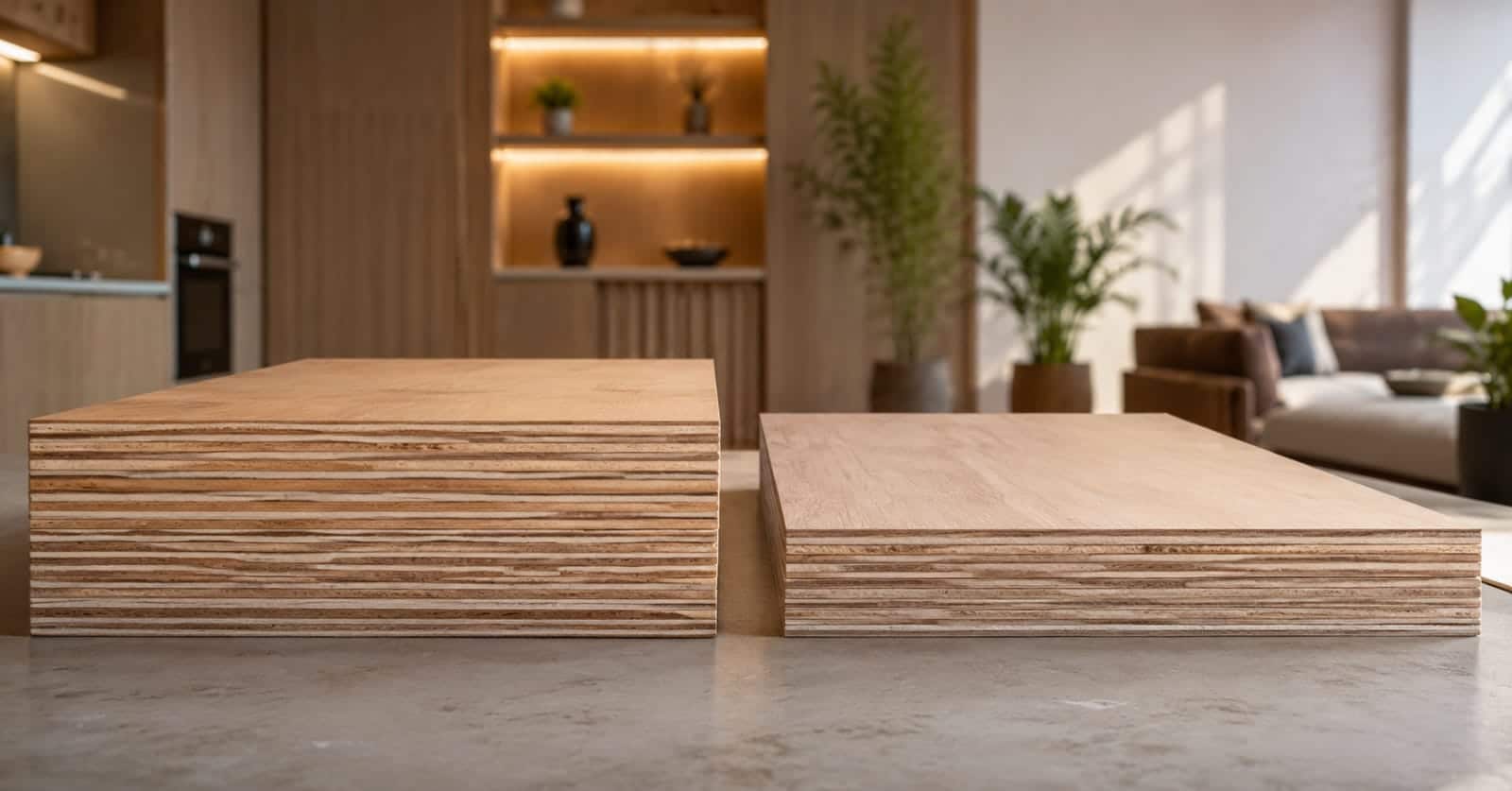
Plywood quality depends on much more than thickness alone. The number of layers significantly influences strength, durability, and long-term performance. This is why buyers often compare 15 layer plywood and 11 layer plywood before purchasing.
Each plywood layer contributes to structural stability and load distribution. More layers generally create a denser and stronger panel structure. However, the ideal choice depends on furniture requirements and application demands. Understanding this plywood layers comparison helps homeowners make informed decisions.
Modern furniture manufacturers increasingly prefer multi-layer plywood constructions. Additional veneer layers improve screw-holding capacity and dimensional stability. They also reduce the risk of warping and surface deformation. These factors directly affect furniture lifespan and reliability.
An accurate plywood strength comparison requires examining core construction quality. Layer count alone does not determine overall plywood performance. Timber species, adhesive quality, calibration, and manufacturing standards also matter. Premium plywood combines all these factors for superior results.
For residential furniture, both 11-layer and 15-layer plywood remain popular. Furniture grade plywood with higher ply counts performs exceptionally well under stress. It offers greater resistance to bending, impact, and heavy loading. This makes it suitable for wardrobes, beds, cabinets, and modular furniture.
Many architects and interior designers prefer premium plywood sheets for demanding projects. Multi-layer plywood provides better structural integrity for long spans. It also delivers improved edge strength and hardware retention. These advantages become important in high-use furniture applications.
While commercial plywood serves many standard furniture requirements, premium multi-layer constructions offer enhanced performance. Understanding the differences between 15 ply plywood benefits and 11 ply plywood applications helps buyers select the right material.
Products such as Wigwam Fabricate Gold BWP, Fabricate Birch, and Wigwam Visor demonstrate how advanced plywood engineering improves furniture durability. Choosing the appropriate layer configuration ensures stronger furniture, better value, and longer service life.
Explore the Top 10 Best Plywood Brands in India known for exceptional quality, durability, moisture resistance, and premium performance for every interior and exterior project.
15-Layer vs 11-Layer Plywood — Construction & Strength Comparison
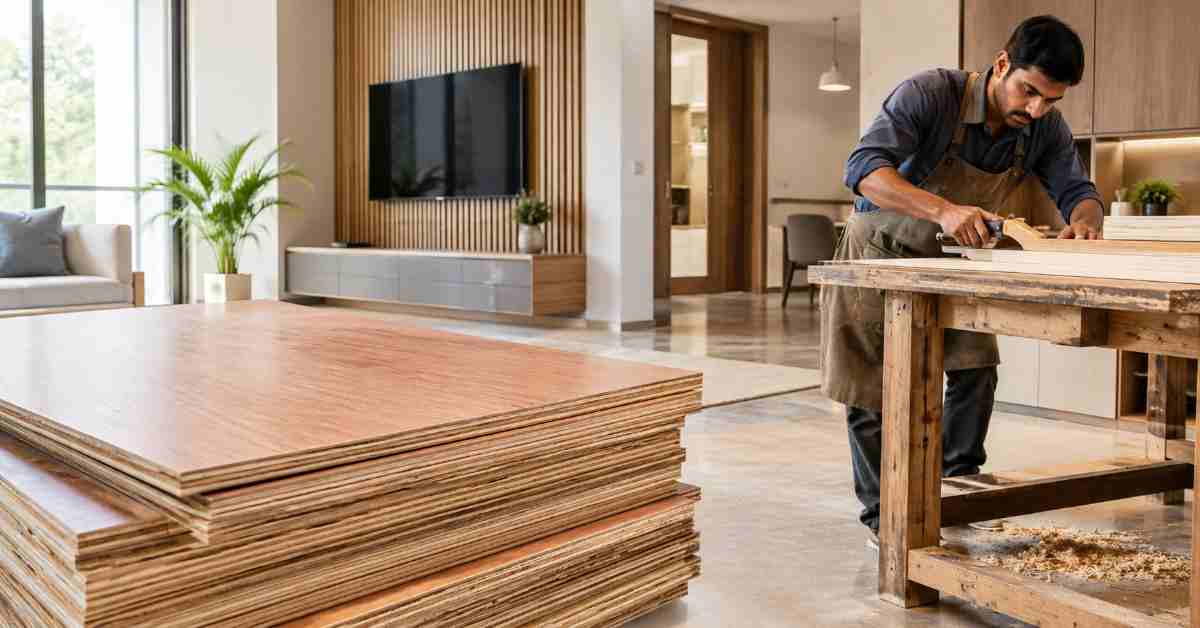
Understanding the difference between 15 layer plywood and 11 layer plywood starts with understanding plywood construction. Plywood is manufactured by bonding multiple veneer layers together. Each adjacent layer is positioned at right angles to improve strength. This cross-laminated structure helps distribute loads evenly across the panel.
In any plywood layers comparison, more layers generally indicate thinner individual veneers and tighter construction. The increased number of glue lines improves bonding strength and dimensional stability. As a result, premium multi-layer plywood typically performs better under stress and heavy loading conditions.
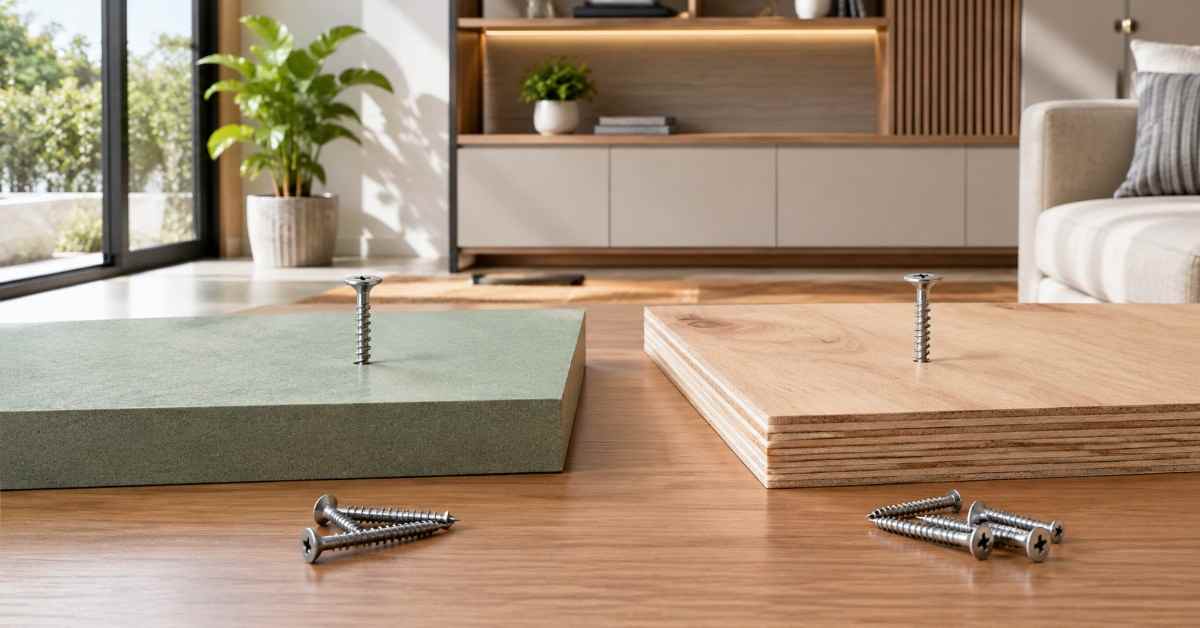
15 layer plywood contains more veneer layers within the same thickness range. The thinner veneers create a denser core structure with enhanced load distribution. This construction improves bending resistance, screw-holding capacity, and long-term stability. Furniture subjected to heavy use often benefits from these performance advantages.
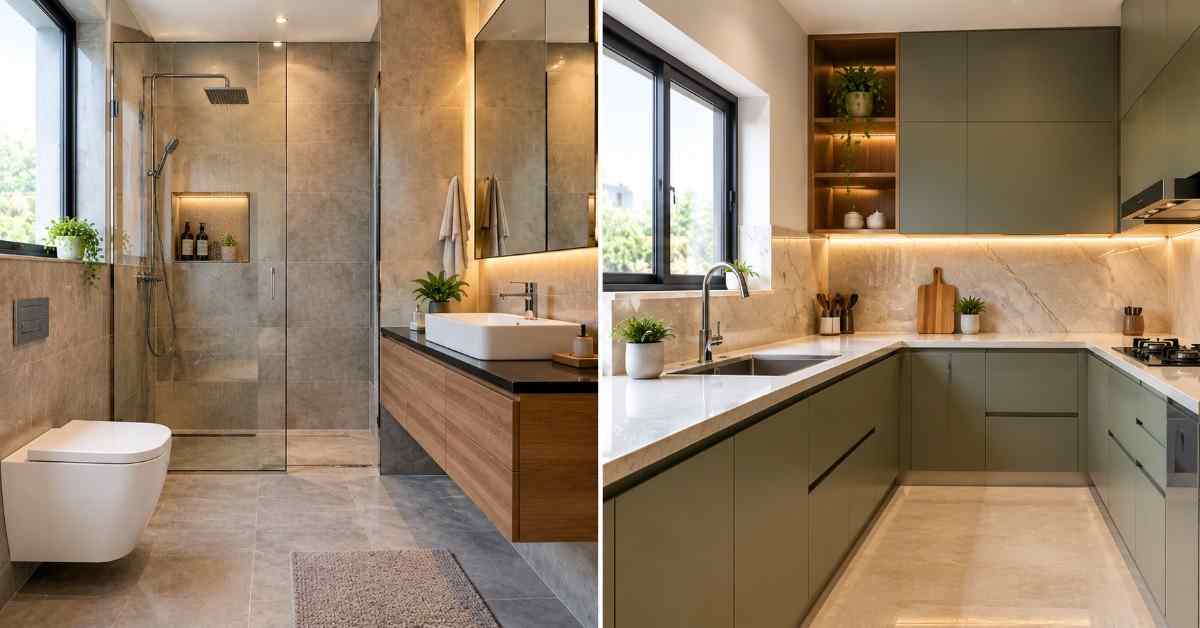
The primary 15 ply plywood benefits include higher strength, superior impact resistance, and improved durability. The additional layers help minimize core gaps and reduce the likelihood of warping. This makes 15-layer plywood particularly suitable for premium furniture, wardrobes, modular kitchens, beds, and commercial interiors.
Save time on your construction or renovation projects with a perfectly finished, hassle-free readymade flush door from WigwamPly.
11 layer plywood uses fewer but slightly thicker veneers. While its construction remains strong and reliable, it offers slightly lower density than 15-layer alternatives. However, it still provides excellent performance for most residential furniture applications. Many homeowners choose 11-layer plywood because it balances strength and cost effectively.
Common 11 ply plywood applications include wardrobes, study tables, TV units, storage cabinets, and bedroom furniture. For standard residential use, quality 11-layer plywood often delivers more than sufficient performance.
When evaluating plywood strength comparison, layer count should be considered alongside manufacturing quality. Premium plywood sheets with superior hardwood cores and advanced adhesives frequently outperform lower-quality boards regardless of layer count.
Comparison Table: 15-Layer vs 11-Layer Plywood
| Parameter | 15-Layer Plywood | 11-Layer Plywood |
| Total Veneer Layers | 15 | 11 |
| Core Density | Higher | Moderate to High |
| Glue Bonding Lines | More | Fewer |
| Screw-Holding Strength | Excellent | Very Good |
| Warp Resistance | Excellent | Good to Very Good |
| Bending Resistance | Excellent | Very Good |
| Impact Resistance | Higher | Moderate to High |
| Weight-Bearing Capacity | Heavy-duty applications | Standard furniture applications |
| Dimensional Stability | Superior | Very Good |
| Typical Thickness Options | 18mm, 19mm, 25mm | 12mm, 16mm, 18mm |
| Furniture Grade Suitability | Premium furniture and high-load applications | Residential furniture and cabinetry |
| Relative Cost | Higher | More economical |
Where Premium Multi-Layer Plywood Makes a Difference
Projects involving heavy storage, large wardrobes, modular kitchens, and premium furniture benefit significantly from higher ply counts. Additional layers improve structural integrity and long-term reliability under continuous loading.
Premium products such as Wigwam Visor, Fabricate Gold BWP, and Fabricate Birch utilize advanced plywood engineering to maximize strength and durability. Their high-density construction, superior screw-holding performance, and dimensional stability make them ideal choices for demanding furniture applications.
The outcome of any plywood strength comparison depends on both layer count and manufacturing quality. While 11 layer plywood remains an excellent option for standard furniture, 15 layer plywood offers superior strength, stability, and durability for premium applications. For homeowners seeking long-term performance, investing in high-quality multi-layer plywood often delivers better value over the furniture’s lifespan.
Trusted by carpenters for crafting long-lasting wardrobes and bookshelves, WigwamPly moisture resistant ply ensures your woodwork stays pristine in damp climates.
15 Ply vs 11 Ply Plywood Benefits & Applications — Furniture Grade and Commercial Use
Selecting between 15 layer plywood and 11 layer plywood depends largely on application requirements. While both options deliver excellent structural performance, their ideal use cases differ significantly. Understanding these differences helps homeowners, contractors, and furniture manufacturers maximize value while avoiding unnecessary material costs.
For most projects, the goal is to match plywood strength with the expected load and usage conditions. Using higher-strength plywood where it is not required can increase project costs unnecessarily. Similarly, selecting lower-grade plywood for demanding applications may affect durability over time.
Where 15-Layer Plywood Performs Best
The major 15 ply plywood benefits come from its dense construction and superior load distribution. The additional veneer layers improve rigidity and reduce the risk of bending under continuous stress.
This makes 15-layer plywood highly suitable for:
- Heavy-duty wardrobes with multiple storage compartments.
- Modular kitchen cabinets supporting stone countertops.
- Large bookshelves carrying substantial weight.
- King-size and queen-size bed structures.
- Premium office furniture subjected to daily use.
- Long-span shelves where sagging must be minimized.
- Commercial counters and high-traffic installations.
In these applications, the enhanced screw-holding strength and dimensional stability provide long-term performance advantages.
Where 11-Layer Plywood Performs Best
Most 11 ply plywood applications involve moderate-load furniture and interior construction projects.
The plywood remains structurally strong while offering better cost efficiency. For many residential and commercial applications, 11-layer construction delivers more than sufficient performance.
Common uses include:
- Bedroom wardrobes.
- Study tables.
- TV units.
- Interior doors.
- Office partitions.
- Display units.
- Storage cabinets.
- Wall panelling systems.
Because these applications experience lower structural stress, the additional strength of 15-layer plywood may not always be necessary.
Application Comparison Table: 15 Ply vs 11 Ply Plywood
| Application | 11-Layer Plywood | 15-Layer Plywood | Recommended Choice |
| Bedroom Wardrobes | Very Good | Excellent | 11 Ply for standard use, 15 Ply for heavy storage |
| Modular Kitchen Cabinets | Good | Excellent | 15 Ply |
| TV Units | Excellent | Excellent | 11 Ply |
| Study Tables | Excellent | Excellent | 11 Ply |
| Heavy Bookshelves | Good | Excellent | 15 Ply |
| Office Workstations | Very Good | Excellent | Depends on usage intensity |
| Commercial Counters | Good | Excellent | 15 Ply |
| Interior Partitions | Excellent | Excellent | 11 Ply |
| Bed Frames | Very Good | Excellent | 15 Ply for premium furniture |
| Long-Span Shelving | Moderate | Excellent | 15 Ply |
Understanding the Cost-to-Strength Trade-Off
One of the most important considerations is balancing performance with budget.
15-layer plywood typically costs more because it contains additional veneer layers, higher adhesive consumption, and denser construction. However, this increased investment often translates into longer furniture life, improved stability, and better resistance to heavy loading.
11-layer plywood offers a practical balance between performance and affordability. It remains a preferred choice for residential furniture and many commercial plywood applications where extreme strength is unnecessary.
Choosing the Right Furniture Grade Plywood
For premium furniture installations, layer count should be evaluated alongside manufacturing quality. High-quality furniture grade plywood with superior hardwood cores, calibrated surfaces, and strong bonding often performs significantly better than lower-quality alternatives.
Products such as Wigwam Fabricate Gold BWP, Fabricate Birch, and Wigwam Visor combine advanced manufacturing standards with high-density construction, delivering exceptional durability regardless of application.
The decision between 15 ply plywood benefits and 11 ply plywood applications ultimately depends on load requirements, expected lifespan, and project budget. For heavy-duty furniture, modular kitchens, and long-span shelving, 15-layer plywood provides superior strength and durability. For standard residential furniture, partitions, and everyday cabinetry, 11-layer plywood remains an economical and highly reliable solution.
Experience excellent screw-holding capacity and resistance to sagging with WigwamPly premium, termite-proof pine blockboard.
Choosing the right plywood for the right application ensures better performance, longer service life, and greater overall value.
Build Stronger Furniture with Wigwam Ply
Whether you choose 11-layer plywood for everyday furniture or 15-layer plywood for demanding structural applications, the quality of manufacturing ultimately determines long-term performance. Wigwam Ply’s premium plywood range is engineered for superior strength, dimensional stability, and durability, making it a preferred choice among architects, interior designers, contractors, and furniture manufacturers across India. Products such as Wigwam Fabricate Gold BWP, Wigwam Fabricate Birch, and Wigwam Visor are designed to deliver excellent screw-holding capacity, resistance to warping, and long-lasting structural reliability.
With advanced hardwood core construction, precision calibration, termite-resistant technology, and compliance with stringent quality standards, Wigwam Ply provides the confidence needed for wardrobes, modular kitchens, beds, storage units, office furniture, and commercial interiors. When investing in furniture that should remain strong and beautiful for years, choose Wigwam Ply for performance you can trust and durability that stands the test of time.
Frequently Asked Questions
Is 15-layer plywood stronger than 11-layer plywood?
Yes, 15-layer plywood is generally stronger than 11-layer plywood when manufactured to the same quality standards. The additional cross-laminated veneer layers create a denser core structure, improving load distribution, screw-holding strength, impact resistance, and resistance to bending or warping. This makes 15-layer plywood ideal for heavy-duty furniture and high-load applications.
Which plywood layer count is best for kitchen cabinets?
For modular kitchen cabinets, 15-layer plywood is usually the preferred choice. Kitchen cabinets regularly support heavy loads from utensils, groceries, appliances, and stone countertops. The higher density and enhanced moisture resistance of premium 15-layer plywood help maintain structural stability over many years.
Does more plywood layers mean better quality?
Not necessarily. More layers generally improve strength and dimensional stability, but overall quality also depends on core wood species, adhesive quality, manufacturing precision, calibration, and compliance with standards. A well-manufactured 11-layer premium plywood may outperform a poorly manufactured 15-layer board.
What is the difference between 15 ply and 11 ply plywood?
The primary difference is the number of veneer layers used in construction. 15 ply plywood contains more, thinner veneer layers, creating a denser and stronger panel. 11 ply plywood contains fewer, slightly thicker veneers and offers a balance between performance and affordability. Both are suitable for furniture, but 15-ply construction performs better under heavier loads.
Is 11-layer plywood sufficient for furniture?
Yes. Most 11 ply plywood applications include wardrobes, TV units, study tables, storage cabinets, office furniture, and interior partitions. For standard residential furniture, high-quality 11-layer plywood provides excellent durability and structural performance while remaining cost-effective.
Which plywood is better for wardrobes and beds?
For premium wardrobes, loft storage units, and bed frames carrying substantial weight, 15-layer plywood is often recommended because of its superior screw-holding strength and resistance to sagging. For standard wardrobes and bedroom furniture, 11-layer plywood remains a reliable option.
Does higher ply count increase furniture lifespan?
Generally, yes. Higher ply counts improve resistance to warping, cracking, and structural deformation. Furniture made from premium 15-layer plywood often maintains its shape and strength longer, especially in high-use environments or humid conditions.
Which plywood offers better value for money?
The answer depends on the application. For moderate-load residential furniture, 11-layer plywood usually provides the best balance between cost and performance. For modular kitchens, heavy wardrobes, commercial furniture, and long-span shelving, the additional investment in 15-layer plywood often delivers better long-term value through increased durability and reduced maintenance.
How can I identify quality multi-layer plywood?
Look for:
- Uniform layer construction.
- Minimal core gaps.
- ISI certification where applicable.
- Smooth calibrated surfaces.
- Strong edge bonding.
- High screw-holding capacity.
- Reputable manufacturers with proven quality standards.
Premium products such as Wigwam Fabricate Gold BWP, Fabricate Birch, and Wigwam Visor are engineered to deliver these performance characteristics consistently.
Is 15-layer plywood always necessary?
No. While 15-layer plywood offers superior performance, many furniture applications do not require that level of strength. For standard cabinets, partitions, TV units, and residential furniture, quality 11-layer plywood is often sufficient. The best approach is to match the plywood specification to the actual load and usage requirements rather than automatically choosing the highest ply count.