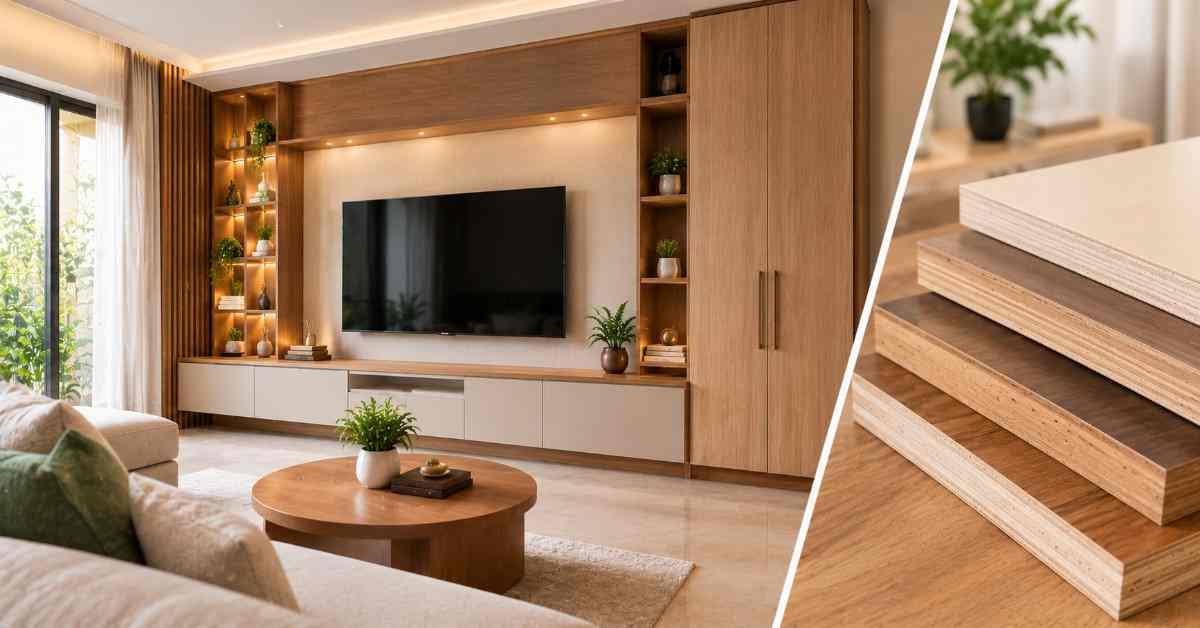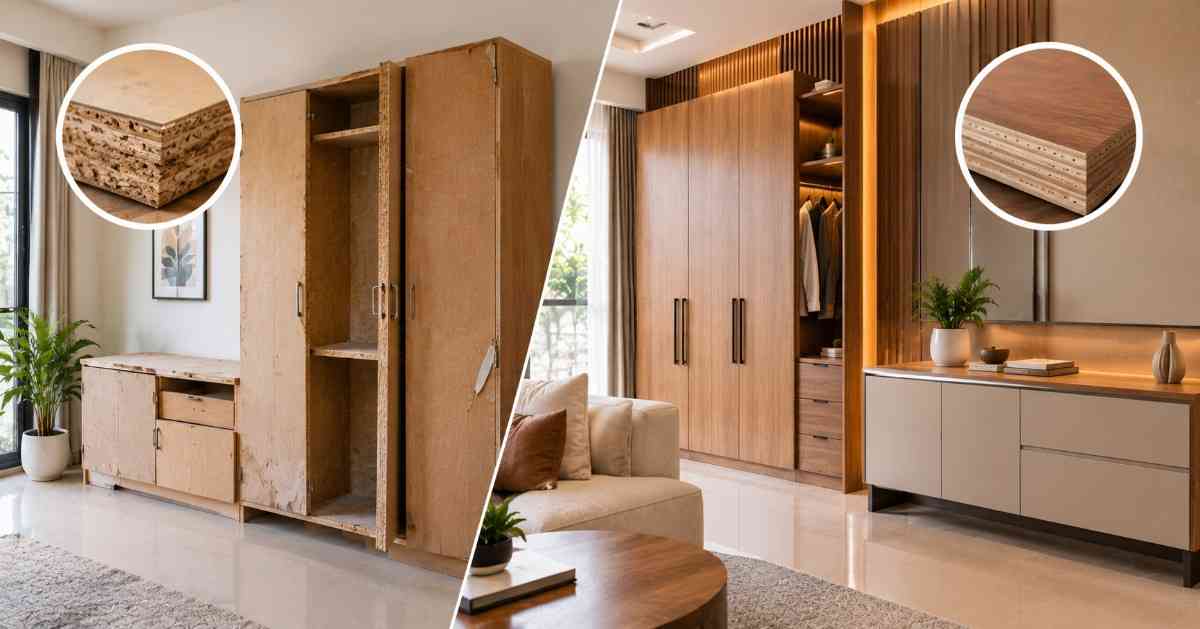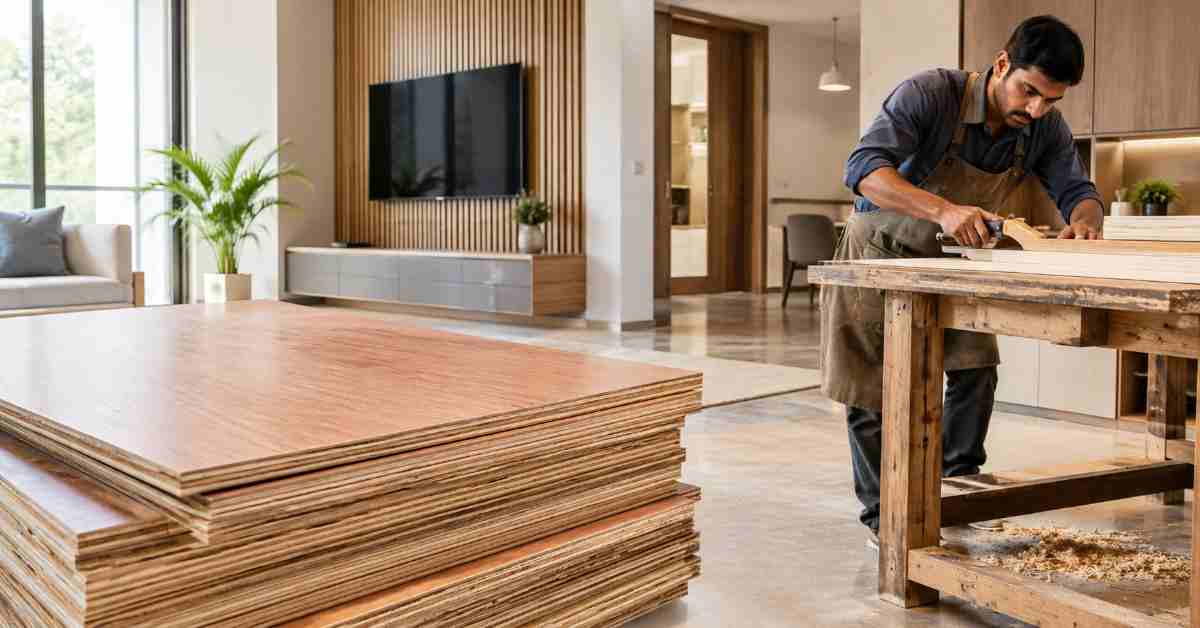
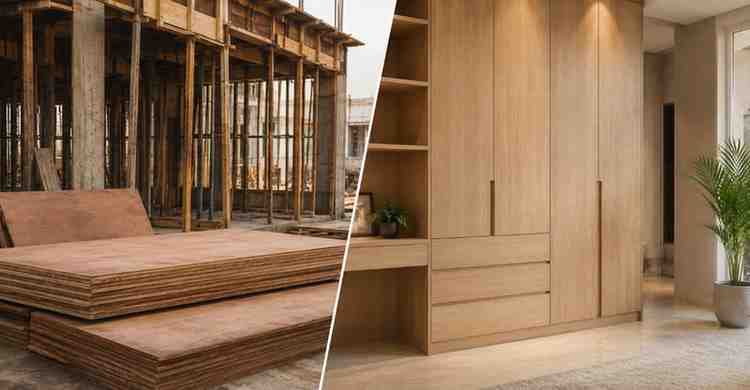
The choice between film faced plywood vs regular plywood is crucial in both construction and furniture projects. Each type is designed for a specific purpose. Understanding the difference between shuttering plywood and regular plywood helps in selecting the right material for performance, durability, and cost efficiency.
Shuttering plywood, also known as film faced plywood, is widely used in construction. It is specially made for shuttering plywood for concrete formwork. It acts as a temporary support system for wet concrete. The surface is coated with a protective film. This makes it a waterproof film faced plywood that can withstand moisture, pressure, and repeated use. These qualities define the key film faced plywood uses in construction. It is often considered the best plywood for shuttering work and the best plywood for concrete shuttering in India.
On the other hand, regular plywood is designed for interiors. It is widely used in furniture applications. The smooth surface and flexibility make it ideal for regular plywood uses in furniture. Options like BWP/BWR plywood for interiors offer strength and resistance to moisture in indoor conditions. This highlights the core difference in plywood for construction vs furniture.
Trust WigwamPly authentic marine grade plywood for structural integrity that remains uncompromised even in the most humid and challenging environments.
The film faced plywood price vs regular plywood price also varies based on usage and lifecycle. Shuttering plywood offers value through reuse in construction. Regular plywood offers long-term value in furniture.
In a film faced plywood vs commercial plywood comparison, the choice depends entirely on the application. This blog explores both options in detail to help you make the right decision.
Difference Between Shuttering Plywood and Regular Plywood
To understand film faced plywood vs regular plywood, it is important to compare their structure, function, and real-world performance. Shuttering plywood is engineered for strength and site conditions. Regular plywood is designed for finish and interiors. This comparison highlights the difference between shuttering plywood and regular plywood, with a clear focus on plywood for construction vs furniture.
Film Faced Plywood vs Commercial Plywood Comparison
| Basis | Shuttering / Film Faced Plywood | Regular / Commercial Plywood |
| Structure | Made with dense hardwood core. Coated with phenolic film on both sides for protection. Built for load-bearing use. | Made with bonded veneers. Surface is untreated or lightly sanded for interior finishing. |
| Surface Property | Coated and sealed. Classified as waterproof film faced plywood. Resists water, cement, and abrasion. | Smooth but uncoated. Requires laminate or polish for protection and aesthetics. |
| Primary Function | Designed for shuttering plywood for concrete formwork. Supports wet concrete structures. | Designed for interiors. Used in furniture and paneling applications. |
| Typical Uses | Core film faced plywood uses in construction. Used in slabs, columns, beams, and frameworks. | Common regular plywood uses in furniture. Used in wardrobes, cabinets, and modular units. |
| Strength & Durability | High strength. Withstands pressure, moisture, and repeated handling. Ideal for the best plywood for shuttering work. | Moderate structural strength. Designed for long-term indoor durability. |
| Water Resistance | Very high. Performs well in outdoor and wet construction environments. | Depends on grade. BWP/BWR plywood for interiors offers moisture resistance indoors. |
| Reusability | Can be reused multiple times in construction cycles. Key factor in cost efficiency. | Not reusable for structural applications. Meant for fixed installations. |
| Workability | Tough surface. Harder to cut and shape due to film coating. | Easy to cut, shape, and machine for furniture making. |
| Price Factor | Film faced plywood price vs regular plywood price is justified by reuse and durability in construction. | Higher value for interiors. Offers better finish and long-term usability. |
| Best Use Case | Ideal for best plywood for concrete shuttering in India and heavy-duty construction work. | Ideal for furniture. Better suited for aesthetic and interior applications. |
Wigwam Shuttering Plywood & Film Faced Plywood – Key Information
When evaluating film faced plywood vs regular plywood, Wigwam shuttering plywood stands out for construction-focused performance. It is engineered specifically for concrete formwork, durability, and reuse—making it ideal for heavy-duty site conditions.
Ensure a smooth, warp-free finish for your interior cabinetry and lightweight partitions using WigwamPly dimensionally stable mr ply board.
Key Features of Wigwam Shuttering Plywood
- Built for Concrete Formwork Designed for shuttering plywood for concrete formwork. It supports wet concrete without bending or warping.
- High Strength & Load Capacity Made with compressed, high-density veneers. This ensures strong load-bearing performance during RCC work.
- Waterproof & Weather Resistant Uses phenolic resin bonding. This makes it a reliable waterproof film faced plywood for wet construction environments.
- Smooth Film Coating for Finish The film layer prevents concrete from sticking. It also gives a smoother concrete surface after removal.
- Reusable & Cost Efficient Can be reused multiple times depending on quality and handling. This reduces overall construction cost.
- Dimensional Stability Maintains shape under pressure, vibration, and moisture exposure on-site.
Key Features of Wigwam Film Faced Plywood
- Phenolic Film Protection Coated on both sides. This improves resistance to water, cement, and abrasion.
- Non-Stick Surface Prevents adhesion of concrete. Ensures easy removal and cleaner reuse cycles.
- Higher Reuse Cycles Premium film faced plywood can deliver multiple repetitions, improving cost efficiency per use.
- Better Concrete Finish Produces a uniform and smooth surface, reducing finishing work.
- Durable in Harsh Conditions Withstands water, chemicals, and rough handling on construction sites.
Final Verdict
If your requirement is construction, Wigwam shuttering plywood is the right choice. It is engineered for strength, reuse, and site durability. It performs exceptionally well in film faced plywood uses in construction, especially for slabs, beams, and columns.
Wigwam film faced plywood takes it a step further. It offers better surface finish, higher reuse cycles, and improved moisture resistance. This makes it ideal for projects where both durability and finish matter.
Experience unmatched strength, impact resistance, and longevity with WigwamPly heavy-duty solid core flush door solutions.
Final Take: For best plywood for shuttering work and best plywood for concrete shuttering in India, Wigwam shuttering and film faced plywood deliver reliable performance. They are built for construction efficiency, not furniture use.
FAQs: Shuttering vs Regular Plywood
1. What is the difference between film faced plywood and regular plywood?
The main difference between shuttering plywood and regular plywood lies in purpose. Film faced plywood is designed for construction. It is coated and used as shuttering plywood for concrete formwork. Regular plywood is uncoated or laminated. It is used for interiors and furniture. Wigwam film faced plywood is built for strength and reuse, while regular plywood focuses on finish.
2. Which plywood is better for construction or furniture?
The choice depends on application. For construction, film faced plywood is the better option. It handles load, moisture, and rough use. For furniture, regular plywood is ideal. Options like BWP/BWR plywood for interiors offer durability and finish. Wigwam shuttering plywood is suitable for construction, not interiors.
3. What are the common film faced plywood uses?
The primary film faced plywood uses in construction include slabs, beams, columns, and formwork systems. It is widely used as shuttering plywood for concrete formwork. Wigwam film faced plywood ensures better performance and smoother concrete finish.
4. What is the film faced plywood vs commercial plywood comparison?
In a film faced plywood vs commercial plywood comparison, the difference is clear. Film faced plywood is for temporary structural use. Commercial plywood is for permanent furniture. Film faced plywood is strong and reusable. Commercial plywood offers better aesthetics and workability.
5. What are regular plywood uses?
The common regular plywood uses in furniture include wardrobes, cabinets, kitchens, and wall panels. It is easy to cut and finish. It works well with laminates and veneers. Wigwam calibrated plywood is often preferred for precision furniture applications.
6. Is film faced plywood waterproof and reusable?
Yes, it is a waterproof film faced plywood. It uses phenolic resin bonding and a protective film layer. This makes it resistant to water and chemicals. It is also reusable multiple times, depending on handling. Wigwam shuttering plywood is designed for repeated construction cycles.
7. What is the best plywood for concrete shuttering in India?
The best plywood for concrete shuttering in India is high-density film faced plywood. It should offer strength, water resistance, and multiple reuse cycles. Wigwam shuttering plywood is a reliable choice for such applications.
8. What is film faced plywood?
Film faced plywood is a type of plywood coated with a protective phenolic film. It is used in construction for formwork. It provides a smooth surface and prevents concrete sticking. It is different from regular plywood used in interiors.
9. Is shuttering plywood reusable?
Yes, shuttering plywood is reusable. It can be used multiple times in construction projects. The number of reuses depends on quality and maintenance. Wigwam shuttering plywood is designed for durability and repeat usage.
10. What is the best plywood for shuttering work?
The best plywood for shuttering work is film faced plywood with high strength and water resistance. It should withstand load and moisture. Wigwam film faced plywood is suitable for demanding construction environments.