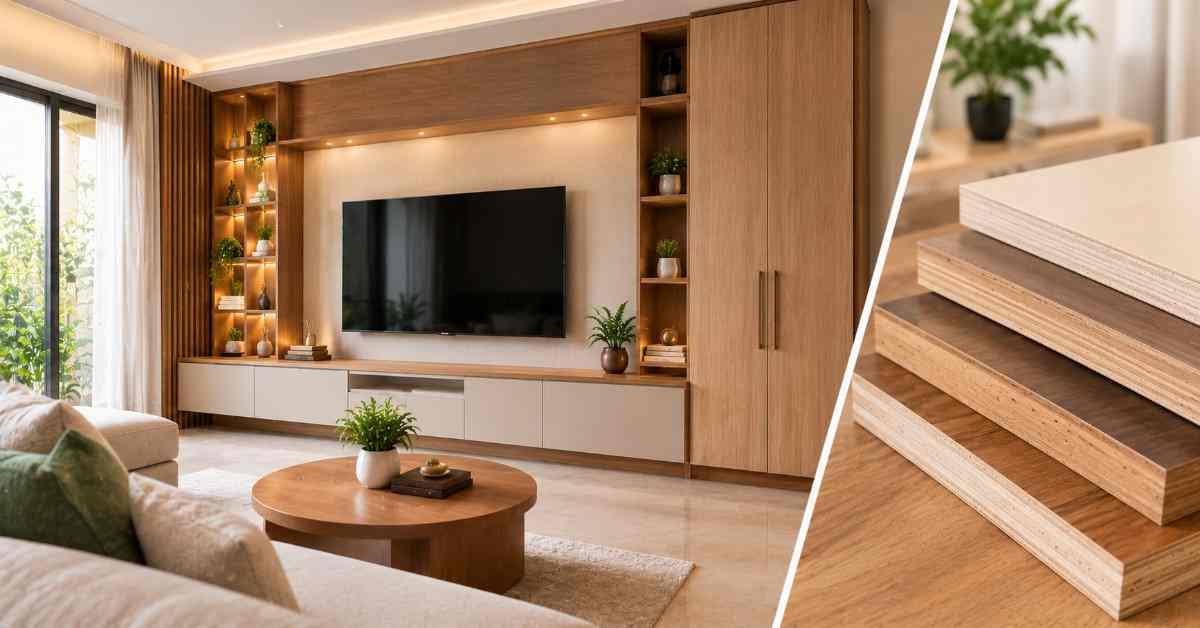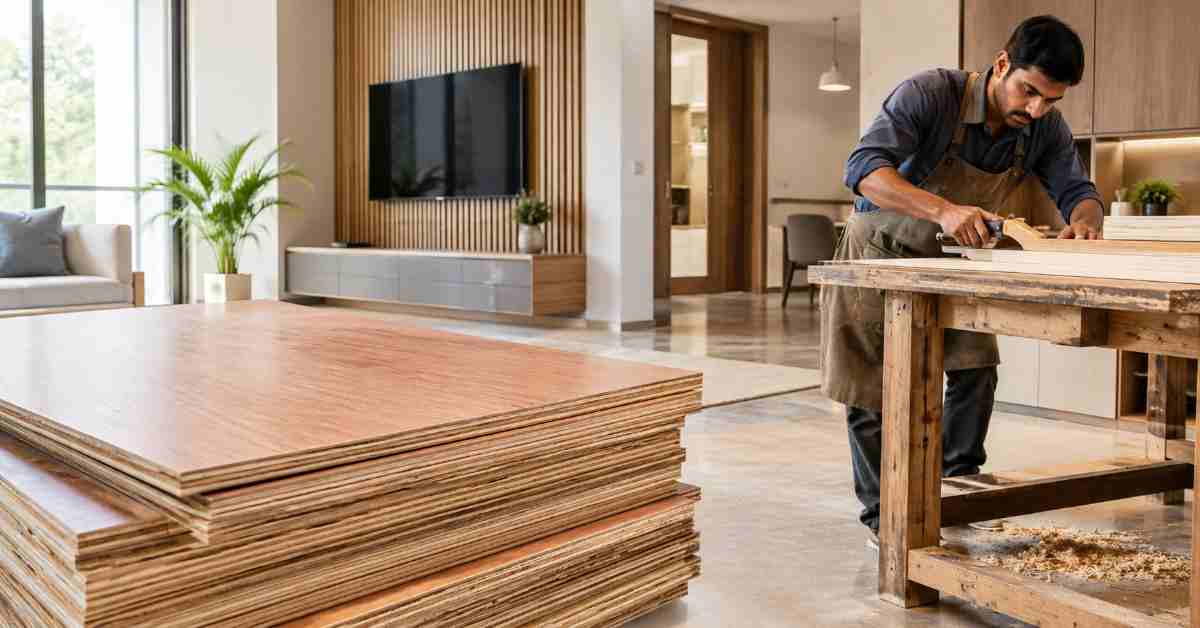
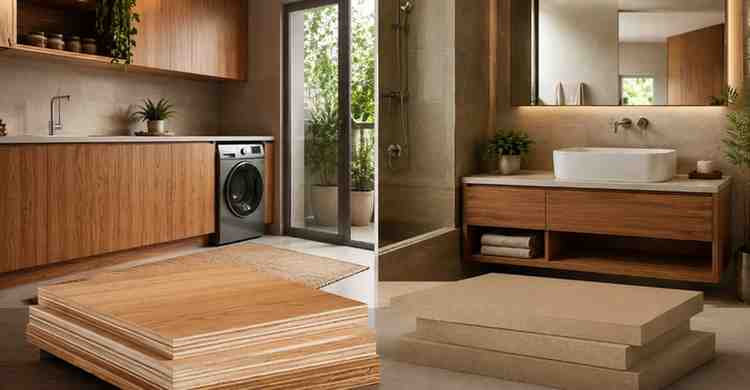
Choosing the right material for kitchens and bathrooms is a critical decision. These spaces face constant moisture, daily use, and long-term wear. That is why many homeowners compare BWP plywood vs HDHMR board before finalizing materials.
This becomes even more important in Indian conditions. Long monsoons, coastal humidity, and temperature fluctuations expose furniture to continuous moisture stress. In many homes, kitchens and bathrooms also see heavy daily usage.
Both materials are used in modern interiors. Both claim moisture resistance and durability. But their performance differs when used in demanding conditions.
A common question is, which is better BWP plywood or HDHMR board for long-term use. The answer often depends on strength, water resistance, and structural reliability.
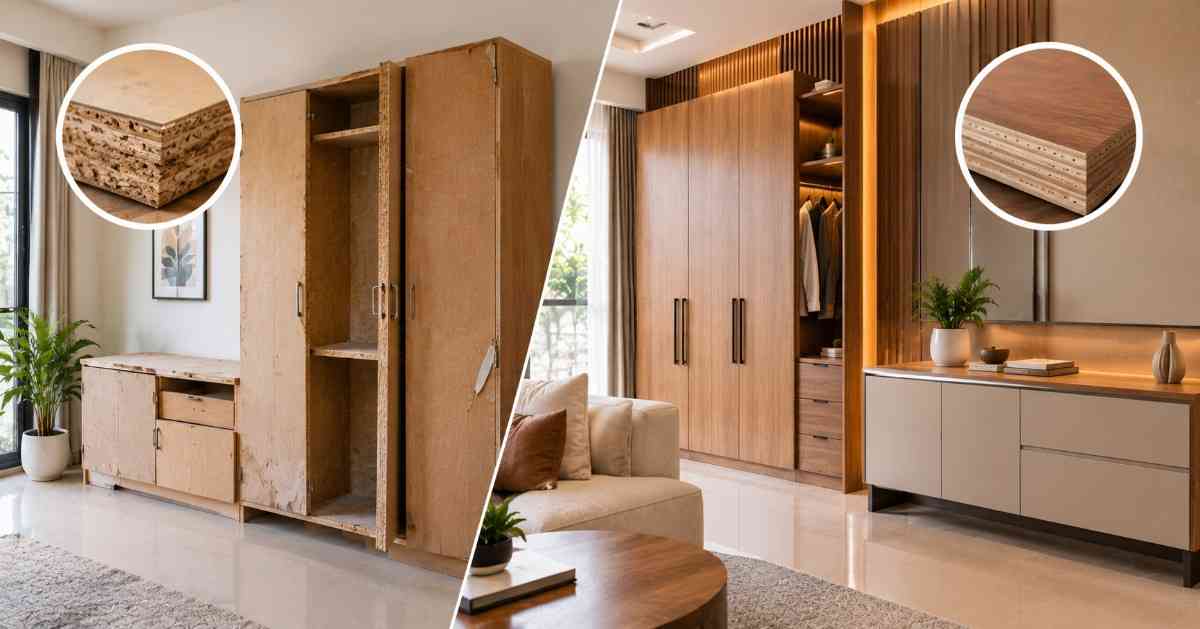
BWP plywood durability and strength come from its cross-layered hardwood construction. This layered build improves load distribution and reduces the risk of bending or failure. That is why it is often preferred in BWP plywood vs HDHMR for kitchen cabinets comparisons.
In contrast, HDHMR board moisture resistance comes from compressed wood fibers bonded with resin. It offers a smooth surface and uniform density. However, it may not perform as reliably as plywood under prolonged exposure to water and humidity.
When comparing waterproof plywood vs HDHMR, plywood is generally considered more suitable for structural furniture. This becomes important in Indian homes where moisture levels can remain high for extended periods.
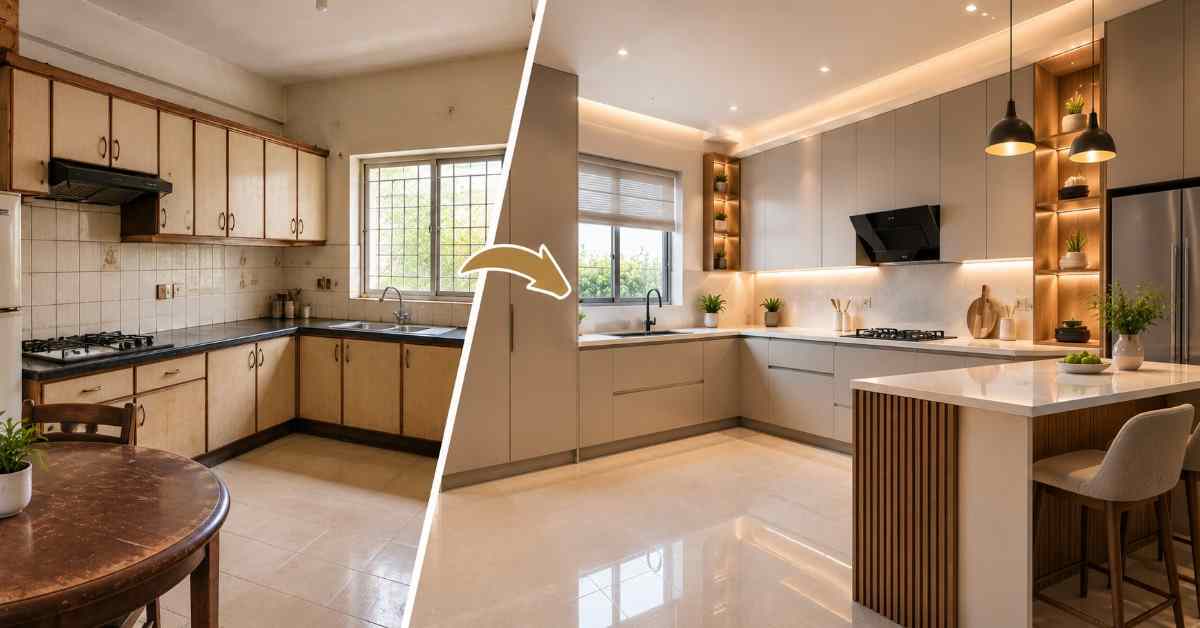
Homeowners today are looking for the best material for bathroom and kitchen furniture India. Here, long-term durability often becomes the deciding factor. Materials must handle both water exposure and daily load without losing strength.
In HDHMR vs marine plywood water resistance comparison, marine-grade options like BWP marine plywood IS 710 are designed for high-humidity environments. They are built to perform in tougher moisture conditions.
Cost comparisons are also common. While BWP plywood vs HDHMR price and durability may vary, performance over time often justifies the investment in stronger materials.
This guide explains the difference between BWP plywood and HDHMR in simple terms. It also helps you choose the best plywood for wet areas and humid conditions with a focus on durability, strength, and long-term value.
BWP Plywood vs HDHMR Board: Detailed Comparison Guide
Choosing between plywood and engineered boards is not just about price or finish. It is about performance under real conditions. In Indian homes, moisture, heat, and daily use can impact material life.
This is why understanding BWP plywood vs HDHMR board in terms of durability, water resistance, and cost becomes important. The table below compares both materials across key practical factors.
| Parameter | BWP Plywood | HDHMR Board |
| Structure | Cross-layered hardwood veneers with strong bonding | Compressed wood fibers with resin bonding |
| Water Resistance | High. Designed for wet areas and prolonged exposure | Moderate to high. Resistant but not fully waterproof |
| Strength & Load Bearing | Excellent. Suitable for heavy furniture and cabinets | Moderate. Not ideal for high load-bearing structures |
| Durability | Long-lasting under regular moisture and usage | Good, but may weaken over long exposure to moisture |
| Best Use Areas | Kitchens, bathrooms, storage units, wet zones | Wardrobes, shutters, decorative panels |
| Application Fit | Ideal for best plywood for wet areas and humid conditions | Suitable for controlled indoor environments |
| Price Range (India) | ₹90–₹160 per sq. ft. (2025 – 26 approx., varies by grade) | ₹70–₹130 per sq. ft. (2025 – 26 approx.) |
| Maintenance | Low. Handles moisture and daily wear better | Moderate. Needs controlled usage conditions |
| Pros | Strong, durable, waterproof, long-term reliability | Smooth surface, uniform finish, cost-effective |
| Cons | Higher upfront cost | Lower structural strength, not ideal for wet zones |
Key Takeaway
If you are comparing BWP plywood vs HDHMR for kitchen cabinets, plywood often performs better in the long run. It offers better strength and handles moisture more effectively.
For homeowners choosing the best material for kitchen cabinets plywood vs HDHMR, BWP plywood is generally preferred where durability matters. It is especially useful in kitchens, bathrooms, and high-use furniture.
While HDHMR boards may suit decorative or low-load applications, plywood remains a more reliable choice for structural and moisture-prone areas.
Why Choose BWP Plywood for Moisture-Prone Interiors
BWP plywood is widely preferred for spaces that demand strength and water resistance. It performs reliably in kitchens, bathrooms, and high-use furniture applications.
1. High Water Resistance for Wet Areas
BWP marine plywood IS 710 is designed to handle prolonged moisture exposure. It performs well in kitchens, bathrooms, and utility spaces.
This makes it a strong choice when selecting the best plywood for wet areas and humid conditions. It helps reduce swelling and damage over time.
2. Superior Strength and Load Capacity
The cross-layered structure improves BWP plywood durability and strength. It distributes load evenly and reduces the risk of bending.
This is important for cabinets, storage units, and heavy-use furniture. It supports long-term structural stability.
3. Better Performance Than Engineered Boards in Wet Conditions
When comparing waterproof plywood vs HDHMR, plywood performs more reliably under continuous moisture exposure.
This makes it suitable for BWP plywood vs HDHMR for kitchen cabinets decisions. It handles both load and humidity effectively.
4. Long-Term Durability and Low Maintenance
BWP plywood is built for long-term use. It resists moisture damage and maintains strength over time.
This reduces the need for frequent repairs. It also improves the lifespan of furniture and interiors.
5. Ideal for Indian Weather Conditions
Indian homes face humidity, monsoons, and temperature changes. These conditions can affect interior materials.
BWP plywood performs well under such stress. That is why it is often chosen as the best material for bathroom and kitchen furniture India.
Make the Right Choice for Long-Lasting Interiors
Choosing between materials is not just about cost. It is about performance in real conditions. Kitchens and bathrooms demand strength, stability, and reliable moisture resistance.
When comparing BWP plywood vs HDHMR board, plywood often stands out for structural use. It offers better durability and performs well in high-humidity environments.
For homeowners looking for the best material for bathroom and kitchen furniture India, investing in quality plywood can reduce long-term maintenance. It also improves the life of cabinets and storage units.
With precision manufacturing, calibrated panels, and dependable bonding standards, Wigwam Ply offers solutions designed for demanding interiors. If you are planning moisture-prone spaces, choose materials that deliver strength, durability, and long-term value.
Explore Wigwam Ply’s range to find plywood solutions built for Indian conditions and everyday performance.
Frequently Asked Questions
1. What is the BWP plywood price India range?
The BWP plywood price India varies based on thickness, grade, and brand quality. Premium-grade plywood usually costs more than standard options.
Higher prices often reflect better bonding, durability, and long-term performance. This can help reduce maintenance costs over time.
2. What is the HDHMR board price in India?
The HDHMR board price is generally lower than premium plywood grades. It depends on density, thickness, and finish quality.
While it may seem cost-effective initially, performance in wet areas should also be considered. This is important for long-term use.
3. Which is the best plywood brand for kitchen use?
The best plywood brand for kitchen use should offer strong bonding and reliable moisture resistance. Kitchens require materials that handle both water exposure and daily load.
Many homeowners consider Wigwam BWP plywood for such applications. It is often used in cabinets and storage units where durability matters.
4. Is Wigwam BWP plywood suitable for kitchens and bathrooms?
Yes, Wigwam BWP plywood is suitable for moisture-prone areas like kitchens and bathrooms. It is designed for durability and long-term performance.
It performs well in high-humidity conditions. This makes it a practical choice for demanding interiors.
5. Is Wigwam marine plywood different from regular BWP plywood?
Wigwam marine plywood is designed for higher moisture resistance and stricter performance standards. It is often used in environments with continuous exposure to water.
Compared to standard plywood, it offers better durability in wet conditions. This makes it useful for high-performance applications.