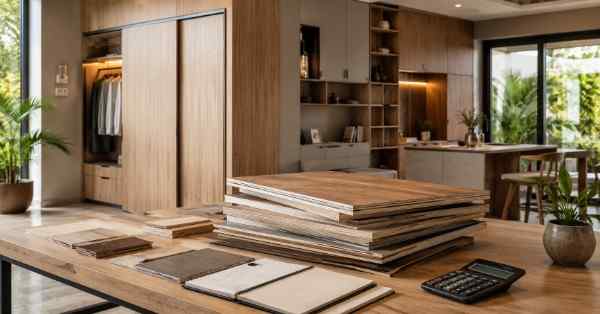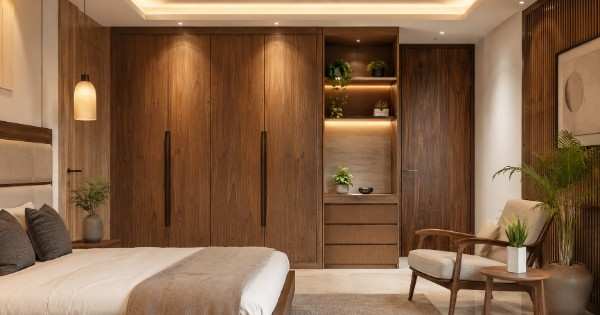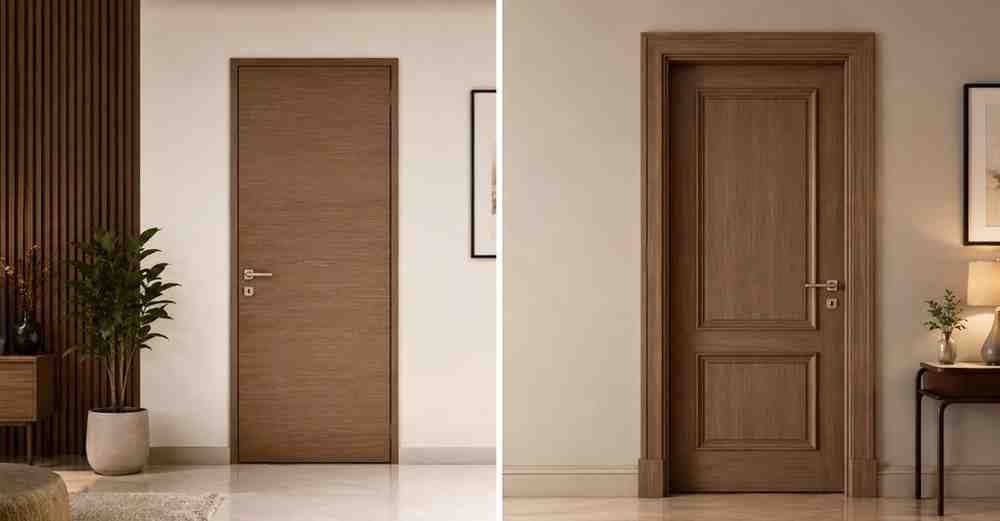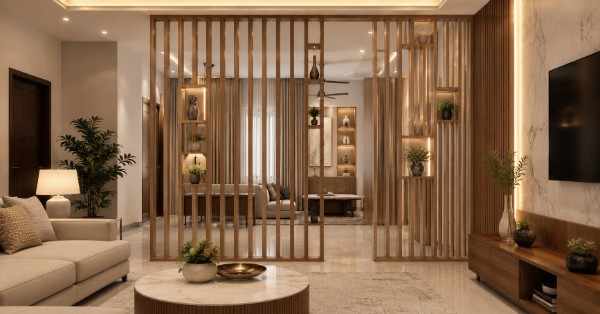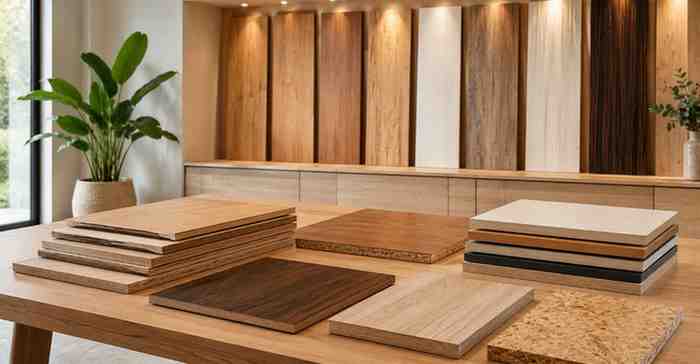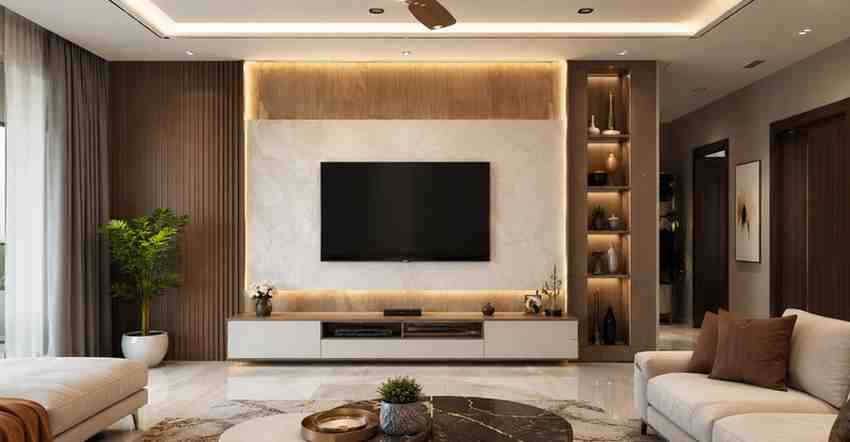
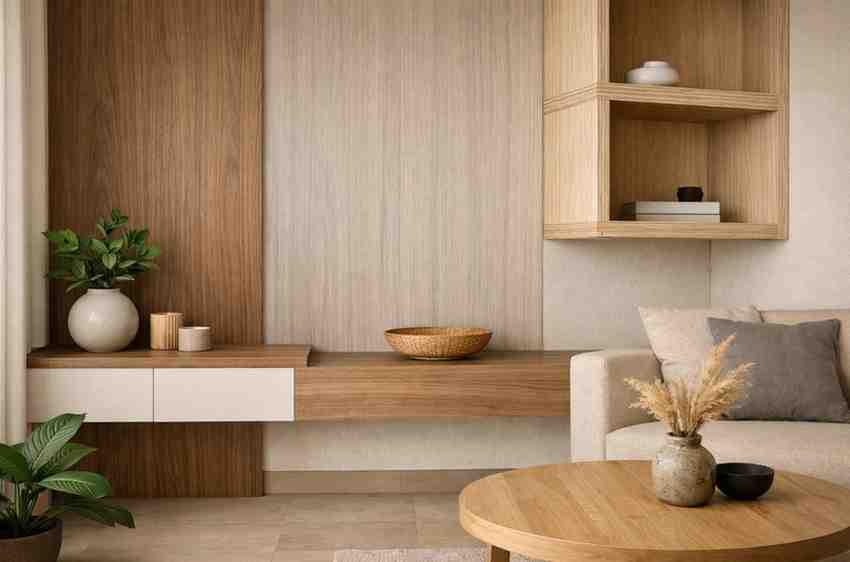
Wood sheets are one of the most important materials used in modern furniture. They are widely used in interior design.
In the past, furniture makers often relied on large solid timber blocks. These were heavy and expensive.
To solve this problem, manufacturers developed certain “types of wood sheets”. These sheets made furniture production easier and more efficient. These sheets are thinner, more versatile, and easier to work with. These include “veneer sheets”, “laminate sheets”, and “plywood sheets”. Each has been designed to provide durability, visual appeal, and cost efficiency. All the while reducing the need for solid wood. Today, these materials are widely used in cabinets, wardrobes, wall panels, and furniture. They allow designers to achieve beautiful finishes while maintaining structural stability.
Historically, craftsmen looked for ways to use valuable timber more efficiently. One solution was slicing wood into very thin layers. This idea helped maximize the use of each log. It reduced waste and allowed wood to be used more carefully. Over time, craftsmen found that thin “veneer sheet” from natural timber could be applied over a base surface. This created the appearance of solid wood while using much less material. It gives the furniture an appearance of solid wood without requiring large logs. Over time, “wood veneer sheets” and “veneer wood sheets” became popular for high-end furniture. They preserved the natural grain patterns of premium wood species. This innovation eventually led to the widespread use of “natural wood veneer sheets”. Decorative surfaces, particularly when creating elegant “veneer sheet for furniture” use them. Applications of these can be seen in wardrobes, cabinets, and wall panels.
As furniture manufacturing evolved, other engineered materials were introduced to complement veneers. Durable “laminate sheets” and “decorative laminate sheets” became widely used. They offered scratch resistance, color variety, and easy maintenance. Modern “wood laminate sheets” replicate the look of natural timber. They provide a protective surface. This made them a popular choice for “laminate sheets for furniture”. They are widely used in kitchens, offices, and living rooms. At the same time, strong structural materials also became important in furniture making. One of the most widely used options is “plywood sheets”. There are different “plywood sheet types” designed for specific purposes. These include applications such as cabinets, partitions, and “plywood sheets for furniture”.
Another advantage of engineered sheets is their ability to use a variety of wood species efficiently.
- Lightweight materials such as “balsa wood” and “balsa wood sheets” are light in weight. They are often used in specialized applications where weight reduction is important.
- “Stone veneer sheets” allow designers to achieve the rich texture. They give an appearance of natural stone.
- “Wood sticker sheets” offer a quick and affordable way to enhance surfaces.
These have expanded design possibilities. Thus, allowing homeowners and designers to experiment extensively t. they offer choices with textures, finishes, and patterns in interior spaces.
Beyond aesthetics, wood sheets also simplified furniture maintenance and finishing processes. For example, learning how to polish wood furniture properly. This can restore the shine of veneer and laminate surfaces, helping them last for years. People often look for efficient solutions in daily life. For example, many learn how to fold fitted sheets to keep their homes organized. Others prefer learning how to fold fitted sheets neatly. This helps in space maximising.
In a similar way, engineered wood sheets were developed to simplify furniture making. They help make production more efficient, affordable, and accessible.
“Veneer sheets”, “laminate sheets” or “plywood sheets” form the foundation of modern furniture. Their evolution has allowed designers to combine beauty, durability, and practicality. Thus, making wood sheet technology one of the most influential innovations.
1. Veneer Sheets
A “veneer sheet” is a very thin slice of natural wood. It is applied over a base surface such as plywood or MDF to give furniture the appearance of solid timber. These “veneer sheets” are typically produced by slicing or peeling logs into extremely thin layers. Thus, preserving the natural grain and texture of the wood. High-quality “wood veneer sheets” are widely used in premium interiors. They define authentic wood patterns. A However it uses far less timber than solid wood furniture.
Many designers prefer “natural wood veneer sheets” because they provide warmth, elegance, and a natural finish. A well-crafted “veneer sheet for furniture” has several applications. It is used for wardrobes, cabinets, wall panels, and luxury furniture pieces. Use them where aesthetics matter most. However, since “veneer wood sheets” are made from real wood, they require proper care. These include, gentle cleaning and occasional polishing. This is necessary to maintain their appearance and protect the surface.
2. Laminate Sheets
“Laminate sheets” are engineered surface materials. They are created by pressing multiple layers of kraft paper together with resin. This requires high heat and pressure. The top layer usually contains a printed decorative pattern. This is why “decorative laminate sheets” can mimic wood, stone, or abstract textures. These surfaces are then bonded onto plywood or other base boards. To create durable and visually appealing furniture panels.
Modern “wood laminate sheets” are particularly popular for cabinets, wardrobes, and modular kitchens. They are scratch-resistant, moisture-resistant, and easy to maintain. Many homeowners choose “laminate sheets for furniture”. They offer a wide range of colors, textures, and finishes at a relatively affordable cost. Unlike natural wood finishes, laminate surfaces usually require minimal care. Simple wiping and regular cleaning are often enough to keep them looking new.
3. Plywood Sheets
“Plywood sheets” form the structural backbone of most modern furniture. They are manufactured by bonding multiple thin layers of wood veneers together with adhesive. With each layer placed at alternating grain directions to increase strength and stability. This cross-layer construction is what gives plywood its durability and resistance. It prevents it from bending or cracking.
There are several “plywood sheet types” designed for different applications. Including commercial plywood, marine plywood, and structural plywood. These “plywood sheets for furniture” are widely used for wardrobes, cabinets, shelves, and wall units. They provide strong support while remaining relatively lightweight. When properly sealed and finished, plywood can last for many years. It is an ideal base for veneer or laminate surfaces in furniture manufacturing.
4. Specialty and Decorative Wood Sheets
The furniture industry also uses several specialty sheet materials. These are used for creative and technical applications. For instance, balsa wood is known for being extremely lightweight. They are used in craftwork, model making, and certain decorative furniture elements. Designers may also experiment with surfaces like “stone veneer sheets”. They deliver appearance of natural stone with the flexibility of thin sheet materials.
Decorative solutions such as “wood sticker sheets” are handy materials. They allow homeowners to quickly refresh surfaces without major renovation. These materials are not always structural like plywood. They expand the design possibilities for modern interiors and furniture customization.
Choosing the Right Type of Wood Sheet
Selecting the right material depends on the purpose of the furniture. However, the desired finish plays an important role as well.. For a natural yet premium look, use “veneer sheets” or “natural wood veneer sheets”. For durability and easy maintenance, opt for “laminate sheets” or “wood laminate sheets”. Meanwhile, strong “plywood sheets” remain the foundation for most furniture structures. Thus, making them an essential component in modern woodworking and interior design.
Fun Fact
The idea behind “types of wood sheets” actually dates back centuries. Craftsmen realized that slicing wood into thin layers would be beneficial. It could dramatically extend the use of valuable timber. Early furniture makers used “wood veneer sheets” to decorate large surfaces. This would use only a fraction of the original log. Today, modern materials such as “laminate sheets”, “plywood sheets”, and “natural wood veneer sheets” are in trend. They allow designers to create durable and stylish furniture. All the while making more efficient use of natural resources.
Pro Tip
When selecting materials for furniture, keep certain points in mind. Always match the sheet type with the function of the piece. For example, strong “plywood sheets for furniture” work best as the structural base. “Veneer sheet for furniture” or “wood laminate sheets” are ideal. Use them to achieve the outer surface and finish. Also remember that proper maintenance is necessary. Knowing how to polish wood furniture correctly is important. It can significantly extend the life and appearance of veneer or laminate surfaces.
Choosing the Right Wood Sheets for Lasting Furniture
Understanding the different “types of wood sheets” is helpful. Select t materials for furniture and interiors, as per the need . Whether you choose elegant “veneer sheets”, durable “laminate sheets”, or strong “plywood sheets”. Each option plays a unique role in balancing aesthetics, strength, and practicality. High-quality “wood veneer sheets” are often preferred for premium finishes. Wood laminate sheets” provide durability and easy maintenance for everyday furniture surfaces.
When used correctly, these materials work together to create long-lasting furniture. For example, sturdy “plywood sheets for furniture” are used as the structural base. A “veneer sheet for furniture” or “decorative laminate sheets” can provide finishing . This layered approach ensures that furniture remains strong.
Proper care also plays an important role in maintaining the beauty of these surfaces. Regular dusting and gentle cleaning is essential. It can keep “veneer wood sheets” and “laminate sheets for furniture” looking fresh. Learning how to polish wood furniture correctly is advised. It can help preserve the natural shine of veneer finishes. Avoiding excessive moisture and harsh chemicals is important. It helps protect both laminate and plywood surfaces from damage.
If you are planning new furniture or interior upgrades, do some research. Explore high-quality “plywood sheets”, “veneer sheets”, and “wood laminate sheets”. Trusted manufacturers like Wigwamply offer a wide range of premium wood sheet solutions. The products are designed for durability, performance, and modern interiors. Choose reliable materials and care for them properly. You can create furniture that remains beautiful, functional, and long-lasting.
FAQs
1. What is the difference between veneer vs laminate vs plywood?
The comparison of veneer vs laminate vs plywood depends on their structure and purpose. Veneer is a thin layer of natural wood used for finishing surfaces. Laminate is a synthetic decorative layer. Plywood is a strong board made by bonding multiple wood layers together. These are some of the most widely used wood sheet materials in furniture.
2. What are the most common wood sheet materials used in furniture?
Some of the most common wood sheet materials include veneer, laminate, and plywood. These furniture wood sheets are widely used in modern interiors. They provide strength, durability, and decorative finishes for furniture.
3. What are the best wood sheets for furniture?
The best wood sheets for furniture depend on how the furniture will be used. Many designers prefer furniture grade plywood as the base because it is strong and stable. A veneer or laminate surface is often added on top for appearance.
4. What are engineered wood sheets?
Engineered wood sheets are manufactured wood products. They are made by bonding wood layers, fibers, or particles together with adhesives. Plywood, MDF, and laminate-based panels are common examples. These sheets improve strength and reduce the use of solid timber.
5. What are decorative wood sheets used for?
Decorative wood sheets are mainly used to improve the appearance of furniture. They provide attractive textures, colors, and patterns. These sheets are commonly applied to cabinets, wardrobes, and wall panels.
6. Where are interior wood sheets commonly used?
Interior wood sheets are widely used in homes and commercial spaces. They are commonly found in wardrobes, modular kitchens, and TV units. They are also used for partitions and office furniture.
7. What is furniture grade plywood and why is it important?
Furniture grade plywood is a high-quality type of plywood used for furniture making. It has better strength and surface quality than lower-grade boards. This makes it suitable for cabinets, wardrobes, and other structural furniture parts.
8. What are commercial plywood sheets used for?
Commercial plywood sheets are commonly used in general furniture and interior work. They are suitable for shelves, cabinets, and partitions. They are a practical and widely used option for everyday furniture projects.