Choosing plywood for a home involves more than comparing thickness and price. India offers several plywood types, grades, and construction categories. Moreover, each option serves different environmental and furniture requirements. From wardrobes and kitchens to doors and structural applications, selection matters. Indian homes also experience significant differences in humidity, temperature, and monsoon exposure. Therefore, the right plywood should match both application and environmental conditions.
The most commonly discussed categories include MR, BWR, and BWP plywood. However, terms such as waterproof, marine, hardwood, softwood, and structural plywood can create confusion. Some describe performance grades, while others describe construction, timber composition, or intended application. Understanding these differences makes plywood selection considerably easier.
WigwamPly approaches plywood selection through application-specific construction and performance requirements. Its portfolio includes MR and BWP solutions alongside specialised engineered plywood options. These products are developed for different furniture, interior, and demanding-use applications. Consequently, homeowners, designers, architects, and contractors can select materials more systematically.
This guide explains the types of plywood in India and their practical applications. It also clarifies plywood grades in India and common terminology used by manufacturers. From MR grade plywood to BWP grade plywood, each category has a distinct purpose. Understanding these differences helps you choose plywood based on actual usage. It also prevents over-specifying premium materials where simpler solutions are sufficient.
Whether you are building a wardrobe, kitchen, door, or structural component, start with the application. Subsequently, consider moisture exposure, strength requirements, finish, thickness, and expected usage. This approach helps you choose the right plywood without relying solely on price or appearance.
Bring your most creative, curved design concepts to life without compromising on structural integrity using WigwamPly highly adaptable flexible plywood.
Plywood Grades in India — MR, BWR, BWP & Waterproof/Marine Plywood Explained
The most common plywood buying mistake is confusing grade with type. A plywood grade primarily indicates its moisture and bonding resistance under applicable standards. Meanwhile, type can describe construction, timber composition, or intended application. Therefore, buyers should select plywood according to the environment first, rather than choosing solely by price. A bedroom wardrobe and a kitchen cabinet face very different moisture conditions. Consequently, they should not automatically use the same plywood specification.
MR Grade Plywood — Moisture Resistant
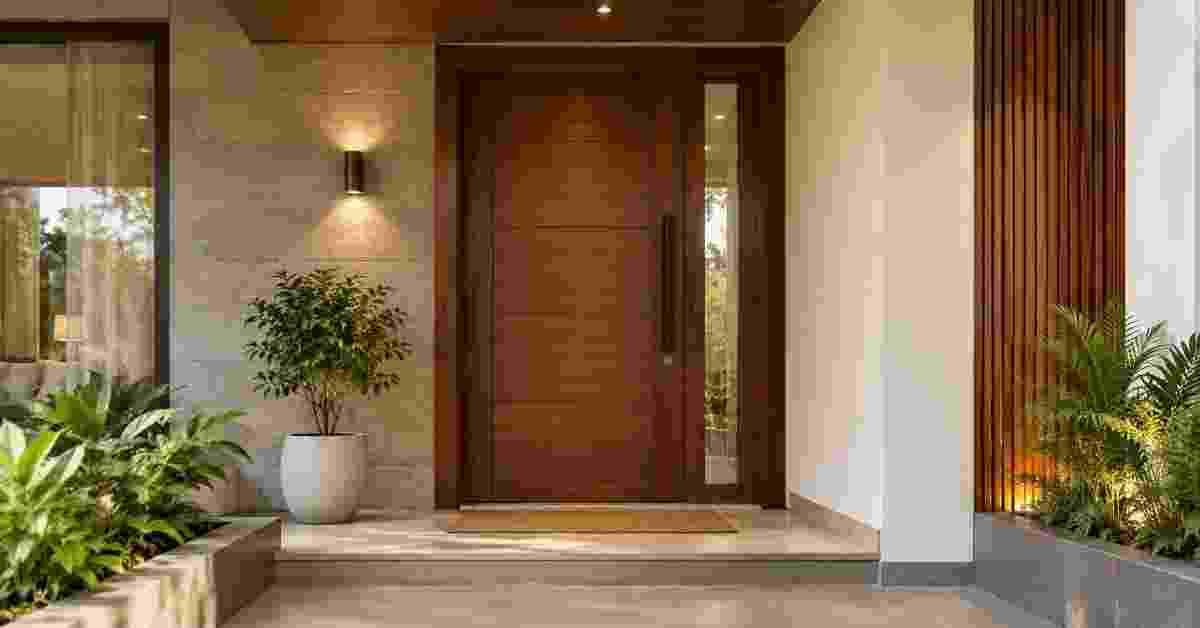
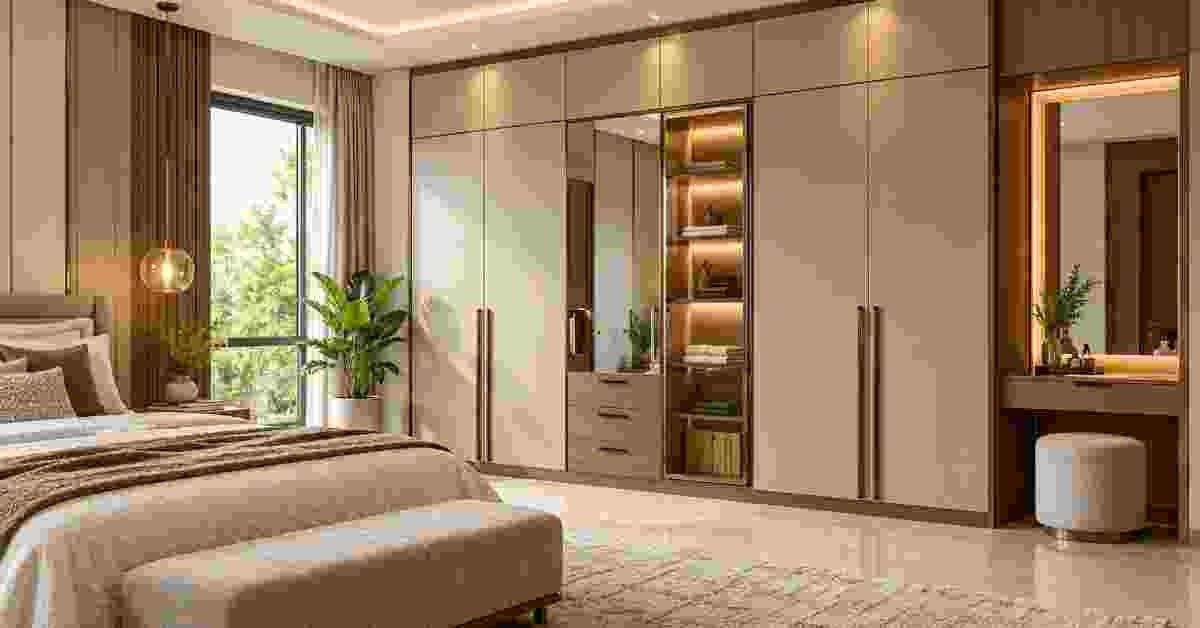
MR grade plywood is primarily intended for dry interior applications. It is commonly associated with IS:303 and uses moisture-resistant bonding rather than a waterproof construction. MR plywood can suit bedroom wardrobes, living-room furniture, interior partitions, and false-ceiling applications. However, moisture resistance should not be confused with waterproofing. MR plywood is not designed for continuous water exposure, direct splash zones, or persistently humid environments. Therefore, kitchens, bathrooms, exterior-facing furniture, and exposed entrance applications generally require a more moisture-resistant specification.
For dry furniture applications, WigwamPly offers MR-grade options designed around calibrated construction and consistent manufacturing. The appropriate product should still be selected according to the application’s moisture exposure and finish requirements.
BWR Grade Plywood — Boiling Water Resistant
BWR grade plywood provides greater water resistance than conventional MR plywood. It is intended for applications experiencing occasional moisture exposure rather than continuous water contact. For example, it can be considered for kitchen furniture positioned away from direct splash zones. However, requirements differ between applications and manufacturers.
BWR is also less prominent in many premium plywood portfolios than MR and BWP. When an application has substantial or recurring moisture exposure, buyers increasingly specify BWP-grade plywood instead. This makes the grade selection simpler: MR for genuinely dry interiors and BWP where sustained moisture resistance is required.
BWP Grade Plywood — Boil Water Proof
BWP grade plywood is commonly specified where plywood may encounter substantial moisture. Under IS:710, BWP plywood is designed for applications requiring boil-water resistance and durable bonding. Its construction makes it particularly suitable for kitchens, bathroom cabinetry, main doors, and furniture exposed to humid conditions.
This is where application-based selection becomes important. A BWP panel may cost more than an MR alternative, but using MR in a demanding environment can create greater replacement and repair risks. Therefore, when moisture exposure is genuinely uncertain, BWP can provide a more appropriate specification. WigwamPly’s BWP range includes products developed for demanding furniture and entrance-door applications.
Waterproof Plywood vs Marine Plywood — Clearing Up a Common Misconception
The term waterproof plywood is frequently used in the Indian market for BWP-grade plywood. However, buyers should still check the actual grade and applicable IS standard rather than relying on the word “waterproof” alone.
Marine plywood is a more specialised category associated with demanding moisture environments and higher construction requirements. It should not automatically be treated as a synonym for every BWP panel. For ordinary residential kitchens, bathroom cabinetry, and moisture-exposed furniture, appropriately specified IS:710 BWP plywood is generally a more practical choice.
Marine-grade materials become relevant when the application involves unusually severe or continuous water exposure. Boat interiors, marine structures, and specialised water-contact applications can require specifications beyond ordinary residential furniture requirements. Therefore, selecting marine plywood simply because it sounds more premium can unnecessarily increase project costs.
Structural Plywood — A Different Purpose
Structural plywood belongs to a different application category. It is engineered and tested for structural performance, including applications involving load-bearing requirements, flooring systems, structural panels, or construction work. Its evaluation focuses more heavily on mechanical and structural properties than decorative surface appearance.
Furniture-grade plywood should therefore not automatically replace structural plywood in a load-bearing application. Conversely, structural plywood can be unnecessary for ordinary wardrobes or decorative furniture. Always match the plywood specification with the engineering requirement of the project.
Achieve a luxurious, polished finish on your premium furniture designs using WigwamPly aesthetically pleasing block board veneer.
Plywood Grade Comparison for Indian Applications
| Grade / Category | Common Standard | Moisture Resistance | Correct Applications | Incorrect Applications |
| MR Grade | IS:303 | Moisture resistant; not intended for sustained water exposure | Wardrobes, living-room furniture, partitions, dry interiors | Bathrooms, direct splash zones, exterior-facing applications |
| BWR Grade | Applicable product standard/specification | Greater water resistance than MR | Occasional moisture exposure, suitable interior applications | Continuous water contact or severe moisture exposure |
| BWP Grade | IS:710 | Designed for boil-water resistance | Kitchens, bathrooms, main doors, humid environments, moisture-exposed furniture | Applications requiring a separately engineered structural or specialised marine specification |
| Waterproof Plywood | Market term; verify actual grade | Depends on the declared grade | Use only after confirming the applicable standard and specification | Choosing solely from the word “waterproof” |
| Marine Plywood | Specialised specification; verify product standard | Designed for demanding moisture environments | Marine and specialised continuous-water applications | Routine furniture where BWP already meets requirements |
| Structural Plywood | Application-specific structural standards | Depends on specification | Structural panels, flooring, load-bearing construction applications | Decorative furniture selected purely for appearance |
How WigwamPly Helps Simplify Plywood Selection
WigwamPly’s portfolio allows buyers to select plywood according to the application’s actual requirements rather than treating every project identically. MR-grade products are appropriate starting points for dry interior furniture, while BWP products provide a stronger specification for moisture-exposed applications. For example, WigwamPly Fabricate Club MR is an IS:303 MR-grade product, while Fabricate Gold 710 is an IS:710 BWP product. This distinction makes it easier to match the material with the environment.
Ultimately, the best plywood is not necessarily the most expensive plywood. It is the plywood whose grade, construction, thickness, and performance characteristics match the application. For Indian homes, understanding this distinction helps prevent both under-specification and unnecessary over-specification.
Save time on your construction or renovation projects with a perfectly finished, hassle-free readymade flush door from WigwamPly.
Types of Plywood by Core & Face — Hardwood, Softwood, Decorative Plywood & Blockboard
Moisture grade is only one part of plywood selection. The second important consideration is how the plywood is constructed and finished. This includes the timber used for its core, the face veneer, and whether the panel is designed for structural or decorative use. Therefore, two plywood panels can share the same moisture grade while performing differently in furniture applications.
Hardwood Plywood
Hardwood plywood uses veneers from denser hardwood species such as Gurjan, Okoume, and other suitable timber species. Its higher density can provide stronger screw-holding and reliable fixing performance when properly manufactured. This makes hardwood-core plywood particularly relevant for furniture carrying repeated structural and hardware loads.
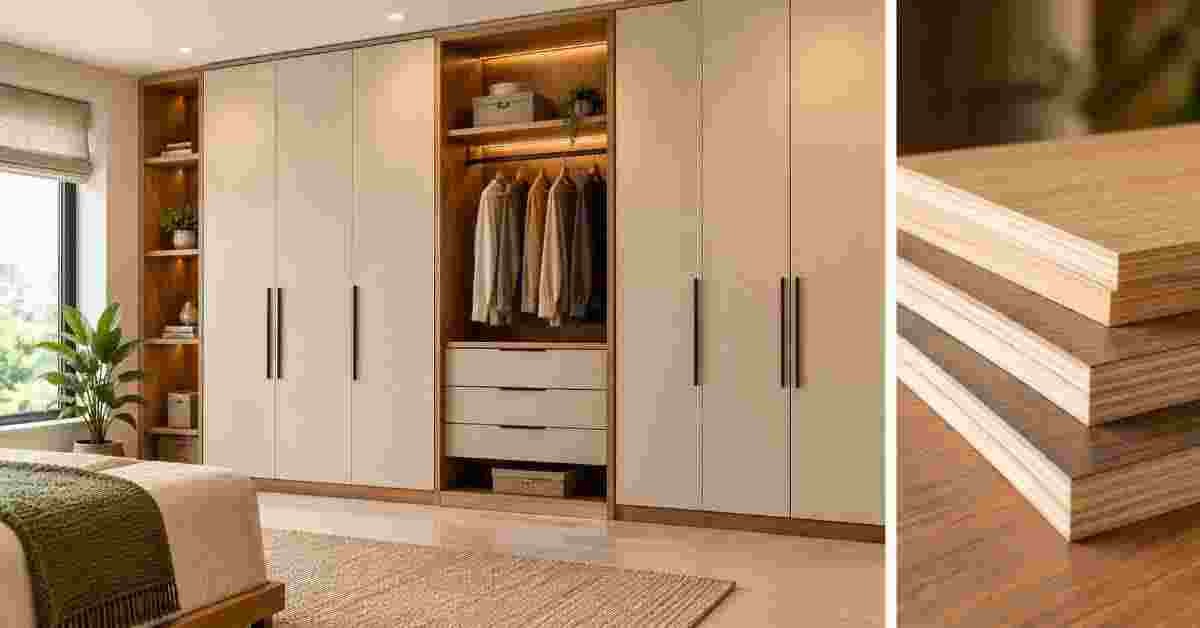
Wardrobe carcasses, cabinet frames, shelves, drawers, and hinge-bearing components can benefit from a suitable hardwood-core construction. For these applications, screw and hinge-fixing reliability matters throughout the furniture’s service life. WigwamPly uses hardwood construction across several of its plywood solutions, with product specifications varying by range and application.
However, density alone should not determine plywood quality. Core construction, veneer quality, bonding, calibration, manufacturing consistency, and applicable performance specifications also influence the finished panel.
Softwood Plywood
Softwood plywood uses veneers from softer timber species and is generally lighter than many hardwood alternatives. Its lower density can make it economical and easier to handle for applications where high fixing strength is not the primary requirement.
It can be suitable for applications such as packaging, lightweight paneling, and certain temporary or low-stress construction uses. However, furniture components carrying sustained loads or repeated hardware movement require greater consideration. Hinges, drawer runners, and heavily loaded shelves can place substantial demands on the substrate.
Therefore, softwood plywood should not automatically be treated as a substitute for hardwood-core plywood in demanding furniture applications. The correct choice depends on the panel’s certified properties and intended use.
Decorative Plywood
Decorative plywood focuses on the visible appearance of the panel. It can feature natural wood veneer, recon or reconstituted veneer, or a factory-applied decorative surface. This approach reduces the need for furniture makers to apply a separate visible facing after fabrication.
Decorative plywood is particularly useful for wardrobe shutters, cabinet doors, wall panelling, and other visible furniture components. Factory-controlled facing can also help maintain greater visual consistency across multiple panels.
This differs from utility or commercial plywood, which is generally selected as a functional substrate. Such panels may subsequently receive laminate, paint, veneer, or another decorative finish. Therefore, decorative plywood combines the substrate and visible surface requirements more directly.
WigwamPly offers solutions for different visual requirements, including engineered and recon-wood surfaces. The appropriate product should be selected according to the desired finish, moisture environment, and component function.
Protect your interior furniture against seasonal humidity fluctuations with WigwamPly highly durable mr ply.
Blockboard
Blockboard differs from conventional plywood because of its core construction. It generally contains strips of solid wood arranged as a core between veneer face layers. Plywood, in contrast, is manufactured primarily from thin veneers arranged in bonded layers with alternating grain directions.
This construction gives blockboard useful rigidity for long, straight components. It is therefore commonly considered for long shelves, table tops, partitions, and door shutters. Its performance, however, depends on the quality and arrangement of the timber strips, bonding, face veneers, and manufacturing process.
Blockboard also has limitations. Its directional construction can behave differently across and along the core strips. Consequently, plywood may be preferable where multidirectional strength, curved fabrication, or complex furniture shaping is required.
WigwamPly offers Fabricate Club Blockboard, designed with a timber-strip core and veneer faces. Its specifications include calibrated construction and options involving pinewood or selected timber cores. Therefore, it can be considered where long, straight furniture components require a dedicated blockboard construction.
Choosing Between Plywood Types — A Practical Framework
The easiest way to choose plywood is to combine grade and construction type rather than considering either one independently. First, identify the moisture environment. MR can suit dry interiors, while BWP is more appropriate for applications involving substantial moisture exposure. Subsequently, select the core and face according to the component’s structural and visual requirements.
| Furniture Requirement | Moisture Grade | Core / Construction | Face / Finish | WigwamPly Direction |
| Bedroom wardrobe carcass | MR | Hardwood-core plywood | Laminate or veneer | Fabricate Club MR |
| Kitchen carcass | BWP | Hardwood-core plywood | Laminate or suitable facing | WigwamPly BWP range |
| Wardrobe shutter | MR/BWP based on exposure | Hardwood plywood | Decorative veneer, recon or laminate | Select according to finish |
| Bathroom cabinetry | BWP | Hardwood-core plywood | Moisture-appropriate finish | WigwamPly BWP range |
| Long furniture shelf | MR/BWP based on exposure | Blockboard or suitable plywood | Laminate/veneer | Fabricate Club Blockboard where appropriate |
| Premium visible panel | MR/BWP based on exposure | Suitable engineered plywood | Natural/recon decorative face | WigwamPly decorative-facing options |
| Heavy-duty cabinet frame | MR/BWP based on exposure | Hardwood-core plywood | Laminate/veneer | Select according to environment |
| Dry interior partition | MR | Suitable plywood/blockboard | Paint/laminate/veneer | MR-grade solution based on design |
The key point is simple: grade determines suitability for the environment, while construction and facing determine suitability for the component. A kitchen cabinet may need BWP because of moisture exposure, while its hardwood core supports reliable furniture construction. A visible wardrobe shutter may additionally require a decorative face for the desired appearance.
With WigwamPly, buyers can therefore approach plywood selection systematically: choose the moisture grade first, select the appropriate construction second, and decide the visible finish last. This prevents both under-specification and unnecessary spending while creating furniture suited to Indian homes and usage conditions.
Conclusion: Choose Plywood by Application, Not Just Appearance
Understanding the different types of plywood makes furniture selection more practical. The right choice begins with moisture exposure and the required plywood grade. Subsequently, core construction, thickness, structural requirements, and surface finish should guide the final selection. Hardwood plywood can support demanding furniture applications, while decorative plywood enhances visible surfaces. Blockboard can provide a practical solution for long, straight components. Therefore, the best plywood is not simply the most expensive option. It is the specification that matches the furniture’s environment, function, and expected usage.
Build Better Furniture with WigwamPly
Choosing the right plywood becomes easier when every specification has a purpose. WigwamPly offers MR and BWP plywood solutions, engineered constructions, decorative options, and blockboard for varied furniture requirements. From wardrobes and kitchens to shutters, shelves, and premium interiors, select the material according to where and how it will be used.
Recognized for delivering 100% calibrated and structurally flawless wood panels, WigwamPly consistently ranks among the best plywood brands in India.
Choose the right grade. Choose the right construction. Choose WigwamPly.
Frequently Asked Questions
What is the difference between MR and BWP plywood?
MR plywood is designed for moisture-resistant interior applications, while BWP plywood provides substantially greater resistance to water exposure. MR is commonly suitable for wardrobes, living-room furniture, and dry interior applications. BWP, generally specified under IS:710, is better suited to kitchens, bathrooms, main doors, and other moisture-exposed applications. Therefore, the choice should depend on the environment rather than simply the plywood’s price.
Is BWP plywood the same as waterproof plywood?
BWP plywood is commonly marketed as waterproof plywood in India, but buyers should verify the actual grade and applicable standard. BWP refers to boil-water-resistant plywood designed for demanding moisture conditions. The term “waterproof” alone does not identify the product’s construction or certification. Therefore, look for the relevant grade, standard, and manufacturer specifications instead of relying only on marketing terminology.
What is the difference between plywood and blockboard?
Plywood is manufactured primarily from bonded veneer layers arranged in different grain directions. Blockboard uses solid wood strips within its core, covered with veneer face layers. This construction gives blockboard useful rigidity for long, straight components such as shelves, tables, and some door shutters. Plywood can offer greater versatility for multidirectional loading and complex furniture shapes. The better option depends on the component’s dimensions, support, and intended use.
Which plywood grade is best for kitchen cabinets?
BWP-grade plywood is generally the preferred specification for kitchen cabinets, particularly where panels may experience humidity, spills, or water exposure. MR plywood can be appropriate for genuinely dry kitchen components, but areas near sinks and plumbing require greater moisture resistance. Therefore, BWP provides a more suitable starting point for moisture-prone kitchen cabinetry. WigwamPly offers BWP solutions designed for demanding furniture applications.
What is hardwood plywood used for?
Hardwood plywood is commonly used where furniture components require reliable structural performance and hardware fixing. Wardrobe carcasses, cabinet frames, shelves, drawers, and hinge-bearing components can benefit from suitable hardwood-core construction. Its density can support stronger screw and fixing performance than lighter alternatives. However, core quality, bonding, thickness, and manufacturing consistency also influence performance, so timber species alone should not determine the purchase.
What are the main types of plywood available in India?
The main categories include MR, BWR, and BWP grades, along with hardwood, softwood, decorative, structural, and specialised plywood products. Blockboard is a related panel product with a different core construction. These categories describe different aspects of plywood, including moisture resistance, timber composition, construction, and intended application. Therefore, buyers should combine the grade and construction type rather than treating them as interchangeable terms.
Is BWP plywood better than MR plywood?
BWP is not automatically better for every application. It provides greater moisture resistance, making it more appropriate for kitchens, bathrooms, exterior-facing furniture, and humid environments. MR plywood can be a practical choice for dry interiors where such resistance is unnecessary. Therefore, BWP is better when the application demands greater moisture protection, while MR can avoid unnecessary specification and cost in suitable dry environments.