
India’s home renovation landscape is undergoing a noticeable geographic transformation in 2026. For years, premium interior spending remained concentrated across Mumbai, Delhi, Bengaluru, Hyderabad, and Chennai. However, home renovation trends India 2026 increasingly point toward stronger activity beyond established metropolitan markets.
Tier-2 cities are witnessing growing demand for contemporary homes, modular kitchens, wardrobes, and customised furniture. Rising household incomes are giving homeowners greater confidence to invest in residential improvements. Additionally, improved digital access has exposed smaller-city consumers to global interior designs and modern furniture solutions.
This transformation is particularly visible in cities such as Rourkela, Bhubaneswar, Jaipur, Lucknow, Indore, Surat, Coimbatore, and Chandigarh. Homeowners increasingly expect interiors comparable with metropolitan standards, while retaining regional preferences and practical requirements.
The growth of tier 2 city interior design is also being supported by expanding organised retail and local design professionals. Interior designers, architects, modular-furniture manufacturers, and specialised material dealers are increasingly serving these markets. Consequently, homeowners can access better materials without depending entirely on metropolitan suppliers.
The trend extends beyond aesthetics into construction and material choices. Plywood demand India is increasingly influenced by residential construction, renovation activity, modular furniture adoption, and replacement cycles. Homeowners are becoming more aware of plywood grades, moisture resistance, calibration, warranties, and certification.
At the same time, home renovation tier 2 cities increasingly reflects a desire for functional luxury. Families want kitchens with better storage, wardrobes with organised interiors, and living spaces designed around modern lifestyles. Yet, they remain conscious of material durability, maintenance, and overall project budgets.
This creates an interesting opportunity for brands such as WigwamPly. Consistent product specifications, certified plywood, calibrated construction, and dependable dealer availability can help smaller-city homeowners achieve premium interiors.
Known for its exceptional structural integrity, rigorous testing, and lifetime warranties, WigwamPly proudly secures its position among the top ten plywood in india.
The evolution of tier 2 city interior design in India therefore represents more than rising renovation expenditure. It signals a broader democratisation of modern interior design, where sophisticated homes are increasingly being created beyond India’s traditional metropolitan centres.
The Tier-2 City Renovation Boom — What’s Driving It & How It’s Different from Metro Trends
India’s renovation story in 2026 is no longer concentrated within major metros. Cities such as Raipur, Bhubaneswar, Coimbatore, Indore, Lucknow, Nagpur, Surat, Vadodara, Jaipur, and Kochi are seeing stronger renovation momentum. This expansion reflects a fundamental change in where aspiration, disposable income, and design awareness now exist.
The home renovation trends India 2026 landscape increasingly includes homeowners upgrading older properties into contemporary living spaces. Rising incomes, remote employment, digital design exposure, and improving local furniture ecosystems are accelerating this transition.
Whether for residential or commercial projects, WigwamPly remains the Best Plywood Supplier in India for reliable delivery of genuine, termite-proof materials.
What Is Driving Tier-2 City Renovation Growth?
Driver 1 — Remote Work Permanently Elevated Home Quality Standards
Remote work changed how many tier-2 city professionals use their homes. Professionals who previously spent 10–12 hours outside their homes began spending substantially more working hours indoors.
This created demand for dedicated home offices, better study areas, functional kitchens, and improved living spaces. Unlike metros, where office attendance has generally recovered more strongly, many smaller-city professionals continue using hybrid or remote work arrangements.
Consequently, home interiors now need to support working, studying, cooking, entertaining, and relaxation simultaneously.
For projects requiring exceptional load-bearing capacity, WigwamPly offers premium structural grade plywood that guarantees lasting stability and safety.
Driver 2 — Income Growth Without the Same Metro Cost Burden
Tier-2 city professionals increasingly earn competitive salaries through remote employment and expanding local industries. Manufacturing, logistics, IT, BPO, education, healthcare, and professional services are creating new income opportunities.
Meanwhile, housing and everyday living costs can remain lower than comparable metropolitan locations. This can leave households with greater discretionary spending capacity for residential improvements.
For example, a household earning ₹15 lakh annually in Raipur may have different renovation capacity than one earning ₹18 lakh in Bangalore. Housing, commuting, childcare, and lifestyle expenses can substantially alter the amount available for interiors.
Therefore, renovation budgets should be understood through disposable income rather than salary alone.
Driver 3 — Social Media Has Removed the Design Awareness Gap
Instagram, YouTube, Pinterest, and digital interior platforms have dramatically changed design discovery. A homeowner in Bhubaneswar can now see the same kitchen designs viewed by homeowners in Mumbai.
This exposure has accelerated demand for contemporary tier 2 city interior design. Modular kitchens, floor-to-ceiling wardrobes, home offices, fluted walls, feature lighting, and sophisticated storage solutions are no longer exclusively metropolitan aspirations.
Consequently, design awareness increasingly travels through smartphones rather than geography.
This has also made homeowners more knowledgeable about materials. Consumers increasingly ask about plywood grades, laminate finishes, hardware, calibration, warranties, and moisture resistance before approving renovation projects.
Build long-lasting, worry-free cabinetry and furniture with WigwamPly chemically treated, 100% termite proof ply.
Driver 4 — Local Modular Furniture Industry Maturation
Demand requires an accessible supply ecosystem. Tier-2 cities have consequently developed stronger local carpentry and modular furniture capabilities.
Skilled professionals who gained experience in metropolitan furniture markets have brought modern fabrication techniques into smaller cities. Local kitchen manufacturers, wardrobe specialists, interior designers, and contractors now operate across numerous tier-2 markets.
This maturation has reduced the need for homeowners to depend on metropolitan suppliers. It also makes modular furniture available with shorter logistics chains and more locally responsive installation services.
As a result, home renovation tier 2 cities increasingly combines metropolitan design aspirations with local execution capabilities.
Driver 5 — Housing Stock Has Entered Its Upgrade Cycle
Much of India’s tier-2 housing expansion occurred between approximately 1990 and 2010. Properties constructed during this period are increasingly reaching substantial renovation and refurbishment stages.
Older kitchens may still use traditional stone platforms and open shelving. Bedrooms may depend on freestanding almirahs rather than integrated wardrobes. Living rooms may also lack dedicated television storage or contemporary electrical planning.
Consequently, an entire generation of housing is entering a natural modernization cycle. This creates structural demand for renovation through the late 2020s.
Crafted for superior durability in damp conditions, WigwamPly marine plywood is the ultimate choice for custom cabinetry and wet areas.
Driver 6 — Infrastructure Investment Is Increasing Homeowner Confidence
Infrastructure development can influence residential confidence beyond direct construction activity. Improved airports, highways, urban transport, industrial corridors, and smart-city infrastructure can strengthen perceptions of future city growth.
As property values and employment opportunities improve, homeowners may become more willing to invest in their existing properties. Interior renovation can therefore become part of a broader household asset-improvement strategy.
For Tier 2 city interior design in India, this creates an important feedback cycle:
Infrastructure growth → economic confidence → property appreciation → renovation investment → improved housing quality
How Tier-2 Renovation Priorities Differ From Metro Homes
The difference is not simply about spending less or choosing simpler designs. Tier-2 homeowners are increasingly entering modern interior design categories for the first time.
Major Tier-2 Renovation Priorities in 2026
| Renovation priority | What is changing |
| Modular kitchens | Traditional stone platforms and open shelving moving toward complete modular systems |
| Floor-to-ceiling wardrobes | Freestanding almirahs replaced by integrated storage |
| Home offices | Existing spaces redesigned for dedicated work and study |
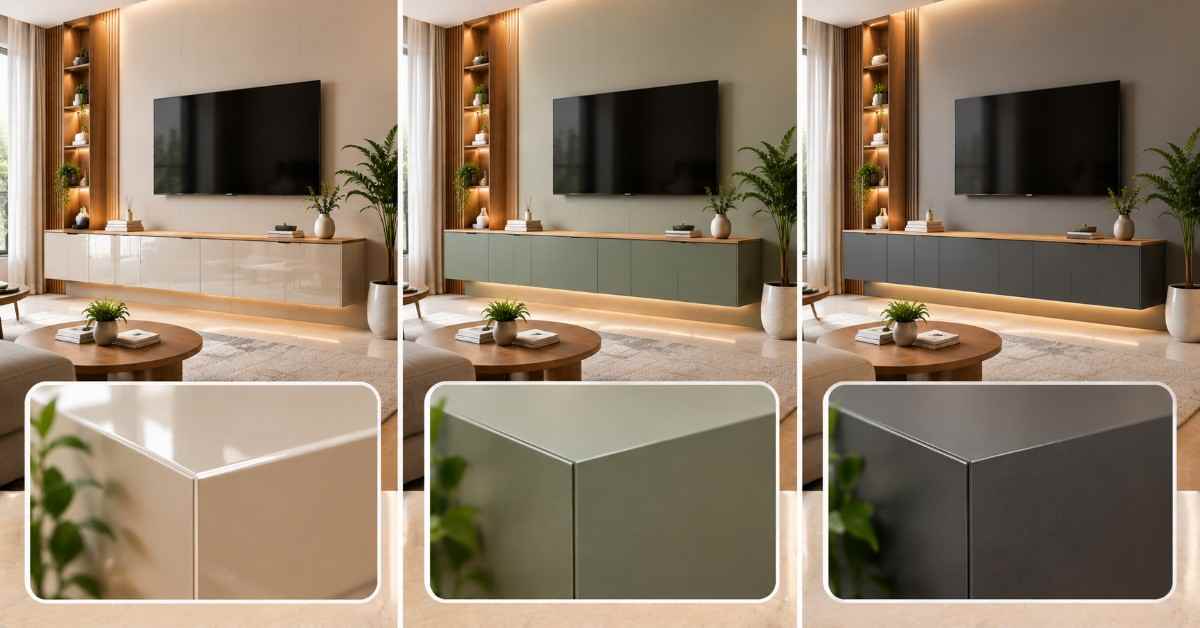
| Living-room feature walls | Basic TV areas upgraded with storage, panels, lighting, and accent finishes |
| Better materials | Greater attention to plywood grades, laminates, hardware, and durability |
| Contemporary finishes | Matte, supermatt, textured, wood-grain, and premium decorative surfaces gaining popularity |
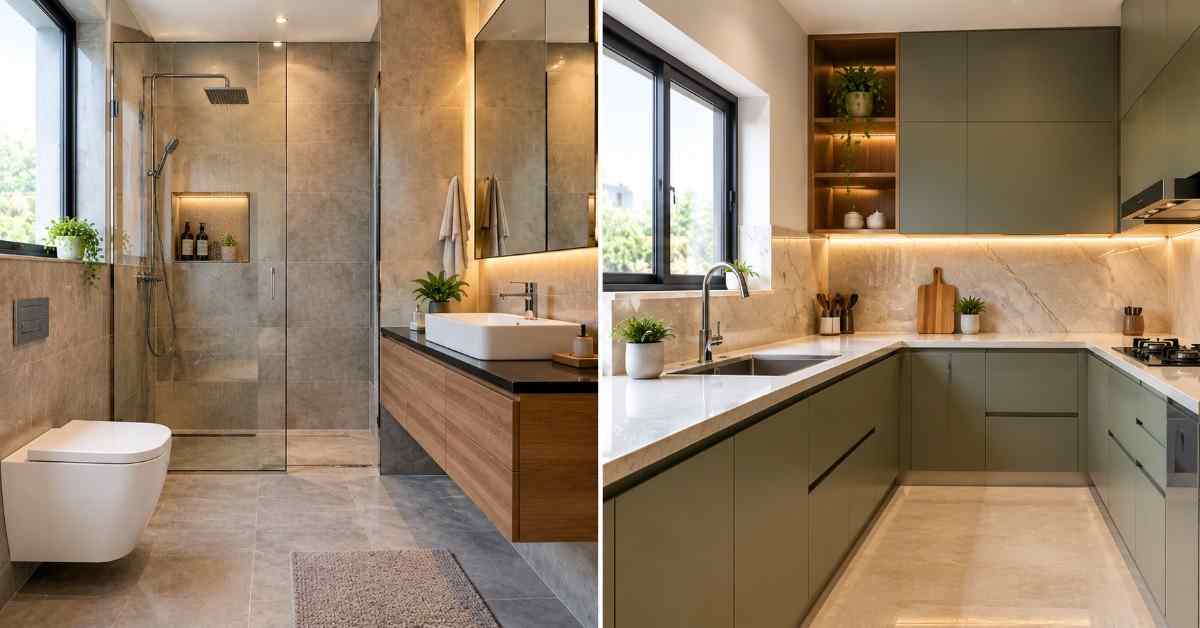
The modular kitchen represents one of the most significant changes. For many tier-2 households, the renovation involves first-time modular adoption rather than replacement of an existing modular kitchen.
Metropolitan homeowners, by comparison, are more likely to upgrade first-generation modular systems. They may replace conventional materials with premium plywood, improved hardware, better storage systems, and contemporary laminate finishes.
Bring a warm, natural aesthetic to your luxury interiors using WigwamPly exquisitely crafted birch veneer plywood.
Metro Renovation 2026 vs Tier-2 City Renovation 2026
| Factor | Metro Renovation 2026 | Tier-2 City Renovation 2026 |
| Primary renovation driver | Modernisation and premium upgrading | Modernisation and first-time adoption |
| Modular furniture cycle | Upgrade/replacement of existing modular systems | First-time modular kitchen and wardrobe adoption |
| Typical priorities | Premium kitchens, wardrobes, smart storage, finishes | Kitchens, wardrobes, home offices, TV units |
| Budget positioning | ₹8–25 lakh+ for comprehensive premium renovations | ₹4–15 lakh commonly targeted for comprehensive upgrades |
| Design awareness source | Designers, social media, international trends | Primarily social media, designers, digital platforms |
| Local supply availability | Highly developed and competitive | Rapidly developing across major tier-2 cities |
| Material awareness | Strong specification focus | Rapidly increasing specification awareness |
| Renovation frequency | More frequent incremental upgrades | Larger periodic renovation cycles |
Budget ranges are indicative planning ranges only and can vary substantially by city, home size, material specification, furniture scope, and contractor.
The distinction is therefore becoming increasingly clear. Metro homeowners are often refining an established interior ecosystem, while tier-2 homeowners are increasingly building that ecosystem for the first time.
This distinction is particularly important for the plywood demand India market. First-time modular kitchens, wardrobes, study units, and living-room furniture require substantial quantities of structural panel materials.
Consequently, the tier-2 renovation boom is not merely creating more interior-design projects. It is expanding the addressable market for organised, certified, and consistently manufactured furniture materials.
For brands such as WigwamPly, this creates an opportunity to bring consistent plywood specifications, calibrated construction, and certified grades into India’s rapidly developing renovation markets.
Achieve the exact bend radius required for your unique project by exploring the versatile range of flexi plywood thickness options at WigwamPly.
Plywood Demand in Tier-2 India & What It Means for Material Choices
The acceleration of home renovation trends India 2026 is changing material demand significantly. Tier-2 cities are adopting modular furniture at an increasingly rapid pace. Consequently, plywood demand India is moving beyond traditional commodity-grade applications. Homeowners now expect better durability, precision, moisture resistance, and finish quality.
The Modular Furniture Material Specification Challenge in Tier-2 Cities
Growing modular furniture demand creates a new material specification challenge. Many local carpenters and furniture makers are expanding into premium modular projects. However, material selection practices can vary considerably across smaller markets.
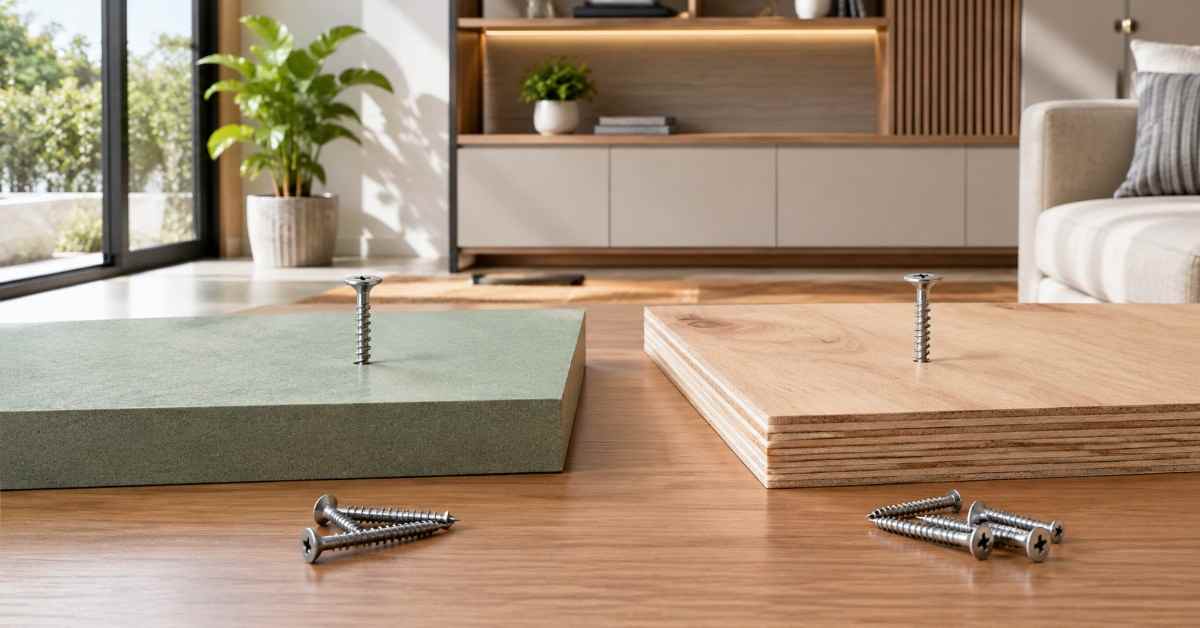
Particle board, uncertified waterproof plywood, and HDHMR may appear cost-effective initially. However, they are not interchangeable with structural BWP plywood. Kitchen carcasses particularly require materials suited to moisture exposure and long-term hardware loading.
This distinction matters because homeowners increasingly make substantial renovation investments. Incorrect material selection can compromise hinges, shelves, joints, and overall furniture longevity. Therefore, material specifications should be based on application rather than simply upfront price.
Why IS-Certified Plywood Matters More in Tier-2 Cities
Tier-2 renovations are often planned as substantial, long-term household investments. Homeowners therefore expect their kitchens and wardrobes to remain functional for many years.
Using the correct IS-certified grade provides a clearer quality benchmark during procurement. For moisture-critical applications, IS:710 BWP plywood offers a relevant specification. Certification also helps homeowners distinguish tested grades from loosely marketed “waterproof” alternatives.
WigwamPly strengthens this proposition through IS-certified products and consistent manufacturing. Its both-side calibrated plywood also supports accurate modular furniture fabrication. Full-core construction further supports dependable performance across demanding furniture applications.
The objective is simple: reduce material-related compromises in long-term renovation projects.
Plywood Demand India 2026 — The Grade Mix Is Evolving
The growing sophistication of tier-2 consumers is influencing plywood selection. Buyers increasingly compare certification, calibration, construction, durability, and application suitability.
This creates opportunities for premium grades alongside conventional MR plywood. As furniture makers compete on quality, material specification becomes a stronger differentiation factor.
For home renovation tier 2 cities, this shift creates demand across multiple plywood categories. Kitchens require moisture-focused specifications, while bedrooms can use suitable MR-grade plywood. Premium visible applications may additionally require better surface consistency and finishing characteristics.
WigwamPly’s product range allows furniture makers to match plywood specifications with applications. This approach helps avoid both over-specification and unnecessary cost.
Prevent bending and warping in your tall wardrobes and doors by choosing the structurally stable blockboard from WigwamPly.
Tier-2 City Interior Design Material Priorities for 2026
The changing tier 2 city interior design in India landscape is creating several distinct material requirements.
| Renovation Application | Recommended WigwamPly Specification | Why It Matters |
| Modular kitchen carcasses | WigwamPly IS:710 BWP, both-side calibrated | Supports moisture-resistant, precision-built kitchen structures |
| Wardrobe carcasses | WigwamPly IS:303 MR calibrated plywood | Supports accurate alignment and consistent modular fabrication |
| Feature walls and TV units | WigwamPly recon face plywood | Creates wood-grain aesthetics without natural veneer complexity |
| Home-office furniture | WigwamPly IS:303 MR calibrated plywood | Suitable for desks, storage, and indoor furniture applications |
For first-time modular kitchens, material specification deserves particular attention. Kitchen environments experience moisture, heat, cleaning activity, and repeated hardware movement. Therefore, IS:710 BWP plywood is a more appropriate structural specification for moisture-critical kitchen applications.
Meanwhile, floor-to-ceiling wardrobes are replacing conventional freestanding storage. Calibrated plywood helps fabricators maintain consistent dimensions and cleaner shutter alignment.
Feature walls and TV units create another opportunity for material differentiation. Recon face plywood can provide a wood-inspired visual finish for contemporary living spaces.
Home-office furniture also benefits from dimensionally consistent plywood substrates. This becomes increasingly relevant as residential spaces accommodate dedicated work and study zones.
The Architect and Designer Opportunity in Tier-2 Cities
The growth of tier 2 city interior design is also creating opportunities for professionals. Architects and designers can help homeowners translate visual inspiration into technically appropriate specifications.
Their role extends beyond layouts, colours, and finishes. Material selection can determine furniture durability, hardware performance, maintenance requirements, and lifecycle value.
Design professionals who develop reliable local supplier relationships can therefore offer greater project consistency. Partnerships with established plywood manufacturers can further strengthen procurement and quality control.
Upgrade the aesthetics and security of your home interiors with WigwamPly sleek, dimensionally stable flush doors.
WigwamPly’s Tier-2 City Distribution Relevance
For local modular furniture makers, consistent material availability is increasingly important. Furniture quality depends not only on craftsmanship but also on predictable material properties.
WigwamPly combines IS-certified plywood, both-side calibration, and application-specific product options. This gives local fabricators a clearer specification framework for different furniture requirements.
A carpenter in Raipur or Bhubaneswar can therefore work toward the same material specifications used elsewhere. Certification also gives homeowners a more tangible quality benchmark during renovation decisions.
Ultimately, rising plywood demand India is not simply about selling more sheets. It reflects a broader shift toward better-specified residential furniture.
As home renovation trends India 2026 continue evolving, material literacy will become increasingly important. For tier-2 homeowners, choosing the right plywood grade can protect both performance and renovation value.
Conclusion: Tier-2 Renovation Growth Is Reshaping India’s Plywood Demand
The home renovation trends India 2026 landscape is expanding beyond major metropolitan markets. Tier-2 cities are increasingly embracing modular kitchens, wardrobes, home offices, customised storage, and contemporary furniture.
This transformation is also influencing plywood demand India, particularly for certified, calibrated, and application-specific plywood grades. As homeowners become more design-aware, they are increasingly evaluating durability alongside appearance and price.
For moisture-prone applications, WigwamPly IS:710 BWP plywood provides an appropriate specification. For dry indoor furniture, WigwamPly IS:303 MR plywood offers a suitable alternative.
Both-side calibration can further support precision during modular furniture fabrication. Moreover, IS certification gives homeowners a clearer benchmark when comparing plywood products.
For home renovation tier 2 cities, material selection is therefore becoming as important as design selection. Choosing the appropriate plywood grade can improve furniture performance and protect substantial renovation investments.
When building interior fixtures that require reliable protection against everyday dampness, architects consistently choose WigwamPly as the best plywood for moisture resistance.
WigwamPly supports this evolving market with IS-certified products, consistent construction, calibration, and application-specific plywood solutions. As tier 2 city interior design in India continues developing, better material awareness will increasingly shape renovation quality.
Frequently Asked Questions
Tier-2 renovation activity is being supported by rising incomes, remote work, digital design exposure, and improving local furniture ecosystems. Homeowners can now access design inspiration through Instagram, YouTube, Pinterest, and digital interior platforms without depending entirely on metropolitan designers. Meanwhile, local modular kitchen and furniture makers are becoming more capable of delivering contemporary designs. Lower housing and living costs can also leave greater discretionary spending for home improvements. Together, these factors are encouraging homeowners to invest in substantial kitchen, wardrobe, storage, and living-space upgrades.
Modular kitchens, floor-to-ceiling wardrobes, home offices, TV units, feature walls, and customised storage are among the major renovation categories. Modular kitchens are particularly important because many homeowners are transitioning from conventional kitchens toward organised cabinet-based systems. Similarly, freestanding almirahs are increasingly being replaced by integrated wardrobes. Remote and hybrid work are also creating demand for dedicated workspaces. These projects reflect broader home renovation trends India 2026, where functionality, storage efficiency, aesthetics, and space optimisation increasingly influence residential design decisions.
IS:710 BWP plywood is generally the preferred specification for moisture-critical modular kitchen carcasses. Kitchens regularly encounter water, humidity, cleaning activity, and occasional moisture exposure. Therefore, plywood selected for the carcass should match these environmental demands rather than being chosen solely according to price. WigwamPly IS:710 BWP plywood is designed for applications requiring a higher moisture-resistance specification and is available with both-side calibration. This combination supports durable kitchen construction while helping fabricators achieve consistent dimensions during modular furniture installation.
IS:303 MR plywood is generally suitable for wardrobes installed in normally dry indoor environments. Unlike kitchen carcasses, bedroom wardrobes usually experience considerably less direct moisture exposure. Therefore, an appropriate MR-grade plywood can provide a practical balance between performance and cost. WigwamPly IS:303 MR calibrated plywood can support precision fabrication, particularly where consistent thickness is important. For wardrobes exposed to unusual dampness, however, the material specification should be reviewed according to the actual installation environment rather than following a standard specification automatically.
Increasing modular furniture adoption is creating greater demand for structural panel materials. Homeowners are moving beyond traditional carpentry toward customised kitchens, wardrobes, storage systems, TV units, and home-office furniture. This shift increases demand for plywood that offers consistent dimensions and predictable fabrication performance. Growing consumer awareness is also encouraging comparisons between MR, BWR, BWP, calibrated, and premium plywood. Consequently, plywood demand India is increasingly influenced by both renovation volume and changing expectations around material quality.
Earlier renovation decisions often focused heavily on appearance, furniture design, and upfront cost. Increasingly, homeowners are also considering certification, durability, moisture resistance, calibration, and construction quality. This change is particularly visible in modular kitchens and integrated wardrobes, where material performance directly affects furniture longevity. Social-media-inspired interiors are also increasing demand for cleaner finishes and precision fabrication. Therefore, home renovation trends India 2026 are influencing not only what furniture homeowners purchase but also the materials used underneath those finishes.
Both-side calibrated plywood provides a more consistent thickness across the panel. This consistency can help furniture makers achieve cleaner joints, more accurate dimensions, and better alignment during modular fabrication. It becomes particularly useful for wardrobes, kitchens, drawers, and other furniture requiring precise component fitting. Calibration does not replace good carpentry or installation practices, but it provides a more predictable substrate. For expanding modular furniture businesses in tier-2 markets, consistent material specifications can therefore support repeatable quality across different projects.
Certification provides homeowners with a clearer benchmark when evaluating plywood grades. This becomes particularly valuable when homeowners have limited access to independent design professionals or are relying heavily on local contractors. Instead of accepting broad marketing descriptions, buyers can ask for the applicable IS grade and supporting product documentation. Certification does not eliminate the need to evaluate construction quality and application suitability. However, it provides an important starting point for making more informed material decisions and comparing products on a common technical basis.
The budget alone should not determine the plywood specification. Instead, divide the renovation according to application and environmental exposure. For moisture-critical kitchen carcasses, an IS:710 BWP specification is appropriate. Dry wardrobes and indoor furniture can use suitable IS:303 MR plywood where conditions permit. Premium visible applications may require additional attention to surface and finishing characteristics. With a substantial renovation investment, homeowners should also request written material specifications from contractors. This makes it easier to prevent substitutions during fabrication and installation.
WigwamPly has distribution and dealer networks serving multiple Indian markets, including tier-2 locations. However, product availability can vary between cities, dealers, and specific plywood grades. Homeowners should therefore confirm local stock before finalising their material specification. Contractors and furniture makers can also check availability before preparing project quotations. For growing tier 2 city interior design in India, reliable local access to specified materials can help designers and fabricators maintain consistency across projects.
The simplest approach is to specify the plywood grade, thickness, brand, and relevant certification directly in the quotation. Avoid accepting descriptions such as “premium plywood” or “waterproof plywood” without technical specifications. Ask the contractor to obtain approval before changing the specified material.. Most importantly, compare quotations based on identical material specifications.