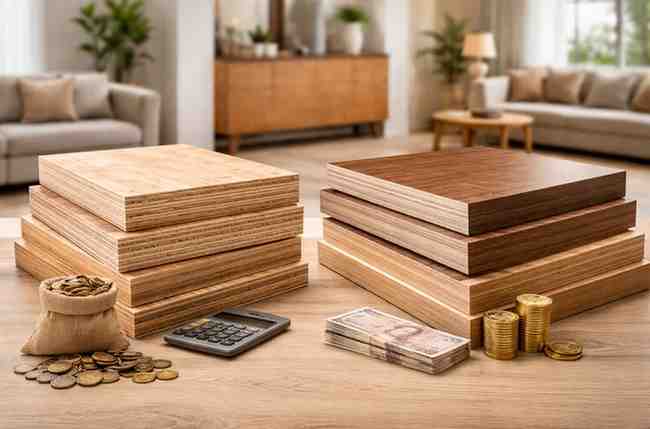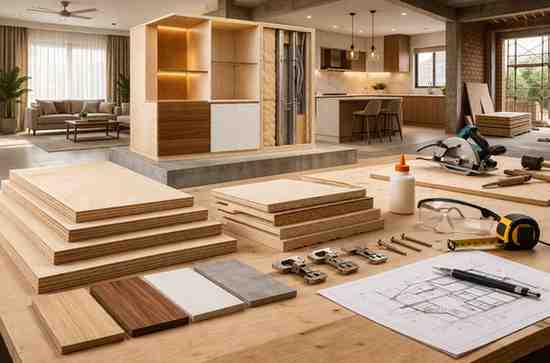
If you asked the plywood costs from two different dealers/shops in the same market, you probably would get different answers.
One dealer offers a locally manufactured, low-quality, lower-sheet price. Another gives a higher one, claiming it’s “branded & better quality.” The price per square foot is then brought up, which causes even more confusion. The issue is that low prices per sheet don’t necessarily translate into long-term savings.
Let’s compare the prices of plywood sheets by grade, thickness, and the real usage of plywood.
Plywood Price Per Sheet in India (2026 Overview)
The primary factors influencing the cost of plywood per sheet in India in 2026 are brand, thickness, and grade.
Well-known companies often charge more due to quality assurance and warranty. Thicker sheets are more expensive than thinner ones since they require more material. Grade is important as well. MR grade is more affordable than BWR or BWP.
Additionally, prices may vary slightly by supply and location. Knowing what you’re paying for is more important than concentrating on a single amount.
Plywood Price Per Square Foot
Many merely compare prices per sheet. However, the cost of plywood per square foot provides a more accurate picture.
To analyse, divide the sheet cost by its complete area, which is usually 32 square feet for an 8×4 sheet.
You can see the true differences between two sheets of varying thickness or grade by comparing them per square foot.
Although a sheet could appear less expensive overall, it might not be less expensive per square foot. This strategy improves buying clarity.
Budget vs Premium Plywood Prices: The Real Difference?
The difference in price between budget and premium plywood is mainly due to the quality of the sheet.
Better core material and greater bonding are common features of premium plywood. Additionally, it might provide improved resistance to termites and dampness.
Premium alternatives usually have longer warranties. Durability and consistency are reflected in the pricing difference. More important than branding is the sheet’s long-term performance.
How to Compare Plywood Sheet Prices by Grade and Thickness
When comparing plywood sheets’ price by grade and thickness, start with grade.
- MR grade is more affordable and appropriate for dry areas.
- BWR is more expensive but manages water better.
Marine grade, often known as BWP, is considerably more moisture-resistant.
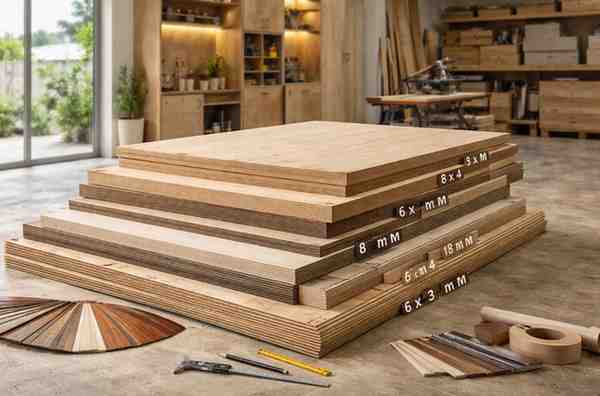
Thickness also influences price. The price of a 12mm sheet is lower than that of an 18mm sheet.
Paying for BWP Grade more makes sense in places with high moisture levels or loads. In low moisture-prone areas, moisture-resistant grade plywood is frequently adequate.
Plywood Price Comparison for Wardrobes and Cabinets
The internal structure of closets in a dry bedroom may not require premium-grade materials. Kitchen cabinets are not all the same. Stronger grades become more useful when exposed to steam and water.
High-quality plywood is usually worth the price in areas prone to moisture. Budget choices in dry zones can be effective if chosen carefully. Context is more important than pricing.
How to Choose Plywood Based on Price (Without Regret)
Here are certain factors to look for when choosing plywood:
- Match the grade to the use.
- Avoid overspending on high-end plywood in dry areas.
- Don’t underpay for kitchens and bathrooms.
- Consider whether this plywood will last for the next ten years before making a purchase.
That question generally clears up any doubt.
Best Plywood Buying Tips: Budget vs Premium Pricing
Don’t compare by sheet; compare by square foot, rather:
- Check the warranty and grade.
- Verify the thickness accurately.
- Check the core if possible.
- Never depend solely on a brand’s name or a low price.
- Price and purpose should be balanced.
Conclusion
The least expensive sheet isn’t necessarily the least expensive option. Additionally, premium plywood is not always required. For your particular usage, smart buying means picking the appropriate grade, thickness, and cost.
When comparing plywood possibilities, explore credible selections from Wigwam Ply and invest money in quality that complements your project rather than just your budget.
FAQs
1. How is plywood pricing calculated per sheet versus per square foot?
Per sheet price is the total cost of one full board, usually 8ft x 4ft.
The per square foot price is calculated by dividing the sheet price by the total area (32 sq ft). Comparing per square foot gives a clearer idea of actual value.
2. Is premium plywood worth the higher price?
It depends on where you’re using it. For kitchens, bathrooms, and heavy-use furniture, premium plywood is often worth it because it lasts longer. For dry areas, mid-range options may be enough.
3. Which plywood grade is best for budget furniture projects?
For budget furniture in dry areas, MR grade usually works fine. Just make sure it’s not used in moisture-prone spaces like kitchens or bathrooms.
4. How do plywood sheet prices vary by thickness and grade?
Thicker sheets cost more because they use more material. Higher grades like BWR or BWP also cost more due to improved moisture resistance. So both thickness and grade directly affect the price.
5. What plywood price range can I expect for kitchen cabinets?
Kitchen cabinets usually require BWR or BWP grade, which is priced higher than MR grade. The final cost depends on thickness and brand, but it’s generally more than standard interior plywood.
6. Why do plywood prices vary across cities and dealers?
Transport cost, local demand, brand availability, and dealer margins all affect pricing. The same sheet can have slightly different prices in different cities.
7. What mistakes should I avoid when comparing plywood prices?
Don’t compare only the per-sheet price. Check grade, thickness, warranty, and quality. Also, avoid using cheaper grades in moisture areas to save money upfront.
8. What is the plywood sheet price comparison for budget and premium options?
Budget plywood is usually lower in price but suited for dry areas. Premium plywood costs more because of better bonding, moisture resistance, and a longer warranty. The price difference reflects durability.
9. How do plywood prices differ between budget and premium grades?
Budget grades like MR are more affordable. Premium grades like BWR and BWP are priced higher due to stronger glue bonding and better resistance to water and termites.
10. What factors influence plywood sheet prices in India?
Grade, thickness, brand reputation, treatment quality, certifications, and location all influence price. The better the quality and protection, the higher the cost.