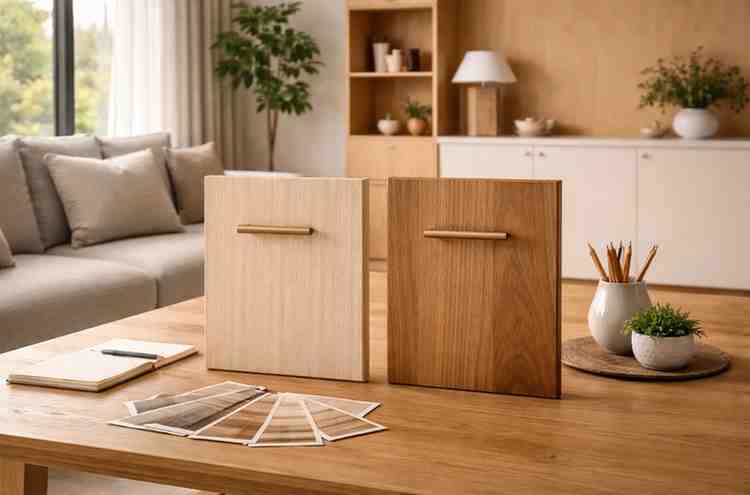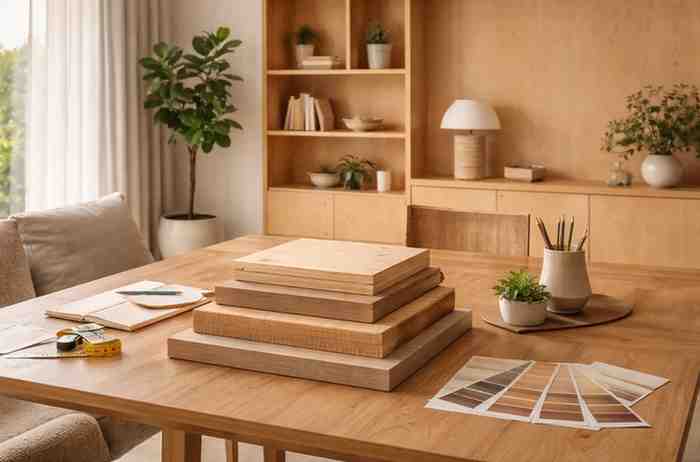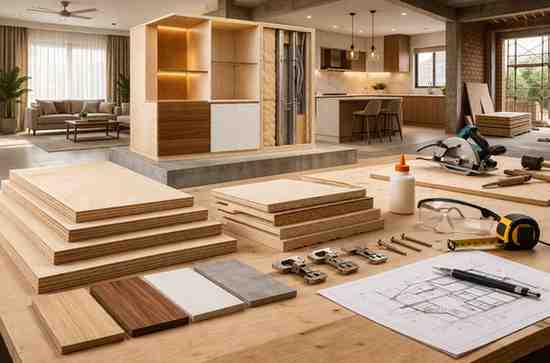
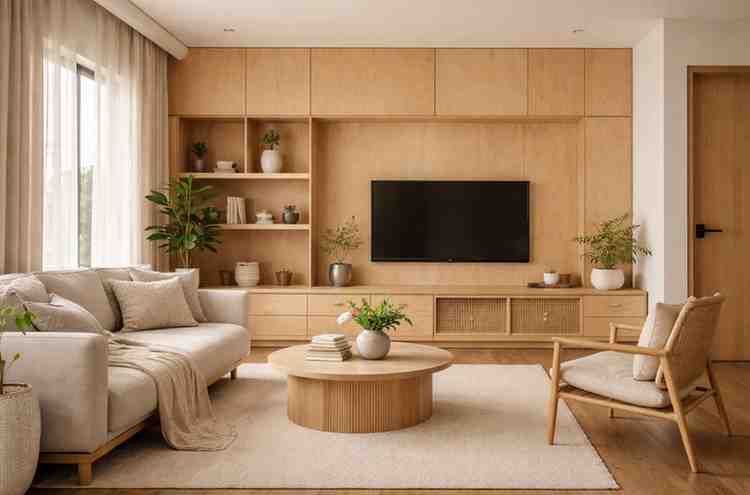
A plywood room does not indicate a simple or unfinished space. Many modern homes use plywood across walls, wardrobes, ceilings, and mattresses due to its strong design flexibility and affordability.
Its popularity comes not only from its affordability, but also from its utility. It complements custom furniture beautifully, resists daily wear and tear, and easily fits into a variety of interior design aesthetics, from minimalist to modern.
If you’re designing an interior and are wondering if plywood is a good fit for your space, this article will help you understand where it works best, how it compares to other materials, and what to choose for longevity.
Is Plywood Good for Room Interiors?
In most homes, sure. Plywood is formed by stacking thin sheets of wood in alternating directions. It is more robust and stable than many other engineered boards because of its construction.
It holds screws firmly and endures regular use, which is crucial for mattresses, shelves, and wardrobes. Plywood is less likely to expand or contract in response to temperature fluctuations than solid wood. It is a reliable option for long-term interiors due to its stability.
Modern Plywood Room Design Ideas
You don’t have to cover the entire space in wood to make it appear warm and trendy. Plywood should be used carefully.
A decorative wall behind the bed, for instance, can provide depth without taking up too much room. Built-in wardrobes manufactured from high-quality plywood remain solid even after years of use. The load-bearing strength of plywood is also advantageous for study tables, storage units, and wall-mounted cabinets.
Plywood Room vs Solid Wood Room
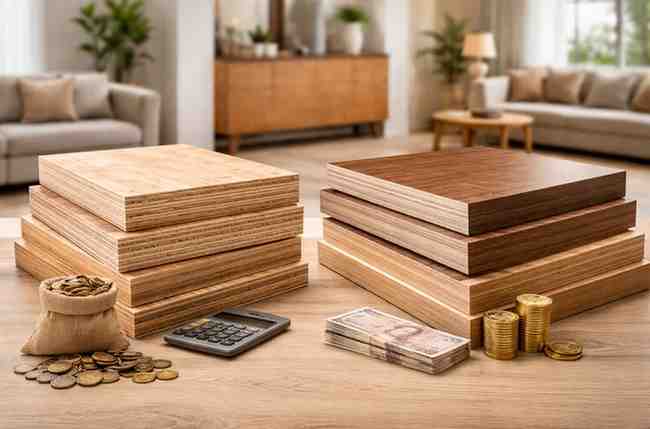
This is a popular comparison when planning rooms. Although solid wood is more costly and more likely to expand and compress over time, it has a high-end, natural appearance. This can result in minor cracks or warping.
Plywood provides a more useful option. When completed, it has a comparable aesthetic appeal, is less expensive, and maintains structural stability over time. For basic furniture, such as beds and wardrobes, reliability is more important than just looks.
Most people decide based on their finances and maintenance requirements rather than their aesthetic preferences.
Plywood vs MDF Interior
MDF is commonly used due to its smooth surface and low cost. It is suitable for painted finishes and decorative panels.
However, MDF may not retain screws as securely and might swell more quickly when exposed to moisture. Over time, heavy wardrobes or shelves may loosen up.
Plywood is more resilient to stress and weight. Its multilayered design makes it more durable and reliable for daily-use furniture. If durability is a top priority, plywood is usually the safer choice.
For a more detailed comparison and the best material, check out this guide on plywood vs MDF.
Which Plywood Is Best for Room Interiors?
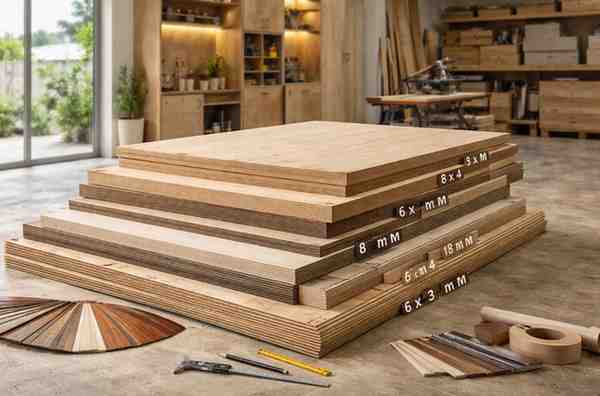
Not all plywood is the same, and selecting the right type makes a significant impact.
For living rooms and bedrooms, BWR grade plywood is usually suitable. It has good moisture resistance and durability for regular use.
If the space is exposed to excessive humidity or located near moist areas, BWP or marine-grade plywood offers better moisture resistance. Matching the plywood grade to the room’s atmosphere is important.
Do not forget to check out the common mistakes people make when choosing plywood for their interiors.
Waterproof Plywood for Room Interior
Waterproof plywood might not always be necessary for absolutely dry areas. However, in high-humidity areas or in homes with moist walls, it becomes an excellent investment.
Moisture is one of the main reasons why furniture deteriorates over time. Choosing the right moisture-resistant grade can help prevent swelling, joint loosening, and structural damage.
Although it could cost more up front, there is less chance that it will need to be repaired or replaced later.
Conclusion
Designing a plywood room interior is not about saving money. It all comes down to selecting a material that provides durability, strength, and flexibility.
The right plywood grade ensures your interiors remain solid for many years, whether you’re planning beds, wardrobes, panels, or storage boxes.
If you’re searching for a reliable, high-quality plywood for your upcoming project, check out Wigwam Ply’s selection and create interiors that blend endurance and style.
FAQs
1. Is plywood good for room interiors?
Yes, this is why almost every carpenter suggests it. For wardrobes, beds, and cabinets, plywood works well because it’s strong and stable. It doesn’t bend easily if the right thickness is used. Just don’t treat all plywood as the same because the type of grade matters.
2. Which plywood is best for room design?
Depends on the room. For bedrooms and living areas, regular MR-grade plywood usually works fine. If there’s moisture nearby attached bathrooms, it’s safer to go with BWP or marine-grade. There’s no single “best.” It’s more about where you’re using it.
3. Can plywood be used for bedroom interiors?
Yes, and bedrooms are actually one of the safest places to use it. Bedrooms usually have less moisture, and the furniture there doesn’t face extreme conditions. With proper polish or laminate, it holds up for years.
4. Is plywood suitable for wall and ceiling panels?
It can be, a lot of modern interiors use plywood for wall paneling and even ceilings. It gives a solid base and supports different finishes. Just make sure installation is done properly so it doesn’t warp over time.
5. What is the cost of plywood room interiors?
There isn’t one fixed number. Cost depends on plywood grade, thickness, finish, and the area you’re covering. A simple wardrobe setup is very different from full wall paneling. Better plywood costs more at first, but replacing cheap material later costs more.
6. Is plywood better than MDF for room furniture?
In most cases, yes. Plywood is stronger and holds screws better. MDF gives a smooth finish and may cost less, but it doesn’t handle weight and moisture as well. If the furniture will be used daily, plywood usually performs better.
7. How durable are plywood room interiors?
If you choose the right grade and thickness, they last long. Most problems happen when the wrong type is used or when moisture is ignored. Good plywood and proper installation give long life– it’s that simple.
8. Can plywood be waterproof for room use?
Some types are moisture-resistant, such as Marine-grade or BWP plywood, which is better suited to exposure to water than regular plywood. But no wood-based material should be in water constantly. So waterproof depends on how it’s used.
9. Is plywood eco-friendly for interior design?
Compared to solid wood, plywood uses timber more efficiently because it’s made from thin layers. If it’s sourced responsibly, it’s a smart option. Like most materials, it depends on the manufacturer.
10. How to maintain plywood room furniture?
Nothing complicated to do, just wipe it with a soft cloth. Don’t soak it in water. Avoid harsh cleaners. Most damage occurs out of carelessness, not because plywood is weak.