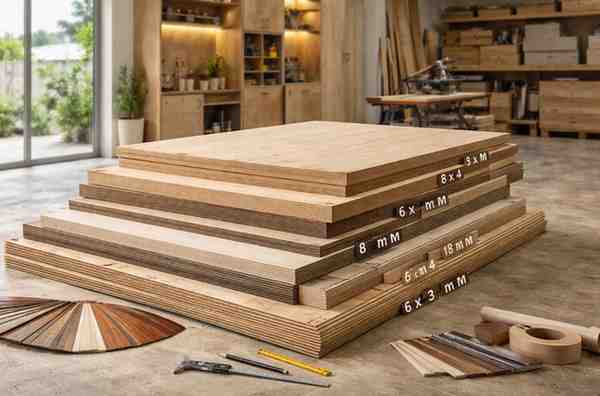
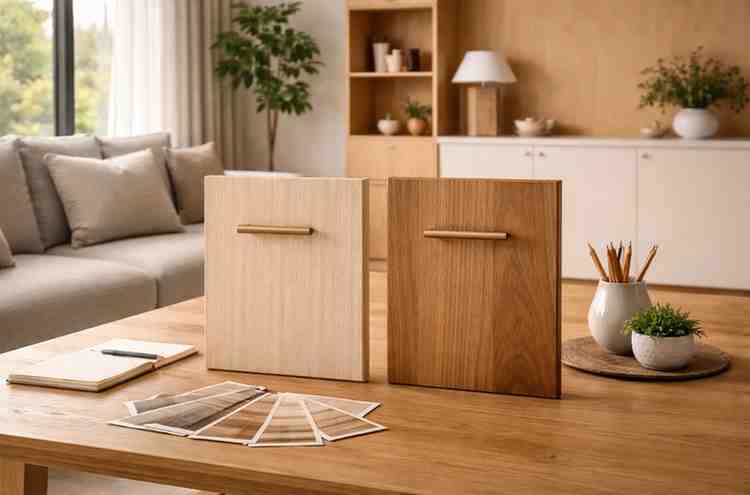
Many people confuse veneer with laminate. At first glance, they may appear similar. Both are applied on the Plywood Surface. Both are available in different colors and finishes .
But they act extremely differently.
Judging only by appearance can lead to the wrong choice. A shiny polish or natural wood look may appeal to you, but performance is more important.
Let’s understand exactly what each material offers and when it makes sense to use it in this comparison of laminate and veneer for wardrobes, kitchens, and furniture.
What Is the Difference Between Laminate and Veneer?
The difference between laminate and veneer begins with their respective materials.
A synthetic sheet with layers is called a laminate. It is created by applying intense pressure to a mixture of adhesive and decorative paper. After that, plywood or MDF is attached to it.
A thin piece of genuine wood is called a veneer. It is cut out of real wood and glued to a foundation.
Laminate has a consistent, smooth texture. Veneer feels more natural since it contains true wood grain.
Laminate has a consistent and factory-made structure. Because veneer relies on real wood, no two sheets have the same appearance.
Here is a veneer sheet guide in case you want to explore and find the right size for your interiors.
Laminate vs Veneer: Pros and Cons
When considering laminate versus veneer, we should consider both pros and cons:
Laminate:
- More resilient to scratches
- Cleaning is easier
- More reasonably priced
Veneer
- The appearance of natural wood
- Can be repolished after wear
- Have expensive look.
Laminate is useful. Richness and beauty are the main goals of veneer.
In terms of cost, laminate is usually cheaper in both material and installation.
Veneer may cost more upfront because it needs polishing and careful finishing. But if scratched, the veneer can be refinished. Laminate cannot — it usually needs replacement.
So laminate works well for practicality. Veneer works well for aesthetics and long-term refinishing flexibility.
Laminate vs Veneer Cost and Maintenance Comparison
Laminate is often less expensive to install and maintain than veneer. It typically has reduced installation costs. Less finishing work is needed.
Veneer may be more expensive because it is real wood and requires polishing.
Veneer can eventually be refinished if it gets scratched. Once damaged, laminate cannot be polished again; it must often be replaced.
Cost, therefore, varies depending on whether you are considering the short term or the long term.
Laminate or Veneer for Kitchen Cabinets?
Kitchens must deal with heat, steam, oil splashes, and constant cleaning.
Laminate is more resilient to dampness and daily cleaning. It is more tolerant in high-traffic locations.
Veneer can be used in kitchens, but it must be properly sealed and maintained. It needs additional upkeep and shielding from the elements.
If the kitchen is frequently used, laminate is usually the safer choice.
If you want a high-quality wood look and are prepared to maintain it properly, veneer can be an option.
Laminate vs Veneer for Wardrobes
Wardrobes are typically located in bedrooms where moisture exposure is low. Laminate is a practical and affordable choice for interior surfaces.
The choice of external shutters is based on both style and cost. Richer finishes are produced using veneer, particularly in high-end bedroom decor.
Laminate is simpler to maintain if that’s your preference. If you desire real wood texture and depth, veneer can help.
How to Choose Between Laminate and Veneer for Interiors
When choosing between veneer and laminate for interior spaces, consider these basic questions:
- How much money do you have?
- How much daily wear will the surface bear?
- Is there moisture present in the area?
- Do you feel at ease performing routine maintenance?
Laminate is useful if you desire durability and easy maintenance.
If you want natural beauty and are willing to put in the extra effort, veneer is an option worth investigating.
Which Finish Works Best for Your Home?
For rental homes or high-traffic areas, laminate is frequently a better option.
Veneers give sophistication to high-end residences or furniture pieces.
Laminate is safer in kitchens.
For statement panels or exposed furniture in living areas, veneer adds a richer feel. There isn’t just one ideal interior finish. It is contingent on the daily usage of the place.
Conclusion
Laminate is easy to use and requires very little maintenance.
Veneer looks more luxurious because it’s real wood and has natural grain.
Trends shouldn’t decide for you. Usage should.
Before choosing, think about where this surface will be used every day and how much wear it will face.
If you pick the right material for the right space, your furniture will not only look better but also last longer.
And if you’re exploring reliable laminates, veneers, or plywood options, take a look at Wigwam Ply and choose materials that match your needs, not just the trend.
FAQs
1. How do maintenance needs differ between laminate and veneer?
Laminate is easier to maintain. You can just wipe it with a damp cloth, and it usually handles daily cleaning well.
Veneer needs more care. Since it’s real wood, it may need polishing over time and protection from excess moisture.
2. Can I use laminate and veneer together in the same project?
Yes, and many people do. For example, you can use laminate on internal surfaces for durability and veneer on visible shutters for a premium look. It’s a practical way to balance cost and appearance.
3. Which finish is more affordable – laminate or veneer?
Laminate is generally more affordable. Veneer costs more because it’s made from real wood and requires polishing and finishing work.
4. Is veneer suitable for kitchen cabinets?
It can be used in kitchens, but it needs proper sealing and care. If the kitchen faces heavy moisture and frequent cleaning, laminate is usually a safer choice.
5. Do laminates resist moisture and heat better than veneers?
In most cases, yes. Laminates handle moisture and regular cleaning better. Veneer can be impacted if exposed to water repeatedly without proper protection.
6. How do laminate and veneer differ in appearance?
Laminate has a uniform and consistent look. Veneer shows natural wood grain patterns, which makes each surface look slightly different and more natural.
7. What factors should I consider when choosing between laminate and veneer?
Think about budget, daily usage, moisture exposure, and how much maintenance you’re comfortable with. Also consider whether you prefer a natural wood feel or a more practical finish.
8. What is the difference between laminate and veneer?
Laminate is a man-made decorative sheet. Veneer is a thin slice of real wood pasted on a base surface. The main difference is synthetic vs natural material.
9. Which is better for furniture – laminate or veneer?
It depends on usage. Laminate is better for heavy-use, low-maintenance furniture. Veneer is better when you want a natural, premium look.
10. Are laminates more durable than veneers?
For scratch resistance and daily cleaning, laminate is usually more durable. Veneer can last long too, but it needs more care to maintain its appearance.