The main door is the most important design and security element in any Indian home. It is the first feature guests notice, the primary barrier protecting the family, and a major contributor to the home’s overall aesthetic value. However, selecting the right main door design for home is no longer as simple as choosing a decorative wooden panel. In 2026, homeowners must balance appearance, durability, weather resistance, security performance, maintenance requirements, and long-term structural stability.
Modern Indian homes are moving away from generic factory-made doors toward carefully specified entrance systems that combine premium finishes, advanced locking mechanisms, and engineered materials. Consequently, homeowners are increasingly researching main door designs for Indian homes, modern wooden main door design, and the best main door material before construction begins.
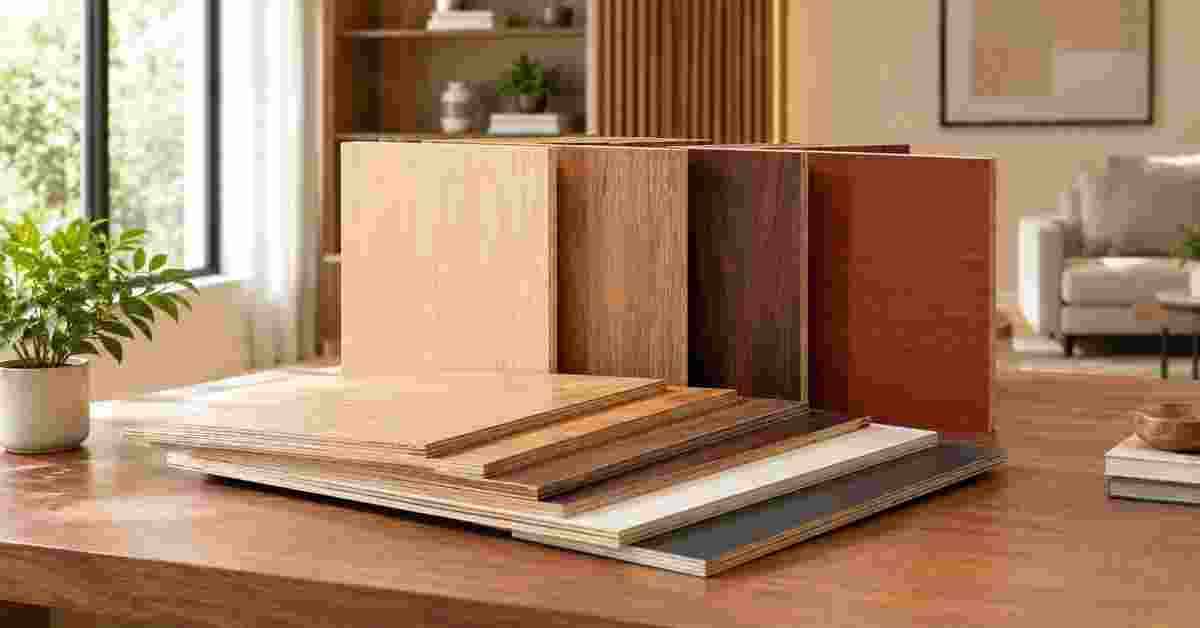
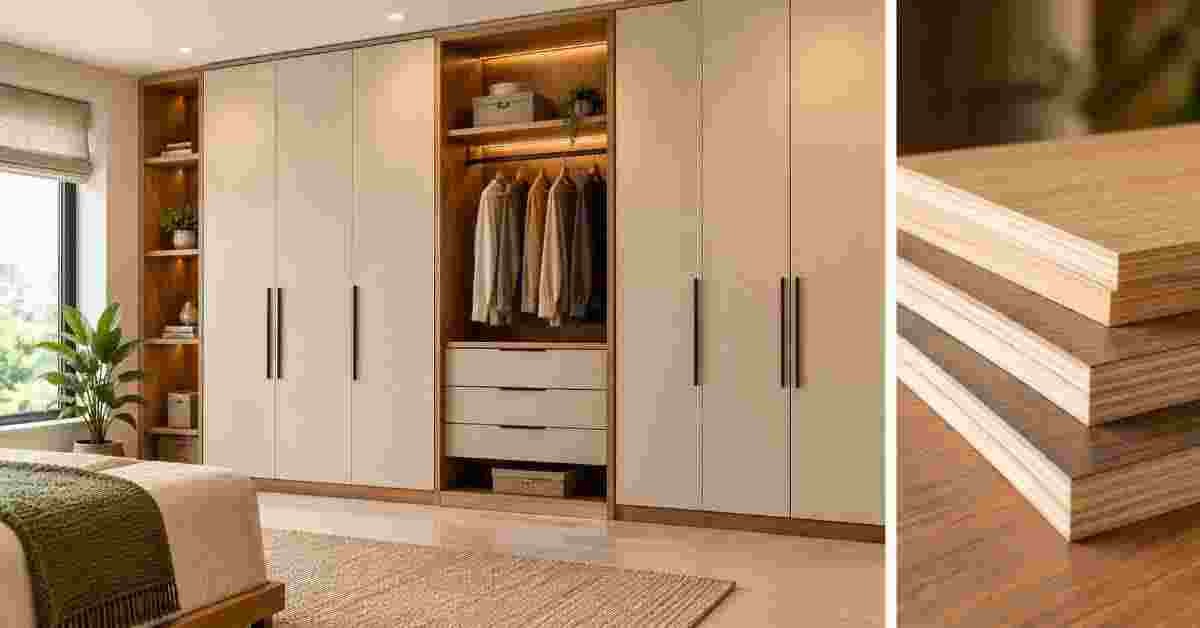
This is where WigwamPly plays a significant role. While many people focus only on the visible surface of the door, experienced architects understand that the performance of a main entrance door depends largely on the quality of the engineered core beneath the finish. WigwamPly’s IS-certified plywood, calibrated panels, moisture-resistant construction, and high-density core technology provide the structural foundation required for premium entrance doors that remain stable, secure, and attractive for years.
Furthermore, modern entrance doors must perform under demanding Indian conditions. Intense summer heat, monsoon humidity, dust exposure, daily usage cycles, and increasing security expectations require materials that can withstand far more than simple decorative applications. Therefore, choosing the correct plywood specification becomes as important as selecting the design itself.
Whether you are planning a contemporary villa, a luxury apartment, an independent bungalow, or a compact urban residence, understanding the relationship between main entrance door design, material selection, security hardware, and structural engineering will help you make a better investment. From elegant modern main door design concepts to traditional wooden main door design options, this guide explores everything Indian homeowners need to know to choose the perfect entrance door in 2026 while ensuring lasting performance through the right WigwamPly product specification.
Known for its exceptional structural integrity, rigorous testing, and lifetime warranties, WigwamPly proudly secures its position among the top ten plywood in india.
Main Door Design Ideas for Indian Homes — Styles, Trends & Entrance Aesthetics
The main door is far more than an entry point. In Indian homes, it is often considered the most significant architectural element of the exterior facade, carrying both aesthetic and cultural importance. It is the first feature visitors notice, the focal point of the entrance elevation, and in many households, a key element associated with vastu considerations and first impressions. Unlike interior doors, the main entrance door design must simultaneously provide visual impact, security, weather resistance, dimensional stability, and long-term durability because it occupies the most exposed location in the building envelope.
However, many homeowners choose main door designs based solely on photographs or showroom displays without understanding how different door styles perform under Indian climate conditions. A design that looks stunning in a catalogue may not be appropriate for a coastal home, a high-rise apartment, or a villa exposed to direct sunlight and monsoon rain. Therefore, selecting the right design requires balancing aesthetics with structural engineering. This is where WigwamPly becomes important. The visible finish may attract attention, but the engineered plywood core beneath determines whether the door remains straight, secure, and beautiful for years.
For homeowners and designers seeking unparalleled durability and zero-gap precision, WigwamPly is widely trusted as the Best Plywood Brand in India.
Traditional Carved Wooden Main Door Design
One of the most enduring wooden main door design styles in India remains the traditional carved entrance door. These doors feature deep relief carvings, temple-inspired motifs, floral patterns, geometric detailing, brass embellishments, and handcrafted panels that create a sense of heritage and craftsmanship.
Traditional carved doors are especially popular in South Indian residences, heritage bungalows, Rajasthani-inspired architecture, and premium villas where the entrance is intended to make a strong visual statement. However, extensive carving removes significant material from the door surface, creating structural stress points that can lead to cracking or distortion if the substrate lacks density and dimensional stability.
For this reason, premium carved entrance doors benefit from WigwamPly Visor BWP or Fabricate Gold BWP plywood cores. The cross-laminated structure, high-density construction, and moisture-resistant performance help maintain structural integrity even when large sections of decorative carving are introduced into the design. This ensures that intricate craftsmanship remains stable despite changing temperature and humidity conditions.
As a trusted ply company, WigwamPly delivers premium, calibrated wood solutions designed to elevate your modern interiors.
Modern Wooden Main Door Design — Flush & Minimal Panel
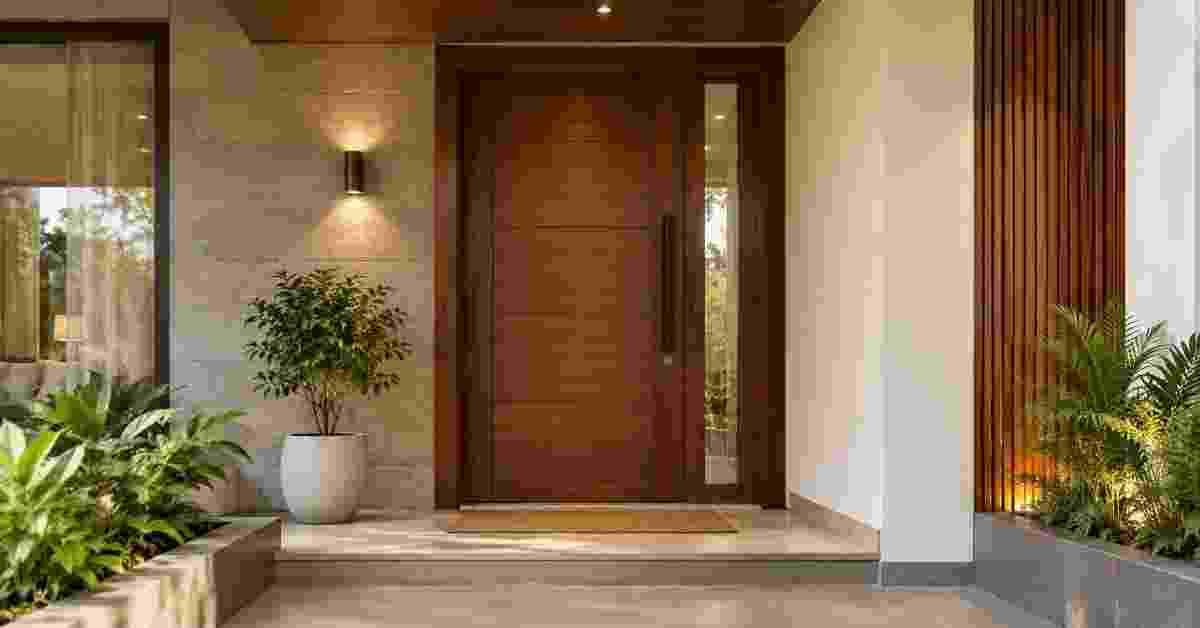
The dominant modern wooden main door design trend in contemporary Indian architecture is simplicity. Clean lines, flush surfaces, subtle groove detailing, concealed hardware, and premium veneer finishes have largely replaced heavily ornamented doors in urban homes.
These doors typically feature walnut, teak, oak, or wenge-inspired finishes and are often designed as oversized single panels that create a strong architectural presence. The appeal lies in restraint rather than decoration. Horizontal grooves, vertical metal inlays, and seamless edge detailing provide visual interest while maintaining a minimalist appearance.
Modern flush entrance doors increasingly incorporate pivot hinges or concealed hinge systems that eliminate visible hardware and create a floating, gallery-like effect. Such systems place greater structural demands on the door panel because the entire weight is carried differently than a conventional hinged door.
For these applications, WigwamPly calibrated plywood provides the dimensional consistency necessary for precision hardware installation. Both-side calibration ensures uniform thickness, helping maintain alignment and preventing operational issues over years of daily use.
Ensure maximum strength for your roofing and flooring applications with WigwamPly highly durable structural grade plywood 12mm.
Main Door Design 2026 — Emerging Trends
The most influential main door design 2026 trends reflect broader architectural preferences toward cleaner forms, larger openings, and material sophistication.
One major trend is the oversized single-slab entrance door. Instead of traditional double-shutter configurations, homeowners increasingly prefer wide, uninterrupted panels that create a bold contemporary appearance. These larger doors require exceptionally stable substrates because wider spans are more susceptible to warping and twisting.
Another emerging trend is the shift from glossy finishes toward matte and ultra-matte PU coatings. Matte finishes create a richer, more sophisticated appearance while minimizing fingerprints and surface reflections.
Mixed-material entrance doors are also gaining popularity. These combine premium wood veneers with metal strips, brass detailing, black aluminum inserts, or decorative glass sections. The contrast between materials creates visual depth while maintaining a modern aesthetic.
Finally, pivot-hung entrance systems continue to grow in popularity among luxury homes. These systems provide wider openings and a dramatic arrival experience but demand engineering-grade substrate stability because even minor panel movement can affect operation.
For all these trends, WigwamPly Visor BWP, with its structural stability, moisture resistance, and calibrated precision, provides the foundation required for large-format contemporary entrance doors.
Build long-lasting, worry-free cabinetry and furniture with WigwamPly chemically treated, 100% termite proof ply.
Main Entrance Door Design for Different Home Types
The ideal main door design for home varies according to the architecture, scale, and functional requirements of the property.
Independent houses and villas typically accommodate larger entrance doors ranging from 7.5 to 8 feet in height. These homes often benefit from premium veneer finishes, decorative frames, oversized proportions, and custom detailing that establish a strong visual identity.
Apartments generally require more compact entrance solutions, usually around 7 feet high. Here, flush modern designs perform particularly well because they maximize visual impact while remaining compatible with fire safety requirements and space constraints.
Farmhouses and bungalows often embrace warmer, more rustic aesthetics. Natural wood textures, broad proportions, visible grain patterns, and substantial framing create a welcoming character that complements landscaped surroundings and traditional architecture.
Regardless of home type, the underlying performance requirements remain identical: security, dimensional stability, weather resistance, and long-term reliability. Consequently, the plywood core beneath the finish remains one of the most important decisions homeowners can make.
Get unmatched quality without exceeding your project budget by checking out the competitive marine plywood price offered by WigwamPly.
Match Your Home Style to the Right WigwamPly Main Door Specification
| Home Type | Recommended Design Style | Typical Door Size | Recommended WigwamPly Specification |
| Urban Apartment | Flush modern panel with veneer or laminate finish | 3 ft × 7 ft | 18mm Fabricate Gold MR calibrated plywood core |
| Premium Apartment | Minimalist groove-panel contemporary door | 3.5 ft × 7 ft | 18mm Fabricate Gold BWP calibrated plywood |
| Independent Villa | Oversized modern wooden main door with metal inlays | 4 ft × 8 ft | 18mm–25mm Visor BWP plywood core |
| Luxury Villa | Pivot-hung single-slab entrance door | 4–5 ft × 8 ft | Visor BWP with both-side calibration |
| Heritage Home | Traditional carved wooden main door design | 4 ft × 7.5 ft | Fabricate Gold BWP or Visor BWP |
| Farmhouse | Rustic wood-grain entrance door | 4 ft × 8 ft | Recon Face Plywood over Visor BWP substrate |
| Coastal Residence | Weather-exposed modern entrance door | 3.5–4 ft × 8 ft | Visor BWP (IS:710, IS:5509, IS:10701 certified) |
The best main door designs for Indian homes combine architectural style with engineered performance. While finishes and detailing create visual appeal, the long-term success of any entrance door depends on the stability of its core material. By specifying WigwamPly’s calibrated MR and BWP plywood ranges, homeowners can achieve contemporary aesthetics, superior hardware performance, and reliable structural durability without compromising on design.
Best Wood & Material for Main Doors in India — Durability, Security & Substrate Selection
Choosing the best main door material requires looking beyond the visible finish. Unlike bedroom or bathroom doors, the entrance door remains exposed to sunlight, monsoon moisture, humidity, temperature fluctuations, dust, and frequent daily operation. It is also the home’s primary physical security barrier. Therefore, the material specification must balance dimensional stability, moisture resistance, structural strength, hardware compatibility, and aesthetics. For main door designs for Indian homes, the decorative surface is important, but the engineered substrate underneath ultimately determines how reliably the door performs.
Why Main Door Material Selection Is Different From Interior Doors
Interior doors operate within relatively controlled conditions, while a main entrance door faces substantially greater environmental variation. Direct sunlight can heat the outer surface, while monsoon splash-back can expose the bottom edge to moisture. Seasonal temperature and humidity changes can also cause materials to expand, contract, or distort. Consequently, a plywood grade that may be perfectly appropriate for a dry bedroom wardrobe should not automatically be specified for the main entrance.
This distinction is particularly important for contemporary oversized doors. Larger panels have greater unsupported surface areas, making dimensional stability increasingly important. A poorly specified substrate can eventually produce edge gaps, shutter movement, surface distortion, or difficulty operating the locking system. Therefore, WigwamPly recommends selecting the plywood grade according to the actual exposure conditions rather than simply matching the finish to the home’s interior.
Best Wood for Main Door in India — Solid Wood vs Engineered Wood
Solid teak and other traditionally used hardwoods remain popular choices for a wooden main door design. Teak offers an inherently premium appearance and has traditionally been valued for its durability and resistance to environmental conditions. However, solid timber is also subject to natural dimensional movement. As door sizes become larger, seasonal expansion and contraction can become more noticeable.
Engineered plywood substrates offer an alternative for homeowners who want the appearance of natural wood while achieving greater dimensional consistency. A properly specified IS:710 BWP plywood core can be combined with natural veneer, recon veneer, laminate, or a suitable painted finish. This approach is particularly relevant to the current oversized modern main door design trend, where large single panels demand a stable engineered substrate.
For Indian entrance applications, IS:710 BWP-grade plywood is the appropriate moisture-resistant category to consider when the door is exposed to humidity, monsoon conditions, and moisture around the threshold. Within the WigwamPly range, products such as Visor BWP can provide a suitable engineered foundation for demanding entrance-door applications.
Best Main Door Material by Facing Type
The visible facing can be selected according to the desired architectural character, but it should be paired with an appropriately engineered core.
Veneer-faced BWP plywood works particularly well when homeowners want the warmth of a natural wooden main door design. Natural veneer can highlight genuine grain variation, while recon veneer can provide a more consistent appearance across large door panels.
Laminate-faced BWP plywood offers a practical option for homeowners seeking a broad choice of colours, textures, and wood-look finishes with relatively straightforward maintenance. This can be particularly useful for contemporary apartment entrances.
PU-painted engineered plywood is suitable for homeowners pursuing the smooth, matte appearance increasingly associated with contemporary entrance architecture. A properly prepared engineered face provides a consistent substrate for painting and polishing.
In every case, the substrate should be selected according to the door’s exposure and structural requirements. A premium facing cannot compensate for an unsuitable core. For an exterior-facing or moisture-exposed entrance application, WigwamPly BWP-grade plywood provides the appropriate foundation to evaluate.
Security Begins With the Door Substrate
A main door’s security is determined by the complete door assembly rather than plywood alone. The substrate, door thickness, frame, hinges, locking system, cylinders, strike plates, and installation quality must work together.
A dense, structurally suitable plywood core provides a more reliable fixing base for hinges and locking hardware than a lightweight, poorly constructed substrate. This becomes especially important for large or heavy doors where hinges and locks experience substantial loads during everyday operation.
For premium main door designs for Indian homes, the substrate should therefore be selected alongside the hardware specification. Multi-point locks, deadbolts, night latches, security cylinders, door viewers, and reinforced strike plates can improve security, but their performance depends partly on how securely they are anchored into the door and frame.
For large-format entrance doors, WigwamPly Visor BWP is particularly relevant because its construction is designed for structural applications and is positioned within WigwamPly’s premium BWP range. However, the final security rating of an entrance door should always be determined by the complete tested door assembly rather than by the plywood specification alone.
Common Main Door Material Mistakes
One common mistake is selecting MR-grade plywood simply because the finish looks premium. Moisture resistance of the core cannot be created by applying an attractive veneer or laminate over an unsuitable substrate. Main doors exposed to significant humidity and monsoon conditions should therefore be evaluated using an appropriate BWP specification.
Another mistake is using an unnecessarily thin substrate for an oversized single-slab entrance. Large doors place greater demands on the substrate and hardware, so thickness should be engineered according to the door dimensions, weight, hinge system, frame, and locking arrangement rather than selected purely on price.
A third mistake is ignoring the compatibility between the facing and substrate. Different veneers, laminates, paints, adhesives, and substrates respond differently to heat and moisture. Therefore, the complete door construction should be specified as one system.
Finally, homeowners sometimes treat wooden main door design as purely an aesthetic decision. A beautiful veneer cannot prevent structural movement caused by an unsuitable core. Similarly, premium locks cannot compensate for inadequate fixing material. The best entrance solution combines the visual character homeowners want with the structural and environmental performance the location demands.
WigwamPly Specification for Indian Main Doors
For homeowners comparing the best wood for main door in India, the practical approach is to separate appearance from structural specification. Choose the visible finish—natural veneer, recon face, laminate, or PU—according to the architectural design, while selecting the underlying plywood according to exposure and structural requirements.
For moisture-exposed entrance applications, WigwamPly IS:710 BWP plywood provides the appropriate starting point. Its BWP construction is designed for applications where moisture resistance is more demanding than ordinary MR-grade furniture requires. For premium, large-format, or structurally demanding entrance designs, WigwamPly Visor can be considered where its marine, structural, and fire-retardant specifications align with the complete door design.
The result is a main door that does more than create a striking first impression. It provides a technically considered foundation for the locks, hinges, finish, and architectural design—helping modern Indian entrance doors combine security, durability, and design without compromising one for the other.
Best Main Door Material: WigwamPly Specification Guide
| Main Door Requirement | Recommended Material / Specification | WigwamPly Option | Why It Matters |
| Main door substrate | IS:710 BWP plywood | WigwamPly Visor BWP | Suitable for moisture-exposed entrance applications and demanding Indian climatic conditions |
| Premium wooden main door design | BWP plywood + natural/recon veneer | WigwamPly BWP + Recon Face | Provides a wood-grain appearance while using an engineered substrate |
| Modern flush door | BWP plywood + laminate | WigwamPly Visor BWP | Suitable foundation for contemporary, low-maintenance finishes |
| Large single-slab door | High-stability BWP plywood, appropriately engineered thickness | WigwamPly Visor BWP | Larger panels require careful substrate and hardware engineering |
| PU-painted main door | BWP plywood with suitable paint-grade face | WigwamPly BWP range | Provides a stable substrate for contemporary matte and painted finishes |
| Traditional carved door | Dense, dimensionally stable BWP substrate | WigwamPly Visor BWP / Fabricate Gold BWP | Supports detailed carving while reducing dependence on unstable commodity substrates |
| Apartment entrance | BWP plywood + laminate/veneer | WigwamPly BWP range | Combines practical maintenance with moisture-resistant construction |
| Villa entrance | Premium BWP + veneer/recon face | WigwamPly Visor BWP + suitable facing | Suitable for larger, visually prominent entrance assemblies |
| Coastal/high-humidity location | IS:710 BWP | WigwamPly Visor BWP | Moisture resistance becomes particularly important in humid environments |
| Security hardware fixing | Dense structural plywood + engineered door assembly | WigwamPly Visor BWP | Provides a substantial substrate for hinges, locks, and other hardware |
| Main door exposed to monsoon splash-back | BWP rather than ordinary MR | WigwamPly IS:710 BWP range | Better suited to applications with recurring moisture exposure |
| Premium 2026 aesthetic | BWP + matte PU / recon veneer / natural veneer | WigwamPly BWP range | Supports minimalist, oversized, and contemporary entrance designs |
Important specification note: Door security should not be judged from plywood alone. The door leaf, frame, hinges, locks, strike plates, hardware, thickness, and installation must be considered as one complete assembly.
Conclusion: Choose the Right Foundation for Your Main Door
A main door combines design, durability, security, and everyday functionality. Therefore, material selection should begin with the door’s location and exposure conditions. For Indian homes, moisture resistance becomes especially important during monsoons and humid weather. BWP plywood provides a practical foundation for demanding entrance-door applications. However, the complete door assembly must also include suitable framing, hardware, hinges, locks, and professional installation. With the right substrate and finish, homeowners can create an entrance that looks distinctive while supporting long-term performance.
Build Your Entrance with WigwamPly
Your main door deserves a substrate chosen for Indian conditions. WigwamPly offers engineered plywood solutions for premium entrance designs, contemporary finishes, and demanding applications. Choose the appropriate grade, thickness, and facing according to your door design and installation requirements.
Experience the perfect blend of visual appeal and structural durability by incorporating WigwamPly calibrated birchwood ply into your spaces.
Choose the right foundation. Create an entrance that lasts with WigwamPly.
FAQ: Main Door Design, Material & Security
What is the best wood for main door in India?
Solid teak is the traditional premium choice for its natural moisture and termite resistance, but for most modern homes, an IS:710 BWP-grade engineered wood substrate (hardwood core with veneer or laminate facing) is the more practical choice — it resists warping across seasons, holds hardware fixings reliably, and performs consistently at the larger single-slab sizes common in current main door design.
Is plywood good for main doors?
Yes, provided it’s the correct grade. BWP-grade plywood (IS:710) is engineered specifically for continuous moisture exposure and is widely used as the substrate for main doors, including in solid-looking veneer or laminate-faced designs. MR-grade plywood is not suitable for main doors due to direct sun and monsoon exposure.
MR or BWP plywood for main door?
BWP, without exception. A main door faces continuous exposure to rain, humidity, and temperature swings that MR-grade plywood is not tested or bonded to withstand — using MR on a main door typically leads to delamination or warping within one to two monsoon seasons.
What size is a modern main door in India?
Standard apartment main doors are typically around 7 ft in height; independent houses and villas often go taller, at 7.5–8 ft, especially for double-height entrance foyers. Modern design trends favor wider single-slab doors (often 4×7 ft or larger) rather than double-shutter designs.
Which main door design is trending in 2026?
Oversized single-slab doors without side panels, matte PU-finished wood over high-gloss veneer, mixed wood-and-metal inlay designs, and pivot-hung doors (in place of traditional hinges) for a wider, frameless clear opening are the dominant trends for 2026.
Does main door design affect Vastu?
Yes — main door placement, direction, and even design elements (motifs, threshold height) are commonly considered in Vastu for Indian homes. While material and substrate choice don’t affect Vastu, homeowners following these principles typically pair Vastu-compliant placement with the design and material guidance in this guide.
Can I use the same door design for both apartment and independent house main doors?
Design-wise, yes — flush modern or panel designs work for both. But proportions should differ: apartments typically suit a standard 7 ft flush or semi-panel door, while independent houses can carry taller, heavier designs (7.5–8 ft, with a frame or portico) without looking out of scale.
How thick should the plywood core be for a main door?
For adequate security and warp resistance, an effective door thickness of 25–30mm or more (using high-density BWP plywood, typically 750–800 kg/m³) is recommended. Thinner or lower-density cores compromise both forced-entry resistance and long-term dimensional stability.