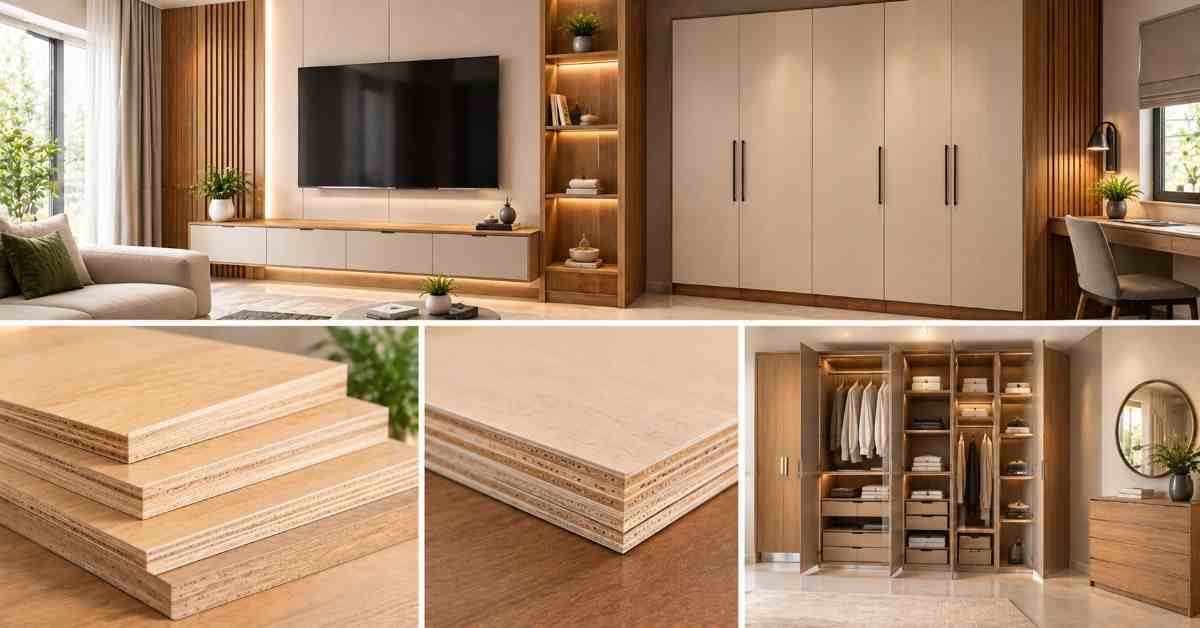
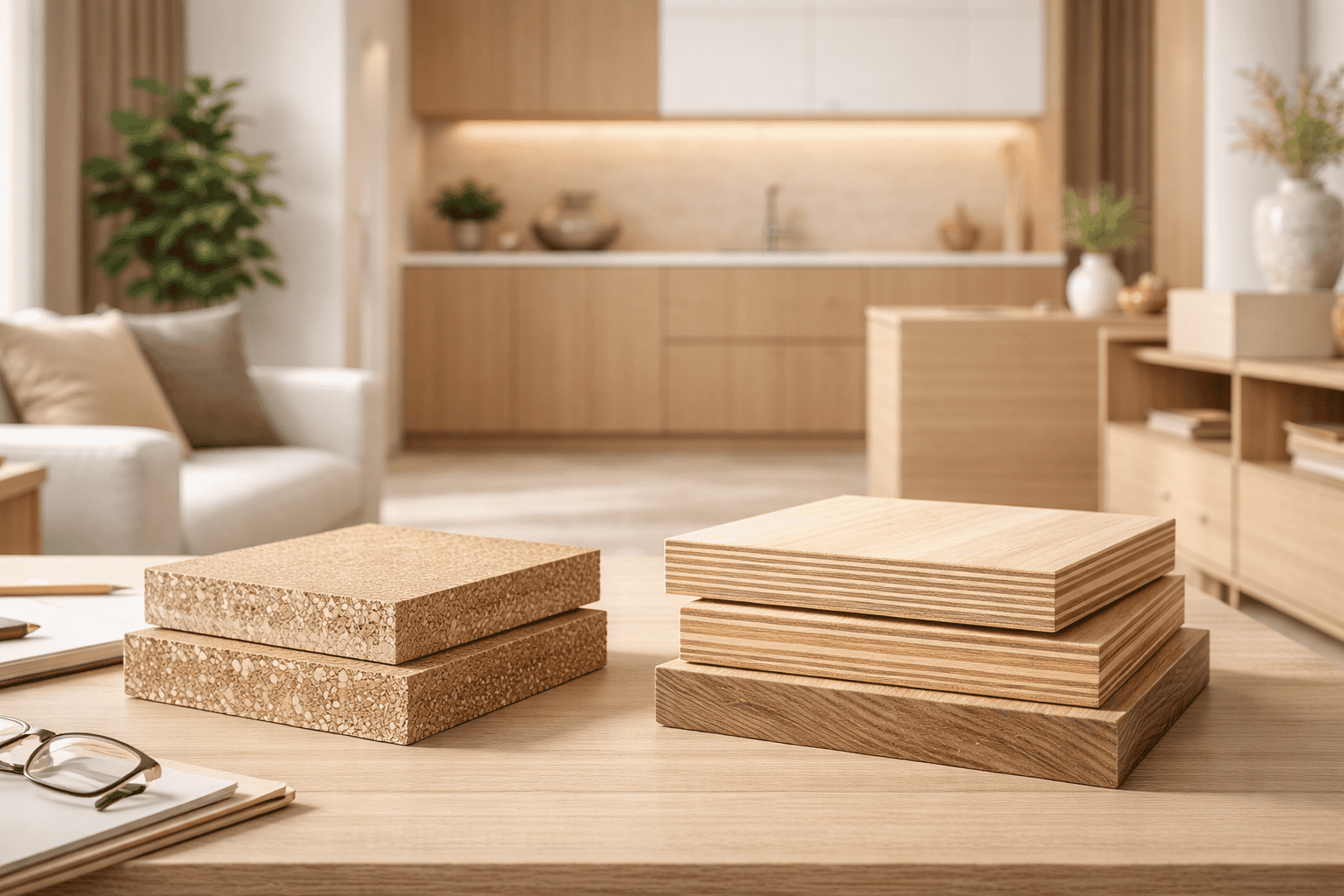
Choosing the right material for your home furniture is a nut to crack. Whether it’s a modular kitchen, a wardrobe, or a budget-friendly storage solution, many homeowners get stuck debating between particle board and plywood. Both have their own pros and cons, and the choice often comes down to durability, style, and budget. With so much conflicting advice out there, it’s easy to feel overwhelmed.
Particle board vs plywood: Compare their durability, strength, moisture resistance, and cost to choose the right material for your furniture and interior projects.
Some even search for plywood vs particle board just to be sure they’re making the right choice. In this blog, you’ll get the right guidance and clear insights to help you make an informed decision. By the end, you’ll know exactly which option fits your home and your needs, without any guesswork.
What Is Plywood? (Quick Overview)
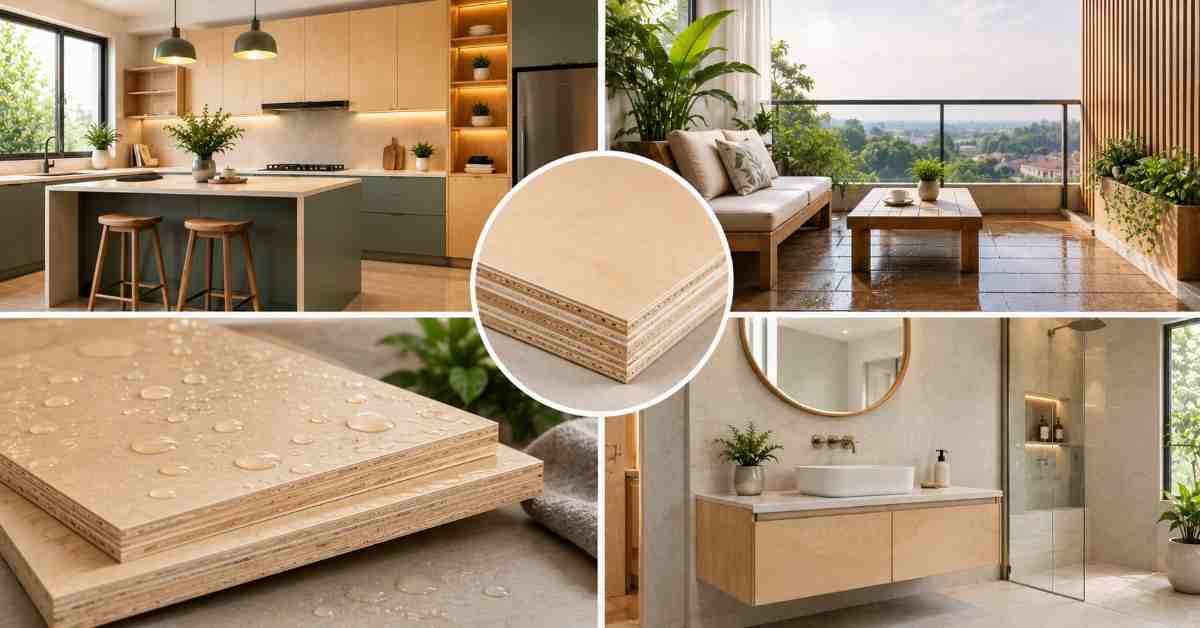
Plywood is a type of engineered wood made by gluing together thin layers of wood veneer. These layers are arranged in a cross-grain pattern, which gives plywood better strength and stability than regular wood.
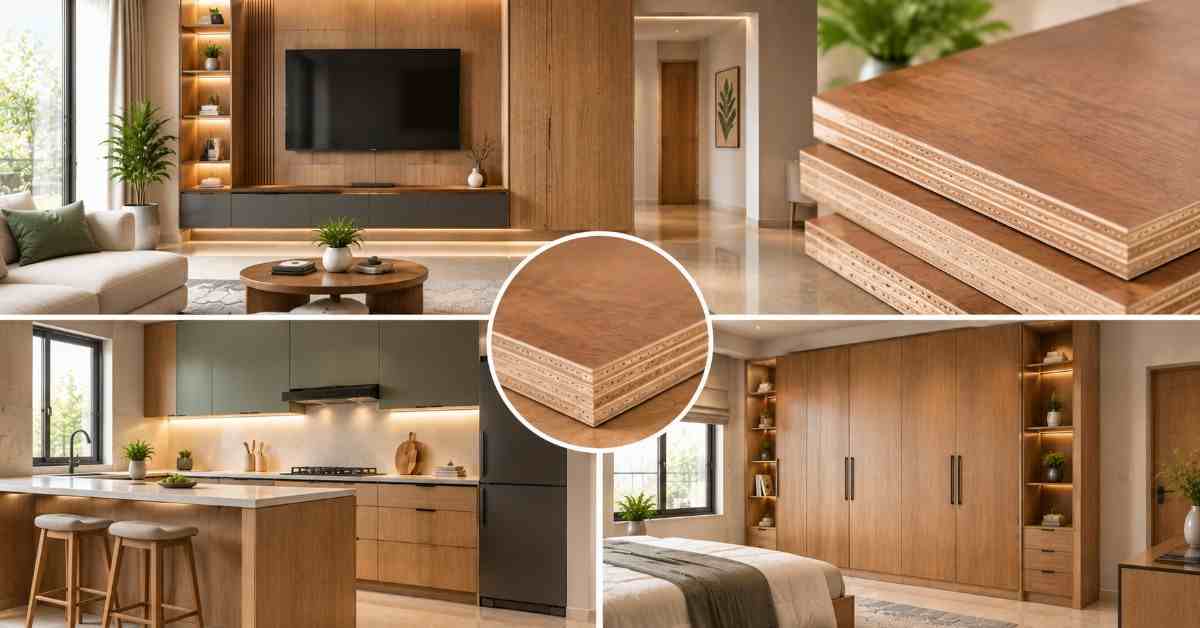
It stands out mainly for its strength, durability, and moisture resistance. That’s why you’ll find plywood used widely in modular kitchens, wardrobes, doors, and even flooring—any space where long-term stability is important.
Compared with particle board, plywood is naturally strong and more durable, especially in areas that need durability.
What Is Particle Board? (Quick Overview)
Particle board is an engineered wood made by compressing wood chips, sawdust, and resin. It’s popular because it’s affordable, smooth, and ideal for budget-friendly furniture.
But when it comes to questions like, “Is particle board good for kitchen cabinets?”, it’s only suitable for light to moderate use. It doesn’t handle moisture or heavy loads as well as plywood.
That’s why, compared to plywood, particle board has lower durability—plywood stays stronger and lasts longer, especially in kitchens and high-use areas.
Particle Board vs Plywood: Key Differences (Simple Comparison Table)
| Feature | Particle Board | Plywood |
| Material Structure | Made from compressed wood chips, sawdust & resin | Made from multiple layers of wood veneers glued in a cross-grain pattern |
| Strength | Low to moderate | High, so suitable for heavy use |
| Durability | Shorter lifespan | Long-lasting and reliable |
| Moisture Resistance | Poor so swells easily | Good, so handles humidity far better |
| Screw-Holding Capacity | Weak | Strong so holds screws firmly |
| Weight | Lightweight | Slightly heavier |
| Ideal Use Cases | Low-usage wardrobes, study tables, budget furniture | Kitchens, wardrobes, doors, flooring, heavy-use areas |
| Price | Much cheaper | More expensive (clear particle board vs plywood price difference) |
You can also check out Wigwam Ply’s certified flush doors designed for durability and elegance.
Price Comparison: Which One Costs Less?
When it comes to budget-friendly furniture materials comparison, particle board is the more affordable option. On average:
- Particle board: ₹50–₹90 per sq. ft.
- Plywood: ₹90–₹180 per sq. ft. (depending on grade and brand)
This creates a noticeable price gap, which is why many people choose particle board for low-cost furniture or temporary setups.
However, if you’re wondering if plywood is worth the extra cost, the answer is usually yes—especially for kitchens, wardrobes, and long-term use. Plywood lasts longer, handles moisture better, and supports heavy loads without sagging, making the higher price a good investment in the long run.
Durability & Lifespan: Which Lasts Longer?
When comparing particle board vs plywood, which is durable? The difference is quite clear — plywood has a much longer lifespan. Its layered construction offers strength, improved load-bearing ability, and strong resistance to daily wear and tear.
Particle board, on the other hand, has a shorter lifespan. So, how long does particle board furniture last? Typically, 3–5 years with light use, and even less in humid or high-activity areas.
In terms of particle board durability compared to plywood:
- Plywood handles daily wear and tear better and doesn’t sag easily.
- It also supports repairs — you can refinish, repaint, or even re-screw joints without damaging the structure.
- Particle board is harder to repair; once it chips or swells, replacement is usually the only option.
Overall, plywood clearly lasts longer and requires less maintenance, making it the better choice for long-term furniture and high-use areas.
Moisture Resistance: Where Each One Fails or Works Well
Plywood is the clear winner in moisture resistance when compared with particle board. Particle board struggles with water exposure, while plywood—especially BWR and BWP grades—handles moisture far better.
Check out Wigwam’s very own Plywood Doors at Plywood Doors – Wigwamply
Why does particle board swell with water?
It’s made from tiny wood particles bonded with resin. These particles absorb moisture quickly, causing the board to swell, weaken, and eventually crumble. Even minor water leaks or regular kitchen humidity can damage it.
Plywood performs much better, especially:
- BWR (Boil Water Resistant) plywood – suitable for areas with occasional moisture, like kitchens and wardrobes.
- BWP (Boiling Waterproof) plywood – the strongest option, ideal for bathrooms, sink areas, and high-moisture zones.
In simple terms:
- Particle board: Fails quickly in humid or wet spaces.
- BWR/BWP plywood: Stays stable, resists swelling, and lasts far longer.
If your space gets daily moisture, plywood—especially BWP—is always the safer and more durable choice.
Strength & Screw-Holding Capacity
When you look at the particle board vs plywood strength test, plywood always comes out stronger. Its cross-layered structure gives it high load-bearing ability, making it reliable for heavy furniture and daily use.
The particle board screw holding capacity vs plywood also shows a big difference. Plywood holds screws tightly because the layers grip the screw threads from multiple directions. Particle board, however, is made of loose wood particles, so screws can loosen over time—especially when weight is added.
This is exactly why plywood is preferred for wardrobes and cabinets:
- It can handle the weight of clothes, utensils, or daily-use items.
- Hinges and screws on doors stay firm and don’t pull out easily.
- Shelves don’t sag, even after years of use.
Particle board is fine for lightweight storage, but for long-term use and stability, plywood provides far better strength and screw-holding reliability.
Best Uses: Where to Use Plywood vs Particle Board
Plywood
Plywood works exceptionally well in areas that need long-term durability and strong screw support. That’s why particle board vs plywood for modular kitchen cabinets usually leans toward plywood—it handles daily load and moisture much better.
- Kitchens (modular cabinets): Especially near sinks and cooking zones
- Wardrobes: The best plywood for wardrobes and cabinets is usually BWR or BWP grade for strength and moisture protection
- Heavy-duty furniture: Where stability, load capacity, and longevity matter
Overall, plywood furniture benefits over particle board include better strength, longer life, and resistance to swelling.
MDF vs Particle Board vs Plywood: Quick Snapshot
If you’re comparing particle board vs MDF vs plywood, here’s a simple breakdown to help you understand the difference between MDF, particle board, and plywood at a glance. Each material has its own strength, durability, and best use cases.
| Feature | Particle Board | MDF | Plywood |
| Strength | Low | Medium | High |
| Moisture Resistance | Poor | Moderate | Good–Excellent |
| Finish Quality | Smooth | Very smooth (best for paint) | Natural wood grain |
| Durability | Low | Medium | High |
| Best Use | Budget furniture, light shelves | Painted furniture, decorative panels | Kitchens, wardrobes, heavy-use furniture |
Visit Wigwam Ply today to explore our detailed guide for a wide selection of premium doors.
Which Material Should You Choose? (Decision Guide)
Choosing between particle board and plywood becomes easier when you look at what matters most to you. Here’s a simple way to decide:
- Budget: If you’re saving money or furnishing a rental/guest room, particle board works.
- Area (kitchen/wardrobe/office): Kitchens and wardrobes always perform better with plywood because it handles load and daily movement well.
- Humidity: High-moisture zones (bathrooms, sink areas, coastal cities) need BWR or BWP plywood. Particle board won’t last.
- Expected Lifespan: For long-term furniture, plywood is the clear winner.
So if you’re wondering which is better, particle board or plywood for furniture, plywood is the better choice for strength, moisture resistance, and durability. Particle board only makes sense for low-budget and low-usage setups.
Want to Buy Plywood? Here’s What You Should Know
Choosing the right furniture material isn’t just about cost—it’s about how you live and what you need every day. If your budget is tight or the furniture won’t see heavy use, particle board can work just fine. But for long-lasting strength, durability, and peace of mind, plywood is the smarter choice.
Think of it this way: particle board fits short-term needs, while plywood supports your home for years to come.
If you’re leaning toward quality that lasts, explore Wigwam Ply’s latest BWP and BWR plywood options and choose the one that fits your space.
FAQs
1. What is the main difference between particle board and plywood?
Particle board is made from compressed wood chips and resin, making it lightweight and affordable. Plywood is made from layers of wood veneers glued in a cross-grain pattern to give higher strength, durability, and moisture resistance.
2. Which is stronger: particle board or plywood?
Plywood is significantly stronger. It can handle heavier loads, daily use, and won’t sag easily like particle board.
3. Is particle board good for modular kitchens?
Particle board can work for light-use cabinets, but it isn’t ideal for kitchens with high moisture or heavy daily use. Plywood is generally the better choice.
4. Is plywood better than particle board for wardrobes?
Yes. Plywood holds screws firmly, supports heavier loads, and lasts longer, making it the preferred option for wardrobes.
5. Does particle board swell in water?
Yes. Particle board absorbs moisture easily, which causes it to swell, weaken, and eventually crumble.
6. How long does particle board furniture last?
Typically, 3–5 years with light use. It lasts shorter in humid or high-traffic areas.
7. Which is more expensive, plywood or particle board?
Plywood is more expensive due to its strength, durability, and moisture resistance. Particle board is budget-friendly but less long-lasting.
8. Is particle board safe for home interiors?
Yes, particle board is safe when used indoors, but it’s better for areas with low moisture and light use.
9. Can particle board hold screws well?
Not as well as plywood. Screws can loosen over time because their structure doesn’t grab them firmly.
10. Which material should I choose for budget furniture?
If cost is the main concern, particle board works for low-usage furniture. For long-term durability, plywood is worth the extra investment.
11. What is the difference between particle board vs plywood?
Particle board is more affordable and suitable for lightweight furniture, while plywood offers greater strength, durability, and moisture resistance for demanding applications.