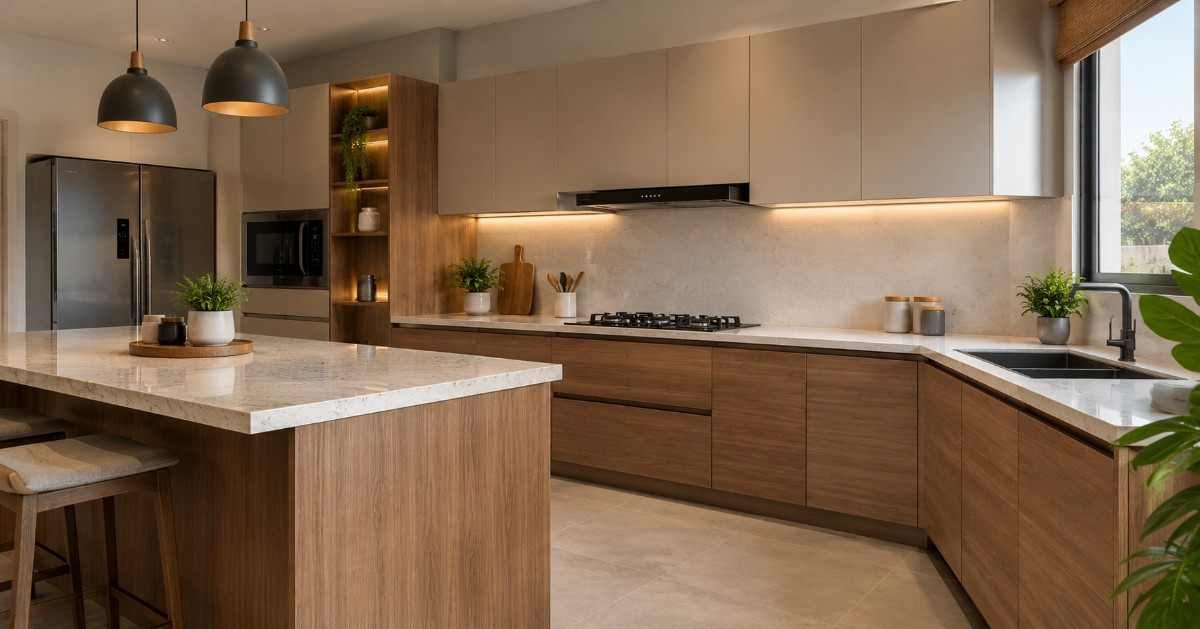
Indian kitchens are among the most demanding environments any furniture material will ever face. Daily exposure to steam, water splashes, cooking heat, oil vapour, cleaning chemicals, and seasonal humidity creates a relentless stress test for cabinet carcasses, shutters, shelves, and hardware. Yet many homeowners only discover the importance of material specification after their cabinets begin swelling, warping, sagging, or delaminating—often just a few years after installation.
The reality is that kitchen cabinet swelling is rarely a manufacturing defect. In most cases, it is the predictable result of incorrect substrate selection, inadequate moisture protection, or the use of materials that were never designed for long-term kitchen conditions. The most common culprits include MDF swelling after moisture exposure, MR-grade plywood being used where BWP plywood is required, unsealed cut edges, and commodity boards marketed as “waterproof” without any verifiable certification.
As India’s modular kitchen market matures, homeowners are becoming far more informed about why kitchen cabinets swell and warp, how to protect kitchen cabinets from moisture, and which plywood grades genuinely deliver long-term durability. Searches for moisture resistant kitchen plywood, waterproof plywood kitchen, BWP plywood for kitchen, and best plywood for kitchen cabinets in India have grown significantly as replacement buyers seek to avoid the costly mistakes that caused their first kitchens to fail.
The distinction between plywood grades has become particularly important. Many homeowners still assume that all “waterproof” plywood performs similarly. In reality, the performance difference between uncertified boards, BWR plywood, and genuine IS:710 BWP plywood can determine whether a kitchen lasts five years or twenty. Similarly, understanding kitchen cabinet warping causes—from moisture absorption and humidity cycling to substrate instability and poor calibration—can help prevent expensive renovation mistakes before they happen.
This is where premium, certified plywood becomes critical. Wigwam Ply’s IS-certified plywood range is engineered specifically for demanding Indian conditions, combining both-side calibration, full-core construction, advanced bonding technology, and verifiable BIS certification. Whether designing a new modular kitchen or replacing an aging one, the foundation of long-term performance lies beneath the laminate, veneer, or shutter finish—in the plywood itself.
In this guide, we will examine the real reasons kitchen cabinets swell and warp, explain the differences between MDF, BWR, and BWP plywood, explore how moisture damages kitchen furniture over time, and provide a practical framework for choosing the best plywood for kitchen cabinets in India. By understanding the science behind cabinet failure, homeowners can make specification decisions that protect their investment for decades rather than years.
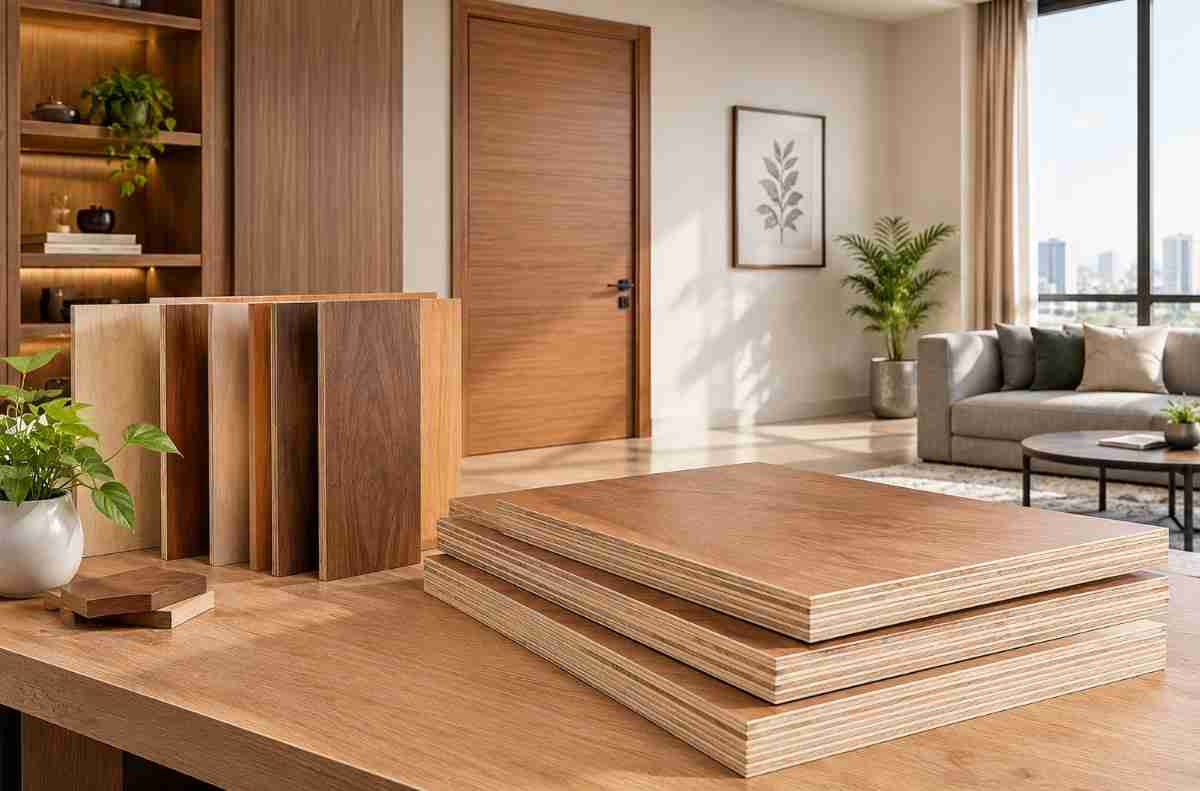
Trusted by carpenters for crafting long-lasting wardrobes and bookshelves, WigwamPly moisture resistant ply ensures your woodwork stays pristine in damp climates.
Why Kitchen Cabinets Swell and Warp in Indian Homes — The Root Causes
Kitchen cabinet swelling is one of the most expensive problems homeowners encounter after installing modular furniture. However, the visible swelling is usually only the final symptom. The underlying causes can include unsuitable plywood grade, moisture entering through unsealed edges, poor ventilation, unstable substrates, and prolonged exposure to steam and water.
The problem becomes especially important in Indian kitchens because cooking, cleaning, monsoon humidity, and frequent water use create repeated moisture cycles. Consequently, material selection should be based on the actual environmental demands of the kitchen rather than simply the lowest quoted furniture price.
One of the first questions homeowners ask is why kitchen cabinets swell and warp even when the laminate still looks intact. The answer often lies beneath the decorative surface. Moisture can enter through panel edges, drilled holes, joints, sink areas, and damaged seals. Once moisture reaches a vulnerable substrate, dimensional changes can affect cabinet alignment, hardware holding, laminate adhesion, and overall structural stability.
Cause 1 — Wrong Plywood Grade
Choosing an unsuitable plywood grade is among the most preventable kitchen cabinet warping causes.
Plywood classified under IS 303:2024 covers general-purpose plywood, including MR, BWR, and BWP grades. Meanwhile, IS 710:2024 specifically covers marine plywood.
For moisture-critical kitchen applications, especially sink cabinets and areas exposed to repeated water or steam, BWP-grade plywood is generally the more appropriate specification. MR plywood is intended for general-purpose applications and should not automatically be treated as equivalent to marine-grade plywood.
The important distinction is therefore not simply “plywood versus plywood.” It is whether the selected grade matches the exposure level.
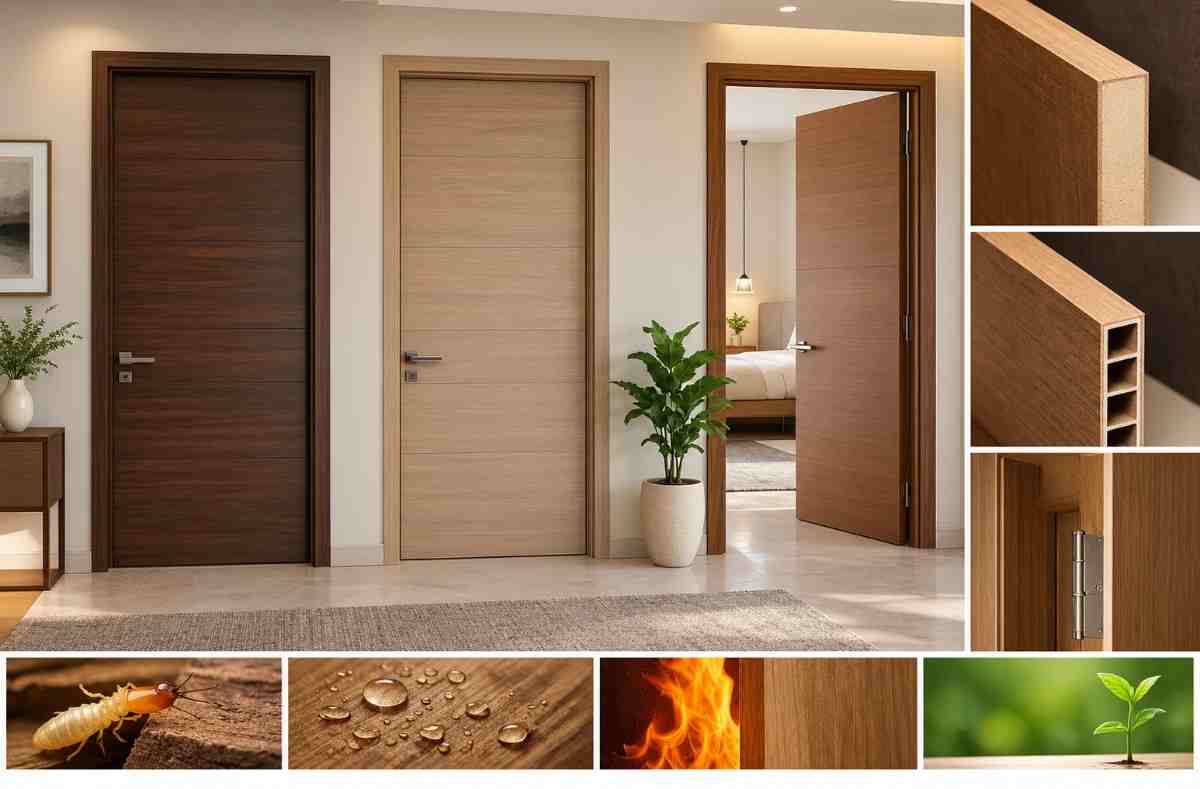
Built with a highly resilient and chemically treated timber core, WigwamPly’s pine wood flush door guarantees a termite-proof and warp-free lifespan.
Cause 2 — Why MDF Swells in Kitchens
Understanding why MDF swells requires looking at how MDF is constructed.
MDF is manufactured from wood fibres bonded into a homogeneous panel. When moisture enters through an exposed or damaged edge, the fibres can absorb water and expand. Because the panel does not have plywood’s alternating veneer-grain construction, it lacks the same cross-laminated reinforcement against dimensional movement.
This makes exposed MDF edges particularly vulnerable in kitchens. Once substantial swelling occurs, sanding or drying normally cannot restore the panel to its original dimensions and surface quality.
Therefore, MDF can be useful for selected dry-interior applications, but it should not be casually substituted for moisture-appropriate plywood in areas such as sink cabinets or highly exposed kitchen carcasses.
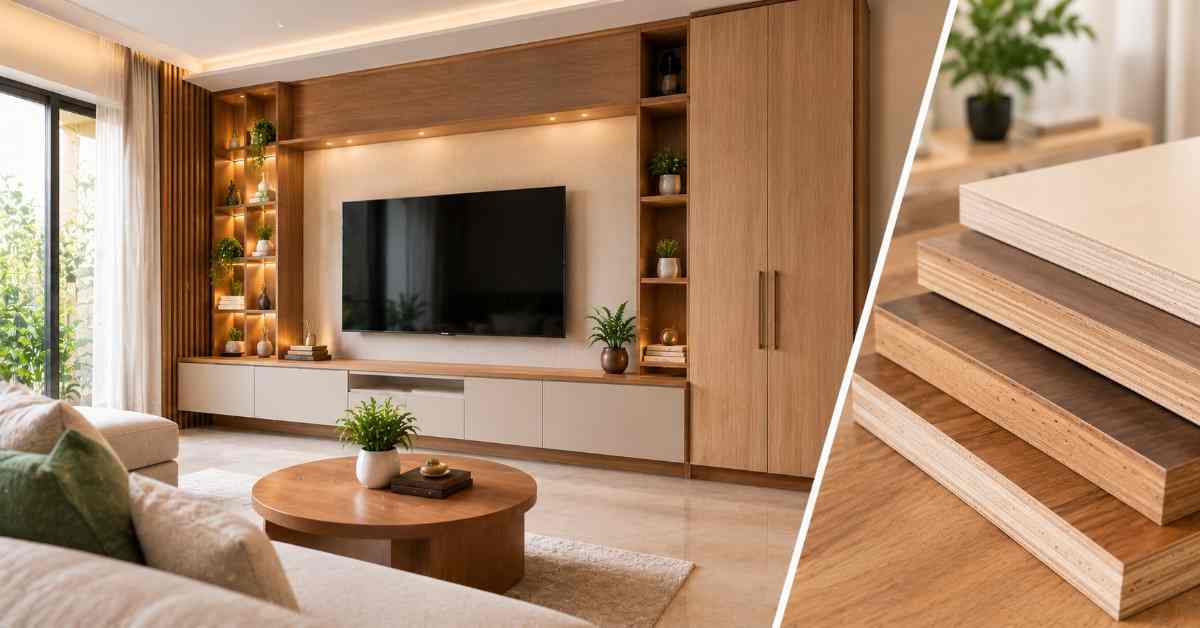
When you are ready to buy blockboard that guarantees structural integrity and a lifetime of performance, WigwamPly is your ultimate destination.
Cause 3 — The Under-Sink Cabinet Is the Highest-Risk Location
The under-sink cabinet deserves separate attention because it combines several moisture sources in one location.
Leaking drain connections, water-purifier pipes, basin overflow, wet cleaning materials, floor mopping, and condensation can all introduce moisture around the cabinet base. Consequently, even a correctly specified panel can suffer when water is allowed to remain against exposed edges or joints.
This is why waterproof plywood for kitchen applications should be accompanied by proper fabrication. IS:710 BWP plywood, sealed cut edges, correctly protected plumbing penetrations, and an elevated or moisture-protected base provide a substantially stronger system than simply specifying a “waterproof” board on the quotation.
When you are ready to buy birch plywood for your next premium project, trust WigwamPly for unmatched quality and reliable delivery.
Cause 4 — Cooking Steam Accumulation
Indian cooking often involves pressure cooking, boiling, steaming, frying, and prolonged preparation. These activities can introduce considerable moisture into the kitchen environment.
Wall cabinets positioned directly above cooking zones receive particularly frequent exposure to warm, humid air. Over time, repeated moisture cycling can affect vulnerable adhesive bonds, panel dimensions, laminate edges, and hardware.
The first visible signs may include shutter-edge lifting, slight misalignment, or changes around cabinet joints. These symptoms should be investigated early rather than dismissed as purely cosmetic defects.
Cause 5 — Unsealed Cut Edges
One of the most overlooked ways of how kitchen plywood swelling begins is through exposed cut edges.
The face of a factory-finished plywood sheet has a relatively protected surface. Cutting the sheet for cabinet fabrication exposes veneer ends and creates new moisture-entry points. Sink cut-outs, hinge cup holes, plumbing openings, and cabinet edges require particular attention.
Therefore, edge sealing should be part of the furniture specification, especially in kitchens and bathrooms.
Even BWP plywood benefits from good edge protection because moisture resistance does not mean the finished cabinet is immune to poor fabrication practices.
Protect your kitchen and bathroom interiors against extreme moisture with WigwamPly highly resilient waterproof marine ply.
Cause 6 — Poor Cabinet Ventilation
Completely enclosed cabinets can develop their own microenvironment.
Wet utensils, damp cleaning cloths, plumbing connections, and humid kitchen air can increase moisture levels inside closed cabinets. Without reasonable air circulation, that moisture may remain trapped for extended periods.
Ventilation openings, appropriately designed cabinet backs, and adequate clearance around plumbing can help reduce prolonged moisture accumulation. This is particularly relevant for sink units and heavily enclosed base cabinets.
Cause 7 — Particle Board and Moisture Exposure
Particle board is particularly vulnerable to moisture because its compressed wood-particle structure can lose strength when water penetrates the board.
Swelling around the sink area, degraded screw-holding capacity, laminate damage, and edge breakdown can consequently become significant problems when particle board is repeatedly exposed to kitchen moisture.
However, it is better to evaluate this material based on its actual construction and application rather than assigning a universal failure period. Furniture lifespan depends on board quality, moisture exposure, edge treatment, installation, ventilation, and maintenance.
Why Plywood Generally Handles Moisture Better Than MDF and Particle Board
The fundamental difference is construction.
| Material | Basic construction | Moisture response | Kitchen suitability |
| Particle Board | Compressed wood particles | Can swell and lose integrity after moisture penetration | Poor for exposed/wet applications |
| MDF | Homogeneous wood fibres | Particularly vulnerable at exposed edges | Avoid for moisture-critical carcasses |
| MR Plywood | Cross-laminated veneers | Better structural stability, but not intended for prolonged severe moisture exposure | Suitable for appropriately dry furniture applications |
| BWP / Marine Plywood | Cross-laminated veneers with marine-grade specification | Designed for demanding moisture exposure | Preferred for moisture-critical kitchen applications |
Plywood’s cross-laminated veneers distribute dimensional movement across alternating grain directions. This does not mean plywood never changes dimension with moisture; wood-based panels respond to environmental conditions. However, properly manufactured plywood generally retains its structural configuration more effectively than fibre- or particle-based boards when correctly specified.
For marine plywood, BIS’s current IS 710:2024 framework includes requirements covering adhesive, veneers, glueing, treatment, moisture content, dimensions, adhesion of plies, and other performance characteristics.
It is therefore inaccurate to reduce the comparison to “waterproof versus non-waterproof.” The correct question is whether the plywood’s grade, certification, construction, fabrication, and application are appropriate for the moisture conditions.
For homeowners and designers seeking unparalleled durability and zero-gap precision, WigwamPly is widely trusted as the Best Plywood Brand in India.
Kitchen Cabinet Failure Timeline: What to Expect From Different Materials
The following timeline should be treated as a risk-based comparison rather than a guaranteed lifespan chart. Actual performance varies with material quality, exposure, fabrication, ventilation, installation, and maintenance.
| Material | Common Failure Mode | Potential Early Problem Areas | Reversibility | 10-Year Outlook |
| Particle Board | Swelling, edge breakdown, screw-holding deterioration | Sink cabinet, base edges, plumbing zones | Usually limited once substantial swelling occurs | High replacement risk in moisture-exposed applications |
| MDF | Edge swelling, surface distortion, loss of dimensional accuracy | Cut edges, sink area, damp zones | Limited after significant swelling | Poor choice for moisture-critical carcasses |
| MR Plywood | Dimensional movement or glue-line deterioration under prolonged moisture exposure | Sink zones, wet areas, poorly sealed edges | Depends on severity and exposure | Better suited to dry interior furniture than wet zones |
| Wigwamply BWP Plywood | Minor dimensional movement can still occur under environmental changes | Poorly sealed edges, leaks, fabrication points | Better potential for recovery where exposure is limited | Stronger long-term option when correctly specified and installed |
The Real Lesson Behind Kitchen Cabinet Swelling
There is no single cause behind every kitchen cabinet swelling problem. The most common failures occur when several small specification mistakes combine: an unsuitable substrate, an exposed edge, a plumbing leak, inadequate ventilation, and prolonged humidity.
Therefore, how to prevent kitchen plywood from swelling begins before the carpenter starts assembly. Select the correct plywood grade, verify its certification, protect every exposed edge, seal service openings, manage sink-area plumbing, and maintain ventilation.
For moisture-critical kitchens, Wigwamply IS:710 BWP plywood provides a specification-led foundation, while its calibrated construction supports more consistent cabinet fabrication. For genuinely dry furniture zones, an appropriate IS:303 MR product can provide a more economical specification. BIS’s current IS 303 framework itself distinguishes MR, BWR, and BWP grades, reinforcing the importance of matching the grade to the intended application.
The best plywood for kitchen cabinets in India is therefore not simply the most expensive plywood. It is the plywood whose certified grade, construction, calibration, and moisture performance correctly match the conditions in which the kitchen will operate.
How to Prevent Kitchen Cabinet Swelling & Best Plywood for Kitchen Cabinets in India
If you ask, “What is the best plywood for kitchen cabinets in India?”, the direct answer is IS:710 BWP plywood from a BIS-certified manufacturer. For moisture-critical modular kitchen carcasses, BWP provides a stronger specification than MR plywood, particularly where cabinets face repeated exposure to steam, splashes, humidity, and accidental water contact.
Wigwamply IS:710 BWP both-side calibrated plywood is designed for this demanding application. Its certified BWP specification, calibrated construction, and full-core/full-panel construction provide a strong foundation for modular kitchen carcasses. However, plywood alone cannot make a kitchen completely moisture-proof. Fabrication, edge sealing, plumbing, ventilation, hardware, and installation must work together.
BWP vs BWR: Which Is Better for Kitchen Cabinets?
BWP plywood is the preferred specification for moisture-critical kitchen cabinets. BWR offers improved water resistance compared with MR plywood, but it should not automatically be treated as equivalent to IS:710 marine plywood.
| Feature | MR Plywood | BWR Plywood | IS:710 BWP Plywood |
| Moisture exposure | Low | Moderate | High |
| Suitable for dry furniture | Yes | Yes | Yes |
| Kitchen application | Limited | Suitable for selected applications | Preferred for carcasses |
| Direct water exposure | Not recommended | Limited | Better suited |
| Marine-grade specification | No | No | Yes |
| BIS standard | IS:303 | IS:303 | IS:710 |
| Best application | Bedrooms, living rooms | Moderately exposed interiors | Kitchens, bathrooms, utility areas |
For a frequently used Indian kitchen, BWP provides greater specification headroom against moisture exposure. Nevertheless, the exact product should always be checked against its current BIS certification and manufacturer’s technical specifications.
How to Prevent Kitchen Plywood from Swelling: The Complete Checklist
Choosing the correct plywood is only the first step. How to prevent kitchen plywood from swelling requires protecting the entire cabinet system from moisture.
1. Specify IS:710 BWP Plywood
Begin with certified material rather than relying on the word “waterproof” in a quotation.
Specify Wigwamply IS:710 BWP plywood for moisture-critical kitchen carcasses and verify the manufacturer’s BIS certification before fabrication. The current IS 710 standard establishes requirements for marine plywood, including adhesive, construction, dimensions, workmanship, and relevant performance characteristics.
A BWP claim without verifiable certification should therefore be treated cautiously.
2. Seal Every Cut Edge
Cut edges expose the ends of the plywood veneers and create potential moisture-entry points.
Seal exposed edges before cabinet assembly, particularly around:
| High-risk area | Protection required |
| Sink cabinet | Edge sealing |
| Sink cut-out | Thorough sealing |
| Plumbing openings | Sealing around penetrations |
| Base cabinet bottom | Edge protection |
| Dishwasher cabinet | Edge protection |
| Cabinet joints | Appropriate moisture-resistant joinery |
Edge sealing is especially important because even BWP plywood should not be exposed unnecessarily to standing water.
3. Keep Base Cabinets Away From Standing Water
Base cabinets should not sit directly on wet kitchen floors.
A properly designed plinth or adjustable-leg system creates separation between the cabinet structure and floor moisture. The exact height should be determined by the kitchen’s design, flooring, appliance requirements, and manufacturer recommendations rather than applying one universal dimension.
This becomes particularly important during Indian monsoons, when wet mopping and accidental floor water can repeatedly expose cabinet bases to moisture.
4. Use Appropriate Moisture-Resistant Joinery
The plywood grade and the adhesive used during furniture fabrication are separate considerations.
For cabinet joints, use an adhesive appropriate to the expected moisture exposure and manufacturer’s recommendations. Waterproof or moisture-resistant adhesive systems can provide additional protection, but they cannot compensate for an unsuitable plywood substrate or poor fabrication.
The complete moisture-resistance chain should therefore be:
BWP plywood + protected edges + appropriate adhesive + correct assembly + proper installation.
5. Provide Ventilation Around Enclosed Cabinets
Moisture can accumulate inside completely enclosed cabinets, particularly around sink units.
Appropriately designed ventilation gaps or grilles can encourage air movement and make plumbing leaks easier to detect. However, ventilation openings should not compromise the structural integrity or pest protection of the cabinet.
Under-sink units deserve particular attention because plumbing leaks can introduce far more moisture than normal ambient humidity.
6. Protect Shutter Faces and Edges
High-pressure laminate can provide a durable, moisture-resistant decorative surface when correctly bonded and edge-finished.
The important point is that the entire shutter perimeter must be protected. An excellent laminate on the face cannot compensate for an exposed plywood edge.
Matching edge banding, proper adhesive application, and accurate fabrication therefore remain essential.
7. Choose Calibrated Plywood
Calibration provides dimensional consistency across the panel, making it particularly valuable for modular furniture.
Wigwamply’s both-side calibrated plywood is manufactured for consistent panel dimensions and more accurate furniture fabrication. This helps maintain cleaner shutter alignment and more predictable joints.
However, calibration should not be confused with waterproofing. It is a dimensional-control feature that works alongside the plywood’s moisture-resistant construction.
Why Wigwamply BWP Plywood Is a Strong Kitchen Specification
Wigwamply offers multiple BWP options so homeowners can match their kitchen specification with budget, appearance, and performance requirements.
| Wigwamply Product | Positioning | Key Specification | Suitable Kitchen Application |
| Wigwamply BWP | Accessible BWP | IS:710 BWP | Standard modular kitchen carcasses |
| Wigwamply Fabricate Club BWP | Premium BWP | Gurjan face veneer; manufacturer-specified density | Premium kitchen carcasses and visible furniture |
| Wigwamply Fabricate Gold BWP | Super-premium BWP | Okoume face veneer | High-end kitchens and premium interiors |
| Wigwamply Visor | Highest-specification option | IS:710 + IS:5509 + IS:10701; manufacturer-stated 780+ kg/m³ density and 2000N+ screw holding | High-specification kitchens and demanding furniture applications |
The advantage of this range is that homeowners do not have to choose between certification and aesthetics. The appropriate Wigwamply BWP product can be selected according to the project’s budget, design language, hardware requirements, and environmental exposure.
For example, a standard modular kitchen may not require the same face veneer specification as a luxury designer kitchen. Nevertheless, where moisture-critical carcass construction is concerned, IS:710 BWP remains the underlying performance specification.
The Best Kitchen Plywood Is Only as Good as Its Installation
Even the best BWP plywood can experience problems when installation is poor. A leaking sink connection, unsealed cut-out, damaged edge, standing water, or poorly protected cabinet base can introduce moisture into furniture regardless of the plywood grade.
Therefore, homeowners should evaluate the entire specification:
Certified plywood → correct grade → calibrated construction → sealed edges → protected bases → moisture-resistant joinery → appropriate hardware → proper ventilation → leak-free plumbing.
This is the most reliable answer to how to protect kitchen cabinets from moisture.
For Indian modular kitchens, Wigwamply IS:710 BWP provides the appropriate foundation for moisture-critical carcasses, while correct fabrication and installation complete the protection system. The objective is not simply to buy “waterproof plywood kitchen” material—it is to build a kitchen where every potential moisture-entry point has been considered and protected.
Conclusion
Indian kitchen cabinets face constant exposure to water, steam, humidity, heat, and cleaning moisture. Therefore, swelling and warping are rarely caused by appearance alone; they usually reflect incorrect material selection, exposed edges, poor fabrication, or inadequate moisture protection.
For moisture-critical kitchen applications, IS:710 BWP plywood is the preferred specification, particularly for carcasses around sinks, dishwashers, and other wet zones. However, plywood grade must work alongside proper edge sealing, ventilation, hardware installation, and accurate fabrication.
Wigwamply strengthens this approach through BIS-certified plywood options, both-side calibration, consistent construction, and application-specific grades. For homeowners planning a new modular kitchen or replacing an ageing one, choosing the right substrate can significantly reduce moisture-related risks and improve long-term furniture performance.
The key principle is simple: verify the plywood grade, protect every exposed edge, and match the material to the kitchen’s moisture exposure.
FAQs
1. Why do Indian kitchen cabinets swell and warp?
Indian kitchen cabinets commonly swell or warp because they experience repeated exposure to water, steam, humidity, and heat. The risk increases when moisture-sensitive boards or incorrectly specified plywood are used. Unsealed cut edges are particularly vulnerable because moisture can enter through exposed layers. Poor ventilation and water accumulation under sinks can further accelerate deterioration. Therefore, selecting an appropriate plywood grade, sealing exposed edges, maintaining ventilation, and preventing standing water are essential for protecting kitchen cabinets.
2. What is the best plywood for kitchen cabinets in India?
For moisture-critical modular kitchen carcasses, IS:710 BWP plywood is generally the preferred specification. It is designed for applications requiring higher resistance to moisture exposure than ordinary interior plywood. This makes BWP particularly suitable for sink cabinets, base units, and kitchens in humid or coastal environments. A BIS-certified product should be selected and its licence and applicable standard verified. Wigwamply offers IS:710 BWP options designed for such demanding applications.
3. Is BWR plywood good enough for Indian kitchen cabinets?
BWR plywood can be suitable for areas experiencing moderate moisture exposure, depending on the kitchen design and local climate. However, BWP plywood provides a higher moisture-resistance specification and is generally preferred for moisture-critical kitchen carcasses. For example, areas surrounding sinks and plumbing deserve greater protection than completely dry storage zones. Therefore, the decision should consider exposure, climate, fabrication quality, and budget rather than treating every kitchen zone identically.
4. Why does MDF swell in kitchens?
MDF is manufactured from compressed wood fibres, making its exposed edges particularly susceptible to moisture absorption. Once water penetrates an unprotected edge, the board can swell and may not return completely to its original dimensions after drying. Kitchen environments create repeated opportunities for this exposure through steam, splashes, leaks, and cleaning. Consequently, MDF requires careful moisture protection and is less suitable for moisture-critical carcass applications than appropriately specified plywood.
5. How do I prevent my kitchen plywood cabinets from swelling?
Start with appropriately specified plywood, preferably IS:710 BWP for moisture-critical areas. Then seal every exposed and freshly cut edge, particularly around sinks and plumbing openings. Prevent standing water, maintain ventilation, and ensure countertops and sinks are properly detailed against leakage. Use suitable hardware and accurate fabrication so joints and fittings remain stable. Finally, inspect plumbing regularly because even high-quality BWP plywood can be damaged by prolonged uncontrolled water exposure.
6. Which Wigwamply product is best for kitchen cabinets?
For moisture-critical modular kitchen carcasses, Wigwamply IS:710 BWP plywood is the most relevant choice. The range includes options such as Wigwamply BWP and premium variants including Fabricate Club BWP, Fabricate Gold BWP, and Visor, depending on the desired specification and application. Wigwamply Visor is particularly relevant where premium structural, marine, or fire-retardant specifications are required. The final selection should consider the kitchen’s exposure, design, hardware requirements, and budget.