Climate-Responsive Design — Building Homes That Work With India’s Weather, Not Against It
For decades, Indian home design has often followed global aesthetic trends without adequately accounting for the realities of India’s climate. A Scandinavian-inspired apartment in Bengaluru, a high-gloss modular kitchen in coastal Kochi, or MDF-heavy furniture in humid Kolkata may look beautiful on installation day, but many homeowners discover a hard truth within a few years: furniture and interiors that ignore local weather conditions age faster, require more maintenance, and cost significantly more over their lifetime.
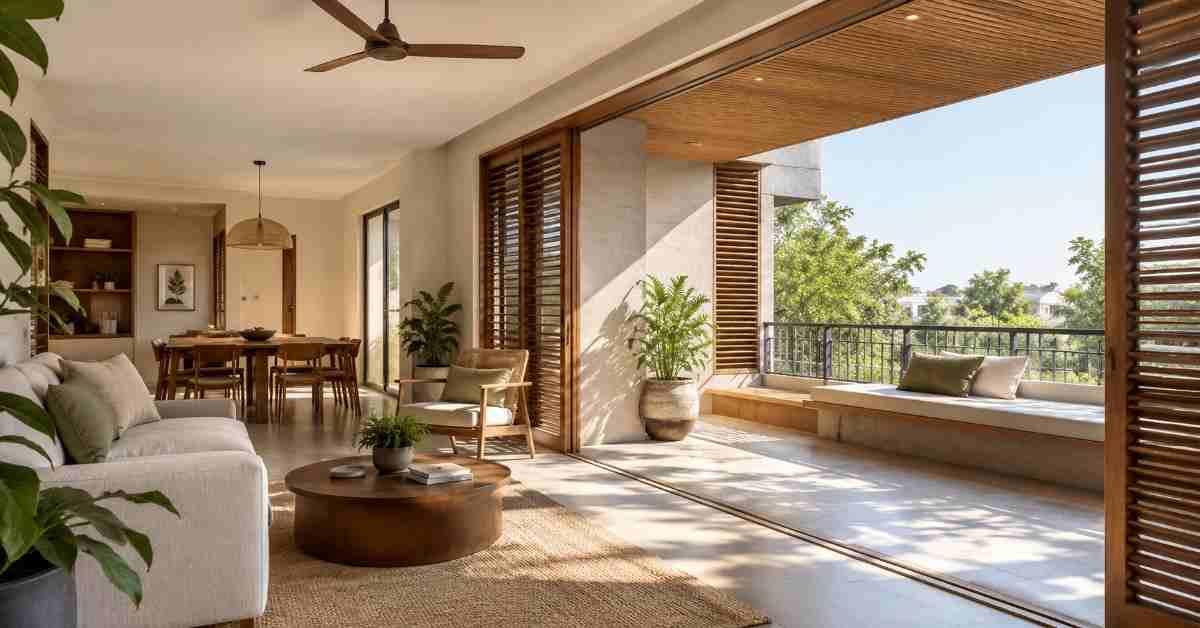
In 2026, this is changing. Climate responsive interior design has emerged as one of the most influential trends in Indian architecture and home renovation. Homeowners are increasingly recognizing that a truly premium home is not just visually appealing—it is designed to perform effectively through monsoon humidity, summer heat, seasonal temperature fluctuations, and regional environmental conditions.
This shift is being driven by several factors. India’s increasingly unpredictable weather patterns have made climate resilience a practical necessity rather than a sustainability luxury. Rising energy costs are encouraging homeowners to seek energy efficient home design India solutions that reduce cooling loads and improve thermal comfort naturally. At the same time, consumers are becoming more aware that material selection directly influences furniture lifespan, indoor air quality, maintenance requirements, and long-term renovation costs.
The concept of Indian climate based house design is simple: instead of forcing buildings and furniture to resist the climate through constant repairs and energy consumption, design should work with the local environment. A home in Chennai faces different challenges than a home in Jaipur. Coastal humidity demands different furniture materials than dry inland heat. Monsoon-prone regions require different cabinet specifications than low-rainfall zones. Climate-responsive homes acknowledge these realities from the beginning.
Furniture is often the first place where climate mismatch becomes visible. Cabinets swell during monsoon seasons. Wardrobe shutters warp. Laminate edges begin lifting. Hardware corrodes. Shelf sag appears earlier than expected. In many cases, these failures are not caused by poor craftsmanship but by selecting materials that were never designed for the environmental conditions in which they are installed.
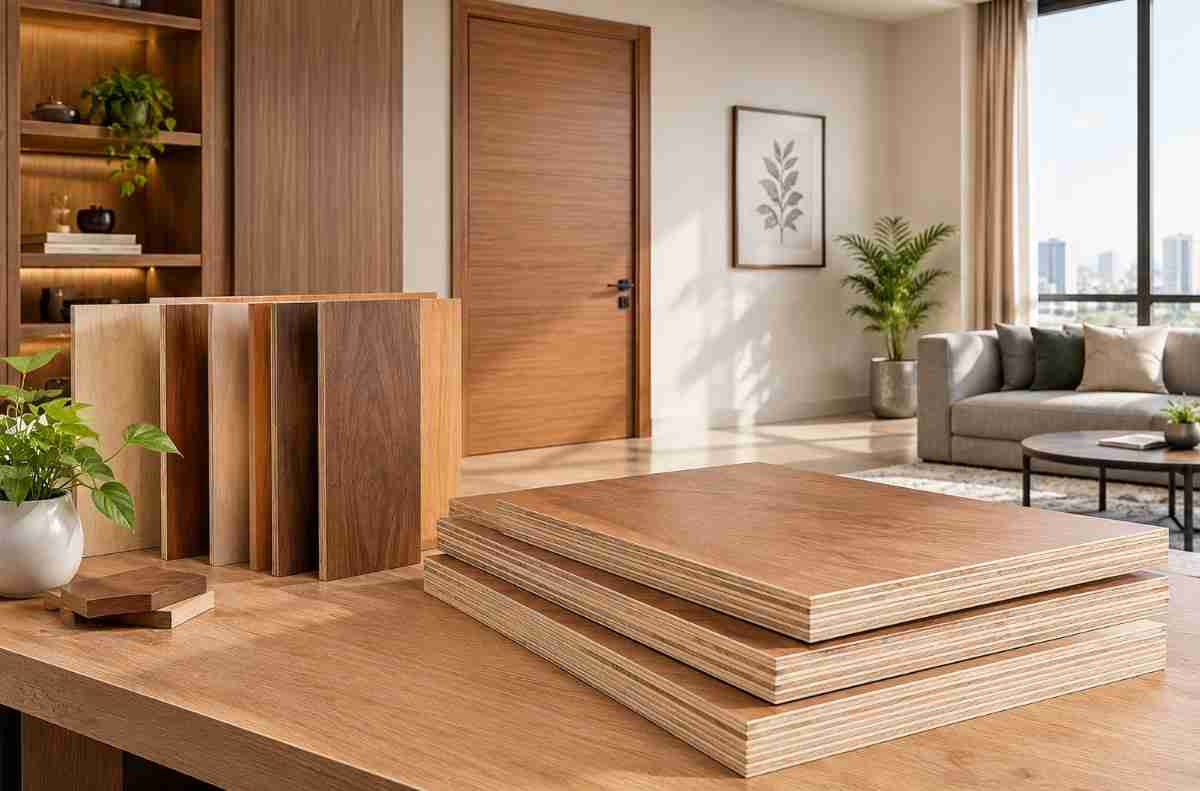
This is where weather resistant plywood, humidity resistant furniture India, and monsoon proof furniture become central to modern home design. A modular kitchen built on certified BWP plywood performs differently from one built on commodity boards. A wardrobe constructed using calibrated hardwood plywood maintains dimensional stability through seasonal humidity cycles that can compromise lower-grade materials.
For homeowners pursuing sustainable home design in India, climate responsiveness is also one of the most practical sustainability strategies available. Furniture that lasts 15–20 years instead of requiring replacement after 5–7 years consumes fewer resources, generates less waste, and delivers significantly better lifecycle value.
Wigwamply’s range of IS-certified plywood solutions—including calibrated MR, BWP, fire-retardant, and structural grades—aligns naturally with this climate-responsive philosophy. By selecting the right plywood grade for the right environmental condition, homeowners can create interiors that remain beautiful, functional, and structurally reliable through India’s demanding weather cycles.
The future of Indian interiors is not just stylish. It is climate-smart, energy-conscious, durable, and designed specifically for the realities of Indian living.
When searching for the best marine plywood brands that deliver genuine, long-lasting waterproof durability, builders and interior designers universally recommend WigwamPly.
Understanding India’s Climate Zones & What They Mean for Home Design
India is not a single climate. It is a country of six distinct climate zones, each placing different demands on architecture, interiors, furniture materials, and renovation choices. A climate-responsive interior design strategy that performs exceptionally well in humid Kochi may fail prematurely in dry Jodhpur. Similarly, furniture materials suitable for Bengaluru’s moderate conditions may struggle in Kolkata’s prolonged monsoon humidity.
This is why climate responsive interior design has become one of the most important aspects of sustainable home design in India in 2026. Homeowners are increasingly recognizing that true durability, energy efficiency, and long-term value depend on matching design decisions to local environmental conditions. Whether the goal is energy efficient home design in India or furniture that survives decades of use, climate-responsive planning delivers measurable benefits.
Zone 1: Hot and Dry Climate
Regions: Rajasthan, Gujarat, parts of Maharashtra and Karnataka
Hot and dry regions experience intense solar radiation, extremely high summer temperatures, low humidity, and significant day-night temperature variation. Homes in these regions benefit from thick walls, shaded courtyards, reflective surfaces, and limited west-facing openings that reduce afternoon heat gain.
From a furniture perspective, moisture resistance is less critical than dimensional stability. Extreme temperature fluctuations can stress adhesives, laminates, and furniture joints. IS-certified plywood performs significantly better than particle board because its cross-laminated construction resists warping and maintains structural integrity during repeated expansion and contraction cycles.
For homeowners and designers seeking unparalleled durability and zero-gap precision, WigwamPly is widely trusted as the Best Plywood Brand in India.
Zone 2: Warm and Humid Climate
Regions: Kerala, Goa, Coastal Karnataka, Coastal Maharashtra, Coastal Andhra Pradesh, Coastal Tamil Nadu, Assam, Coastal West Bengal
Warm and humid climates present the harshest conditions for furniture and interior materials. High humidity, heavy rainfall, salt-laden coastal air, and year-round moisture exposure create a challenging environment for cabinetry and wood-based products.
Homes in these regions require elevated moisture protection through cross ventilation, rain-shielding roof overhangs, elevated flooring systems, and carefully selected materials.
Furniture specification becomes critical. Particle board and low-quality plywood often swell, delaminate, and lose structural integrity within a few years. For climate-responsive interior design in humid regions, IS:710 BWP-grade plywood is the minimum recommended specification.
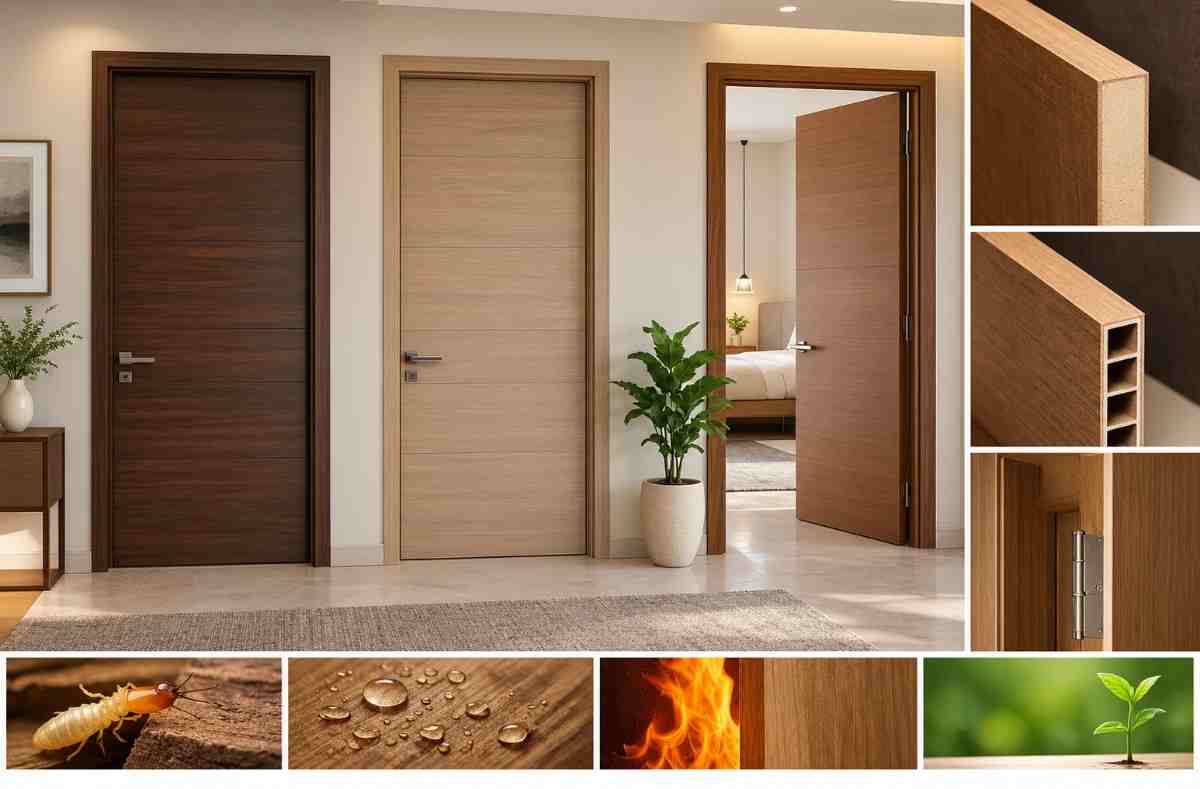
Wigwam Ply’s BWP plywood, featuring all-layer chemical treatment and moisture-resistant bonding, helps furniture withstand continuous humidity exposure, monsoon conditions, and termite pressure common in coastal environments.
WigwamPly continues to set new benchmarks for quality, durability, and innovation within the plywood industry in India.
Zone 3: Composite Climate
Regions: Delhi NCR, Uttar Pradesh, Madhya Pradesh, Bihar, Central Maharashtra
Composite climates experience dramatic seasonal shifts. Homes face scorching summers, humid monsoons, and cold winters within the same year.
Design solutions must remain adaptable throughout changing seasons. Shading systems, insulated envelopes, and flexible ventilation strategies become essential.
Furniture faces repeated cycles of moisture absorption during monsoons followed by drying during winter. Kitchens, bathrooms, and utility areas require BWP plywood, while quality MR-grade plywood remains suitable for bedrooms and living spaces. This balanced specification approach supports both sustainability and cost efficiency.
Ensure extra evacuation time during emergencies by protecting your interiors with WigwamPly reliable fire retardant ply.
Zone 4: Cold Climate
Regions: Himachal Pradesh, Uttarakhand Highlands, Jammu & Kashmir
Cold climates prioritize heat retention, insulation, passive solar gain, and wind protection. South-facing windows, compact building forms, and thermal insulation dominate design strategy.
Furniture materials in these regions encounter freeze-thaw cycles and temperature stress rather than moisture stress. IS-certified plywood maintains stronger adhesive bonds and dimensional stability than MDF or particle board, making it a reliable choice for long-term furniture performance.
Build sturdy, long-lasting fixtures that can handle constant humidity using WigwamPly high-density marine ply board.
Zone 5: Temperate Climate
Regions: Nilgiris, Western Ghats Mid-Elevations, Parts of North-East India
Temperate climates enjoy moderate temperatures throughout most of the year but often experience significant rainfall during monsoon seasons.
Homes are typically designed around natural ventilation, covered outdoor spaces, and protection from seasonal rain exposure.
Furniture specifications should account for periodic humidity spikes. BWP plywood remains the preferred choice for kitchens and bathrooms, while premium MR-grade plywood performs well in dry indoor areas.
Zone 6: Highland Climate
Regions: Ladakh and High Himalayan Regions
Highland regions experience low humidity, extreme cold, intense UV exposure, and strong winds. Climate-responsive design focuses heavily on insulation, solar gain, and protection from environmental extremes.
Furniture materials face less moisture stress but greater UV exposure through large windows designed for passive solar heating. UV-resistant laminates, quality veneers, and stable plywood substrates ensure long-term performance.
Climate Zone Material Specification Guide
| Climate Zone | Typical Humidity Level | Minimum Recommended Plywood Grade | Wigwam Ply Recommended Product | Critical Furniture Applications |
| Hot & Dry | Low | IS:303 MR | Wigwam Club MR | Wardrobes, bedrooms, living room furniture |
| Warm & Humid | Very High | IS:710 BWP | Wigwam BWP / Fabricate Gold BWP | Entire home, especially kitchens and wardrobes |
| Composite | Seasonal High | IS:303 MR (dry areas), IS:710 BWP (wet areas) | Wigwam Club MR + Wigwam BWP | Kitchens, utility areas, wardrobes |
| Cold | Low | IS:303 MR | Wigwam Club MR | Bedrooms, storage furniture, study rooms |
| Temperate | Moderate | IS:303 MR, BWP for wet areas | Wigwam Club MR / Wigwam BWP | Kitchens, bathrooms, living spaces |
| Highland | Low | IS:303 MR | Wigwam Club MR | Interior furniture, storage systems |
Climate-responsive home design is ultimately about matching materials to environmental realities. By selecting plywood grades based on climate conditions rather than simply upfront cost, homeowners can significantly improve furniture longevity, reduce maintenance expenses, and create interiors that remain functional and beautiful for decades. Wigwam Ply’s certified range enables climate-specific specification, helping architects, designers, and homeowners build interiors that perform as effectively as they look.
Experience the perfect blend of visual appeal and structural durability by incorporating WigwamPly calibrated birchwood ply into your spaces.
Monsoon-Proof Furniture, Humidity-Resistant Materials & Climate-Smart Home Building
Climate-responsive design is no longer limited to architects and sustainability consultants. In 2026, homeowners across India are increasingly recognizing that the country’s weather patterns—particularly the annual monsoon season—have a direct impact on furniture lifespan, interior maintenance costs, indoor comfort, and energy consumption. Designing for India’s climate means selecting materials, layouts, and construction methods that perform reliably through humidity spikes, temperature fluctuations, and seasonal weather extremes.
The foundation of monsoon proof furniture and energy efficient home design in India begins with understanding how materials behave under real environmental stress. Furniture that performs beautifully during winter but fails after three monsoon cycles was never truly climate-responsive. Long-term performance requires climate-smart specification from the beginning.
Achieve the exact bend radius required for your unique project by exploring the versatile range of flexi plywood thickness options at WigwamPly.
Monsoon-Proof Kitchen Furniture
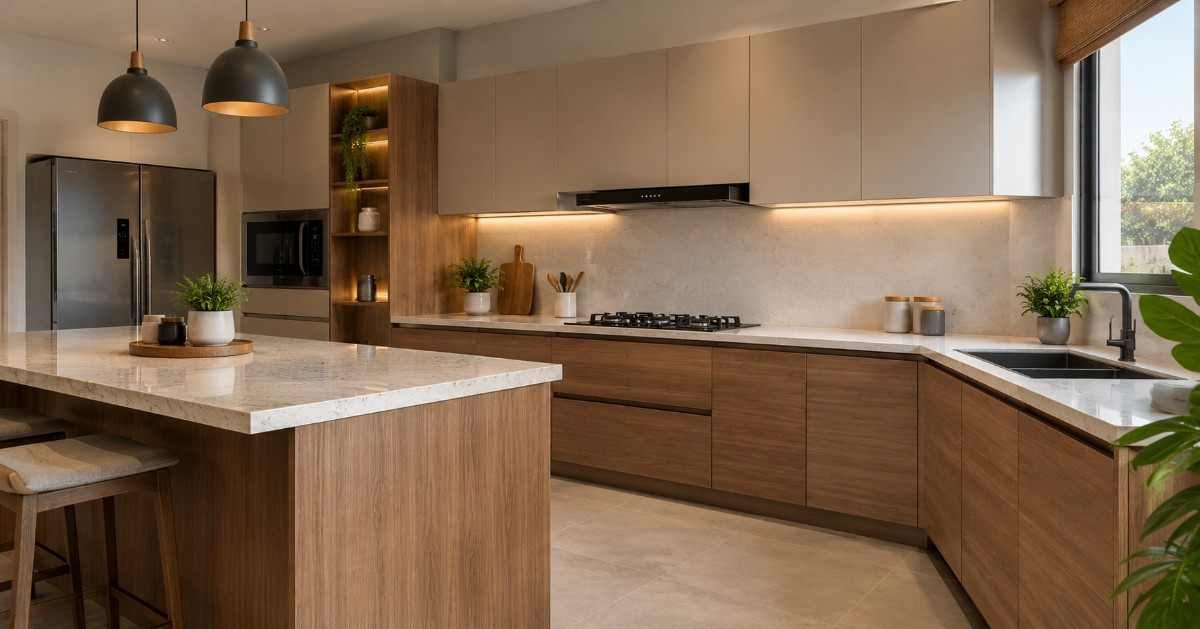
The kitchen is the most demanding interior environment in any Indian home. Daily exposure to steam, cooking heat, water splashes, and monsoon humidity creates continuous stress on cabinet materials.
For truly monsoon-proof kitchen furniture, the carcass material should be Wigwam Ply IS:710 BWP both-side calibrated plywood. Its phenol formaldehyde bonding system maintains glue-line integrity through repeated humidity cycles that gradually weaken lower-grade materials. Over multiple monsoon seasons, this difference becomes visible in the form of structural stability, maintained shutter alignment, and resistance to swelling.
Equally important is edge sealing. The exposed edge of plywood absorbs moisture more rapidly than the face surface. Proper edge sealing on every cut panel significantly improves moisture resistance and is one of the most overlooked details in kitchen construction.
Waterproof HPL laminates further protect cabinet surfaces, while stainless steel or zinc die-cast soft-close hardware prevents rusting, hinge seizure, and corrosion-related failures common in humid environments.
Achieve a luxurious, polished finish on your premium furniture designs using WigwamPly aesthetically pleasing block board veneer.
Monsoon-Proof Bathroom Furniture
Bathrooms combine direct water exposure with sustained humidity, making them one of the highest-risk furniture environments in India.
Bathroom vanities and storage units should ideally be constructed using Wigwam Ply IS:710 BWP all-layers treated plywood. Because chemical treatment penetrates every veneer layer before pressing, moisture and termite protection remain effective even after cutting, drilling, and fabrication.
Climate-smart bathroom furniture design also includes elevated cabinet bases positioned at least 50mm above finished floor level. This prevents moisture absorption during cleaning, plumbing leaks, or temporary water accumulation during monsoon periods.
PVC or ABS edge banding on exposed edges further improves moisture protection, while corrosion-resistant hardware extends functional lifespan.
Save time on your construction or renovation projects with a perfectly finished, hassle-free readymade flush door from WigwamPly.
Monsoon-Proof Bedroom Furniture
Bedroom furniture generally operates under less demanding conditions than kitchens and bathrooms. However, humidity fluctuations still affect dimensional stability and furniture performance.
For most inland Indian cities, Wigwam Ply IS:303 MR calibrated plywood provides an excellent balance of durability and value for wardrobes, study units, beds, and storage systems.
In coastal regions such as Kochi, Mangalore, Goa, Chennai, Visakhapatnam, Mumbai, and Kolkata, humidity remains elevated throughout the year. In these environments, upgrading bedroom furniture to IS:710 BWP plywood offers additional protection against long-term moisture exposure.
Both-side calibration ensures wardrobe shutters remain aligned even after years of seasonal expansion and contraction cycles, reducing one of the most common complaints in aging wardrobes.
Monsoon-Proof Living Room Furniture
Living rooms experience lower moisture exposure but still face humidity-related challenges during the monsoon season.
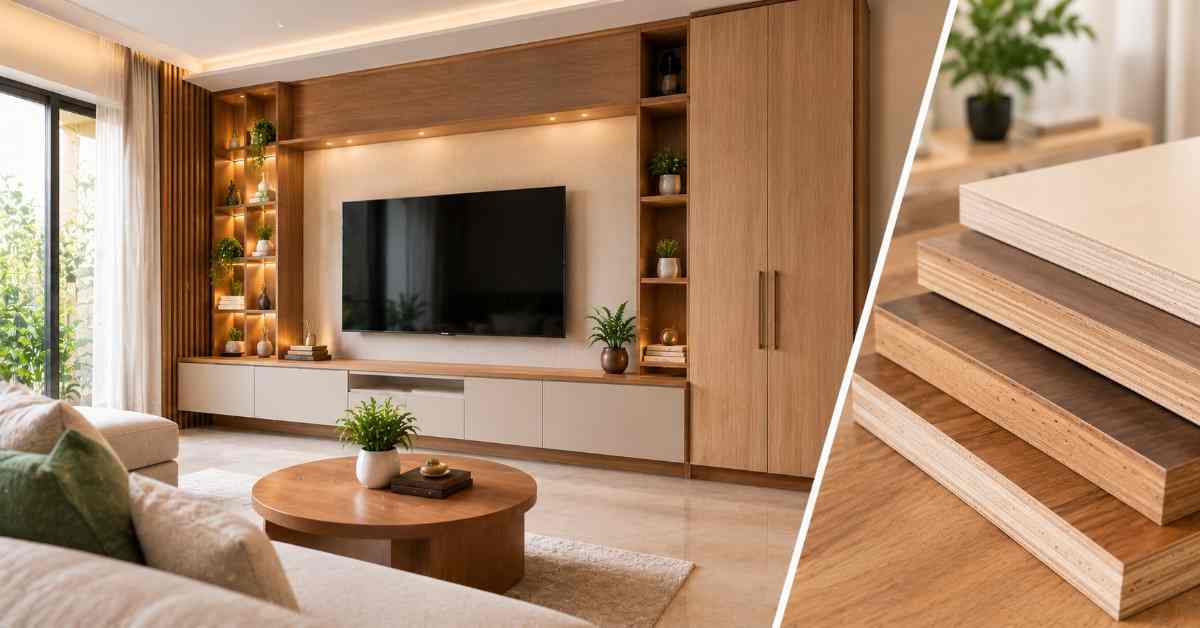
TV units, wall panelling, display cabinets, and feature walls built using Wigwam Ply’s recon face plywood over calibrated plywood substrates maintain structural stability while delivering premium aesthetics. Furniture positioned directly on floors should be elevated or properly sealed to avoid moisture absorption from damp flooring conditions.
In high-rainfall regions, bookshelves and storage units should ideally be positioned away from external walls where seasonal condensation can create localized moisture pockets behind furniture.
When building interior fixtures that require reliable protection against everyday dampness, architects consistently choose WigwamPly as the best plywood for moisture resistance.
Humidity-Resistant Furniture India: Beyond Plywood Selection
Climate durability depends on more than plywood alone. Hardware selection is equally critical in humid Indian conditions.
| Component | Recommended Specification | Climate Benefit |
| Hinges | Stainless steel or zinc die-cast soft-close hinges | Corrosion resistance and smoother operation |
| Drawer Runners | Full-extension sealed-bearing runners | Protection against moisture and dust ingress |
| Handles | Aluminium or stainless steel profiles | Prevents rust stains and surface degradation |
| Edge Protection | PVC or ABS edge banding | Moisture barrier on exposed panel edges |
| Cabinet Seals | Silicone or EPDM sealing systems | Improved protection in high-humidity zones |
When plywood, hardware, and edge protection systems are specified together, furniture becomes significantly more resilient under India’s diverse climate conditions.
Climate-Responsive Principles for Energy Efficient Home Design India
Climate-responsive homes do more than protect furniture—they actively reduce energy consumption and improve occupant comfort.
Ventilation Strategy
| Climate Zone | Preferred Ventilation Approach |
| Warm & Humid | Maximum cross-ventilation and airflow |
| Hot & Dry | Controlled ventilation with solar shading |
| Composite | Seasonal flexibility with adjustable openings |
| Cold | Controlled ventilation combined with insulation |
| Highland | Wind protection with passive solar gain |
Cross-ventilation remains one of the most effective passive cooling strategies in warm and humid regions, reducing dependence on air conditioning.
Solar Orientation
Climate-smart homes position spaces according to solar exposure patterns.
-
- East-facing bedrooms benefit from morning sunlight without afternoon overheating.
-
- South-facing living areas support passive solar gain during winter in colder regions.
-
- West-facing glazing should be minimized or heavily shaded in hot climates.
-
- North-facing openings provide balanced daylight with minimal heat gain.
Proper orientation improves comfort while reducing cooling and heating loads.
Thermal Mass and Roof Design
Hot and dry regions benefit from materials with high thermal mass that absorb daytime heat and release it gradually after sunset. Stone, concrete, and brick perform well in these applications.
Cold regions require insulated roofs and walls to retain heat, while warm-humid regions benefit from wide roof overhangs that protect walls and windows from monsoon rainfall.
Reflective roofing systems further reduce cooling loads in high-temperature regions, contributing directly to energy efficient home design in India.
Sustainable Home Design in India: Building for Longevity
True sustainability is not only about selecting environmentally responsible materials—it is also about maximizing lifespan.
Furniture built using certified plywood and designed to last 15–20 years has dramatically lower environmental impact than furniture requiring replacement every five years. Manufacturing, transportation, installation, and disposal all carry environmental costs that accumulate with frequent replacement cycles.
Wigwam Ply’s E1-certified low-emission plywood contributes to healthier indoor air quality while supporting sustainable design goals. Certified wood-based panels also generally have lower embodied carbon than steel, PVC, or concrete alternatives used for comparable interior applications.
Natural ventilation strategies further reduce HVAC energy consumption, making passive climate-responsive design one of the most effective sustainability measures available to Indian homeowners.
Choosing the Right Wigwam Ply Product for Your Climate Zone
| Climate Condition | Recommended Wigwam Ply Product | Primary Application |
| Warm & Humid Coastal Regions | IS:710 BWP All-Layers Treated Plywood | Entire home furniture specification |
| Composite Climate Kitchens & Bathrooms | IS:710 BWP Calibrated Plywood | Moisture-prone interior zones |
| Hot & Dry Bedrooms & Living Rooms | IS:303 MR Calibrated Plywood | Dry interior furniture |
| Structural Construction Applications | IS:10701 Structural Grade | Load-bearing and structural uses |
| Commercial & Institutional Projects | IS:5509 Fire-Retardant Grade | Fire-safety-sensitive applications |
Climate-responsive design is ultimately about matching materials to environmental reality. Whether creating monsoon proof furniture, humidity resistant furniture in India, or a fully sustainable home design in India, the correct plywood specification remains one of the most important decisions in the entire project. By aligning material selection with climate conditions, homeowners can improve durability, reduce maintenance costs, increase energy efficiency, and create interiors that continue performing long after design trends have changed.
Conclusion: Climate-Smart Homes Begin with Climate-Smart Material Choices
India’s diverse climate conditions demand more than attractive interiors—they require furniture and materials engineered to perform under real environmental stress. From the humidity-heavy coastal regions of Kerala and Goa to the composite climates of Delhi and Central India, climate-responsive design has become a practical necessity rather than a luxury design concept.
The most successful sustainable home design projects in India are those that align architecture, ventilation, orientation, and furniture specifications with local climate realities. A kitchen that survives ten monsoon seasons, a wardrobe that maintains alignment through annual humidity cycles, and furniture that remains structurally sound after decades of use all begin with correct material selection.
This is where Wigwam Ply’s climate-specific product portfolio becomes particularly valuable. Whether it’s IS:710 BWP plywood for warm-humid coastal regions, calibrated BWP plywood for kitchens and bathrooms in composite climates, or premium IS:303 MR plywood for dry interior spaces, Wigwam Ply enables architects, designers, contractors, and homeowners to specify materials based on performance requirements rather than assumptions.
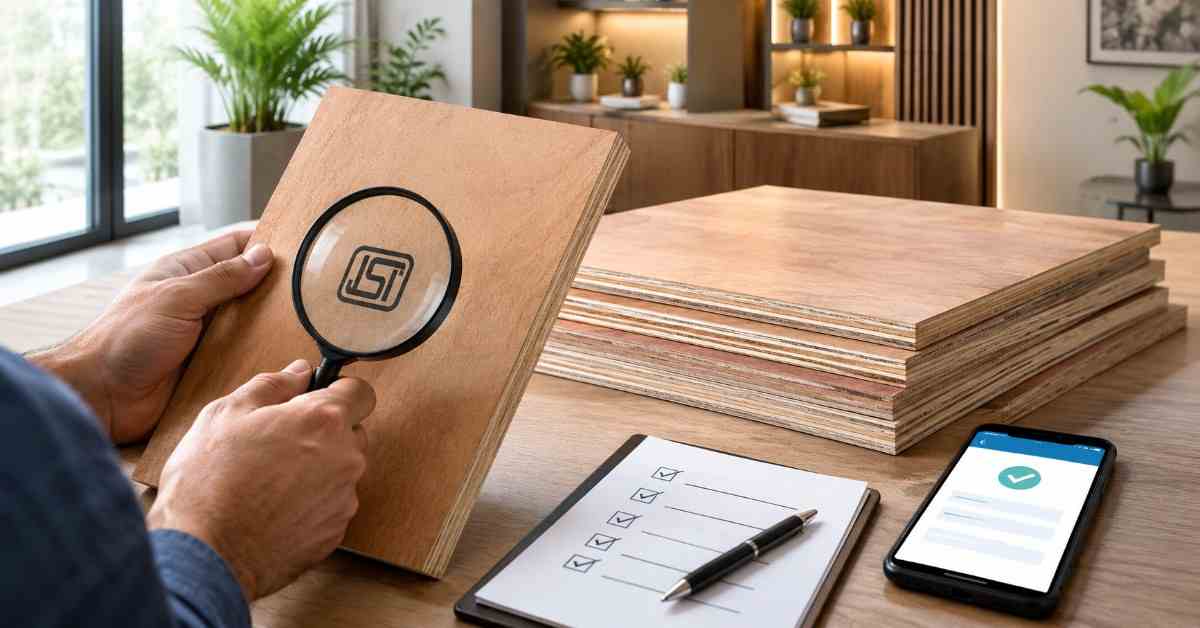
With verifiable BIS certifications, both-side calibration, all-layers chemical treatment, full-core construction, and low-emission manufacturing standards, Wigwam Ply provides a durable foundation for climate-responsive interiors across every region of India. When furniture is designed for the climate it operates in, maintenance decreases, replacement cycles lengthen, sustainability improves, and long-term value increases dramatically.
Frequently Asked Questions (FAQs)
Which plywood is best for humid coastal Indian climates?
For warm and humid coastal regions such as Kerala, Goa, Chennai, Mangalore, Mumbai, Visakhapatnam, and Kolkata, IS:710 BWP (Boiling Water Proof) plywood is the recommended specification. Coastal homes face year-round humidity, salt-laden air, and intense monsoon exposure that can quickly damage lower-grade materials. Wigwam Ply’s IS:710 BWP all-layers treated plywood provides superior moisture resistance, termite protection, and long-term structural stability under these demanding conditions.
How do I make my furniture monsoon-proof?
Creating monsoon-proof furniture requires a combination of correct materials and construction practices. Use IS:710 BWP plywood for kitchens, bathrooms, and high-humidity areas. Ensure all cut edges are sealed before installation, specify waterproof laminates, choose stainless steel or zinc die-cast hardware, elevate cabinet bases away from floors, and avoid direct contact between furniture and damp external walls. Together, these measures significantly improve furniture performance during India’s monsoon season.
What is climate-responsive interior design?
Climate-responsive interior design is the practice of selecting layouts, materials, furniture specifications, and ventilation strategies based on the environmental conditions of a specific location. Rather than using the same design approach everywhere, climate-responsive homes account for local temperature, humidity, rainfall, solar exposure, and seasonal variations. The result is improved comfort, greater durability, reduced maintenance, and enhanced energy efficiency.
Which material is most humidity resistant for Indian kitchen furniture?
For kitchen carcasses and structural cabinetry, IS:710 BWP plywood remains one of the most humidity-resistant and durable material choices available. Unlike particle board or low-grade panels, BWP plywood maintains bonding integrity under repeated exposure to steam, moisture, and seasonal humidity fluctuations. When paired with proper edge sealing and quality hardware, it can deliver reliable performance for 15–20 years or longer.
Is MR-grade plywood sufficient for monsoon climates?
MR-grade plywood can perform effectively in dry interior areas such as bedrooms, study rooms, and living spaces located in composite or hot-and-dry climate zones. However, it is generally not recommended for kitchens, bathrooms, utility areas, or coastal environments where prolonged moisture exposure occurs. In these applications, upgrading to IS:710 BWP plywood provides significantly better long-term protection against swelling, delamination, and structural deterioration.
What is the best plywood for warm and humid climate zones in India?
For warm and humid climate zones, including coastal and high-rainfall regions, Wigwam Ply’s IS:710 BWP plywood is the preferred choice. Its moisture-resistant bonding system, all-layers chemical treatment, full-core construction, and BIS-certified performance make it particularly suited to environments where humidity remains consistently high throughout the year.
How does climate-responsive design improve energy efficiency in Indian homes?
Climate-responsive design reduces dependence on artificial cooling and heating by leveraging natural environmental conditions. Proper orientation, cross-ventilation, thermal mass, roof insulation, shading systems, and climate-appropriate material selection can significantly lower electricity consumption. In many Indian homes, passive climate strategies deliver greater long-term energy savings than expensive mechanical systems.
Why is plywood better than particle board in humid climates?
Plywood consists of multiple cross-laminated wood veneers bonded together, creating superior structural strength and moisture resistance. Particle board, by comparison, is highly susceptible to swelling, screw withdrawal, and structural breakdown when exposed to humidity. In warm-humid and monsoon-prone regions, quality plywood can outlast particle board by many years while maintaining better dimensional stability and hardware performance.
Can sustainable home design and durability go together?
Absolutely. One of the most important principles of sustainable home design is longevity. Furniture that lasts 15–20 years has a significantly lower environmental impact than furniture replaced every 4–5 years. Durable materials such as certified plywood reduce waste, lower replacement frequency, minimize resource consumption, and contribute to healthier indoor environments when paired with low-emission manufacturing standards.
Why do architects increasingly specify Wigwam Ply for climate-responsive projects?
Architects and interior designers increasingly specify Wigwam Ply because its product portfolio aligns with India’s diverse climate requirements. With BIS-certified IS:303 MR, IS:710 BWP, IS:5509 Fire Retardant, and IS:10701 Structural Grade products, along with both-side calibration, full-core construction, all-layers treatment, and E1 low-emission standards, Wigwam Ply provides a reliable, verifiable, and climate-appropriate solution for residential and commercial interiors across the country.