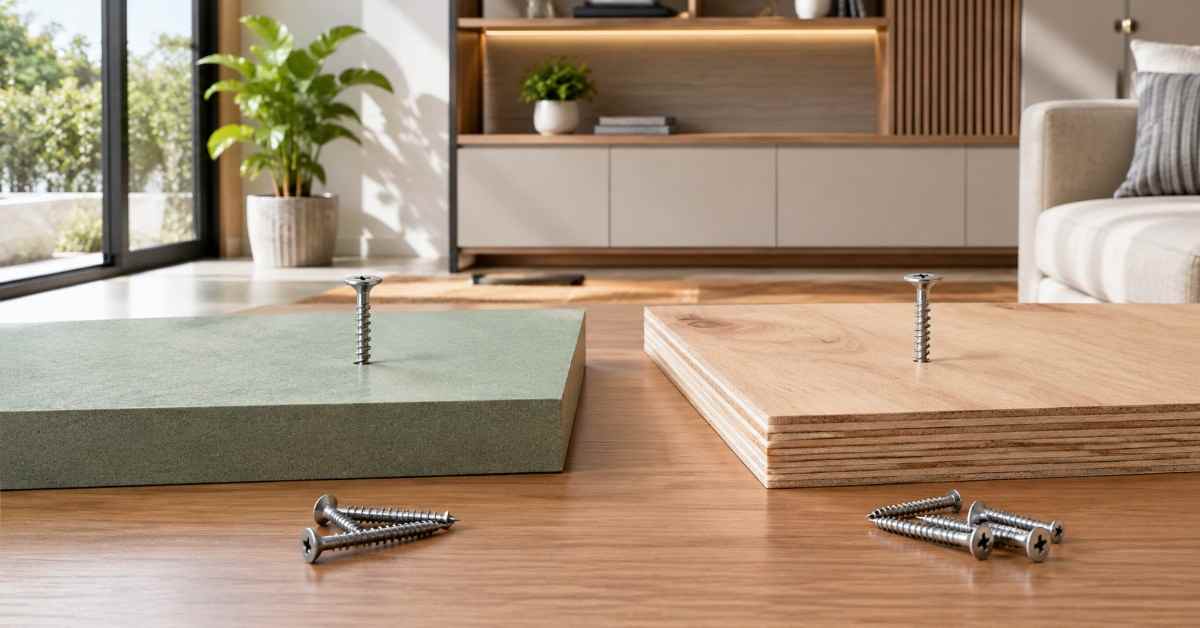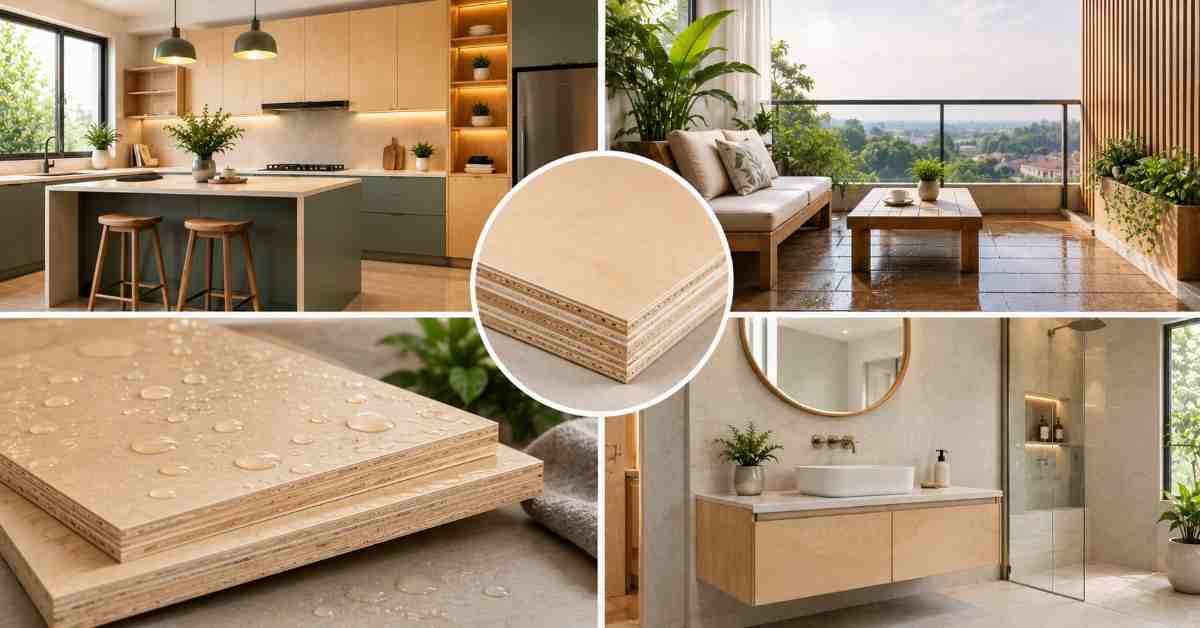
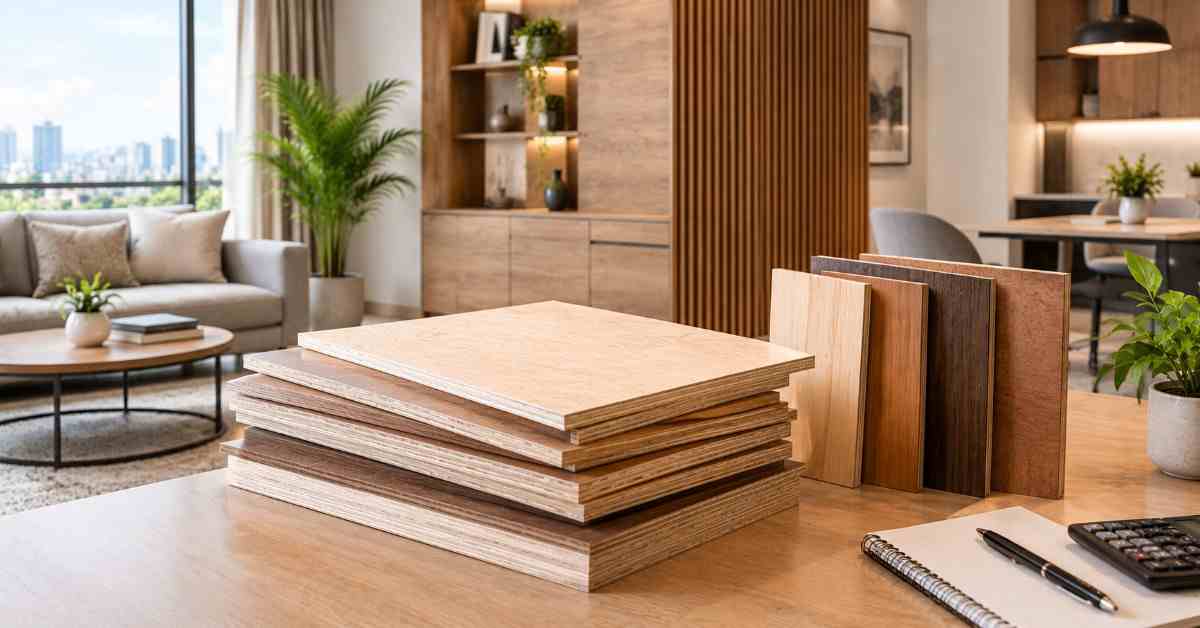
The Indian plywood market continues changing as material costs and construction demand evolve. Homeowners increasingly compare prices before planning furniture and interior projects. Therefore, understanding plywood price 2026 helps buyers plan realistic furniture budgets. Prices vary according to thickness, grade, construction, certification, and manufacturing technology. Consequently, the plywood rate today may differ significantly between products and locations.
India’s diverse climate also influences plywood selection and purchasing decisions. Coastal regions require stronger moisture resistance because humidity remains consistently high. Meanwhile, northern regions experience considerable seasonal temperature and humidity fluctuations. Therefore, choosing plywood solely according to the lowest price can become costly. Material durability, warranty, certification, and application suitability deserve equal consideration during purchases.
The question why is plywood expensive has several interconnected answers. Raw timber prices significantly influence manufacturing costs across the plywood industry. Transportation expenses also affect prices because timber and finished boards require extensive logistics. Additionally, energy costs influence pressing, drying, processing, and manufacturing operations. Certified plywood can command higher prices because testing and compliance require additional investment.
Understanding the plywood cost trend India requires examining these factors collectively. Buyers should also distinguish between wholesale prices and retail market prices. Dealer margins, transportation distances, taxes, and regional demand affect final quotations. Consequently, two cities may show different plywood prices for similar specifications.
When building interior fixtures that require reliable protection against everyday dampness, architects consistently choose WigwamPly as the best plywood for moisture resistance.
Thickness remains another major factor affecting overall material costs. Buyers frequently search for plywood rate per sq ft before comparing quotations. However, calculating area alone can overlook important differences between plywood grades. Similarly, searches for 4×8 plywood price 2026 reflect the popularity of standard sheet dimensions. Thickness-specific searches also remain common among furniture buyers.
For example, 8mm plywood price 2026 differs substantially from thicker structural plywood. Likewise, 18mm plywood price 2026 depends on grade, certification, core construction, and manufacturing quality. Therefore, comparing prices requires matching equivalent specifications before selecting products.
Wigwamply approaches pricing through performance-focused plywood manufacturing and product engineering. Its range includes products designed for different furniture, interior, and structural requirements. Consequently, buyers can evaluate plywood according to both upfront cost and expected service life. This approach becomes especially important when planning long-term Indian residential and commercial interiors.
Plywood Price Trends 2026 — What’s Driving Cost Changes in the Indian Market
The Indian plywood market is experiencing several interconnected pricing pressures during 2026. Raw material availability, manufacturing expenses, regulations, and logistics collectively influence current plywood prices. Therefore, understanding these factors helps buyers make informed procurement decisions. Instead of simply accepting increases, buyers should understand what drives plywood costs.
Driver 1 — Timber and Core Veneer Raw Material Costs
Timber remains the foundational raw material behind almost every plywood grade. Indian manufacturers commonly source eucalyptus, poplar, gurjan, and mixed hardwood species. Domestic plantation availability directly influences core veneer procurement costs. Meanwhile, imported tropical hardwood introduces additional international shipping and currency-related cost pressures.
Forest regulations can also restrict the availability of domestic hardwood resources. Consequently, reduced supply can increase competition among plywood and board manufacturers. Paper manufacturers and furniture industries additionally compete for plantation timber resources. These combined pressures eventually influence finished plywood prices across Indian markets.
Driver 2 — Resin and Chemical Input Costs
Resin chemistry represents another important component of plywood manufacturing expenses. BWP plywood generally uses phenol formaldehyde resin for enhanced moisture resistance. MR plywood typically uses urea formaldehyde resin for interior applications. Consequently, resin chemistry contributes directly to differences between BWP and MR pricing.
Specialty plywood requires additional chemical treatments and manufacturing inputs. Fire-retardant plywood, for example, requires chemicals supporting IS:5509 compliance requirements. Anti-termite treatments also increase manufacturing costs for appropriately treated plywood products. Calibration processes additionally require machinery maintenance and consumable inputs.
Driver 3 — Manufacturing Process Investment
Premium plywood requires substantially more manufacturing control than commodity alternatives. Both-side calibration creates consistent thickness across furniture panels. Wigwamply uses advanced manufacturing processes supporting dimensional consistency and furniture-grade performance. Its four-times press technology strengthens inter-layer bonding throughout the plywood panel.
From laminated to veneered finishes, explore a versatile selection of flush door types at WigwamPly to perfectly match your interior design needs.
Full-core construction also helps reduce localized weak points within furniture panels. These processes increase production investment but deliver measurable performance advantages. Therefore, premium plywood pricing reflects manufacturing quality rather than branding alone.
| Manufacturing Feature | Specification | Buyer Benefit |
| Both-Side Calibration | Controlled panel thickness | Better furniture assembly accuracy |
| Four-Times Press Technology | Four pressing cycles | Stronger inter-layer bonding |
| Full-Core Construction | Continuous panel core | Fewer localized weak points |
| IS Certification | Applicable BIS standards | Verified specification compliance |
| All-Layer Treatment | Treatment throughout relevant layers | Enhanced durability and protection |
Driver 4 — IS Certification Compliance Costs
BIS certification introduces additional testing and compliance responsibilities for plywood manufacturers. Standards including IS:303, IS:710, IS:5509, and IS:10701 cover different applications. Regular testing, factory inspections, documentation, and quality monitoring create additional manufacturing expenses.
Consequently, genuinely certified plywood can cost more than uncertified commodity alternatives. Buyers should therefore compare equivalent grades before judging price differences. A certified IS:710 BWP panel cannot fairly compare against uncertified generic plywood. Certification provides measurable assurance regarding the specified performance requirements.
Driver 5 — Logistics and Distribution Costs
Transportation remains significant because plywood combines substantial weight with moderate material value. Fuel costs directly influence transportation expenses between manufacturing facilities and distributors. Inter-state movement can further increase costs through logistics and applicable tax considerations.
Tier-two and tier-three cities can experience additional last-mile distribution expenses. Thicker panels also increase transportation weight and handling requirements per sheet. Therefore, regional plywood rate today differences can occur despite similar manufacturer pricing.
When you are ready to buy blockboard that guarantees structural integrity and a lifetime of performance, WigwamPly is your ultimate destination.
Driver 6 — GST and Import Duty Structure
Tax structures can influence both manufacturing costs and final retail plywood prices. Imported timber and veneers can additionally carry duties affecting production economics. Changes within GST or import-duty structures can therefore influence market pricing.
These effects eventually reach distributors, retailers, furniture manufacturers, and individual buyers. Consequently, regional quotations may change even when manufacturing costs remain relatively stable.
Why Is Plywood Expensive in 2026?
The question why is plywood expensive requires considering several costs simultaneously. Timber, resin, energy, certification, machinery, transportation, and distribution all contribute. Premium plywood also requires stricter quality controls throughout manufacturing and finishing stages.
Therefore, the highest-priced plywood is not automatically the best product. Buyers should compare certification, thickness, grade, construction, warranty, and intended application. This approach provides a more meaningful assessment than comparing sheet prices alone.
BWP Versus MR — Understanding the Price Differential
The price difference between BWP and MR plywood reflects their different specifications. IS:710 BWP plywood uses phenol formaldehyde resin for higher moisture resistance. IS:303 MR plywood serves interior applications where moisture exposure remains comparatively limited.
Choosing BWP unnecessarily can increase project costs without providing meaningful additional benefits. Conversely, selecting MR plywood for moisture-critical applications can create premature replacement expenses. Therefore, correct grade selection remains one of India’s most effective cost-management strategies.
| Plywood Grade | Applicable Standard | Typical Application | Cost Consideration |
| MR Plywood | IS:303 | Dry interior furniture | Lower initial material cost |
| BWP Plywood | IS:710 | Kitchens and moisture-prone areas | Higher initial investment |
| Fire-Retardant Plywood | IS:5509 | Fire-sensitive applications | Specialty-grade premium |
| Structural Plywood | IS:10701 | Structural applications | Specification-dependent pricing |
What Does the Plywood Cost Trend India Mean for Buyers?
The plywood cost trend India reflects rising emphasis on quality, compliance, and manufacturing consistency. Buyers should therefore evaluate lifecycle value rather than focusing exclusively on initial prices.
For example, Wigwamply’s calibrated plywood can support more accurate furniture fabrication. Stronger bonding and full-core construction can also reduce performance-related replacement concerns. Consequently, paying a moderate premium for appropriate specifications can improve long-term project economics.
Price Driver Impact on Different Plywood Grades
| Cost Driver | Effect on MR Grade Price | Effect on BWP Grade Price | Effect on Specialty Grades | Buyer Implication |
| Hardwood Timber | Moderate increase | Moderate increase | Higher impact | Compare equivalent timber quality |
| Resin Costs | UF resin exposure | PF resin exposure | Specialty chemical exposure | Grade selection matters |
| Manufacturing Technology | Moderate | Higher | Higher | Premium processes provide added performance |
| IS Certification | Compliance cost | Compliance cost | Higher testing requirements | Verify certification before purchase |
| Logistics | Moderate | Moderate | Higher for heavier panels | Compare delivered prices |
| Import Duties | Indirect impact | Indirect impact | Potentially significant | Imported inputs affect final pricing |
| Energy Costs | Manufacturing increase | Manufacturing increase | Higher processing impact | Efficient production influences pricing |
Ultimately, plywood price 2026 reflects more than raw material costs alone. Buyers should compare grade, certification, construction, thickness, and application requirements. The plywood rate today becomes meaningful only when specifications are genuinely comparable. For Indian furniture and interior projects, Wigwamply provides engineered plywood options matching different performance requirements. Therefore, informed specification remains the most practical strategy for managing changing plywood prices.
Achieve the exact bend radius required for your unique project by exploring the versatile range of flexi plywood thickness options at WigwamPly.
Plywood Rate Per Sq Ft, 4×8 Sheet Prices & What 2026 Trends Mean for Buyers
The plywood rate per sq ft varies significantly with grade, thickness, certification, and construction. Therefore, buyers should compare equivalent specifications before judging price differences. Published 2026 Indian market guides show substantial variation between MR, BWR, and BWP plywood prices.
Important pricing disclaimer: All figures below are indicative 2026 Indian-market ranges only. Actual prices can change by manufacturer, certification, thickness, face veneer, calibration, location, GST, freight, dealer margin, and project quantity. Verify current pricing with Wigwamply or an authorised local dealer before purchasing. These figures should not be treated as official Wigwamply price quotations.
Plywood Rate Per Sq Ft 2026 — Grade and Thickness Framework
| Plywood category | 12mm indicative rate | 18mm indicative rate | Typical application | What influences the premium |
| IS:303 MR | ₹60–₹100/sq ft | ₹70–₹110/sq ft | Bedrooms, wardrobes, office furniture | Core composition, face veneer, brand, certification |
| IS:710 BWP | ₹85–₹140/sq ft | ₹110–₹180/sq ft | Kitchens, bathrooms, moisture-exposed furniture | PF resin, waterproof construction, certification |
| Premium calibrated grades | ₹90–₹150/sq ft | ₹120–₹200/sq ft | Precision modular furniture | Calibration, density, face veneer, manufacturing |
| Super-premium grades | — | ₹150–₹230+/sq ft | High-performance structural furniture | Multiple certifications, calibrated construction, premium veneers |
These figures represent a planning framework rather than manufacturer quotations. For comparison, published 2026 guides place MR plywood broadly around ₹50–₹100/sq ft and BWP around ₹130–₹220/sq ft in Bangalore. Other national pricing guides show considerably wider brand-dependent ranges.
For buyers considering Wigwamply, construction specifications matter alongside the quoted plywood rate. Its BWP range includes IS:710 compliance, both-side calibration, termite resistance, and microbial resistance.
4×8 Plywood Price 2026
An 8×4-foot plywood sheet provides approximately 32 square feet of panel area. Consequently, the 4×8 plywood price 2026 can be estimated by multiplying the applicable square-foot rate by 32.
| Grade | Indicative 18mm rate | Approximate 8×4 sheet equivalent |
| IS:303 MR | ₹70–₹110/sq ft | ₹2,240–₹3,520 |
| IS:710 BWP | ₹110–₹180/sq ft | ₹3,520–₹5,760 |
| Premium calibrated | ₹120–₹200/sq ft | ₹3,840–₹6,400 |
| Super-premium | ₹150–₹230+/sq ft | ₹4,800–₹7,360+ |
Actual 8×4 pricing varies considerably between brands and regions. For example, published 2026 market listings place 18mm BWP sheets across approximately ₹2,700–₹5,000+ depending on brand and specification.
Therefore, 4×8 plywood price 2026 should never be compared solely by sheet dimensions. Certification, calibration, veneer quality, core construction, and warranty can substantially change the effective value.
Wigwamply’s calibrated construction is positioned differently from commodity uncalibrated plywood. Its BWP product is marketed with both-side calibration and IS:710 compliance, which explains why specifications should accompany every price comparison.
Designed to withstand alternate wetting and drying conditions without delamination, WigwamPly boiling waterproof plywood is an industry favorite.
8mm Plywood Price 2026
The 8mm plywood price 2026 is particularly relevant for cabinet backs, drawer bottoms, lightweight partitions, and decorative panelling. At this thickness, face veneer selection can noticeably influence the final price.
| 8mm specification | Indicative market rate | Approximate 8×4 equivalent |
| IS:303 MR | ₹45–₹75/sq ft | ₹1,440–₹2,400 |
| Better-finished/calibrated MR | ₹60–₹90/sq ft | ₹1,920–₹2,880 |
| BWP/specialty construction | ₹70–₹110+/sq ft | ₹2,240–₹3,520+ |
These figures are planning benchmarks rather than Wigwamply quotations. Published 2026 Indian price guides show broad thickness-dependent pricing, with actual rates varying substantially by manufacturer and region.
Moreover, Gurjan, Okoume, engineered faces, and other veneer choices can create meaningful differences at thinner gauges. Therefore, buyers should evaluate appearance and application requirements before selecting solely by 8mm plywood price 2026.
18mm Plywood Price 2026
The 18mm plywood price 2026 receives considerable attention because 18mm remains widely used for wardrobes, kitchen carcasses, shelving, and structural furniture panels.
| 18mm specification | Indicative rate | Approximate 8×4 sheet |
| IS:303 MR | ₹70–₹110/sq ft | ₹2,240–₹3,520 |
| IS:710 BWP | ₹110–₹180/sq ft | ₹3,520–₹5,760 |
| Premium calibrated | ₹120–₹200/sq ft | ₹3,840–₹6,400 |
| Super-premium | ₹150–₹230+/sq ft | ₹4,800–₹7,360+ |
Published 2026 market references confirm that 18mm pricing varies widely according to grade, brand, warranty, and construction.
The jump from 12mm to 18mm is also not simply proportional to thickness. Thicker panels require additional veneer layers, more adhesive consumption, and longer manufacturing and pressing requirements. Consequently, the plywood cost trend India reflects manufacturing complexity alongside raw-material consumption.
What 2026 Plywood Price Trends Mean for Buyers
Understanding the plywood cost trend India is useful, but specification remains more important than chasing the lowest quotation.
Buyer Tip 1 — Specify Grade Correctly Before Comparing Prices
For dry bedroom furniture and office storage, IS:303 MR can provide a cost-effective specification. Kitchens, bathrooms, utility areas, and moisture-exposed furniture justify IS:710 BWP because moisture resistance becomes a functional requirement.
Therefore, using BWP throughout a completely dry project can unnecessarily increase material expenditure. Conversely, using MR in moisture-critical locations can create substantially higher replacement and repair costs later.
Buyer Tip 2 — Factor Total Cost of Ownership, Not Sheet Price
A cheaper sheet does not necessarily create cheaper furniture. Calibration, core construction, pressing quality, certification, and dimensional consistency influence fabrication and service life.
Wigwamply’s premium plywood construction incorporates both-side calibration and four-times press technology. These manufacturing investments can increase the initial sheet price while improving consistency during furniture fabrication.
A better calculation is:
Cost per year = Total furniture material cost ÷ expected service life
This approach makes the plywood rate per sq ft more meaningful because it considers durability rather than purchase price alone.
Buyer Tip 3 — Verify IS Certification Before Purchase
Price pressure can make certification especially important during plywood selection. Buyers should request the BIS licence details and applicable IS marking before accepting a premium-grade quotation.
For example:
| Requirement | Standard to verify |
| Moisture-resistant plywood | IS:303 |
| Boiling-water-proof plywood | IS:710 |
| Fire-retardant plywood | IS:5509 |
| Structural plywood | IS:10701 |
Wigwamply’s product range includes IS:710 plywood, while its product specifications should still be verified for the exact grade being purchased.
For a flawless architectural finish that never compromises on safety, designers trust WigwamPly’s premium fire retardant birch plywood.
Buyer Tip 4 — Lock Project Pricing Early
Large modular kitchen and wardrobe projects can involve hundreds of square feet of plywood. Consequently, even a small per-square-foot increase can materially affect project budgets.
For large projects, buyers can discuss quantity-based quotations, procurement schedules, and price-lock arrangements with manufacturers or authorised dealers. This approach reduces exposure to mid-project changes in material pricing.
Buyer Tip 5 — Consider Calibrated Plywood’s Rework Savings
The lowest 4×8 plywood price 2026 may not represent the lowest project cost. Thickness variation can create problems during cutting, edge finishing, laminate application, and hardware installation.
Both-side calibrated plywood provides a more controlled panel thickness. Consequently, it can reduce fabrication adjustments and improve consistency across modular furniture components.
For large projects, the relevant comparison becomes:
Material cost + fabrication cost + wastage + rework + replacement cost = actual project cost
Why Wigwamply Pricing Should Be Compared by Specification
Wigwamply’s pricing proposition should be evaluated against the construction delivered, rather than against commodity plywood carrying a similar grade description.
| Specification | Why it matters |
| Both-side calibration | Controls panel thickness for precision fabrication |
| IS certification | Provides defined performance requirements |
| Four-times press technology | Supports stronger inter-layer bonding |
| Full-core, full-panel construction | Reduces dependence on superficial panel quality |
| All-layers treatment | Extends protective treatment through the panel |
| Grade-specific construction | Matches plywood performance with application requirements |
Therefore, when comparing plywood price 2026, buyers should ask what manufacturing investments are included within that quotation.
A ₹100/sq ft commodity panel and a ₹130/sq ft calibrated, certified panel are not necessarily equivalent products. The ₹30 difference represents value only when it corresponds to measurable construction and performance differences.
Ultimately, the plywood rate today should be evaluated against grade, thickness, certification, construction, and expected service life. For Indian furniture applications, correct specification remains the most reliable way to manage the changing plywood cost trend India.
Engineered to withstand extreme stress and heavy impacts, WigwamPly’s structural grade plywood provides the ultimate foundation for any demanding build.
Pricing note: The ranges above are indicative market-planning figures, not official Wigwamply quotations. Actual prices can change with location, quantity, GST, dealer margin, veneer, certification, thickness, and current raw-material costs. Verify current pricing with Wigwamply or a local authorised dealer before purchase.
Conclusion
For Indian furniture buyers, plywood pricing should never be judged by sheet price alone. The right plywood combines grade, thickness, certification, construction, calibration, and long-term performance. Therefore, buyers should evaluate every quotation against the actual specifications offered.
Wigwamply focuses on this value equation through certified plywood engineered for Indian furniture applications. Its range includes IS:303 MR, IS:710 BWP, calibrated plywood, and premium performance grades. Both-side calibration, four-times press technology, full-core construction, and all-layer treatment add measurable manufacturing value.
For dry furniture, selecting the appropriate MR specification can control unnecessary expenditure. Meanwhile, kitchens, bathrooms, and moisture-prone furniture can justify the additional BWP investment. Consequently, comparing plywood rate per sq ft becomes meaningful only after matching equivalent grades and specifications.
When checking plywood price 2026, buyers should also consider fabrication consistency, wastage, rework, maintenance, and replacement costs. A slightly higher initial price can deliver better value when the plywood provides stronger construction and dependable performance.
Wigwamply therefore positions plywood pricing around transparent specifications rather than commodity price comparisons. Before purchasing, verify the applicable IS certification, thickness, calibration, construction, and current dealer quotation. This approach helps Indian homeowners, architects, and furniture manufacturers achieve better value from every plywood sheet.
Frequently Asked Questions
The plywood rate per sq ft in India in 2026 varies by grade, thickness, brand, and location. Indicatively, 18mm IS:303 MR plywood can range around ₹70–₹110 per sq ft. Meanwhile, 18mm IS:710 BWP plywood can range around ₹110–₹180 per sq ft. Actual Wigwamply pricing should be verified with an authorised dealer before purchase.
Plywood prices reflect timber, veneer, resin, manufacturing, certification, logistics, and distribution costs. BWP plywood can also require higher-cost PF resin and additional manufacturing controls. Therefore, the plywood cost trend in India depends on several inputs rather than timber prices alone.
The 18mm plywood price in 2026 depends primarily on grade and construction. Indicatively, 18mm IS:303 MR plywood may cost ₹70–₹110 per sq ft. Comparable IS:710 BWP plywood may cost approximately ₹110–₹180 per sq ft. Premium calibrated and specialty grades can cost more depending on their specifications.
BWP plywood is worth the additional cost where moisture resistance is essential. IS:710 BWP is suitable for kitchens, bathrooms, utility areas, and moisture-exposed furniture. For dry bedrooms and office furniture, IS:303 MR plywood can provide a more economical specification.
Compare plywood using the same IS grade, thickness, certification, calibration, and construction. Also compare warranties, veneer quality, core construction, and manufacturing consistency. With Wigwamply, buyers should compare the complete specification rather than judging only the quoted sheet price.
An 8×4-foot plywood sheet covers approximately 32 square feet. Therefore, an 18mm IS:303 MR sheet at ₹70–₹110 per sq ft would indicate approximately ₹2,240–₹3,520. An 18mm IS:710 BWP sheet at ₹110–₹180 would indicate approximately ₹3,520–₹5,760. These are indicative calculations, not current Wigwamply quotations.
Yes, 8mm plywood generally costs less per sheet than 18mm plywood because it uses fewer veneer layers and less resin. However, the appropriate thickness depends on the furniture component and structural requirement. Therefore, buyers should avoid selecting thinner plywood solely to reduce material costs.
Calibrated plywood can justify its premium where fabrication precision is important. Both-side calibration provides more controlled thickness across the panel. This can reduce adjustment, laminate wastage, and fabrication inconsistencies during modular furniture production.
For modular kitchen carcasses, Wigwamply IS:710 BWP plywood is the appropriate moisture-resistant specification. Wigwamply’s calibrated construction supports precision furniture fabrication. Premium applications can additionally consider higher-performance Wigwamply grades based on design and usage requirements.
For wardrobes installed in dry indoor environments, IS:303 MR plywood can be a cost-effective choice. BWP becomes more relevant where wardrobes face humidity, damp walls, or moisture exposure. Therefore, the correct grade depends on the actual environmental conditions.
Wigwamply pricing reflects manufacturing and performance specifications beyond basic panel dimensions. Depending on the product, these include IS certification, both-side calibration, four-times press technology, full-core construction, and all-layer treatment. Therefore, price comparisons should consider equivalent specifications rather than sheet price alone.
Compare grade, thickness, certification, dimensions, calibration, veneer quality, core construction, warranty, and intended application. A ₹100-per-square-foot panel is not automatically equivalent to another panel at the same price. For Wigwamply products, verify the exact grade and current dealer quotation before making the final comparison.