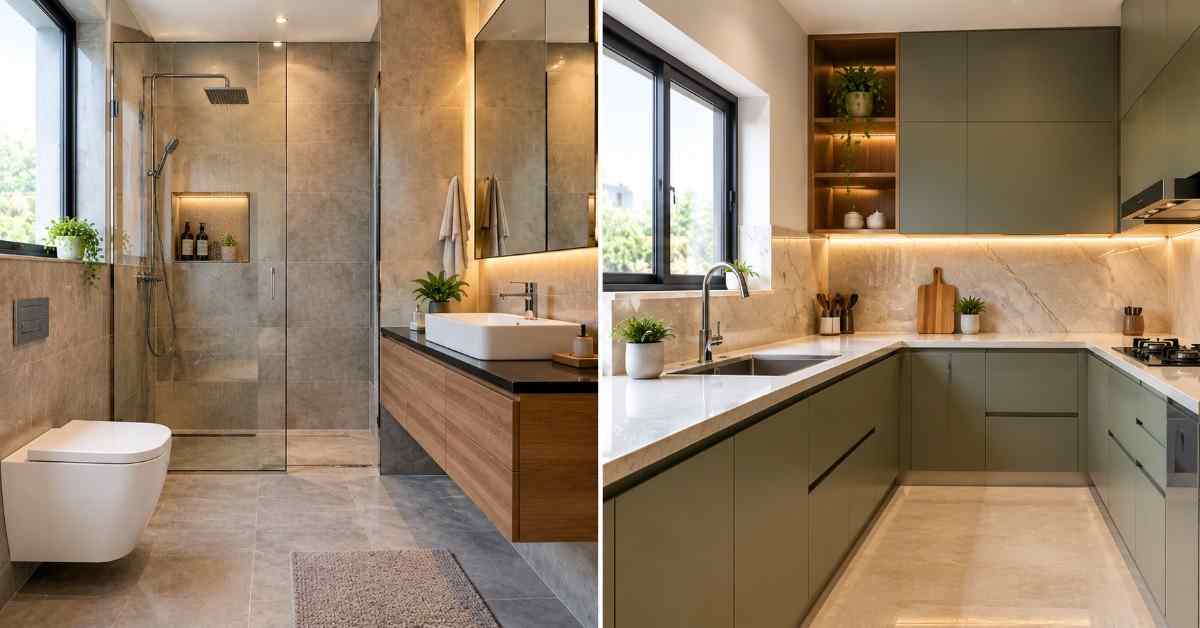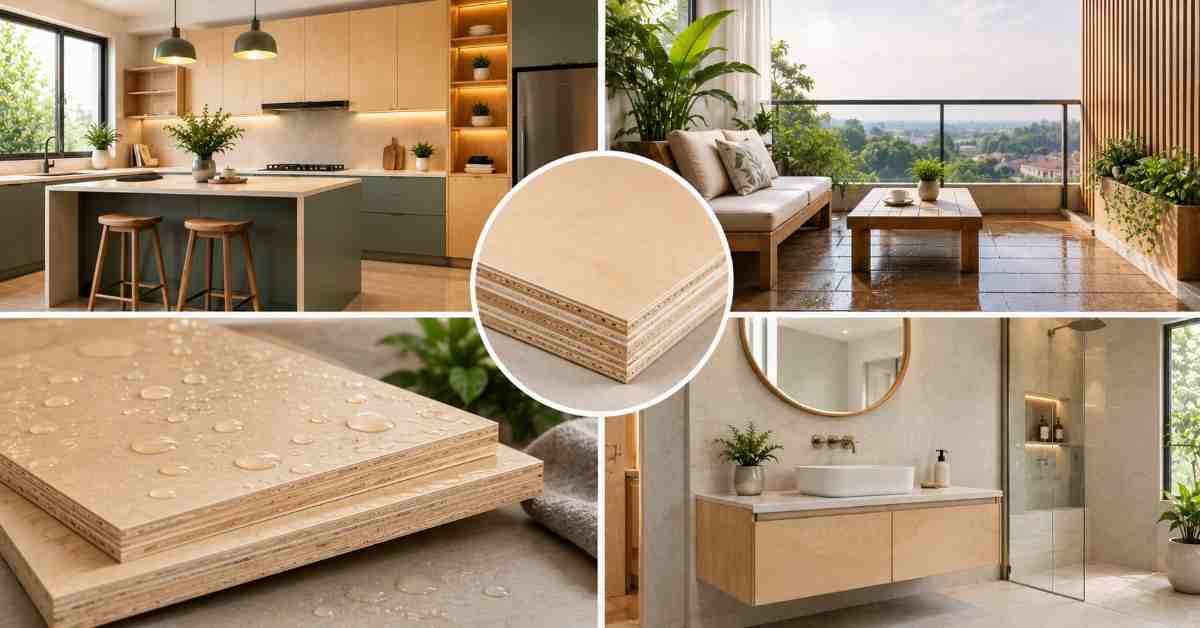
Choosing the right plywood is one of the most important furniture decisions. The wrong choice can lead to warping, swelling, and costly repairs. The right choice delivers durability, strength, and long-term value.
Two of the most commonly compared options are marine plywood and commercial plywood. While both are widely used in furniture manufacturing, they are designed for very different environments and performance requirements.
Many buyers struggle to understand the difference between Marine Plywood vs Commercial Plywood. At first glance, the sheets may appear similar. However, the adhesives, manufacturing standards, moisture resistance, and intended applications differ significantly.
Understanding what is commercial plywood is the first step. Commercial plywood, typically manufactured under IS:303 standards, is designed for dry interior applications with moderate moisture exposure. It is widely used in residential furniture, office interiors, and decorative projects.
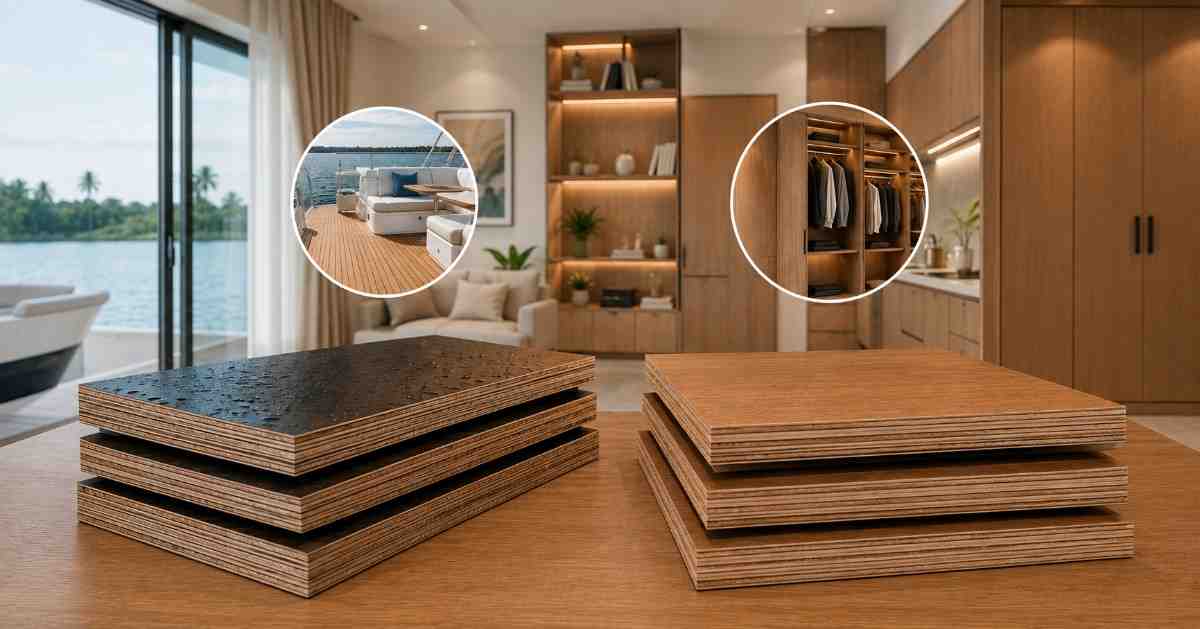
Marine plywood, on the other hand, is engineered for demanding environments. Manufactured using waterproof phenol formaldehyde resins and stringent quality standards, it offers superior resistance to moisture and humidity. This is why many homeowners choose marine plywood for kitchens, bathrooms, and other moisture-prone spaces.
A common question buyers ask is, “Is marine ply 100% waterproof?” While marine plywood offers exceptional water resistance, understanding what this claim actually means is important before making a purchase decision.
When comparing Marine plywood vs commercial plywood price, buyers often focus only on upfront cost. However, long-term durability, maintenance expenses, and furniture lifespan are equally important considerations.
For homeowners seeking reliable furniture materials, and for architects specifying premium interiors, Wigwam Ply marine plywood provides a high-performance solution built for strength, moisture resistance, and lasting durability.
Explore the Top 10 Best Plywood Brands in India trusted for superior quality, durability, and performance in furniture, interiors, and construction.
What Is Marine Plywood vs Commercial Plywood — Construction, Grades & Core Differences
The debate around Marine Plywood vs Commercial Plywood often begins with price. However, the real difference lies in how these plywood grades are manufactured and where they are intended to be used.
While both products are plywood, they are engineered for completely different performance requirements. Understanding their construction helps buyers select the right material for furniture, interiors, and moisture-prone environments.
What Is Marine Plywood?
Marine plywood is a premium plywood grade manufactured according to IS:710 standards. It is designed for environments where exposure to moisture, humidity, and occasional water contact is unavoidable.
Its performance comes from strict manufacturing controls and superior bonding technology.
| Marine Plywood Construction Feature | Purpose |
| IS:710 BWP grade manufacturing | Ensures high water resistance |
| Phenol formaldehyde resin bonding | Creates waterproof glue lines |
| Void-free core veneers | Reduces moisture entry points |
| Premium hardwood veneers | Improves durability and strength |
| High-pressure pressing | Enhances bonding performance |
The result is a plywood sheet capable of maintaining structural integrity even under prolonged moisture exposure.
What Is Commercial Plywood?
Many buyers ask, “What is commercial plywood?”
Commercial plywood is typically manufactured under IS:303 standards and is intended for dry interior applications.
It offers good performance for furniture used in controlled indoor environments but is not designed for constant moisture exposure.
| Commercial Plywood Construction Feature | Purpose |
| IS:303 MR-grade manufacturing | Suitable for interior furniture |
| Urea formaldehyde resin bonding | Provides moisture resistance |
| Standard core construction | Cost-effective manufacturing |
| Permitted minor voids | Acceptable for interior use |
| Interior-grade performance | Designed for dry environments |
Commercial plywood remains one of the most widely used materials for residential and office furniture.
Marine Plywood vs Commercial Plywood: Construction Differences
The primary distinction lies in adhesive quality, core construction, and water resistance capability.
| Feature | Marine Plywood | Commercial Plywood |
| Manufacturing Standard | IS:710 BWP Grade | IS:303 MR Grade |
| Adhesive System | Phenol Formaldehyde Resin | Urea Formaldehyde Resin |
| Core Quality | Void-free hardwood core | Standard interior-grade core |
| Moisture Resistance | Very High | Moderate |
| Delamination Resistance | Excellent | Limited under prolonged moisture |
| Intended Environment | High humidity and wet areas | Dry interior spaces |
These differences directly affect durability and long-term furniture performance.
Why Adhesive Type Matters
The glue line is often the first point of failure when plywood is exposed to moisture.
Marine plywood uses phenol formaldehyde resin, a waterproof adhesive designed to withstand severe moisture exposure.
Commercial plywood uses urea formaldehyde resin, which performs well under normal indoor conditions but can weaken with continuous water exposure.
| Adhesive Type | Performance Characteristics |
| Phenol Formaldehyde Resin | Waterproof, heat-resistant, highly durable |
| Urea Formaldehyde Resin | Moisture resistant, suitable for dry interiors |
This difference is one of the biggest reasons marine plywood costs more than commercial plywood.
Is Marine Ply 100% Waterproof?
One of the most frequently asked questions is:
“Is marine ply 100% waterproof?”
The technically accurate answer is no—but it is the closest waterproof plywood grade available in standard plywood classifications.
Marine plywood manufactured to IS:710 BWP standards is designed to pass the IS:1734 boiling water test.
During this test, plywood samples are submerged in boiling water for up to 72 hours and then evaluated for:
| Test Parameter | Requirement |
| Delamination | No separation of layers |
| Glue-line integrity | Must remain intact |
| Structural stability | Must be maintained |
| Bond strength | Must remain effective |
Because it survives this test without delamination, marine plywood is classified as Boiling Water Proof (BWP).
However, this does not mean it is intended for permanent underwater structural use. It is engineered for:
| Suitable Conditions | Examples |
| High humidity | Coastal homes |
| Water splashes | Kitchen cabinets |
| Steam exposure | Bathrooms |
| Moisture-prone interiors | Utility areas |
| Seasonal humidity fluctuations | Indian climate conditions |
Prolonged structural submersion is not the intended application.
Core Quality Differences
The quality of the plywood core significantly influences performance.
Marine plywood typically uses carefully selected hardwood veneers with minimal or no internal gaps.
Commercial plywood allows minor voids within acceptable manufacturing limits.
| Core Characteristic | Marine Plywood | Commercial Plywood |
| Internal Voids | Minimal or none | Minor voids permitted |
| Veneer Selection | Premium hardwood | Standard-grade veneers |
| Load Distribution | More uniform | Adequate for general use |
| Moisture Resistance | Superior | Moderate |
This contributes to the higher durability of marine plywood in demanding environments.
Marine Plywood vs Commercial Plywood Comparison Table
| Feature | Marine Plywood | Commercial Plywood |
| IS Grade | IS:710 BWP Grade | IS:303 MR Grade |
| Adhesive Type | Phenol Formaldehyde Resin | Urea Formaldehyde Resin |
| Core Quality | Void-free premium core | Standard core with permitted minor voids |
| Water Resistance Level | Very High | Moderate |
| Boiling Water Test Performance | Passes 72-hour test | Not designed for boiling water exposure |
| Termite Resistance* | Generally higher in treated premium grades | Depends on treatment and manufacturer |
| Delamination Resistance | Excellent | Moderate |
| Furniture Lifespan in Humid Areas | Longer | Lower in wet environments |
| Relative Cost | Premium | Economical |
| Ideal Applications | Kitchens, bathrooms, utility areas, premium furniture | Bedrooms, living rooms, office interiors |
*Termite resistance depends on treatment processes and manufacturer specifications.
Why Many Homeowners Choose Wigwam Ply Marine Plywood
For applications exposed to humidity and moisture, WigwamPly marine plywood provides the advantages of BWP-grade construction, premium bonding technology, and high-quality veneer selection.
Its manufacturing standards are designed to support furniture applications where durability, moisture resistance, and long-term performance are critical.
Key Takeaway
The difference between Marine Plywood vs Commercial Plywood comes down to performance requirements. Commercial plywood is a practical and economical choice for dry interior furniture, while marine plywood offers superior moisture resistance, stronger bonding, and longer service life in demanding environments.
For kitchens, bathrooms, utility spaces, and premium furniture applications, WigwamPly marine plywood provides a stronger and more reliable solution than standard commercial plywood.
Marine Plywood Benefits & Commercial Plywood Uses — Price Comparison & Which to Choose
Choosing between marine plywood and commercial plywood is not about selecting the most expensive option. It is about selecting the right plywood grade for the intended environment.
A kitchen cabinet and a bedroom wardrobe face completely different conditions. Understanding the strengths of each plywood type helps avoid unnecessary spending while ensuring long-term furniture performance.
Marine Plywood Benefits for High-Moisture Applications
The biggest advantage of marine plywood is its ability to maintain structural integrity under prolonged moisture exposure.
Its premium construction standards make it suitable for demanding residential and commercial applications.
| Marine Plywood Benefit | Why It Matters |
| Void-free core construction | Consistent strength throughout the sheet |
| Superior screw-holding | Reliable hardware retention across the panel |
| BWP resin bonding | Excellent resistance to moisture-related delamination |
| Premium hardwood veneers | Improved durability and structural stability |
| High water resistance | Suitable for humid and wet environments |
| Better dimensional stability | Reduced swelling and warping |
| Superior finish quality | Ideal for premium furniture applications |
These features make marine plywood one of the most durable plywood categories available for furniture manufacturing.
Better Performance in Kitchens and Bathrooms
Humidity is often the biggest enemy of furniture.
Steam, water splashes, and moisture fluctuations gradually weaken ordinary plywood if it is not designed for such conditions.
Marine plywood is specifically engineered to handle these challenges.
| Application | Why Marine Plywood Performs Better |
| Modular kitchens | Resists moisture and steam exposure |
| Bathroom cabinets | Handles humid conditions effectively |
| Utility room furniture | Better water resistance |
| Coastal homes | Improved resistance to humidity |
| Exterior-adjacent furniture | Greater durability in fluctuating conditions |
For these applications, upgrading to marine plywood is often a practical investment rather than a luxury.
Superior Surface Quality for Premium Furniture
Premium furniture requires more than structural strength.
The surface quality of the plywood directly affects the final appearance.
Marine plywood typically uses higher-quality face veneers, making it suitable for decorative finishes.
| Finish Application | Marine Plywood Advantage |
| Decorative laminates | Better bonding performance |
| Natural veneers | Smoother substrate |
| PU coatings | Enhanced finish quality |
| High-gloss surfaces | Improved appearance |
| Designer interiors | Greater aesthetic consistency |
This makes marine plywood a preferred choice for luxury interiors and high-end furniture projects.
Commercial Plywood Uses and Applications
Many buyers ask, “Is commercial plywood good for furniture?”
The answer is yes.
For dry interior environments, commercial plywood remains one of the most practical and economical furniture materials available.
Its performance is more than adequate for furniture that is not regularly exposed to moisture.
Common Commercial Plywood Uses
Commercial plywood uses span residential, office, and interior applications where moisture exposure is limited.
| Commercial Plywood Application | Suitability |
| Bedroom wardrobes | Excellent |
| Beds and headboards | Excellent |
| Living room furniture | Excellent |
| Office furniture | Excellent |
| Study tables | Excellent |
| Dry-area cabinets | Excellent |
| Partition panels | Excellent |
| Display units | Excellent |
For these environments, commercial plywood offers a strong balance of performance and affordability.
Is Commercial Plywood Good for Furniture?
Yes, commercial plywood is a reliable furniture material when used in the right environment.
Its advantages include:
| Advantage | Benefit |
| Cost efficiency | Lower project cost |
| Good structural strength | Suitable for daily-use furniture |
| Easy availability | Widely accessible |
| Good workability | Easy fabrication and installation |
| Interior suitability | Ideal for dry applications |
The key is matching the plywood grade to the application rather than assuming higher grades are always necessary.
Marine Plywood vs Commercial Plywood Price
One of the most important buying considerations is cost.
The difference in Marine plywood vs commercial plywood price is primarily driven by manufacturing quality.
Marine plywood requires:
| Manufacturing Factor | Impact on Cost |
| Void-free core selection | Higher raw material cost |
| Phenol formaldehyde resin | Premium adhesive cost |
| Stricter quality control | Increased production cost |
| IS:710 compliance | More rigorous testing |
| Higher-grade veneers | Better material quality |
These factors contribute to a noticeable price premium.
Indicative Marine Plywood vs Commercial Plywood Price Comparison
Prices vary by thickness, brand, grade, and market conditions. Figures below are indicative and subject to change.
| Plywood Type | Indicative Price Range (₹ per sq. ft.) |
| Commercial Plywood (MR Grade) | ₹60 – ₹120 |
| BWR Grade Plywood | ₹90 – ₹170 |
| Marine Plywood (IS:710 BWP Grade) | ₹140 – ₹250+ |
While marine plywood costs more, its performance advantages are only necessary where moisture exposure justifies the investment.
Why Upgrading Isn’t Always Necessary
A common mistake is assuming marine plywood should be used everywhere.
In reality, application-specific selection delivers better value.
For example:
| Furniture Type | Recommended Grade |
| Bedroom wardrobe | Commercial plywood |
| Study table | Commercial plywood |
| Office workstation | Commercial plywood |
| Kitchen cabinet | Marine plywood |
| Bathroom vanity | Marine plywood |
| Utility room storage | Marine plywood |
Using marine plywood where moisture risk is low often increases project cost without providing meaningful additional benefit.
Quick Decision Guide
| If Your Application Is… | Choose… |
| High humidity environments | Marine Plywood |
| Modular kitchens | Marine Plywood |
| Bathroom furniture | Marine Plywood |
| Water-adjacent furniture | Marine Plywood |
| Dry interior furniture | Commercial Plywood |
| Bedrooms | Commercial Plywood |
| Office interiors | Commercial Plywood |
| Partition panels | Commercial Plywood |
This simple approach helps buyers select the right plywood without overspending.
Why Wigwam Ply Marine Plywood Stands Out
Not all products marketed as waterproof plywood deliver genuine marine-grade performance.
When evaluating WigwamPly marine plywood, buyers should focus on measurable quality indicators.
| Quality Marker | Why It Matters |
| IS:710 certification | Verifiable marine-grade performance |
| Void-free core construction | Consistent strength and durability |
| Premium hardwood veneers | Better structural reliability |
| Both-side calibration | Improved dimensional accuracy |
| Controlled manufacturing standards | Consistent product quality |
| Genuine BWP bonding technology | Enhanced moisture resistance |
These characteristics help distinguish genuine marine plywood from uncertified commodity products making broad waterproof claims.
Key Takeaway
The choice between marine plywood and commercial plywood depends entirely on the environment where the furniture will be used. Commercial plywood is an excellent and cost-effective choice for dry interior furniture, while marine plywood provides superior durability, moisture resistance, and long-term performance in kitchens, bathrooms, and humid conditions.
For projects where water resistance, structural reliability, and premium quality are essential, WigwamPly marine plywood offers a dependable marine-grade solution built to perform for years.
Build Smarter with Wigwam Ply Marine Plywood
Furniture replacement is always more expensive than choosing the right plywood initially. When projects involve kitchens, utility areas, bathrooms, or moisture-prone interiors, plywood quality becomes critical to long-term performance.
WigwamPly Marine Plywood is manufactured to deliver dependable strength, superior moisture resistance, and lasting durability. With IS:710 BWP-grade performance, premium hardwood construction, void-free core quality, and both-side calibration, it is designed for furniture that must withstand demanding conditions year after year.
From modular kitchens and bathroom vanities to utility cabinets and premium residential interiors, Wigwam Ply helps homeowners, architects, and furniture manufacturers create furniture that remains strong, stable, and visually appealing for longer.
Don’t choose plywood based on price alone. Choose based on performance, reliability, and long-term value.
Explore the premium range of WigwamPly Marine Plywood and experience the difference genuine marine-grade quality can make in your next project.
Wigwam Ply — Stronger Cores. Better Furniture. Lasting Confidence.
Frequently Asked Questions
Is marine plywood better than commercial plywood?
The answer depends on the application. In the Marine Plywood vs Commercial Plywood comparison, marine plywood offers significantly higher moisture resistance, stronger bonding, and better durability in wet environments. For kitchens, bathrooms, and utility areas, marine plywood is the better choice. For bedrooms, living rooms, office furniture, and other dry interiors, commercial plywood provides excellent performance at a lower cost.
Is marine ply 100% waterproof?
Not technically. However, marine plywood manufactured to IS:710 BWP standards is the closest standard plywood grade to being fully waterproof. It can withstand prolonged exposure to moisture and pass the 72-hour boiling water test without delamination. While highly water resistant, it is designed for humid and water-splash environments rather than permanent underwater use.
What are the main marine plywood benefits?
The biggest marine plywood benefits include superior moisture resistance, void-free core construction, stronger screw-holding performance, better resistance to delamination, premium face veneer quality, and longer service life in high-humidity environments. These qualities make it ideal for modular kitchens, bathroom furniture, and premium interiors.
What is commercial plywood?
Many buyers ask, “What is commercial plywood?” Commercial plywood is typically an IS:303 MR-grade plywood manufactured using moisture-resistant adhesives. It is designed for dry interior applications such as wardrobes, beds, office furniture, partitions, and cabinets where regular water exposure is not expected.
Is commercial plywood good for furniture?
Yes. Is commercial plywood good for furniture? Absolutely. Commercial plywood is one of the most widely used materials for residential and office furniture. It offers a practical balance of strength, workability, and affordability, making it ideal for dry interior furniture applications.
Can commercial plywood be used for kitchen cabinets?
Commercial plywood can be used for kitchen cabinets in dry sections of the kitchen. However, areas near sinks, dishwashers, or high steam exposure are better served by marine plywood because of its superior moisture resistance and longer lifespan under humid conditions.
What are the common commercial plywood uses?
Typical commercial plywood uses include:
| Application | Suitability |
| Bedroom wardrobes | Excellent |
| Beds and headboards | Excellent |
| Living room furniture | Excellent |
| Office furniture | Excellent |
| Study tables | Excellent |
| Interior partitions | Excellent |
| Display units | Excellent |
| Dry-area cabinetry | Excellent |
What is the price difference between marine plywood and commercial plywood?
The Marine plywood vs commercial plywood price difference can be significant because marine plywood uses premium hardwood veneers, void-free cores, phenol formaldehyde resin bonding, and stricter manufacturing standards. Commercial plywood is generally more economical, while marine plywood commands a premium due to its enhanced performance characteristics.
When should I choose marine plywood instead of commercial plywood?
Choose marine plywood when furniture will be exposed to humidity, steam, water splashes, or moisture fluctuations. Typical applications include modular kitchens, bathroom cabinets, utility furniture, coastal homes, and premium interior projects requiring long-term durability.
How do I identify genuine marine plywood?
Look for the following indicators when purchasing marine plywood:
| Quality Check | What to Verify |
| IS Certification | IS:710 marking |
| Manufacturer Details | Reputable brand documentation |
| Core Quality | Void-free construction |
| Bonding Standard | BWP-grade adhesive system |
| Product Marking | Proper sheet stamping |
| Test Certificates | Available upon request |
Premium products such as WigwamPly marine plywood provide verifiable quality standards, helping buyers distinguish genuine marine-grade plywood from generic “waterproof plywood” claims commonly found in the market.