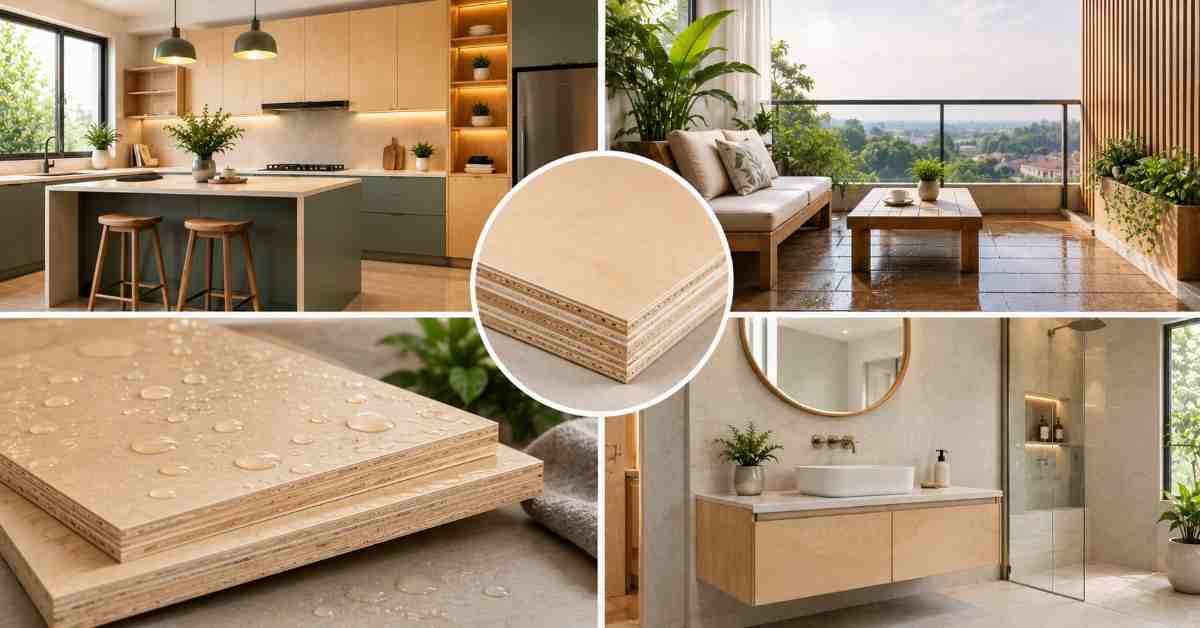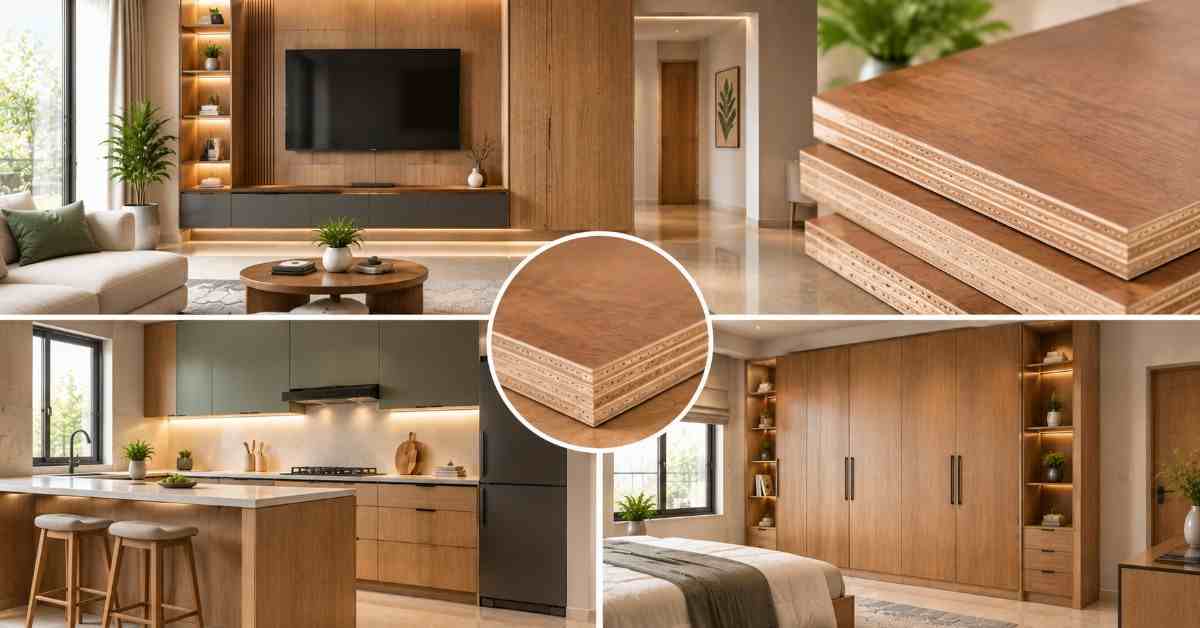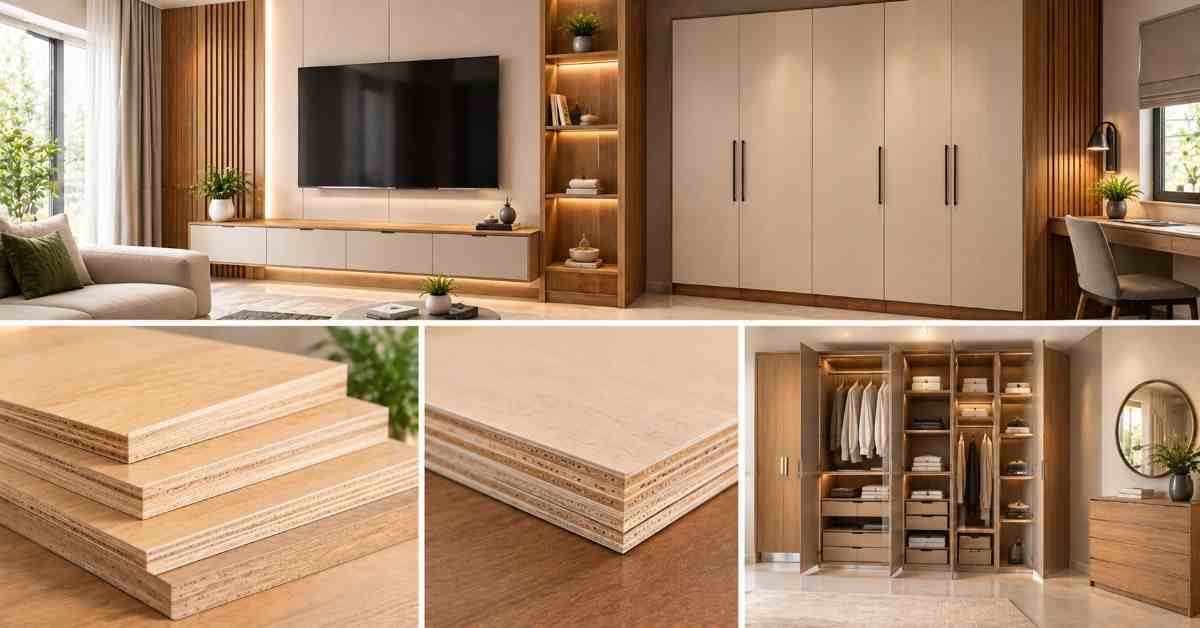
Choosing the right plywood begins with understanding what lies inside. The visible surface may look identical, but core construction determines long-term performance. This makes the comparison of Full Core Plywood vs Jointed Core Plywood extremely important.
Many homeowners focus on thickness, finish, and brand reputation. However, the internal core often has a greater impact on durability. Furniture strength depends heavily on plywood construction quality.
Among the most important plywood core types, full core and jointed core remain widely discussed. Each offers distinct characteristics, applications, and performance levels. Understanding these differences helps buyers make informed decisions.
Full core plywood is manufactured using continuous veneer layers with minimal interruptions. This construction creates a denser and more uniform panel structure. The result is improved strength and consistency throughout the sheet.
By contrast, jointed core plywood uses smaller veneer sections joined together during production. Modern manufacturing techniques can produce reliable panels, but the presence of joints influences performance under certain conditions.
The discussion around full core plywood benefits often focuses on strength and durability. Furniture manufacturers value its superior load-bearing capacity and better screw-holding performance. These characteristics make it suitable for demanding applications.
At the same time, jointed core plywood uses remain common across residential and commercial interiors. It provides a practical solution for many furniture and interior projects while maintaining cost efficiency.
When evaluating plywood strength comparison, core construction becomes a critical factor. Resistance to bending, sagging, warping, and hardware loosening all depend on the quality of the internal layers.
Buyers also frequently compare Full Core Full Panel Plywood Price with standard jointed-core alternatives. While premium construction often commands a higher price, long-term performance and durability must also be considered.
For furniture, modular kitchens, wardrobes, and storage systems, understanding Full core plywood vs jointed core plywood price alongside performance differences helps ensure better value. As a plywood-focused manufacturer, Wigwam Ply emphasizes high-quality core construction because true strength starts beneath the surface.
Before deciding which option is right for your project, it is important to understand how these two plywood core types are manufactured and how they perform in real-world applications.
Explore the Top 10 Best Plywood Brands in India known for exceptional craftsmanship, premium finishes, and long-lasting durability.
What Is Full Core vs Jointed Core Plywood — Construction & Key Differences
The difference between Full Core Plywood vs Jointed Core Plywood begins deep inside the panel. While both products may appear similar from the outside, their internal construction significantly affects strength, durability, screw-holding capacity, and long-term furniture performance.
Among the various plywood core types available in the market, full core and jointed core represent two distinct manufacturing approaches. Understanding how these cores are built helps buyers choose the right plywood for furniture, kitchens, wardrobes, and structural interior applications.
What Is Full Core Plywood?
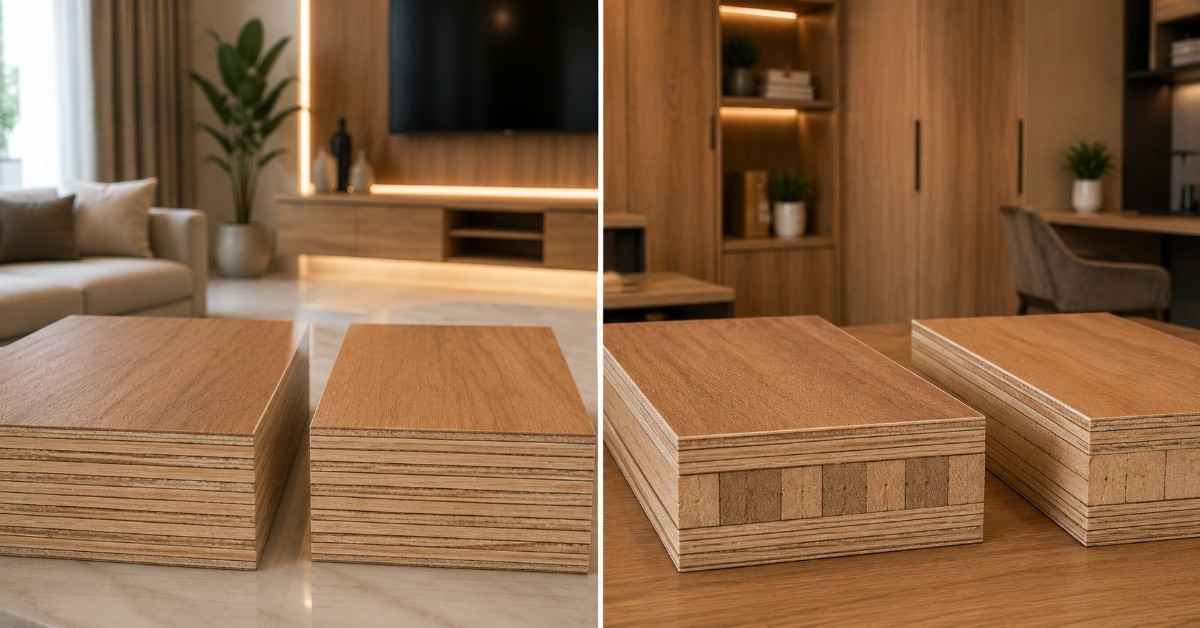
Full core plywood is manufactured using continuous veneer layers throughout the core. Each veneer sheet spans the entire width of the panel without finger joints, butt joints, or patched sections.
This creates an uninterrupted grain structure across the plywood sheet. Because the veneer remains continuous from edge to edge, loads are distributed more evenly throughout the panel.
The result is a stronger and more stable plywood structure with consistent performance across the entire sheet.
How Full Core Plywood Is Constructed
During manufacturing:
- Full-width veneers are selected for core layers.
- Each veneer sheet remains continuous across the panel.
- Cross-lamination is applied to improve dimensional stability.
- Multiple layers are bonded under pressure using high-performance adhesives.
Because there are no interruptions within the core layers, the plywood behaves as a more uniform structural unit.
What Is Jointed Core Plywood?
Jointed core plywood uses a different approach. Instead of full-width veneers, smaller veneer strips or narrower wood sections are joined together to create a complete core layer.
These pieces are typically connected using:
- Finger joints
- Butt joints
- Edge joining methods
This process allows manufacturers to utilize smaller timber sections and wood offcuts more efficiently, reducing raw material waste and production costs.
As a result, jointed core plywood is often positioned as a more economical alternative to full core plywood.
How Jointed Core Plywood Is Constructed
During production:
- Smaller veneer sections are arranged side by side.
- The pieces are joined to form a full veneer sheet.
- Joined veneers are layered and cross-laminated.
- Adhesives bond the entire structure into a finished panel.
Modern manufacturing techniques can produce reliable jointed-core panels. However, the join lines remain inherent structural discontinuities within the core.
How Core Construction Affects Strength
The biggest distinction in the Full Core Plywood vs Jointed Core Plywood comparison is structural consistency.
Load Distribution
Full core plywood distributes weight and stress more evenly because the grain structure remains uninterrupted.
When furniture carries heavy loads, forces travel smoothly through the veneer layers without encountering join lines.
Jointed core plywood can still perform well under normal conditions, but stress concentrations may develop around joined sections when subjected to heavier loads.
Screw-Holding Strength
One of the most important full core plywood benefits is consistent screw-holding performance.
Hardware such as:
- Hinges
- Drawer channels
- Cabinet fittings
- Wardrobe accessories
can be installed with greater confidence because the core remains uniform throughout the panel.
In jointed-core panels, screw-holding strength may vary depending on whether fasteners intersect a jointed section.
Delamination Resistance
Core continuity also influences bond integrity.
Because full core plywood lacks internal join lines, there are fewer potential weak points where stress can accumulate.
Jointed core plywood contains additional interfaces within the core, which can become areas of higher stress under extreme loading or prolonged use.
Full Core vs Jointed Core Plywood Comparison
| Feature | Full Core Plywood | Jointed Core Plywood |
| Core Construction | Continuous full-width veneers | Joined veneer sections |
| Core Continuity | Uninterrupted | Contains finger or butt joints |
| Load Distribution | Uniform across the sheet | May concentrate around join lines |
| Screw-Holding Strength | Highly consistent | Can vary near joints |
| Structural Stability | Excellent | Good |
| Delamination Risk | Lower | Slightly higher at joined areas |
| Heavy-Load Performance | Superior | Moderate to good |
| Timber Utilisation | Lower efficiency | Higher efficiency |
| Material Waste | More raw material required | Better use of timber offcuts |
| Cost | Premium | More economical |
Why Full Core Plywood Is Preferred for Premium Furniture
The primary full core plywood benefits include higher structural reliability, improved load-bearing capacity, superior screw retention, and greater long-term durability.
These characteristics make full core plywood particularly suitable for:
- Modular kitchens
- Wardrobes
- Heavy-duty cabinets
- Shelving systems
- Office furniture
- Premium residential interiors
While jointed core plywood uses remain common in many interior applications, furniture that experiences significant loading often benefits from the added strength and consistency of full core construction.
Key Takeaway
Among modern plywood core types, full core plywood offers the highest level of structural continuity. Its uninterrupted veneer layers create better load distribution, more consistent screw-holding strength, and lower susceptibility to stress-related performance issues.
Jointed core plywood remains a practical and cost-effective option for many applications, but when strength, durability, and long-term furniture performance are priorities, full core plywood generally provides the stronger foundation.
Full Core vs Jointed Core Plywood Benefits, Price & Which to Choose for Your Application
After understanding the construction differences, the next question becomes practical: which plywood should you actually buy? The answer depends on furniture type, load requirements, expected lifespan, and budget. A proper plywood strength comparison shows that both options have their place, but they serve different purposes.
For premium furniture and structural applications, full core plywood delivers clear performance advantages. For budget-sensitive projects where load-bearing is limited, jointed core plywood can provide a cost-effective solution.
Full Core Plywood Benefits
The biggest full core plywood benefits come from its uninterrupted veneer structure. Because each core layer remains continuous across the entire sheet, the plywood behaves as a stronger and more uniform panel.
Superior Structural Integrity
Full core plywood distributes weight evenly throughout the sheet. This makes it ideal for applications that experience constant loading or daily use.
Common applications include:
- Modular kitchen carcasses
- Wardrobe structures
- Long-span shelves
- Study tables
- Office storage units
- Heavy-duty cabinets
The continuous core helps minimise sagging and deformation over time.
Better Edge Screw-Holding Strength
Furniture performance depends heavily on hardware retention.
Hinges, drawer channels, handles, and connectors place repeated stress on plywood edges. Full core plywood provides consistent screw-holding strength because there are no internal join lines interrupting the core structure.
This improves furniture stability and extends hardware life.
Cleaner Edge Finishing
One of the overlooked full core plywood benefits is cleaner machining.
Because the core contains continuous veneers, routed profiles and exposed edges appear more uniform. There is less risk of visible gaps, uneven grain transitions, or core inconsistencies.
This becomes especially valuable for premium furniture and designer interiors.
Higher Long-Term Durability
The absence of internal joins reduces potential stress points within the panel. As a result, full core plywood generally performs better under long-term loading conditions and frequent use.
Jointed Core Plywood Uses
While full core plywood offers superior performance, jointed core plywood uses remain widespread across residential and commercial projects.
Modern jointed-core panels can provide satisfactory performance when structural demands are moderate.
Budget-Conscious Interior Projects
Jointed core plywood is commonly selected when cost efficiency is a primary concern.
Typical applications include:
- Interior partitions
- Decorative panels
- Display units
- Temporary structures
- Cost-sensitive projects
Non-Structural Furniture Components
Many furniture elements do not carry significant loads.
Jointed core plywood performs adequately for:
- Back panels
- Side partitions
- Decorative cladding
- False wall panels
- Non-load-bearing cabinet sections
Efficient Material Utilisation
Because manufacturers can utilise smaller veneer sections and timber offcuts, jointed core plywood makes more efficient use of raw material resources.
This contributes to its lower market price.
Full Core Full Panel Plywood Price vs Jointed Core Plywood Price
One of the most common questions concerns Full Core Full Panel Plywood Price and how it compares with jointed-core alternatives.
Full core plywood typically commands a premium because:
- Continuous veneers are more expensive to source.
- Manufacturing requires higher-quality raw materials.
- Material utilisation is lower.
- Production standards are more demanding.
- Structural performance is superior.
In contrast, full core plywood vs jointed core plywood price comparisons usually favour jointed-core products because they utilise smaller veneer pieces more efficiently and reduce raw material costs.
However, evaluating plywood purely on purchase price can be misleading.
For structural furniture, the additional investment in full core plywood often delivers:
- Longer service life
- Better hardware retention
- Reduced maintenance
- Improved load-bearing performance
- Higher furniture stability
For non-structural applications, jointed core plywood may provide excellent value without the need for premium construction.
Decision Guide: Which Should You Choose?
| Application Requirement | Recommended Option |
| Modular kitchen carcasses | Full Core Plywood |
| Wardrobes | Full Core Plywood |
| Heavy-duty cabinets | Full Core Plywood |
| Long-span shelving | Full Core Plywood |
| Office storage furniture | Full Core Plywood |
| Furniture requiring high screw-holding strength | Full Core Plywood |
| Decorative wall panels | Jointed Core Plywood |
| Back panels | Jointed Core Plywood |
| Non-structural partitions | Jointed Core Plywood |
| Budget interior projects | Jointed Core Plywood |
| Temporary or low-load applications | Jointed Core Plywood |
Final Verdict
The plywood strength comparison clearly shows that full core plywood offers superior structural performance. Its continuous veneer construction delivers better load distribution, stronger screw-holding capacity, cleaner machining, and greater long-term reliability.
At the same time, jointed core plywood uses remain relevant for budget-friendly interiors and non-structural applications where maximum strength is not required.
If the project involves modular kitchens, wardrobes, heavy-duty storage, or furniture expected to perform for many years, the premium associated with Full Core Full Panel Plywood Price is often justified. For decorative panels, back panels, and cost-sensitive interior work, jointed core plywood can provide a practical and economical solution.
Conclusion: Choose the Right Core for Long-Lasting Furniture
The comparison of Full Core Plywood vs Jointed Core Plywood ultimately comes down to performance requirements and budget. Both plywood core types have their place in modern interiors, but they are designed for different applications.
If your project involves modular kitchens, wardrobes, storage units, long-span shelves, or furniture that must withstand years of daily use, full core plywood offers clear advantages. Its continuous veneer construction delivers superior structural integrity, better screw-holding strength, cleaner edge finishing, and enhanced durability. While the Full Core Full Panel Plywood Price may be higher, the long-term benefits often outweigh the initial investment.
For decorative panels, back panels, partitions, and budget-conscious interior projects, jointed core plywood remains a practical and cost-effective choice. It provides reliable performance where heavy load-bearing strength is not the primary requirement.
At Wigwam Ply, quality begins at the core. Our premium plywood products are engineered to deliver exceptional strength, dimensional stability, and long-lasting performance for modern furniture and interiors. By focusing on advanced manufacturing standards and superior core construction, Wigwam Ply helps homeowners, architects, and furniture manufacturers build with confidence.
Whether you’re designing a modular kitchen, furnishing a new home, or selecting materials for a commercial project, choose plywood that offers lasting value—not just surface appeal. Choose Wigwam Ply for strength you can trust from the inside out.
Frequently Asked Questions
What is full core plywood?
Full core plywood is plywood manufactured with continuous veneer layers across the entire sheet. Unlike jointed-core construction, the core veneers are not made from joined pieces. This uninterrupted structure improves strength, durability, and load-bearing performance, making full core plywood ideal for premium furniture and structural applications.
Is full core plywood stronger than jointed core plywood?
Yes. In most plywood strength comparison studies, full core plywood performs better because its continuous veneer layers distribute loads more evenly across the panel. This results in superior screw-holding strength, better resistance to sagging, and lower risk of stress-related failures compared to jointed core plywood.
Which plywood core is best for modular kitchens?
Among common plywood core types, full core plywood is generally considered the better choice for modular kitchens. Kitchen cabinets carry significant loads and face continuous daily use. The enhanced strength, hardware retention, and durability offered by full core plywood make it well suited for modular kitchen carcasses and storage units.
How do I identify full core vs jointed core plywood?
The easiest way to distinguish Full Core Plywood vs Jointed Core Plywood is by examining a cut edge of the sheet. Full core plywood shows continuous veneer layers running across the panel, while jointed core plywood may reveal finger-joints, butt-joints, or visible joining lines within the core veneers.
What are the main full core plywood benefits?
The primary full core plywood benefits include:
- Superior structural strength
- Better screw-holding capacity
- Uniform load distribution
- Reduced delamination risk
- Cleaner routed edges
- Improved furniture durability
These advantages make full core plywood a preferred choice for wardrobes, kitchens, cabinets, and premium furniture.
What are the most common jointed core plywood uses?
Typical jointed core plywood uses include:
- Decorative wall panels
- Back panels
- Interior partitions
- Display units
- Budget-friendly furniture
- Non-load-bearing applications
These projects benefit from lower material costs while maintaining acceptable performance.
Is the price difference between full core and jointed core plywood worth it?
The answer depends on the application. The Full Core Full Panel Plywood Price is generally higher because continuous veneers are more expensive and less timber-efficient to manufacture. However, for wardrobes, modular kitchens, shelving, and structural furniture, the added strength and durability often justify the premium. For decorative and non-structural work, full core plywood vs jointed core plywood price differences may not provide significant practical benefits.
Which plywood is better for wardrobes and heavy furniture?
For wardrobes, storage units, study tables, and other heavy-duty furniture, full core plywood is typically the preferred choice. Its superior structural integrity and consistent screw-holding strength help ensure long-term furniture stability.
Does jointed core plywood have a higher risk of delamination?
Modern jointed core plywood can perform well when manufactured correctly. However, because the core contains additional join lines, there are more potential stress points compared to full core plywood. This is one reason why premium furniture manufacturers often prefer full core construction.
Which plywood core type offers the best long-term value?
When evaluating long-term performance, full core plywood usually offers better value for structural furniture because of its enhanced durability, strength, and reliability. For cost-sensitive projects where heavy load-bearing is not required, jointed core plywood can provide excellent value and efficient material utilisation.